BMS's Next-Generation CAR-T Clears Key Hurdle in Heavily Pretreated Multiple Myeloma
What this article covers
- A New Target for a Population Running Out of Options
- Multiple myeloma remains incurable for most patients, and relapse after BCMA-directed therapies — including the CAR-T products cilta-cel (Carvykti) and ide-cel (Abecma), as well as BCMA-targeted bispecific antibodies — has become an increasingly common and difficult clinical scenario. Patients who progress after BCMA therapy typically have few remaining treatment classes to try, and outcomes in this setting have historically been poor.
- What QUINTESSENTIAL Actually Tested
- QUINTESSENTIAL is an open-label, single-arm, multicenter Phase 2 study (registered as NCT06297226) enrolling adults with relapsed/refractory multiple myeloma who were "quadruple-class exposed" — meaning they had already received an immunomodulatory drug, a proteasome inhibitor, an anti-CD38 antibody, and a BCMA-targeted therapy, with documented disease progression on their most recent regimen. The primary analysis population had received four or more prior lines of therapy; a secondary cohort with three or more prior lines was also evaluated.
- The Results — and Their Real Limits
- According to BMS and coverage from CURE and OncLive, the trial met its primary endpoint of overall response rate (ORR) in the quadruple-class-exposed, four-or-more-prior-lines cohort. It also met its key secondary endpoint — complete response (CR) rate — in that same group, and additional endpoints (ORR and CR rate) were met in the broader three-or-more-prior-lines cohort as well.
- Safety Signals So Far
- " That is a meaningful, if imprecise, reassurance: GPRC5D-directed therapies as a class have shown their own characteristic side-effect profile in prior trials, including oral and dermatologic toxicities related to GPRC5D expression on skin and nail tissue, alongside the cytokine release syndrome (CRS) and neurotoxicity risks common to CAR-T therapies generally. Specific rates of CRS, ICANS, or other adverse events from QUINTESSENTIAL were not disclosed in the topline announcement, so a full risk picture will have to wait for the detailed data release.
- What Comes Next
- Bristol Myers Squibb said full QUINTESSENTIAL results will be presented at an upcoming medical meeting, where the specific response-rate figures, safety tables, and durability data investors and clinicians are waiting on should become available. The company has not yet disclosed a specific timeline for an FDA Biologics License Application (BLA) filing based on these results.
On September 8, 2026, Bristol Myers Squibb announced positive topline results from QUINTESSENTIAL, a registrational Phase 2 trial of arlocabtagene autoleucel ("arlo-cel," also known as BMS-986393) — a GPRC5D-directed CAR T-cell therapy — in patients with relapsed or refractory multiple myeloma who had already exhausted four major drug classes, including a prior BCMA-targeted therapy. The trial met its primary endpoint (overall response rate) and its key secondary endpoint (complete response rate), marking what BMS and independent oncology outlets describe as among the first pivotal data for a therapy specifically tested in this quadruple-class-exposed, post-BCMA population. The result is genuinely encouraging for a patient group with few remaining options — but it comes from a company topline announcement, not a peer-reviewed publication, and the actual response-rate numbers have not yet been made public.
A New Target for a Population Running Out of Options
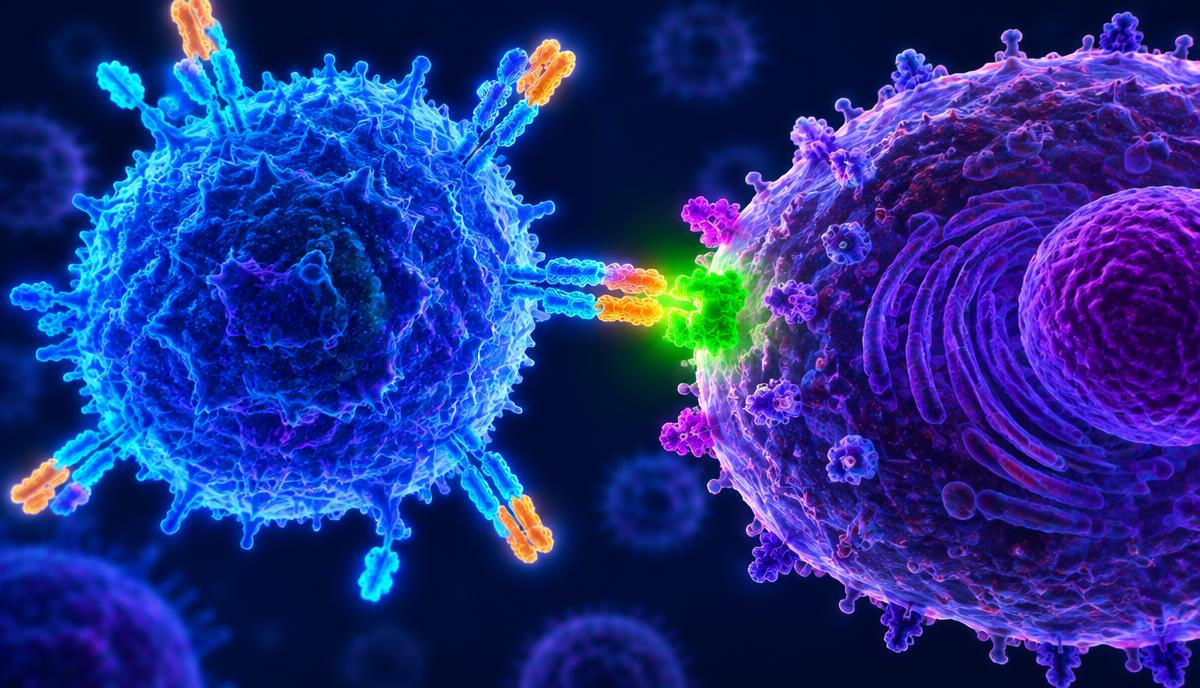
Multiple myeloma remains incurable for most patients, and relapse after BCMA-directed therapies — including the CAR-T products cilta-cel (Carvykti) and ide-cel (Abecma), as well as BCMA-targeted bispecific antibodies — has become an increasingly common and difficult clinical scenario. Patients who progress after BCMA therapy typically have few remaining treatment classes to try, and outcomes in this setting have historically been poor. Arlo-cel takes a different molecular route: rather than targeting BCMA, it targets GPRC5D, a distinct protein expressed on myeloma cells, giving oncologists a genuinely new mechanism to turn to once BCMA-directed options have been used up.
What QUINTESSENTIAL Actually Tested
QUINTESSENTIAL is an open-label, single-arm, multicenter Phase 2 study (registered as NCT06297226) enrolling adults with relapsed/refractory multiple myeloma who were "quadruple-class exposed" — meaning they had already received an immunomodulatory drug, a proteasome inhibitor, an anti-CD38 antibody, and a BCMA-targeted therapy, with documented disease progression on their most recent regimen. The primary analysis population had received four or more prior lines of therapy; a secondary cohort with three or more prior lines was also evaluated. Notably, prior CAR-T therapy was permitted for enrollment (though prior GPRC5D-directed treatment was excluded), underscoring just how treatment-resistant this population was.
The Results — and Their Real Limits
According to BMS and coverage from CURE and OncLive, the trial met its primary endpoint of overall response rate (ORR) in the quadruple-class-exposed, four-or-more-prior-lines cohort. It also met its key secondary endpoint — complete response (CR) rate — in that same group, and additional endpoints (ORR and CR rate) were met in the broader three-or-more-prior-lines cohort as well. BMS characterized the findings as "statistically significant and clinically meaningful." That framing is worth taking seriously — meeting a primary and key secondary endpoint in a single-arm registrational trial is a real, hard-won result, especially in a population defined by prior treatment failure. But it's important to be precise about what has and hasn't been disclosed. The actual response-rate percentages have not been released; BMS says detailed data, including duration of response, progression-free survival, and minimal residual disease (MRD) negativity rates, will be presented at an upcoming medical meeting. There is also no control arm in this trial, which is standard for single-arm registrational studies in this space but means efficacy is being judged against historical benchmarks rather than a randomized comparator within the trial itself. And, critically, arlo-cel remains investigational — it is not yet FDA-approved for any indication.
Safety Signals So Far
BMS reported that arlo-cel's safety profile was "consistent with that of other CAR T-cell therapies and other GPRC5D-targeting therapies in multiple myeloma." That is a meaningful, if imprecise, reassurance: GPRC5D-directed therapies as a class have shown their own characteristic side-effect profile in prior trials, including oral and dermatologic toxicities related to GPRC5D expression on skin and nail tissue, alongside the cytokine release syndrome (CRS) and neurotoxicity risks common to CAR-T therapies generally. Specific rates of CRS, ICANS, or other adverse events from QUINTESSENTIAL were not disclosed in the topline announcement, so a full risk picture will have to wait for the detailed data release.
What Comes Next
Bristol Myers Squibb said full QUINTESSENTIAL results will be presented at an upcoming medical meeting, where the specific response-rate figures, safety tables, and durability data investors and clinicians are waiting on should become available. The company has not yet disclosed a specific timeline for an FDA Biologics License Application (BLA) filing based on these results. Until that fuller dataset and any regulatory filing emerge, arlo-cel should be understood as a promising investigational therapy — not a new treatment option patients can access today.
Bottom Line
QUINTESSENTIAL's topline result is a genuinely hopeful signal for patients with multiple myeloma who have already failed BCMA-targeted therapy and three other major drug classes — a group that, until now, had little pivotal trial data specific to their situation. Meeting both the primary ORR endpoint and the key secondary CR-rate endpoint in this heavily pretreated population is a meaningful milestone for GPRC5D-directed CAR-T therapy. But this is a topline, company-reported announcement without published response-rate numbers, safety tables, or peer review, and arlo-cel is not FDA-approved. Patients and clinicians should watch for the full data presentation and any subsequent regulatory filing before drawing conclusions about how this therapy will ultimately perform or where it will fit in the myeloma treatment sequence.
Sources
- Bristol Myers Squibb Announces Positive Topline Results from Registrational Phase 2 QUINTESSENTIAL Trial of Arlocabtagene Autoleucel — Bristol Myers Squibb official press release, September 8, 2026 — https://news.bms.com/news/details/2026/Bristol-Myers-Squibb-Announces-Positive-Topline-Results-from-Registrational-Phase-2-QUINTESSENTIAL-Trial-of-the-Potential-First-in-Class-GPRC5D-Directed-CAR-T-Cell-Therapy-Arlocabtagene-Autoleucel----/default.aspx
- Bristol Myers Squibb Reports Positive Results for CAR T-Cell Therapy in Heavily Pretreated Multiple Myeloma — CURE Today, September 2026 — https://www.curetoday.com/view/bristol-myers-squibb-reports-positive-results-for-car-t-cell-therapy-in-heavily-pretreated-multiple-myeloma
- Arlo-Cel Meets ORR End Point in BCMA-Pretreated, Quadruple-Class Exposed R/R Myeloma — OncLive, September 2026 — https://www.onclive.com/view/arlo-cel-meets-orr-end-point-in-bcma-pretreated-quadruple-class-exposed-r-r-myeloma
- Bristol Myers Squibb's GPRC5D-Directed CAR T Cell Therapy Meets Primary Endpoint in Multiple Myeloma — BioPharm International, September 2026 — https://www.biopharminternational.com/view/bristol-myers-squibb-s-gprc5d-directed-car-t-cell-therapy-meets-primary-endpoint-in-multiple-myeloma
Related Articles
- Clinical Applications
Immunotherapy for Triple-Negative Breast Cancer: What the Evidence Shows
Pembrolizumab is the first immunotherapy FDA-approved for triple-negative breast cancer. Here's what KEYNOTE-522 and KEYNOTE-355 actually found, who qualifies, and the real risks and limits.
- Clinical Applications
How Does CAR-T Cell Therapy for Large B-Cell Lymphoma Actually Work?
How CD19-targeted CAR-T cells are made and how they kill lymphoma, what ZUMA-1, JULIET, and TRANSCEND showed, and the toxicities, relapse routes, and access barriers involved.
- Clinical Applications
First CAR-T Therapy for an Autoimmune Disease Edges Toward FDA Approval: What Kyverna's Stiff Person Syndrome Data Show
Kyverna's Phase 2 KYSA-8 trial of miv-cel in stiff person syndrome reported a 46% walk-test improvement and a rolling BLA is underway — but the FDA hasn't ruled.