FDA-Cleared Device vs. FDA-Approved Biologic: What the Difference Means When Choosing a Stem Cell Clinic
What this article covers
- Two Very Different FDA Words: "Cleared" and "Approved"
- The FDA uses specific, legally distinct language for different kinds of products, and the differences aren't just semantic. A medical device can receive what's called 510(k) clearance, which means the FDA has determined it's "substantially equivalent" to an existing, legally marketed device in terms of safety for its intended use.
- What a Point-of-Care Processing Device Actually Is
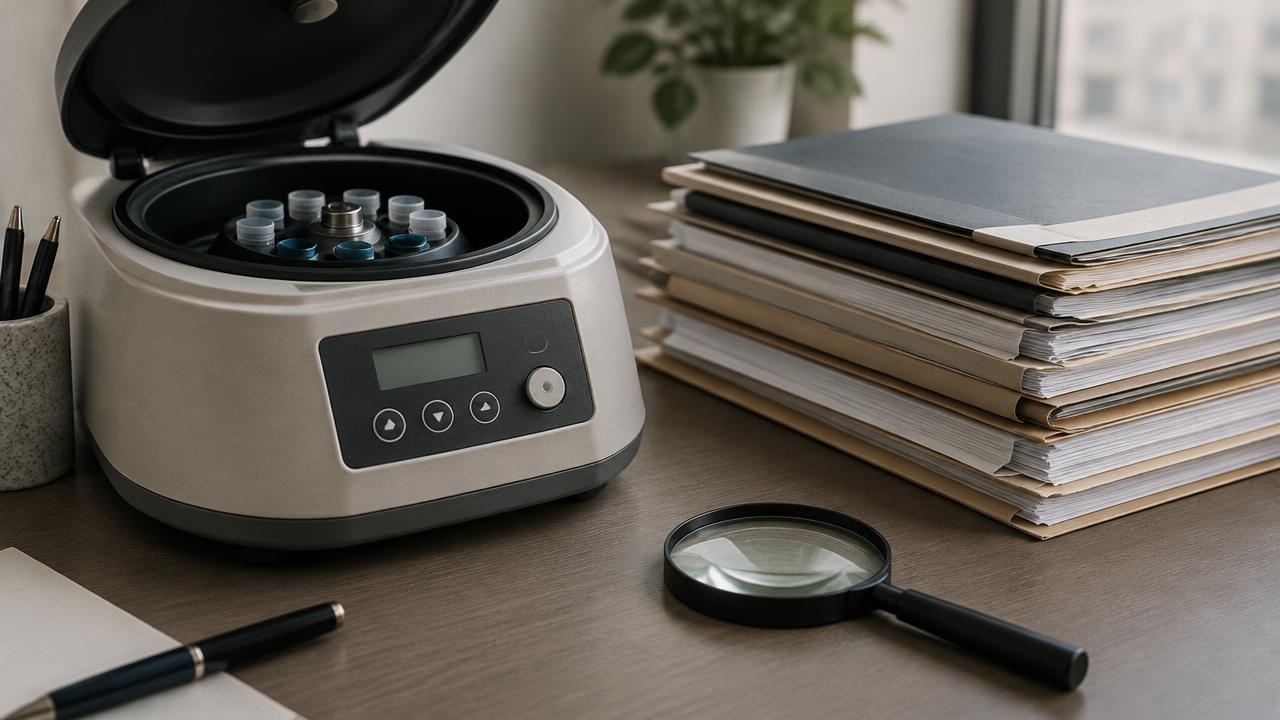
- Many stem cell and regenerative medicine clinics use point-of-care systems — equipment that mechanically washes, filters, or centrifuges a patient's own fat or bone marrow tissue in order to concentrate certain cell populations before the material is reinjected elsewhere in the body. Some of these processing systems have received FDA 510(k) clearance as devices.
- Why the Device Being Cleared Doesn't Mean the Treatment Is Approved
- This is the crux of the confusion, and it has a real regulatory basis. The processed cells themselves are separately regulated by the FDA as human cells, tissues, and cellular and tissue-based products (HCT/Ps) under a distinct set of federal rules.
- A Pattern Regulators Have Flagged Before
- This isn't a hypothetical concern. S.
- Questions Worth Asking
- Before assuming a "FDA-cleared" claim means more than it does, it's reasonable to ask a clinic directly: is it the processing device that's cleared, or has the specific cell product and its intended use received FDA approval through a Biologics License Application? Has the treatment been tested in a registered, published clinical trial for the condition being treated, rather than just processed with cleared equipment?
Many stem cell clinics process a patient's own fat or bone marrow tissue using specialized equipment, and some advertise that this equipment is "FDA-cleared." That statement can be entirely true — and still have nothing to do with whether the treatment itself is approved, safe, or effective. This article explains the real, legally meaningful difference between an FDA-cleared device and an FDA-approved biologic, why clinics sometimes blur the two, and what questions can help you tell them apart.
Two Very Different FDA Words: "Cleared" and "Approved"
The FDA uses specific, legally distinct language for different kinds of products, and the differences aren't just semantic. A medical device can receive what's called 510(k) clearance, which means the FDA has determined it's "substantially equivalent" to an existing, legally marketed device in terms of safety for its intended use. According to the FDA's own guidance on the 510(k) program, this is a premarket notification process focused on comparing a new device to a predicate device — it is explicitly not a determination that the device, or anything made using it, is safe and effective in the way a new drug or biological product is evaluated. A biologic or drug, by contrast, goes through an entirely separate approval pathway — a New Drug Application or Biologics License Application — that requires clinical trial evidence of safety and effectiveness for a specific use. The FDA deliberately uses different words — "cleared" for devices, "approved" for drugs and biologics — because these represent genuinely different regulatory standards.
What a Point-of-Care Processing Device Actually Is
Many stem cell and regenerative medicine clinics use point-of-care systems — equipment that mechanically washes, filters, or centrifuges a patient's own fat or bone marrow tissue in order to concentrate certain cell populations before the material is reinjected elsewhere in the body. Some of these processing systems have received FDA 510(k) clearance as devices. That clearance says something real about the device itself — that the agency considers it comparably safe to other cleared equipment used for similar mechanical processing. It says nothing, on its own, about whether the biological product that comes out of the device — the processed cells — has been shown in controlled trials to safely and effectively treat the condition it's being marketed for.
Why the Device Being Cleared Doesn't Mean the Treatment Is Approved
This is the crux of the confusion, and it has a real regulatory basis. The processed cells themselves are separately regulated by the FDA as human cells, tissues, and cellular and tissue-based products (HCT/Ps) under a distinct set of federal rules. A narrow category of HCT/Ps — those that are only minimally manipulated, intended for a function the tissue normally performs ("homologous use"), and in some cases used within the same surgical procedure — can be used without the FDA premarket approval required of a drug. Everything else requires the same kind of rigorous Biologics License Application approval process used for any other new biological therapy. A federal appeals court addressed exactly this distinction in United States v. US Stem Cell Clinic, LLC, ruling in 2021 that a clinic's adipose-derived cell product did not qualify for that narrow exemption and required FDA drug approval it did not have — a ruling that turned on the biological product's regulatory status, not on whether the processing equipment itself was a legitimate, cleared device.
A Pattern Regulators Have Flagged Before
This isn't a hypothetical concern. Over the past decade, the FDA and the Federal Trade Commission have taken public enforcement action against multiple U.S. stem cell clinics for marketing unapproved, minimally regulated cell products as though they were established, approved treatments — including formal FDA warning letters citing manufacturing and regulatory violations, and FTC settlements addressing deceptive advertising of unproven treatment claims. The FDA's own consumer-facing guidance on regenerative medicine therapies separately warns that being registered or listed with the FDA — a basic administrative step many HCT/P establishments take — does not mean a product is legally marketed or has been evaluated for safety and effectiveness. The common thread across these cases is the same one at the center of the device-versus-biologic distinction: a scientific-sounding or regulatory-sounding term, used imprecisely, can make an unapproved treatment sound more vetted than it actually is.
Questions Worth Asking
Before assuming a "FDA-cleared" claim means more than it does, it's reasonable to ask a clinic directly: is it the processing device that's cleared, or has the specific cell product and its intended use received FDA approval through a Biologics License Application? Has the treatment been tested in a registered, published clinical trial for the condition being treated, rather than just processed with cleared equipment? And is the clinic able to point to the specific FDA approval, if any exists, for the actual treatment being offered — not just the hardware used to prepare it?
Bottom Line
"FDA-cleared" and "FDA-approved" sound similar, and marketing materials don't always go out of their way to clarify the difference — but they describe two entirely different kinds of regulatory review, applied to two entirely different things. A clinic's processing equipment being a legitimately cleared medical device says nothing about whether the treatment it produces has been proven safe and effective. Understanding that distinction is one of the more reliable ways to evaluate a clinic's claims on their own regulatory merits, rather than on how official they sound.
Key Questions Answered
- What is the difference between FDA-cleared and FDA-approved?
- 510(k) clearance finds a device substantially equivalent to an existing device; it is not a safety-and-effectiveness determination. Drugs and biologics are approved through an NDA or BLA requiring clinical trial evidence for a specific use.
- Does a cleared processing device mean the cell treatment is approved?
- No. The processed cells are regulated separately as HCT/Ps. Only a narrow minimally manipulated, homologous-use category avoids premarket approval; the 2021 US Stem Cell Clinic ruling turned on the product's status, not the equipment.
- What should I ask a clinic claiming FDA clearance?
- Ask whether the device or the specific cell product and use is FDA-approved through a BLA, whether the treatment has been tested in a registered published trial for your condition, and which specific approval applies.
Sources
- "The 510(k) Program: Evaluating Substantial Equivalence in Premarket Notifications [510(k)]" — U.S. Food and Drug Administration, guidance document — https://www.fda.gov/regulatory-information/search-fda-guidance-documents/510k-program-evaluating-substantial-equivalence-premarket-notifications-510k
- "Important Patient and Consumer Information About Regenerative Medicine Therapies" — U.S. Food and Drug Administration / Center for Biologics Evaluation and Research — https://www.fda.gov/vaccines-blood-biologics/consumers-biologics/important-patient-and-consumer-information-about-regenerative-medicine-therapies
- United States v. US Stem Cell Clinic, LLC, No. 19-13381 (11th Cir., decided June 2, 2021) — full opinion via Justia — https://law.justia.com/cases/federal/appellate-courts/ca11/19-13381/19-13381-2021-06-02.html
- "Federal Trade Commission Acts for First Time Against Stem Cell Clinics" — The Pew Charitable Trusts, December 21, 2018 — https://www.pewtrusts.org/en/research-and-analysis/articles/2018/12/21/federal-trade-commission-acts-for-first-time-against-stem-cell-clinics
- 21 CFR Part 1271 — Human Cells, Tissues, and Cellular and Tissue-Based Products — U.S. Code of Federal Regulations, eCFR — https://www.ecfr.gov/current/title-21/chapter-I/subchapter-L/part-1271
Related Articles
- Research & Industry
Emerging Cell Therapies 2027: Keystone Symposia Heads to Monaco for Regenerative Medicine's Next Wave
Keystone Symposia's February 2027 Monaco meeting gathers cell therapy researchers on engineering, manufacturing, biomaterials and clinical translation.
- Research & Industry
Longevity Clinics in Singapore: What's Actually Happening
Singapore is investing in public-hospital longevity care and roughly S$350 million in aging research, while biological-age tests and healthspan gains remain unproven.
- Research & Industry
Tandem Meetings 2027: What to Expect From the ASTCT/CIBMTR Gathering on Transplant and Cellular Therapy
A preview of the 2027 Tandem Meetings in Orlando: who attends the ASTCT/CIBMTR gathering, what's on the agenda, and why its registry-backed data matters.