Tandem Meetings 2027: What to Expect From the ASTCT/CIBMTR Gathering on Transplant and Cellular Therapy
What this article covers
- What the Meeting Is
- Tandem is the combined annual meeting of ASTCT, a professional medical society, and CIBMTR, a research collaboration between the Medical College of Wisconsin and the National Marrow Donor Program/Be The Match that maintains one of the world's largest outcomes registries for transplant and cellular therapy patients. The "tandem" format pairs ASTCT's clinically oriented programming with CIBMTR's observational research and registry data, giving the meeting a dual identity: part continuing-medical-education conference, part scientific research summit.
- Who Attends
- Attendees are overwhelmingly clinicians, researchers, and allied professionals already working in blood and marrow transplant and cellular therapy — hematologist-oncologists, transplant pharmacists, nurses, advanced practice providers, cell-processing lab staff, and clinical researchers. Industry representatives from cell and gene therapy companies, along with patient advocacy groups, also participate, reflecting the meeting's role as a convergence point for clinical practice, registry science, and product development in a fast-moving field.
- Key Sessions and Focus Areas to Watch
- Based on published 2027 program planning, several threads stand out:
- Why It Matters
- For readers following legitimate stem cell science, Tandem is a useful barometer of where the field — allogeneic and autologous transplant, CAR T, and emerging gene therapies for inherited blood disorders — actually stands, based on registry-scale outcomes data rather than promotional claims. The CIBMTR registry component in particular underpins much of what regulators and insurers rely on to evaluate long-term transplant outcomes, making the meeting's data releases relevant well beyond the room.
- Logistics
- The 2027 Tandem Meetings run February 17–20, with a pre-meeting day on February 16, at the Orlando World Center Marriott in Orlando, Florida. Registration and the full scientific program are managed through ASTCT and CIBMTR's meeting sites, with abstract and speaker submission windows typically closing the preceding summer.
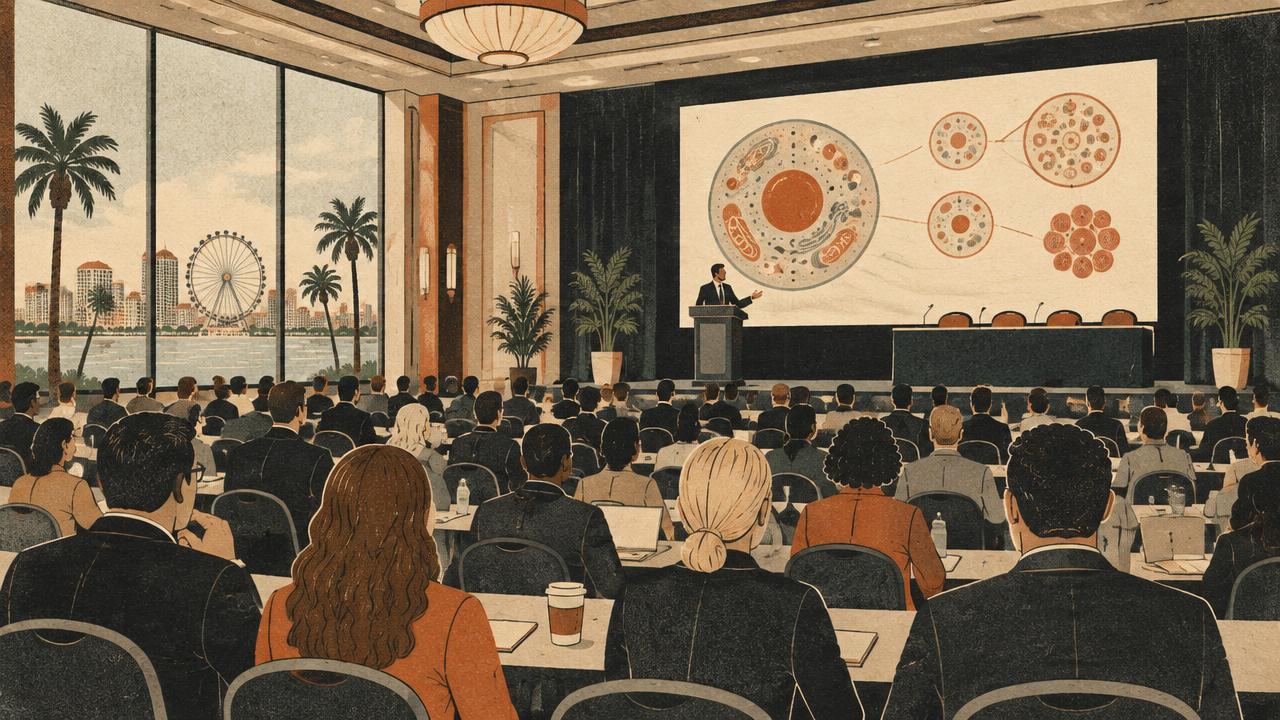
Every February, the hematopoietic cell transplantation and cellular therapy field converges on one meeting: the Transplantation & Cellular Therapy Meetings of the American Society for Transplantation and Cellular Therapy (ASTCT) and the Center for International Blood and Marrow Transplant Research (CIBMTR), commonly called "Tandem." This article previews the 2027 edition, scheduled for Orlando, Florida, outlining who attends, what's on the agenda, and why it matters to anyone tracking the clinical reality of stem cell transplantation, CAR T-cell therapy, and gene therapy — as distinct from the unproven interventions sometimes marketed under similar language.
What the Meeting Is
Tandem is the combined annual meeting of ASTCT, a professional medical society, and CIBMTR, a research collaboration between the Medical College of Wisconsin and the National Marrow Donor Program/Be The Match that maintains one of the world's largest outcomes registries for transplant and cellular therapy patients. The "tandem" format pairs ASTCT's clinically oriented programming with CIBMTR's observational research and registry data, giving the meeting a dual identity: part continuing-medical-education conference, part scientific research summit.
Who Attends
Attendees are overwhelmingly clinicians, researchers, and allied professionals already working in blood and marrow transplant and cellular therapy — hematologist-oncologists, transplant pharmacists, nurses, advanced practice providers, cell-processing lab staff, and clinical researchers. Industry representatives from cell and gene therapy companies, along with patient advocacy groups, also participate, reflecting the meeting's role as a convergence point for clinical practice, registry science, and product development in a fast-moving field.
Key Sessions and Focus Areas to Watch
Based on published 2027 program planning, several threads stand out:
- Hematologic malignancies and cellular immunotherapy, including a dedicated review of findings from the December 2026 American Society of Hematology (ASH) meeting and sessions on the evolving relapsed/refractory multiple myeloma landscape — CAR T-cell therapies and bispecific antibodies among them.
- Transplant complications, including graft-versus-host disease (GVHD) prevention updates and management of transplant-associated thrombotic microangiopathy.
- Cellular and gene therapy operations, covering solid-tumor cell therapy logistics and gene therapy approaches for sickle cell disease, beta thalassemia, and severe combined immunodeficiency.
- Supportive care and infection control, comparing U.S. and European approaches to antiemetics, growth factors, and conditioning-related prophylaxis.
- Early-career mentorship and professional development programming, pairing newer investigators with established researchers.
Why It Matters
For readers following legitimate stem cell science, Tandem is a useful barometer of where the field — allogeneic and autologous transplant, CAR T, and emerging gene therapies for inherited blood disorders — actually stands, based on registry-scale outcomes data rather than promotional claims. The CIBMTR registry component in particular underpins much of what regulators and insurers rely on to evaluate long-term transplant outcomes, making the meeting's data releases relevant well beyond the room.
Logistics
The 2027 Tandem Meetings run February 17–20, with a pre-meeting day on February 16, at the Orlando World Center Marriott in Orlando, Florida. Registration and the full scientific program are managed through ASTCT and CIBMTR's meeting sites, with abstract and speaker submission windows typically closing the preceding summer.
Bottom Line
Tandem 2027 is not a venue for direct-to-consumer stem cell treatments — it's a research and clinical-practice meeting where transplant outcomes, CAR T data, and gene therapy progress are presented and scrutinized by the specialists who actually deliver these therapies. For readers evaluating claims about stem cell treatments, the gap between what gets discussed at meetings like this (rigorous, registry-backed, FDA-regulated therapy) and what's advertised at unregulated clinics is itself an instructive data point.
Key Questions Answered
- What are the Tandem Meetings?
- The combined annual meeting of ASTCT and CIBMTR, pairing clinical transplant programming with registry-based outcomes research. The 2027 edition runs February 17–20 in Orlando, Florida, with a pre-meeting day on February 16.
- Who attends Tandem?
- Mostly clinicians and researchers working in blood and marrow transplant and cellular therapy — hematologist-oncologists, transplant pharmacists, nurses and cell-processing lab staff — plus industry representatives and patient advocacy groups.
- Is Tandem relevant to direct-to-consumer stem cell treatments?
- No. It covers rigorous, registry-backed, FDA-regulated transplant, CAR T and gene therapy — a contrast to what unregulated clinics advertise.
Sources
- 2027 Tandem Meetings overview, CIBMTR, 2026, https://www.cibmtr.org/Tandem
- Upcoming Meetings, CIBMTR, 2026, https://www.cibmtr.org/CIBMTR/Meetings/Upcoming-Meetings
- 2027 Tandem Meetings I Transplantation & Cellular Therapy Meetings of ASTCT and CIBMTR, emedevents, 2026, https://www.emedevents.com/c/medical-conferences-2027/2027-tandem-meetings-i-transplantation-cellular-therapy-meetings-of-astct-and-cibmtr
- 2027 Tandem Pharmacy Track – Call for Speakers, ASTCT, 2026, https://www.astct.org/Portals/0/2027%20Tandem%20Pharmacy%20Track%20-%20Call%20for%20Speakers%20-%202026-2027%20Descriptions.pdf
- 53rd Annual Meeting of the European Society of Blood and Marrow Transplantation (EBMT 2027), Clocate, 2026, https://www.clocate.com/meeting-of-the-european-society-of-blood-and-marrow-transplantation-ebmt/3178/
Related Articles
- Research & Industry
How to Spot Unproven Treatment Claims in Stem Cell Clinic Marketing
The language patterns and sales tactics that signal an unproven stem cell marketing claim, tied to the guidance the FDA and FTC have actually published.
- Research & Industry
Peptide Therapy in Mexico: What's Actually Happening
Peptide therapy in Mexico: what clinics offer, the COFEPRIS and FDA regulatory picture, thin human evidence and what medical tourists should weigh.
- Research & Industry
ASGCT 2027 Annual Meeting: What to Know About Gene and Cell Therapy's Flagship Scientific Gathering
ASGCT’s May 4–8, 2027 meeting in Philadelphia: confirmed dates, expected scientific tracks, regulatory discussions and why the gathering matters for cell and gene therapy.