MSC Therapy for Aging in China: What's Actually Happening
What this article covers
- What This Article Covers
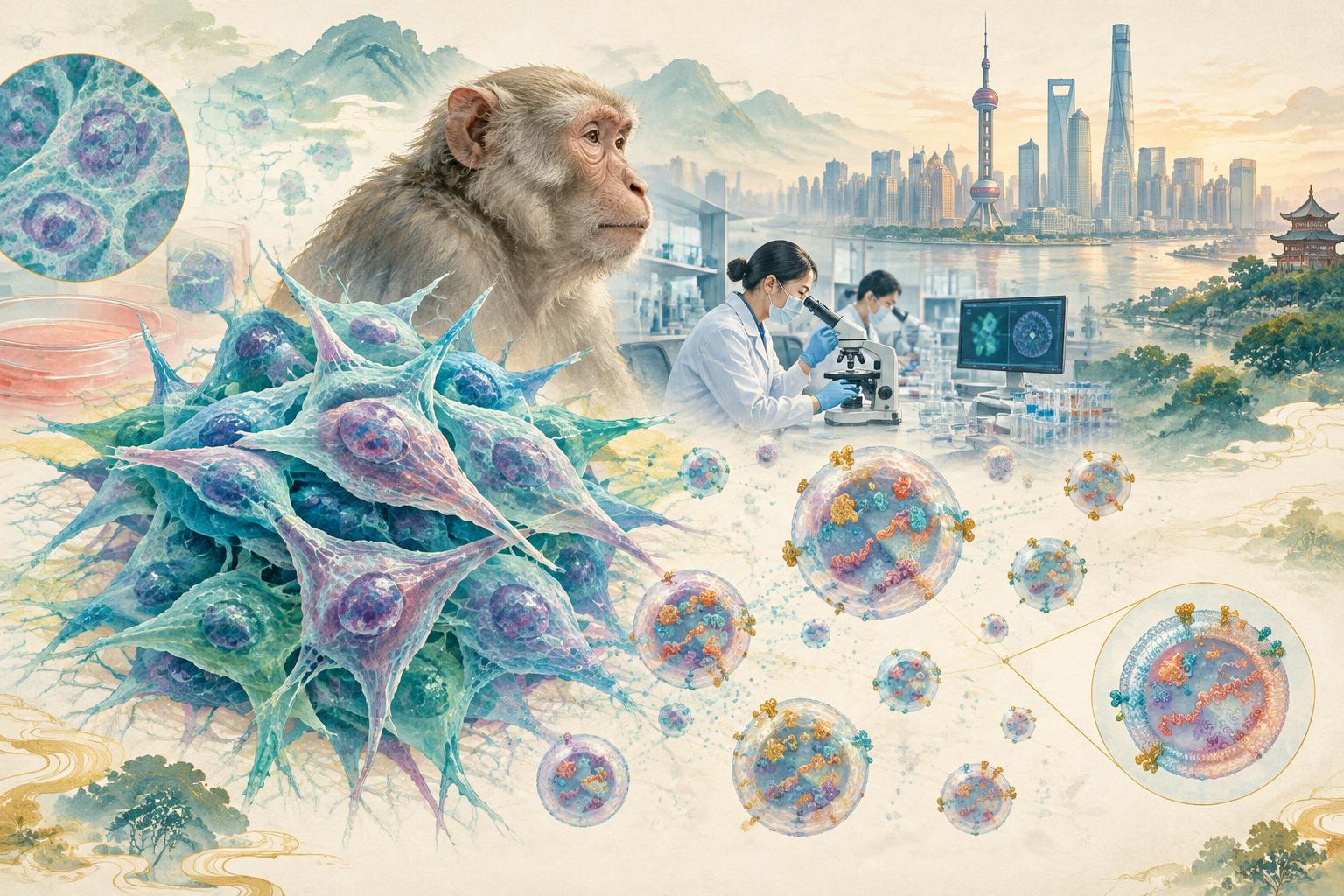
- China has become the most consequential country in the world to watch for mesenchymal stem cell (MSC) science right now — not because anyone has approved an MSC injection for "anti-aging" use, but because the country has simultaneously produced its first-ever conditionally approved MSC drug, built a formal dual-track regulatory system for cell therapies, opened a government-priced medical tourism zone offering stem cell procedures, and published a landmark primate study showing genetically enhanced MSCs reversing multiple markers of biological aging. None of this amounts to an approved aging therapy yet.
- The Regulatory Breakthrough: China's First Approved MSC Drug
- On January 2, 2025, China's National Medical Products Administration (NMPA) granted conditional marketing authorization to Amimestrocel Injection (trade name Ruibosheng), a human umbilical cord-derived mesenchymal stem cell product developed by Platinum Life Excellence Biotechnology (Beijing). It is described by regulators and industry press as the first stem cell therapy product in China ever to receive conditional marketing approval.
- A Genuinely New Regulatory Architecture: The "Dual-Track" System
- China has been building what legal and industry analysts call a dual-track framework for cell and gene therapies, distinguishing a drug track from a medical technology track:
- The Hainan Pilot Zone: Real Prices, Real Access, Real Limits
- The clearest real-world expression of the technology track is Hainan's Boao Lecheng International Medical Tourism Pilot Zone, where regulators released China's first official pricing for stem cell procedures classified as medical technologies rather than drugs:
- The Science That's Turning Heads: Genetically Enhanced MSCs in Primates
- The most scientifically exciting development is a 2025 study from Chinese research institutions, published in a peer-reviewed journal and independently corroborated by multiple science outlets. Researchers engineered "senescence-resistant mesenchymal progenitor cells" by boosting activity of FOXO3, a gene strongly linked to human longevity, then infused them intravenously into elderly cynomolgus monkeys (roughly equivalent to humans in their 60s–70s) repeatedly over a period of roughly ten months.
What This Article Covers
China has become the most consequential country in the world to watch for mesenchymal stem cell (MSC) science right now — not because anyone has approved an MSC injection for "anti-aging" use, but because the country has simultaneously produced its first-ever conditionally approved MSC drug, built a formal dual-track regulatory system for cell therapies, opened a government-priced medical tourism zone offering stem cell procedures, and published a landmark primate study showing genetically enhanced MSCs reversing multiple markers of biological aging. None of this amounts to an approved aging therapy yet. But taken together, it's the most active, best-documented MSC-and-aging regulatory and research story of any country today.
The Regulatory Breakthrough: China's First Approved MSC Drug
On January 2, 2025, China's National Medical Products Administration (NMPA) granted conditional marketing authorization to Amimestrocel Injection (trade name Ruibosheng), a human umbilical cord-derived mesenchymal stem cell product developed by Platinum Life Excellence Biotechnology (Beijing). It is described by regulators and industry press as the first stem cell therapy product in China ever to receive conditional marketing approval. The approved indication is narrow and clinical: steroid-refractory acute graft-versus-host disease (SR-aGVHD) with predominant gastrointestinal involvement, in patients aged 14 and older — a serious complication of stem cell transplantation, not an aging indication.
This matters for the aging story for two reasons. First, it proves China's drug-approval pathway for MSC products can actually produce an approved medicine, after years in which companies struggled to move from "clinical study" to "clinical application." Second, it sits alongside a broader surge: China's drug regulators reported a sharp rise in new cell and gene therapy clinical trial registrations in recent years, with stem cell-related candidates forming a large share of that pipeline — reflecting years of accumulated manufacturing and clinical-trial experience that is now beginning to produce regulatory outcomes, the GVHD approval being the first, not necessarily the last, expected product.
A Genuinely New Regulatory Architecture: The "Dual-Track" System
China has been building what legal and industry analysts call a dual-track framework for cell and gene therapies, distinguishing a drug track from a medical technology track:
- Drug track: Governed by the Drug Administration Law and NMPA's standard (if accelerated, for priority products) review process — the pathway that produced the GVHD approval above.
- Medical technology track: Overseen by the National Health Commission (NHC), this allows hospitals — specifically Class A tertiary hospitals — to conduct filed (not formally pre-approved) clinical studies, and then seek approval for "clinical translation and application," at which point hospitals may charge patients for the approved procedure, though not during the research phase itself.
This dual structure is a deliberate departure from the pre-2020s situation, in which China's 2015 stem cell clinical study regulations created a research pathway with no clear exit into paid clinical use — pushing many companies toward the slower drug-approval route instead. The newer framework, still being finalized through updated national regulations, aims to give hospital-based stem cell medicine (including MSC infusions) a legitimate, supervised route to real-world use that doesn't require full drug registration for every application.
The Hainan Pilot Zone: Real Prices, Real Access, Real Limits
The clearest real-world expression of the technology track is Hainan's Boao Lecheng International Medical Tourism Pilot Zone, where regulators released China's first official pricing for stem cell procedures classified as medical technologies rather than drugs:
- Knee osteoarthritis treatment: approximately 36,000 yuan (about US$4,900) per session
- Autologous lung cell transplantation: 150,000 yuan
- Ischemic heart disease treatment: 60,000 yuan
Under Lecheng's special administrative arrangement, these specific procedures can enter clinical use without going through full NMPA drug approval — making Hainan a genuine regulatory sandbox, explicitly described by Chinese health policy experts as a national testing ground. Eligibility is restricted to patients meeting defined clinical criteria (e.g., knee osteoarthritis unresponsive to standard care, or heart disease with significant left ventricular dysfunction) — this is not an open-access anti-aging menu. China's national medical research registration platform separately lists filings from well over 100 stem cell institutions and roughly as many research projects nationwide, many of which are study-phase and may not charge patients at all.
Observers have flagged legitimate concerns worth keeping intact: the Hainan prices represent a significant share of average urban disposable income, raising affordability and equity questions, and experts caution that stem cell infusions outside careful protocols carry immune-related risks requiring long-term monitoring — a caution that applies to any country's MSC market, not just China's.
The Science That's Turning Heads: Genetically Enhanced MSCs in Primates
The most scientifically exciting development is a 2025 study from Chinese research institutions, published in a peer-reviewed journal and independently corroborated by multiple science outlets. Researchers engineered "senescence-resistant mesenchymal progenitor cells" by boosting activity of FOXO3, a gene strongly linked to human longevity, then infused them intravenously into elderly cynomolgus monkeys (roughly equivalent to humans in their 60s–70s) repeatedly over a period of roughly ten months.
The reported results are striking for an aging intervention:
- No tumors or adverse immune events were observed over the study period
- MRI showed reduced brain atrophy and restored neural connectivity in regions including the prefrontal cortex, approaching levels seen in much younger monkeys
- Aging-associated gene expression reversed across a majority of tissue types examined, more than with unmodified MSCs
- Markers of bone loss, vascular stiffening, and inflammation all improved
- The researchers attribute much of the effect to exosomes released by the engineered cells, which also showed rejuvenating activity on human cells in lab dishes
This is genuinely important, well-documented science — and it is exclusively preclinical. No human trials of these engineered cells have been reported, registered, or announced. Commentary from aging-research outlets speculates human trials "could" follow, but that is speculation, not a disclosed plan.
Market Reality: Ambition Running Ahead of Approved Indications
China's longevity and anti-aging consumer sector is enormous on paper — anti-aging products alone were estimated in the billions of dollars in 2024, with national "silver economy" spending in the trillions of yuan, and the government has elevated longevity-related industries to a national strategic priority since 2024. Stem cell therapy is frequently marketed within this broader wellness and medical-tourism landscape, including within free-trade zones (Beijing, Shanghai, Guangdong, Hainan) where recent NMPA guidance has opened the door for foreign-invested companies to develop and apply stem cell technology.
It is important to be precise about what this does and doesn't mean: there is no NMPA-approved MSC product indicated for aging, frailty, or longevity in China today. The one approved MSC drug treats a transplant complication. The Hainan-priced procedures target osteoarthritis and heart disease, not aging broadly. The primate rejuvenation study is lab/animal-stage. What's real is the regulatory infrastructure, the manufacturing and trial base, and the research momentum — all of which make China a legitimate one to watch, not a country where anti-aging MSC therapy has already arrived as approved medicine.
Bottom Line
China currently offers the most substantive, verifiable MSC-and-aging activity of any country: a first-ever NMPA-approved MSC drug (for GVHD, not aging), a newly formalized dual-track regulatory system separating drug approval from hospital-based medical technology approval, a functioning government-priced pilot zone in Hainan for specific stem cell procedures, and a rigorously published, peer-reviewed primate study showing genetically engineered MSCs reversing multiple biological aging markers. None of this constitutes an approved anti-aging MSC therapy — the approved product treats a different condition, the priced procedures target specific diseases, and the most exciting rejuvenation science remains in monkeys, not humans. For anyone tracking where regulated, well-resourced MSC research is actually headed, though, China's combination of regulatory innovation and scientific output is unmatched right now — real progress, with real limits still fully in place.
Key Questions Answered
- Has China approved an MSC therapy for aging?
- No. The conditionally approved MSC drug treats steroid-refractory acute GVHD in patients aged 14 and older, not aging, frailty or longevity.
- Are Hainan's priced procedures an anti-aging menu?
- No. They target specific conditions such as knee osteoarthritis and ischemic heart disease, with defined eligibility criteria. They do not establish broad anti-aging approval.
- Have the genetically enhanced MSCs been tested in people?
- No human trials of these engineered cells were reported, registered or announced at the time of writing. The encouraging rejuvenation findings are exclusively preclinical, in monkeys and lab cells.
Sources
- "China's NMPA Clears Country's First Mesenchymal Stem Cell Therapy," BioWorld, 2025, https://www.bioworld.com/articles/716203-chinas-nmpa-clears-countrys-first-mesenchymal-stem-cell-therapy
- "NMPA Grants Conditional Approval for China's First MSC Therapy for aGVHD," flcube.com, 2025, https://flcube.com/?p=20470
- "Debut Stem Cell Therapy Pricing Released in Hainan," China Daily / China Services Info, 2025, https://www.chinaservicesinfo.com/s/202504/23/WS682c3ca8498eec7e1f737387/debut-stem-cell-therapy-pricing-released-in-hainan.html
- "Understanding China's Longevity Market: Industry Segments, Trends and Opportunities," China Briefing, 2025, https://www.china-briefing.com/news/understanding-chinas-longevity-market-trends-opportunities/
- Hankun Law, analysis of China's dual-track regulatory framework for new biomedical technologies and stem cells, 2025, https://hankunlaw.com/en/portal/article/index/cid/8/id/15850
- "Reprogramming Aging: Genetically Enhanced Mesenchymal Progenitor Cells Show Systemic Rejuvenation in Primates," PMC/NCBI, 2025, https://pmc.ncbi.nlm.nih.gov/articles/PMC12277565/
- "Chinese Researchers Develop Special Stem Cells That Reverse Aging," Gigazine, 2025, https://www.gigazine.net/gsc_news/en/20251006-stem-cells-reverse-aging-monkeys
Related Articles
- Research & Industry
Does Insurance Cover Stem Cell Therapy? What Cash-Pay Pricing Really Signals About the Evidence
Most stem cell clinic treatments are cash-pay because they aren't FDA-approved, which means Medicare and private insurers won't reimburse them. Here's what that pricing model actually signals — and the questions it should prompt before you pay.
- Research & Industry
Peer-Reviewed, or Just Looks That Way? How to Vet the Research a Stem Cell Clinic Cites
Published citations vary widely in quality. Study design, journal vetting, conflicts of interest and corrections matter more than a peer-reviewed label alone.
- Research & Industry
Treatment Guarantees and Refund Policies at Stem Cell Clinics: What They Actually Mean
A clinic refund promise is a business policy, not clinical evidence. What guarantees may exclude, enforcement history and questions to ask before paying.