Stem Cell Therapy for Asherman's Syndrome (Intrauterine Adhesions)
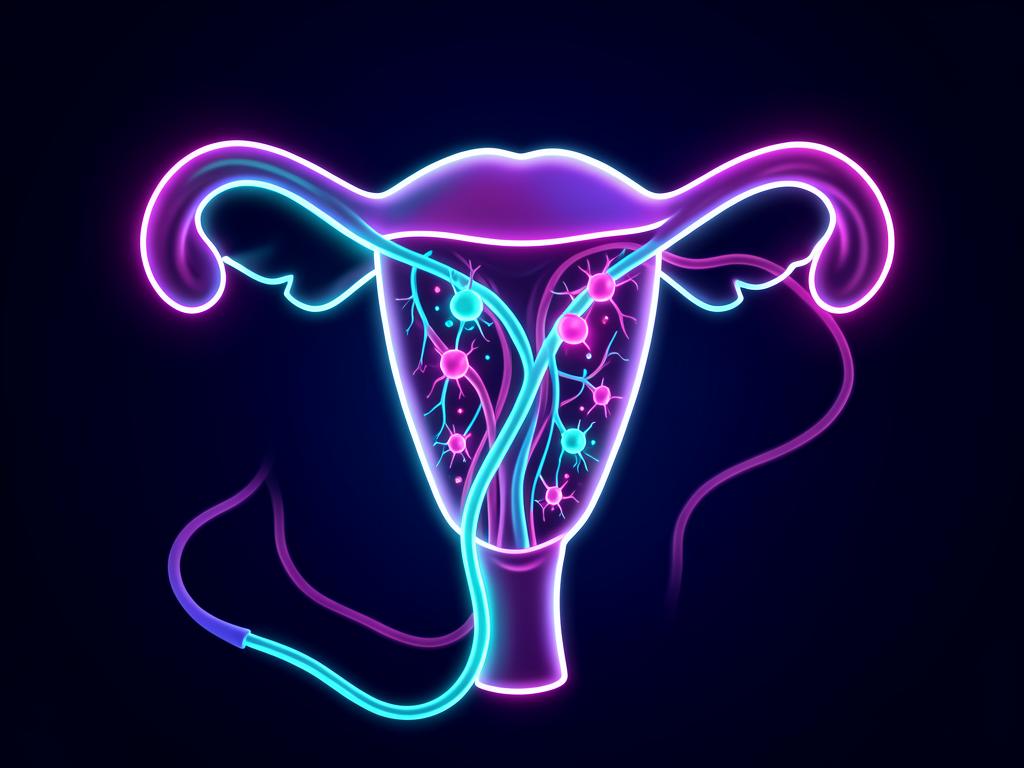
What this article covers
- What This Article Covers
- Asherman's syndrome — scar tissue (intrauterine adhesions) that forms inside the uterus, most often after a dilation and curettage procedure, cesarean section, or uterine infection — can thin the endometrium so severely that periods stop and pregnancy becomes difficult or impossible. Standard treatment is hysteroscopic surgery to cut the adhesions, but in moderate-to-severe cases the endometrium often fails to regenerate afterward, leaving women with a uterine lining too thin to support embryo implantation.
- How It's Thought to Work
- The leading approach uses CD133+ stem cells — a type of hematopoietic (blood-forming) stem cell drawn from a patient's own bone marrow after it is mobilized into the bloodstream with a growth factor injection (G-CSF). These cells are collected via apheresis and then delivered directly into the spiral arterioles of the uterus through a catheter threaded into the uterine artery, guided by minimally invasive radiology.
- What the Evidence Shows
- The most encouraging data come from a 2025 phase 1/2 trial published in Nature Communications, which treated 20 women with moderate-to-severe, treatment-refractory Asherman's syndrome using autologous CD133+ bone marrow-derived stem cells delivered via uterine artery catheterization. 29 mm, and intrauterine adhesion scores dropped sharply.
- Bottom Line
- Stem cell therapy for Asherman's syndrome is one of the more genuinely promising frontiers in reproductive regenerative medicine — a recent phase 1/2 trial showing a 30% live birth rate in women who had already exhausted surgical options is real, encouraging news. But it is still early: the evidence rests on small, uncontrolled studies and one modestly sized trial, not large randomized trials, and no version of this therapy is FDA-approved or considered standard care.
What This Article Covers
Asherman's syndrome — scar tissue (intrauterine adhesions) that forms inside the uterus, most often after a dilation and curettage procedure, cesarean section, or uterine infection — can thin the endometrium so severely that periods stop and pregnancy becomes difficult or impossible. Standard treatment is hysteroscopic surgery to cut the adhesions, but in moderate-to-severe cases the endometrium often fails to regenerate afterward, leaving women with a uterine lining too thin to support embryo implantation. This has pushed researchers toward stem cell therapy, using bone marrow-derived, menstrual blood-derived, or adipose-derived cells to try to regrow functional endometrial tissue. The evidence so far comes from small pilot studies and one recent phase 1/2 trial — not large randomized trials — so it should be read as promising early-stage research rather than an established treatment.
How It's Thought to Work
The leading approach uses CD133+ stem cells — a type of hematopoietic (blood-forming) stem cell drawn from a patient's own bone marrow after it is mobilized into the bloodstream with a growth factor injection (G-CSF). These cells are collected via apheresis and then delivered directly into the spiral arterioles of the uterus through a catheter threaded into the uterine artery, guided by minimally invasive radiology. The theory is that these cells home in on damaged endometrial tissue and support angiogenesis (new blood vessel growth) and cell turnover, helping thicken the endometrial lining and restore a receptive environment for embryo implantation. Other research groups have tested menstrual blood-derived stromal cells and adipose-derived mesenchymal stem cells (from the stromal vascular fraction) using similar logic — regenerating tissue through paracrine signaling rather than the cells becoming endometrium themselves.
What the Evidence Shows
The most encouraging data come from a 2025 phase 1/2 trial published in Nature Communications, which treated 20 women with moderate-to-severe, treatment-refractory Asherman's syndrome using autologous CD133+ bone marrow-derived stem cells delivered via uterine artery catheterization. Endometrial thickness increased significantly, from an average of 3.80 mm to 5.29 mm, and intrauterine adhesion scores dropped sharply. Eleven of the 20 women achieved pregnancy, and six delivered healthy live births — a 30% live birth rate in a population that had already failed standard surgical treatment. That is a genuinely meaningful result for women who had been told there were few options left, and the safety profile was reassuring: no serious treatment-related adverse events were reported. This built on earlier foundational work — a 2016 pilot cohort study in Human Reproduction by Santamaria and colleagues, which first showed CD133+ cell therapy could increase endometrial thickness (from 4.3 mm to 6.7 mm in Asherman's patients) and led to a handful of live births among 16 treated women. Separately, case reports and small series using menstrual blood-derived stem cells and autologous mesenchymal stem cells from fat tissue have reported similar endometrial improvements, and a systematic review and meta-analysis of the pooled literature found consistent, though still preliminary, benefit across studies. Importantly, none of this has produced an FDA-approved cell therapy: the closest regulatory milestone is a 2017 orphan drug designation from the European Medicines Agency (EMA) — not the FDA — for a CD133+ cell product, which speeds up trial support and future review but is not market approval. All current evidence is uncontrolled (no randomized, placebo-controlled trials have been completed), and sample sizes remain small.
Who Might Be a Candidate
- Women diagnosed with moderate-to-severe Asherman's syndrome whose endometrium remains thin or scarred despite hysteroscopic adhesiolysis
- Patients with a thin, "refractory" endometrium who have had repeated failed embryo transfers due to poor lining thickness
- Women exploring options before considering gestational surrogacy or donor-embryo pathways
- Patients enrolled in, or eligible for, a registered clinical trial with appropriate reproductive endocrinology oversight
- Not appropriate for women seeking a first-line or guaranteed fix — this remains investigational, not standard care
Bottom Line
Stem cell therapy for Asherman's syndrome is one of the more genuinely promising frontiers in reproductive regenerative medicine — a recent phase 1/2 trial showing a 30% live birth rate in women who had already exhausted surgical options is real, encouraging news. But it is still early: the evidence rests on small, uncontrolled studies and one modestly sized trial, not large randomized trials, and no version of this therapy is FDA-approved or considered standard care. Women considering it should treat it as investigational, seek care through a registered clinical trial or a reproductive specialist experienced in regenerative approaches, and go in with realistic expectations about both the promise and the remaining uncertainty.
Sources
- Autologous cell therapy with CD133+ bone marrow-derived stem cells for Asherman Syndrome: a phase 1/2 trial — Nature Communications, 2025 — https://www.nature.com/articles/s41467-025-67850-x
- Autologous cell therapy with CD133+ bone marrow-derived stem cells for refractory Asherman's syndrome and endometrial atrophy: a pilot cohort study — Human Reproduction (Oxford Academic), 2016 — https://academic.oup.com/humrep/article/31/5/1087/1750167
- An update on stem cell therapy for Asherman syndrome — Journal of Assisted Reproduction and Genetics, 2020 — https://link.springer.com/article/10.1007/s10815-020-01801-x
- Regenerative capacity of mesenchymal stem cells in the management of Asherman syndrome – a systematic review and meta-analysis of clinical outcomes — PMC, 2025 — https://pmc.ncbi.nlm.nih.gov/articles/PMC12895546/
- Igenomix Receives EMA Orphan Drug Designation for Its Product Indicated for Asherman's Syndrome — Igenomix, 2017 — https://www.igenomix.eu/igenomix-receives-ema-orphan-drug-designation-for-its-product-indicated-for-ashermans-syndrome-with-asphalion-support/
Related Articles
- Clinical Applications
Stem Cell Therapy for Bone Fracture Non-Union
Bone marrow cell therapy for fractures that won't heal: a 2025 meta-analysis of 866 patients shows 91% union rates at 12 months — but nothing is FDA-approved.
- Clinical Applications
Stem Cell Therapy for Long COVID
A phase IIa placebo-controlled trial of a cord blood-derived cell product cut post-COVID fatigue scores sharply — promising, but no stem cell therapy is FDA-approved for Long COVID.
- Clinical Applications
Stem Cell Therapy for Venous Leg Ulcers
Topical MSCs shrank treatment-refractory venous leg ulcers by roughly 76-78% in a phase I/IIa trial — encouraging early data, but no product is FDA-approved for this use.