Stem Cell Therapy for Venous Leg Ulcers
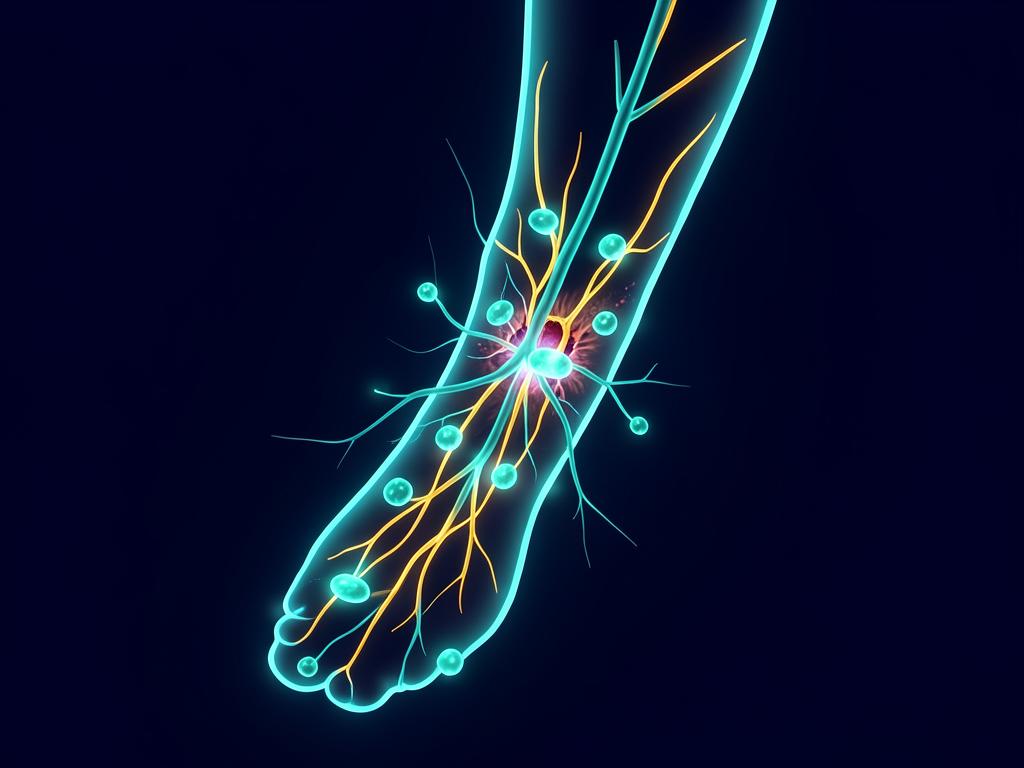
What this article covers
- What This Article Covers
- Venous leg ulcers are open wounds on the lower leg caused by chronic venous insufficiency — damaged vein valves that let blood pool and pressure build in the surrounding skin. They can persist for months or years and often resist standard treatment.
- How It's Thought to Work
- Venous ulcers get stuck in a loop of sluggish local blood flow, chronic inflammation, and wound-bed fibroblasts that become "senescent" — essentially checked out of the repair process. Compression therapy addresses the underlying vein pressure and remains the backbone of treatment, but it doesn't reset the biology of the wound bed.
- What the Evidence Shows
- , JID Innovations, 2022) testing topical, allogeneic ABCB5-positive MSCs, derived from donated human skin, in 31 patients (median age 75) whose ulcers had resisted at least three months of standard care, some for over a year. Patients got up to two applications, six weeks apart — and for a population this hard to treat, the results are genuinely encouraging.
- Bottom Line
- For venous leg ulcers that have stubbornly resisted standard treatment, early trial data — especially the phase I/IIa results with topically applied ABCB5+ MSCs — are genuinely promising, with a majority of hard-to-treat patients showing substantial wound shrinkage and a favorable early safety profile. But the strongest results come from small, uncontrolled, or open-label studies, larger randomized trials are still in progress, and no stem cell product is FDA-approved for this use.
What This Article Covers
Venous leg ulcers are open wounds on the lower leg caused by chronic venous insufficiency — damaged vein valves that let blood pool and pressure build in the surrounding skin. They can persist for months or years and often resist standard treatment. Because compression therapy and wound care don't heal a meaningful share of long-standing ulcers, researchers have begun testing whether mesenchymal stem cells (MSCs), applied directly to the wound, can help close ulcers that have stopped responding to everything else. This article covers what real trials have found, what remains uncertain, and who might be a trial candidate.
How It's Thought to Work
Venous ulcers get stuck in a loop of sluggish local blood flow, chronic inflammation, and wound-bed fibroblasts that become "senescent" — essentially checked out of the repair process. Compression therapy addresses the underlying vein pressure and remains the backbone of treatment, but it doesn't reset the biology of the wound bed.
Mesenchymal stem cells — sourced from bone marrow, fat tissue, or donated skin — aren't typically meant to become new skin cells. Applied to a wound, they act more like a signaling hub: secreting growth factors that encourage new blood vessels, calming an overactive immune response, and coaxing the patient's own repair cells back into gear. Every study below treats this as an add-on to standard wound care, not a replacement for compression.
What the Evidence Shows
The most detailed data come from a phase I/IIa trial (Amann et al., JID Innovations, 2022) testing topical, allogeneic ABCB5-positive MSCs, derived from donated human skin, in 31 patients (median age 75) whose ulcers had resisted at least three months of standard care, some for over a year. Patients got up to two applications, six weeks apart — and for a population this hard to treat, the results are genuinely encouraging. By week 12, median wound size had shrunk 76 to 78 percent, and roughly seven in ten patients qualified as "responders" with at least a 30 percent reduction, a highly statistically significant improvement. About one in five ulcers closed completely within 12 weeks, rising to roughly one in four with longer follow-up. Only three side effects across all patients were judged possibly related to the cell product, all mild to moderate and resolved.
That said, the trial was open-label with no placebo or control group, so some improvement could reflect the extra clinical attention patients got simply by enrolling, not the cells alone. Even the authors call it groundwork to justify "a larger, randomized, controlled trial," which hasn't yet reported results.
A far smaller pilot study presented at a Society for Investigative Dermatology meeting (Grada et al.) did include a real comparison group. Across just 11 patients in three arms, those given autologous bone-marrow-derived stem cells in a fibrin spray healed at roughly 0.11 to 0.13 cm per week, versus near-zero closure on saline or fibrin spray alone — a statistically significant gap, with one patient healing completely and another closing 80 percent. Encouraging, but with only about four patients per arm, it's hypothesis-generating, not confirmatory.
A 2025 umbrella review pooling data across chronic leg ulcers (venous disease causes roughly 70 percent of these wounds, alongside diabetic and arterial ulcers) found stem cell therapy linked to a meaningfully higher healing rate than control care — but only about 5 percent of the underlying evidence met high-quality standards, most trials rated low or very low quality. Better-controlled research is underway: a 2025 phase I/II randomized trial protocol is testing a bioengineered dressing seeded with adipose-derived MSCs against standard compression care in 20 patients.
No stem cell product is FDA-approved for venous leg ulcers, and none of these studies prove the therapy works reliably or is broadly safe outside a research setting.
Who Might Be a Candidate
- A venous leg ulcer that hasn't improved after several months of standard care (compression, appropriate dressings, infection control)
- An ulcer confirmed as venous, not arterial, in origin — poor arterial flow changes treatment and was an exclusion criterion in these trials
- Willingness to enroll in a registered clinical trial, since this therapy exists in research settings, not as a standard commercial treatment
- Ability to continue standard wound care, including compression, alongside any experimental cell treatment
- No active wound infection, which these studies excluded for safety
Bottom Line
For venous leg ulcers that have stubbornly resisted standard treatment, early trial data — especially the phase I/IIa results with topically applied ABCB5+ MSCs — are genuinely promising, with a majority of hard-to-treat patients showing substantial wound shrinkage and a favorable early safety profile. But the strongest results come from small, uncontrolled, or open-label studies, larger randomized trials are still in progress, and no stem cell product is FDA-approved for this use. Anyone considering this route should look for an active, registered clinical trial rather than a clinic offering unproven stem cell injections, and should keep working with a wound care team on proven fundamentals like compression therapy in the meantime.
Sources
- Allogeneic ABCB5+ Mesenchymal Stem Cells for Treatment-Refractory Chronic Venous Ulcers: A Phase I/IIa Clinical Trial — JID Innovations, 2022 — https://www.jidinnovations.org/article/S2667-0267(21)00068-0/fulltext
- Stem cell therapy significantly improves ulcer healing (reporting on Grada et al. randomized pilot trial, Society for Investigative Dermatology annual meeting) — MDedge/The Hospitalist, 2017 — https://blogs.the-hospitalist.org/content/stem-cell-therapy-significantly-improves-ulcer-healing
- Efficacy and safety of stem cell therapy in patients with chronic lower extremity ulcers: an umbrella review of systematic reviews and meta-analyses — Stem Cell Research & Therapy, 2025 — https://link.springer.com/article/10.1186/s13287-025-04853-x
- Application of allogeneic adult mesenchymal stem cells in the treatment of venous ulcers: A phase I/II randomized controlled trial protocol — PLOS ONE, 2025 — https://journals.plos.org/plosone/article?id=10.1371%2Fjournal.pone.0323173
Related Articles
- Clinical Applications
Stem Cell Therapy for Bone Fracture Non-Union
Bone marrow cell therapy for fractures that won't heal: a 2025 meta-analysis of 866 patients shows 91% union rates at 12 months — but nothing is FDA-approved.
- Clinical Applications
Stem Cell Therapy for Asherman's Syndrome (Intrauterine Adhesions)
A 2025 phase 1/2 trial of CD133+ stem cells for Asherman's syndrome produced a 30% live birth rate in women who had exhausted surgical options — promising, but still investigational.
- Clinical Applications
Stem Cell Therapy for Long COVID
A phase IIa placebo-controlled trial of a cord blood-derived cell product cut post-COVID fatigue scores sharply — promising, but no stem cell therapy is FDA-approved for Long COVID.