FDA Grants RMAT Designation to a Cell Therapy for Knee Osteoarthritis: What the Placebo-Controlled Data Actually Show
What this article covers
- What Allocetra Actually Is
- Allocetra is not a stem cell therapy in the traditional sense — it's an allogeneic, off-the-shelf cell therapy made from donor-derived early apoptotic cells, designed to "reprogram" macrophages, the immune cells that help drive chronic inflammation, away from a pro-inflammatory state and toward one associated with tissue repair and resolution. Enlivex has tested the same platform in sepsis and transplant-related complications; knee osteoarthritis is a newer, and so far its most clinically advanced, application.
- What the Trial Data Actually Showed
- The RMAT designation rests on a multi-country, two-stage Phase I/II trial (ENX-CL-05-001). 0001) — a promising but uncontrolled early signal.
- The Caveats That Matter
- The headline numbers come from a subgroup — patients with age-related primary osteoarthritis — rather than the full randomized population, where the effect size was smaller (24-26% versus placebo rather than 72-95%). Enlivex has said the trial was designed in part to identify which patients respond best, which is a legitimate research strategy, but it also means the strongest results reported so far have not been independently confirmed as the trial's primary, prespecified outcome in a peer-reviewed publication — they come from company topline announcements.
- Part of a Broader 2026 Rebound
- Allocetra's RMAT designation was one of four the FDA granted in July 2026 alone, alongside therapies for lymphoma, Parkinson's disease, and geographic atrophy — part of what industry analysts at GlobalData describe as a record year: 48 RMAT designations awarded in 2025, the most ever in a single year, after activity stayed comparatively modest through 2022 and then climbed sharply starting in 2023. S.
- Bottom Line
- Allocetra's RMAT designation reflects real, randomized, placebo-controlled evidence of meaningful pain and function improvement in older adults with knee osteoarthritis — not just a promising concept or an uncontrolled case series. But the most dramatic numbers come from a subgroup analysis in an early-phase trial, not yet validated by the larger confirmatory study now getting underway, and the therapy remains years, not months, from a possible approval.
In July 2026, the FDA granted Regenerative Medicine Advanced Therapy (RMAT) designation to Allocetra, an investigational cell therapy from Enlivex Therapeutics, for age-related primary knee osteoarthritis in adults 64 and older — one of the few cell therapies to earn this status for a joint condition rather than a cancer or genetic disease. The designation comes on the back of randomized, placebo-controlled data that reported a sizable, statistically significant reduction in pain and improvement in function in a specific patient subgroup. This article walks through what Allocetra is, what the actual trial data show (and don't yet show), why regulators found it compelling enough for an expedited designation, and how this single approval fits into a broader rebound in FDA regenerative medicine activity this year.
What Allocetra Actually Is
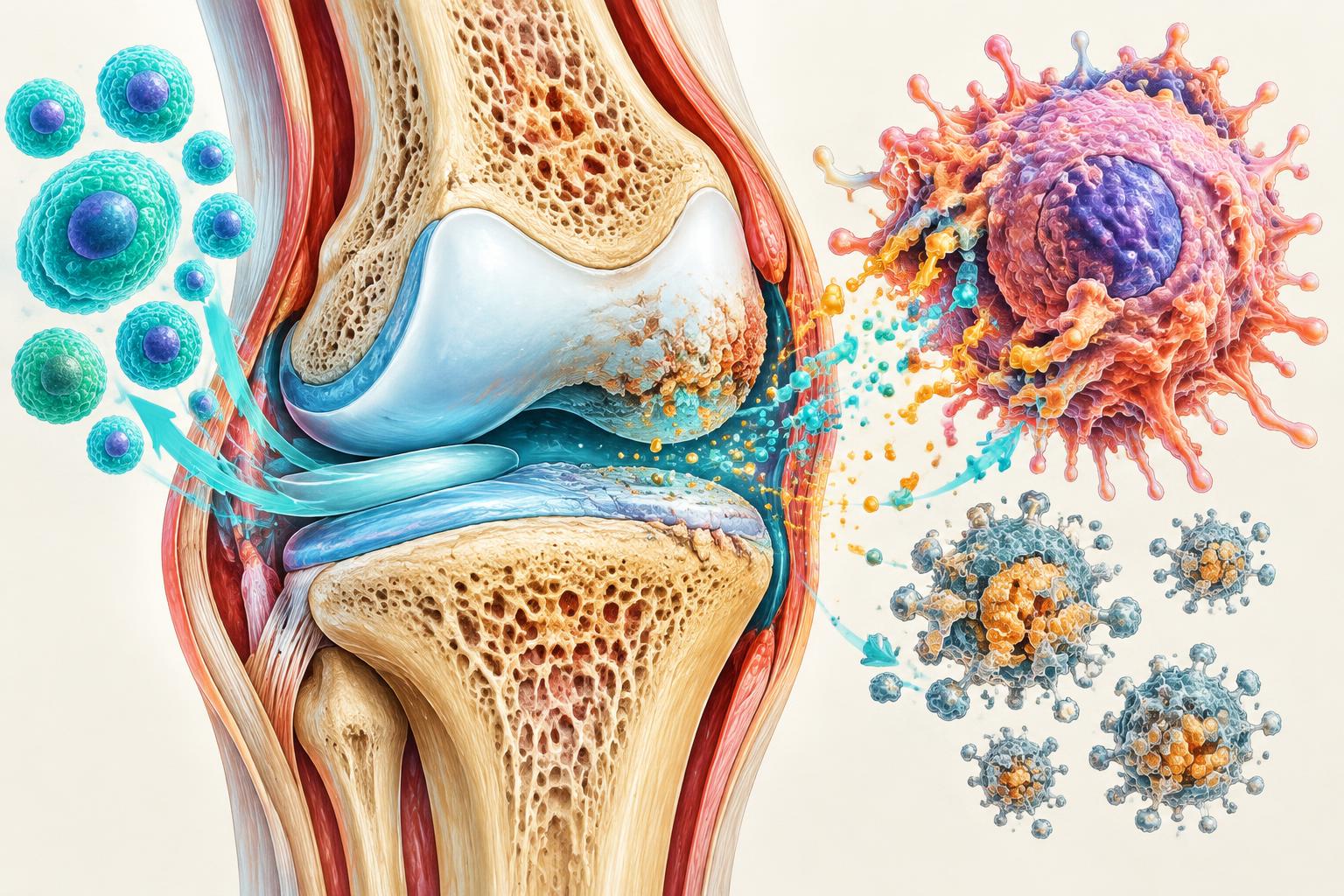
Allocetra is not a stem cell therapy in the traditional sense — it's an allogeneic, off-the-shelf cell therapy made from donor-derived early apoptotic cells, designed to "reprogram" macrophages, the immune cells that help drive chronic inflammation, away from a pro-inflammatory state and toward one associated with tissue repair and resolution. Enlivex has tested the same platform in sepsis and transplant-related complications; knee osteoarthritis is a newer, and so far its most clinically advanced, application. Because the FDA's RMAT pathway covers cell therapies, gene therapies, and other regenerative products broadly — not just stem cells — Allocetra's inflammation-resetting mechanism qualifies it for the same expedited track used by stem cell and gene therapy developers.
What the Trial Data Actually Showed
The RMAT designation rests on a multi-country, two-stage Phase I/II trial (ENX-CL-05-001). The first stage was a small, open-label, 12-patient safety run-in with no placebo comparison, which reported a 47% average reduction in patient-reported pain from baseline at six months (p=0.0001) — a promising but uncontrolled early signal. The stage that actually supports the RMAT filing is the second one: a double-blind, randomized, placebo-controlled Phase IIa cohort. Topline three-month results, reported in August 2025, showed a 24% reduction in pain and 26% improvement in function versus placebo across the full modified intent-to-treat population — and a markedly larger effect, a 72% pain reduction and 95% function improvement versus placebo, in a prespecified-by-age subgroup of patients with age-related primary osteoarthritis. Follow-up data reported in November 2025 found the benefit held up at six months in that same older-patient subgroup: a 27.8-point improvement on a composite pain-and-function scale versus 15.5 points for placebo (p=0.02), roughly 80% greater than the placebo response.
Those are genuinely encouraging numbers for a disease where most current injectable options — corticosteroids, hyaluronic acid, platelet-rich plasma — have, at best, modest and short-lived effects backed by mixed trial evidence. A therapy showing a near-doubling of placebo response that persists to six months, in a randomized design, is a meaningfully stronger evidence base than most of what circulates in the regenerative orthopedics space.
The Caveats That Matter
The headline numbers come from a subgroup — patients with age-related primary osteoarthritis — rather than the full randomized population, where the effect size was smaller (24-26% versus placebo rather than 72-95%). Enlivex has said the trial was designed in part to identify which patients respond best, which is a legitimate research strategy, but it also means the strongest results reported so far have not been independently confirmed as the trial's primary, prespecified outcome in a peer-reviewed publication — they come from company topline announcements. No p-values have been published for the overall population's 3-month results, and full safety data (adverse event rates and types, not just a qualitative "mild to moderate, transient" summary) have not yet been released in detail. Most importantly, RMAT designation is not an approval and guarantees nothing about the outcome of future trials — it simply gives the FDA's blessing to work more closely with the company and potentially use expedited pathways like rolling review down the line. The pivotal Phase IIb trial, intended to confirm these findings in 182 randomized patients across the U.S. and EU, only dosed its first American patient this year, with topline results not expected until the end of Q2 2027. Until that larger, confirmatory trial reads out, Allocetra remains an investigational product with no FDA-approved indication.
Part of a Broader 2026 Rebound
Allocetra's RMAT designation was one of four the FDA granted in July 2026 alone, alongside therapies for lymphoma, Parkinson's disease, and geographic atrophy — part of what industry analysts at GlobalData describe as a record year: 48 RMAT designations awarded in 2025, the most ever in a single year, after activity stayed comparatively modest through 2022 and then climbed sharply starting in 2023. Actual product approvals have followed a bumpier path — a record eight regenerative medicine approvals in 2024 was followed by just two in 2025, which GlobalData's analysts characterize as likely a temporary dip rather than a reversal, given that six more regenerative products were under FDA review for first U.S. approval as of mid-2026 and 43 were sitting in Phase III trials. Designation surges don't guarantee approval surges, but they are one of the better leading indicators the field has for where regulatory and investor attention is heading next.
Bottom Line
Allocetra's RMAT designation reflects real, randomized, placebo-controlled evidence of meaningful pain and function improvement in older adults with knee osteoarthritis — not just a promising concept or an uncontrolled case series. But the most dramatic numbers come from a subgroup analysis in an early-phase trial, not yet validated by the larger confirmatory study now getting underway, and the therapy remains years, not months, from a possible approval. For a joint condition with few good treatment options and a lot of unproven alternatives marketed directly to patients, that's a notable evidence base to watch — just not yet a reason to expect Allocetra at a clinic near you.
Key Questions Answered
- Is Allocetra a stem cell therapy or an FDA-approved treatment?
- Allocetra uses donor-derived early apoptotic cells to influence macrophage behavior, rather than traditional stem cells. It remains investigational with no FDA-approved indication; RMAT designation is not approval.
- What did the randomized trial report?
- Company topline data reported three-month pain and function benefits of 24% and 26% versus placebo overall, with larger 72% and 95% effects in an older-patient subgroup. At six months that subgroup improved 27.8 points versus 15.5 points for placebo on a composite scale (p=0.02).
- What evidence is still needed?
- The largest reported effects are subgroup findings from company announcements, without full published safety data or peer-reviewed confirmation. A 182-patient Phase IIb trial is intended to confirm the findings, with topline results expected at the end of Q2 2027.
Sources
- Enlivex Therapeutics. "Enlivex Receives FDA Regenerative Medicine Advanced Therapy (RMAT) Designation for Allocetra in Age-Related Knee Osteoarthritis." BioSpace/GlobeNewswire, July 13, 2026 — https://www.biospace.com/press-releases/enlivex-receives-fda-regenerative-medicine-advanced-therapy-rmat-designation-for-allocetra-in-age-related-knee-osteoarthritis
- Enlivex Therapeutics. "Enlivex Announces Positive Topline Data From Multi-Country, Randomized, Controlled Phase I/II Trial Evaluating Allocetra in Knee Osteoarthritis." SEC Form 6-K, Exhibit 99.1, August 18, 2025 — https://www.sec.gov/Archives/edgar/data/0001596812/000121390025077714/ea025358701ex99-1_enlivex.htm
- Enlivex Therapeutics. "Enlivex Announces Positive 6-Month Topline Data Demonstrating Durable and Persistent Improvement." Nasdaq press release, November 24, 2025 — https://www.nasdaq.com/press-release/enlivex-announces-positive-6-month-topline-data-demonstrating-durable-and-persistent
- Enlivex Therapeutics. "Enlivex Announces Positive Interim Data: Statistically Significant 47.0% Durable and Persistent Pain Reduction at Six Months in Patients With Moderate to Severe Knee Osteoarthritis." BioSpace/GlobeNewswire, March 2025 — https://www.biospace.com/press-releases/enlivex-announces-positive-interim-data-statistically-significant-47-0-durable-and-persistent-pain-reduction-at-six-months-in-patients-with-moderate-to-severe-knee-osteoarthritis
- U.S. Food and Drug Administration. "Regenerative Medicine Advanced Therapy Designation." FDA.gov — https://www.fda.gov/vaccines-blood-biologics/cellular-gene-therapy-products/regenerative-medicine-advanced-therapy-designation
- The Pharma Letter (citing GlobalData). "FDA-Awarded RMAT Designations Continue to Surge in 2025." July 8, 2026 — https://www.thepharmaletter.com/biotech-news/fda-awarded-rmat-designations-continue-to-surge-in-2025
- Pharmaceutical Technology (GlobalData Healthcare). "FDA Regenerative Medicine Approvals Show Growing Momentum." July 29, 2026 — https://www.pharmaceutical-technology.com/analyst-comment/fda-regenerative-medicine-approvals-show-growing-momentum/
Related Articles
- Research & Industry
J.P. Morgan Healthcare Conference 2027: What Cell and Gene Therapy Watchers Should Expect
Preview JPM Healthcare 2027: conference dates, cell and gene therapy deals, funding signals and why investor sentiment is not clinical evidence.
- Research & Industry
How to Check Whether a Stem Cell Clinic's Cited Research Actually Supports Its Claims
Evaluate a stem cell clinic’s research citations: peer review, matching treatment methods, human trials, comparison groups and funding disclosures.
- Research & Industry
Advanced Therapies Week 2027: What to Know About the Cell and Gene Therapy Industry's Biggest Partnering Event
Advanced Therapies Week returns to San Diego in January 2027, spotlighting manufacturing, partnering and commercialization rather than clinical evidence.