Types of Eye Disease: Which Ones Are Being Studied With Stem Cell Therapy?
What this article covers
- What This Article Covers
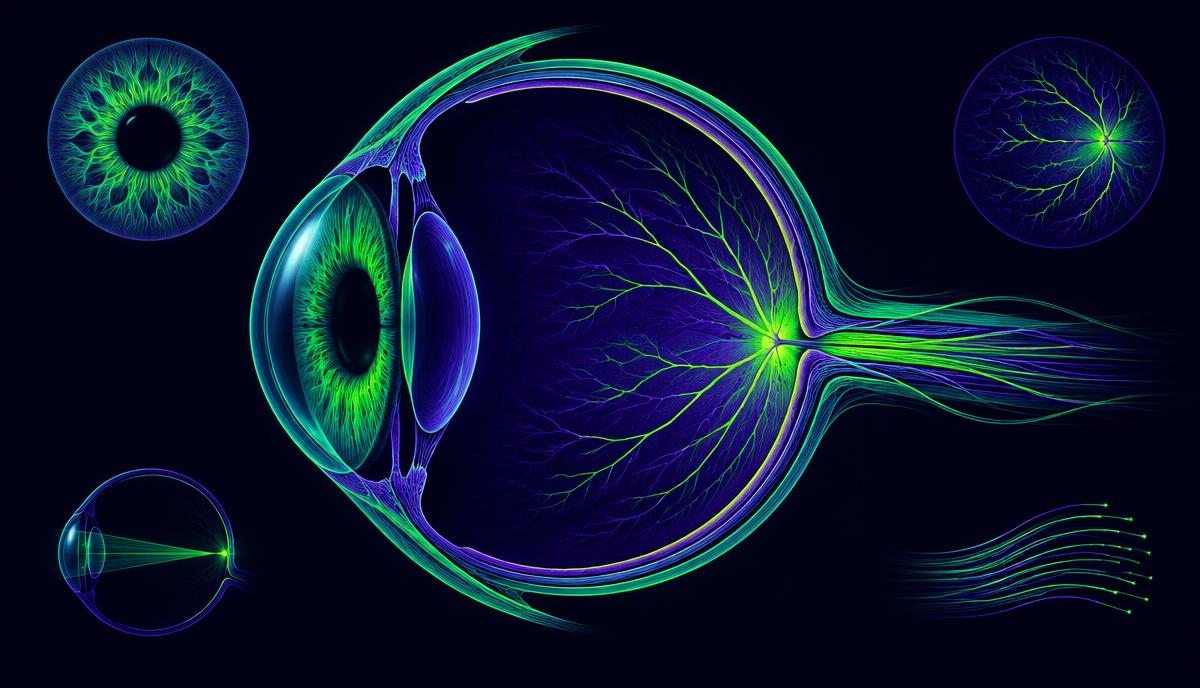
- “Eye disease” is not one condition, and “stem cell therapy for the eyes” is not one treatment. The retina, cornea, and optic nerve are different tissues with different repair biology, and that means the science is at wildly different stages depending on which structure is damaged and why.
- Retinal Degenerative Diseases
- This category has the most active, best-funded stem cell research in ophthalmology, largely because the retina's light-sensing and support cells are relatively well understood and can, in principle, be grown from stem cells in a lab.
- Corneal Diseases
- This is the one category in ophthalmology where a stem-cell-based procedure is already an established, real-world treatment rather than an experimental one.
- Diabetic Eye Disease
- Diabetic retinopathy damages the retina's blood vessels and, in advanced stages, its neurons — a combination of vascular and neurodegenerative injury that is harder to address with a single cell type. Preclinical and early research is underway using mesenchymal stem cells and other progenitor cells to try to repair damaged retinal blood vessels and protect remaining neurons, and some small early-phase trials exist.
- Glaucoma and Optic Nerve Damage
- Glaucoma causes progressive damage to retinal ganglion cells and the optic nerve — the “wiring” that carries visual signals to the brain. This is the hardest regenerative target in the eye, because it requires not just growing new ganglion cells but getting their long axons to correctly regrow the entire length of the optic nerve and reconnect to the brain, something no therapy has achieved in humans.
What This Article Covers
“Eye disease” is not one condition, and “stem cell therapy for the eyes” is not one treatment. The retina, cornea, and optic nerve are different tissues with different repair biology, and that means the science is at wildly different stages depending on which structure is damaged and why. This article maps the major categories of eye disease — retinal degenerations, corneal disease, diabetic eye disease, and glaucoma/optic neuropathy — and lays out, honestly, where stem cell and cell-therapy research actually stands for each one: what's established, what's showing real early promise in human trials, and what remains largely aspirational despite years of lab-level interest.
Retinal Degenerative Diseases
This category has the most active, best-funded stem cell research in ophthalmology, largely because the retina's light-sensing and support cells are relatively well understood and can, in principle, be grown from stem cells in a lab.
- Dry AMD / geographic atrophy (GA): The most advanced area for cell transplantation. GA involves progressive loss of the retinal pigment epithelium (RPE), the support layer beneath photoreceptors — and RPE is one of the easier retinal cell types to manufacture from stem cells. Multiple groups have now dosed real patients. In an early-phase trial of hiPSC-derived RPE cells, the first participants gained an average of 14.9 letters on a standard vision chart 4–6 months after treatment, with no serious adverse events reported across any dose group. In a separate, longer-running program using allogeneic stem-cell-derived RPE (OpRegen), a 12-patient cohort averaged a 7.6-letter gain at 12 months, with a quarter of patients gaining 15 or more letters, and structural benefits reported out to four years. These are still small, early-phase, industry-reported results that need confirmation in larger controlled trials — but they represent genuine, measured functional improvement in a disease that previously had no way to regenerate lost tissue at all.
- Wet (neovascular) AMD: By contrast, wet AMD is overwhelmingly treated with anti-VEGF injections, not cell therapy — the dominant unmet need is in the “dry” side of the disease. Some RPE-transplant programs are exploring combined approaches for advanced wet AMD with scarring, but this is far less developed than the GA work above.
- Retinitis pigmentosa (RP) and other inherited retinal dystrophies: Here, the emphasis has shifted toward photoreceptor replacement rather than RPE support. A Phase 1/2a trial of iPSC-derived photoreceptor cells received FDA clearance to begin, built on roughly 15 years of lab work. This is a genuinely important step — but as of now it is a safety trial with no published human efficacy results yet. Photoreceptor transplantation is meaningfully earlier-stage than RPE transplantation, and claims of restored sight in RP from stem cells should be treated as aspirational, not demonstrated.
Corneal Diseases
This is the one category in ophthalmology where a stem-cell-based procedure is already an established, real-world treatment rather than an experimental one.
- Limbal stem cell deficiency (LSCD): LSCD occurs when the stem cells at the edge of the cornea (the limbus) are destroyed by chemical burns, infection, autoimmune disease, or other injury, leaving the eye unable to maintain a healthy corneal surface. Limbal stem cell transplantation — taking stem cells from a patient's own healthy eye (or, less commonly, a donor) and transplanting or culturing them onto the damaged eye — has been studied for over two decades and is used clinically today. A systematic review of autologous techniques across 22 case series (1,023 eyes) found 69% anatomical success (a stable, healthy corneal surface) and 60% functional success (meaningful vision gain), with the best-performing techniques reaching 74–81% success rates. More recently, a cultivated autologous limbal epithelial cell trial (CALEC), run with NIH's National Eye Institute and Mass Eye and Ear, reported complete or partial corneal restoration in 93% of 14 treated eyes at 12 months (92% at 18 months), published in 2025 — in a condition previously considered permanent and untreatable by conventional means. This is a genuine regenerative medicine success story, grounded in real trial data rather than marketing claims.
- Other corneal conditions: Broader corneal endothelial disease and some forms of dry eye are being explored with cultivated cell or stem-cell-derived approaches, but LSCD remains the corneal category with by far the strongest evidence base.
Diabetic Eye Disease
Diabetic retinopathy damages the retina's blood vessels and, in advanced stages, its neurons — a combination of vascular and neurodegenerative injury that is harder to address with a single cell type. Preclinical and early research is underway using mesenchymal stem cells and other progenitor cells to try to repair damaged retinal blood vessels and protect remaining neurons, and some small early-phase trials exist. However, there is no stem-cell-derived treatment for diabetic retinopathy in late-stage human trials or clinical use; current standard care remains anti-VEGF injections, laser treatment, and glycemic control. This category should be understood as scientifically promising in the lab but still preclinical-to-early-clinical in humans.
Glaucoma and Optic Nerve Damage
Glaucoma causes progressive damage to retinal ganglion cells and the optic nerve — the “wiring” that carries visual signals to the brain. This is the hardest regenerative target in the eye, because it requires not just growing new ganglion cells but getting their long axons to correctly regrow the entire length of the optic nerve and reconnect to the brain, something no therapy has achieved in humans. Laboratories have made progress in coaxing stem cells into ganglion-cell-like cells and in early animal transplantation studies, but as glaucoma research organizations themselves state plainly, stem cell therapies “are not yet proven to be safe and effective” for glaucoma, and there is no FDA-approved cell-based treatment. The only approved treatments remain pressure-lowering therapies (drops, laser, surgery), which slow damage but do not regenerate nerve tissue. Clinics offering stem cell injections for glaucoma outside of registered trials are operating well ahead of the evidence, and documented cases of serious vision loss have followed such unproven procedures.
Bottom Line
Stem cell science in ophthalmology is real, but it is not evenly real across eye disease. Limbal stem cell transplantation for corneal blindness is a genuine, established success story with decades of outcome data behind it. Geographic atrophy is the most exciting active frontier, with multiple independent research programs now showing measurable vision gains in early human trials. Inherited retinal dystrophies like retinitis pigmentosa are moving into human testing but have not yet shown efficacy. Diabetic retinopathy remains largely in the lab. And glaucoma and other optic neuropathies — despite enormous research interest — have essentially no proven regenerative treatment today, and patients should be especially wary of clinics claiming otherwise.
Sources
- Autologous Transplantation of Induced Pluripotent Stem Cell-Derived Retinal Pigment Epithelium for Geographic Atrophy, ClinicalTrials.gov — https://clinicaltrials.gov/study/NCT04339764
- Eyestem releases positive results from phase 1 trial in patients with geographic atrophy, Ophthalmology Times, 2025 — https://www.ophthalmologytimes.com/view/eyestem-releases-positive-results-from-phase-1-trial-in-patients-with-geographic-atrophy
- ARVO 2023: RG6501/OpRegen Phase 1/2a clinical results support the potential for cell therapy to curb disease progression in geographic atrophy, Ophthalmology Times, 2023 — https://www.ophthalmologytimes.com/view/arvo-2023-rg6501-opregen-phase-1-2a-clinical-results-support-the-potential-for-cell-therapy-to-curb-disease-progression-in-geographic-atrophy
- Taking Steps to Restore Vision: Launching a Stem Cell Clinical Trial for Retinitis Pigmentosa, University of Wisconsin Department of Ophthalmology and Visual Sciences, 2024 — https://www.ophth.wisc.edu/blog/2024/11/20/taking-steps-to-restore-vision-launching-a-stem-cell-clinical-trial-for-retinitis-pigmentosa
- Basu S, et al., Autologous limbal stem cell transplantation: a systematic review of clinical outcomes with different surgical techniques, British Journal of Ophthalmology, 2020 — https://bjo.bmj.com/content/104/2/247
- Novel stem cell therapy repairs irreversible corneal damage in clinical trial, National Eye Institute (NIH), 2025 — https://www.nei.nih.gov/about/news-and-events/news/novel-stem-cell-therapy-repairs-irreversible-corneal-damage-clinical-trial
- Stem Cell Therapy for Glaucoma – Are We There Yet?, Glaucoma Research Foundation — https://glaucoma.org/?p=6094
- Adult Stem Cell Therapeutics in Diabetic Retinopathy, PMC/National Library of Medicine — https://www.ncbi.nlm.nih.gov/pmc/articles/PMC6801872/
Related Articles
- Fundamentals
Protecting Cardiovascular Health As You Age: What the Evidence Actually Shows
What large trials show about protecting your heart as you age — and an honest look at where experimental stem cell therapies for cardiovascular disease stand.
- Fundamentals
What Is Alzheimer's Disease?
Alzheimer's causes, stages and the first FDA-approved drugs targeting the disease process — plus where stem cell research actually stands today.
- Fundamentals
Mesenchymal Stem Cells vs. Mesenchymal Stromal Cells: Why the Name Is Still Debated
ISCT has repeatedly recommended "mesenchymal stromal cells" over "stem cells." Learn why the MSC naming debate exists and what it means for evaluating claims.