What Are Organoids? How Scientists Grow Miniature Organs From Stem Cells
What this article covers
- What This Article Covers
- Organoids are one of stem cell biology's quieter revolutions — three-dimensional, lab-grown structures that mimic the architecture and some of the function of real human organs, all built from stem cells in a dish. They don't treat patients directly, but they've become one of the most important research tools in regenerative medicine, letting scientists study disease, test drugs, and in some cases build personalized models of an individual patient's tumor.
- What Exactly Is an Organoid?
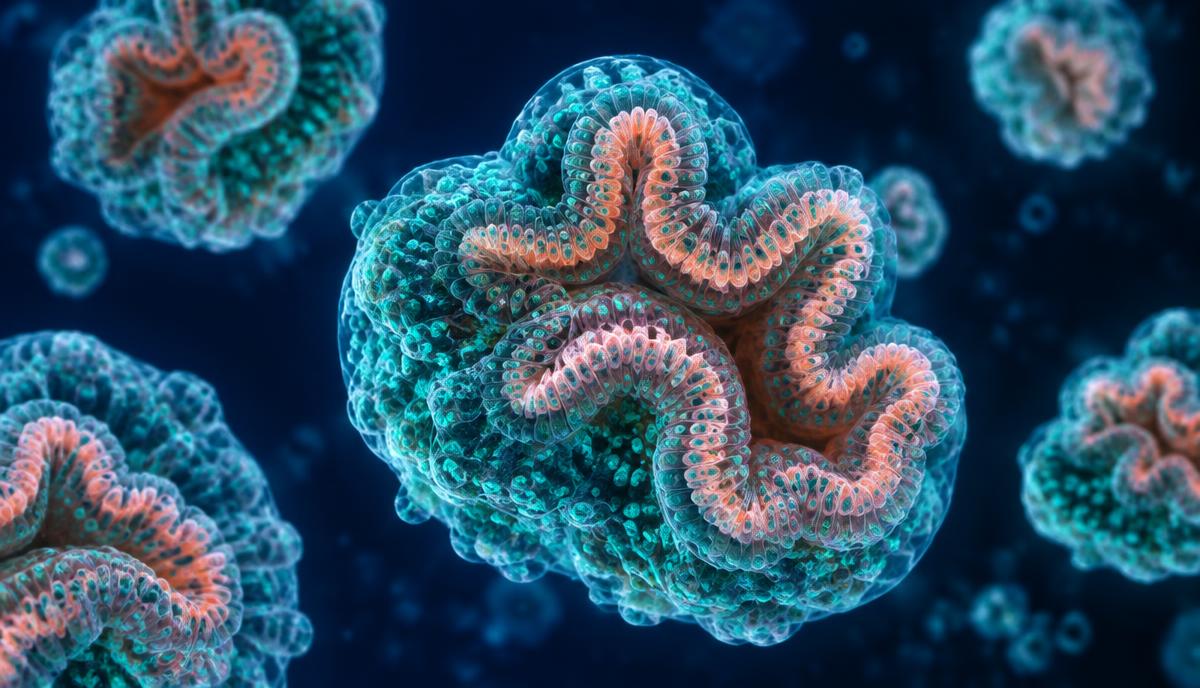
- An organoid is a simplified, miniature version of an organ grown from stem cells that self-organizes into a three-dimensional structure resembling the real tissue's architecture. Unlike a flat sheet of cells growing on a plastic dish — the traditional way cells have been cultured in labs for decades — an organoid arranges itself into the layers, folds, and specialized cell types found in actual organs, giving researchers a dramatically more realistic model to study than conventional cell culture.
- How Are Organoids Actually Grown?
- The foundation of any organoid is a stem cell's two defining abilities: to renew itself indefinitely and to differentiate into the specialized cell types found in a given organ. Researchers start with either adult (tissue-specific) stem cells taken from a biopsy, or pluripotent stem cells — embryonic stem cells or induced pluripotent stem cells (iPSCs) — and place them in a 3D gel scaffold along with a precise cocktail of growth factors that mimics the signals those cells would receive inside the body.
- What Are Organoids Actually Used For?
- Organoids are a research and diagnostic tool, not a treatment, and it's worth being clear about that distinction upfront.
- Where Organoids Fit Alongside Stem Cell Therapy
- It's easy to conflate organoids with stem cell therapy, but they serve different purposes. Stem cell therapy involves introducing cells into a patient's body to repair or replace damaged tissue.
What This Article Covers
Organoids are one of stem cell biology's quieter revolutions — three-dimensional, lab-grown structures that mimic the architecture and some of the function of real human organs, all built from stem cells in a dish. They don't treat patients directly, but they've become one of the most important research tools in regenerative medicine, letting scientists study disease, test drugs, and in some cases build personalized models of an individual patient's tumor. This article explains what organoids actually are, how they're made, what they're used for, and where their real limitations lie.
What Exactly Is an Organoid?
An organoid is a simplified, miniature version of an organ grown from stem cells that self-organizes into a three-dimensional structure resembling the real tissue's architecture. Unlike a flat sheet of cells growing on a plastic dish — the traditional way cells have been cultured in labs for decades — an organoid arranges itself into the layers, folds, and specialized cell types found in actual organs, giving researchers a dramatically more realistic model to study than conventional cell culture. Organoids have now been grown to resemble intestine, stomach, liver, kidney, brain, lung, and several other tissues, along with organoid models built directly from tumor tissue.
How Are Organoids Actually Grown?
The foundation of any organoid is a stem cell's two defining abilities: to renew itself indefinitely and to differentiate into the specialized cell types found in a given organ. Researchers start with either adult (tissue-specific) stem cells taken from a biopsy, or pluripotent stem cells — embryonic stem cells or induced pluripotent stem cells (iPSCs) — and place them in a 3D gel scaffold along with a precise cocktail of growth factors that mimics the signals those cells would receive inside the body. Over days to weeks, the cells self-organize, proliferate, and specialize, forming a structure that behaves, to a meaningful degree, like the tissue it's modeling.
The field traces much of its modern foundation to a landmark 2009 study from Hans Clevers' lab at the Hubrecht Institute, in which researcher Toshiro Sato and colleagues showed that a single Lgr5-positive intestinal stem cell could, on its own, build a self-organizing crypt-villus structure in a dish — without needing surrounding support cells. That finding, published in Nature, helped launch the modern organoid field and showed that stem cells carry much of the "instructions" needed to build tissue architecture on their own, given the right environment.
What Are Organoids Actually Used For?
Organoids are a research and diagnostic tool, not a treatment, and it's worth being clear about that distinction upfront. Their main uses include:
- Disease modeling — growing organoids from patients with a genetic disease or from tissue affected by infection or cancer, to study how the disease actually develops at a cellular level
- Drug screening — testing how a tissue or tumor responds to a candidate drug before it ever reaches a patient, which can flag ineffective or toxic compounds earlier and cheaper than animal studies alone
- Personalized medicine research — building an organoid directly from an individual patient's tumor biopsy to test, in parallel, how that specific tumor responds to several different cancer drugs, with the goal of helping guide a patient's actual treatment choice
- Studying development and basic biology — observing how tissues self-organize and differentiate in ways that are difficult or impossible to study directly in a living human
On the cancer research side specifically, patient-derived tumor organoids have shown a meaningful ability to predict how an individual patient's cancer will respond to a given drug in retrospective studies — published research on metastatic colorectal and gastrointestinal cancers has reported that organoid drug-response testing can match a patient's actual clinical response with reasonably high accuracy, which is why several academic centers now maintain "living biobanks" of patient tumor organoids for exactly this kind of testing. That said, this remains primarily a research and early clinical-decision-support tool rather than a routine, FDA-cleared diagnostic available everywhere.
Where Organoids Fit Alongside Stem Cell Therapy
It's easy to conflate organoids with stem cell therapy, but they serve different purposes. Stem cell therapy involves introducing cells into a patient's body to repair or replace damaged tissue. Organoids, by contrast, generally stay in the lab — they're a window into how cells and tissues behave, used to generate knowledge and test ideas before anything is ever considered for use in a person. The two fields do intersect: organoid research helps scientists understand stem cell behavior more precisely, which in turn informs how actual cell therapies are designed and tested for safety before human trials begin.
Real Limitations Worth Knowing
Organoids are powerful, but they are not miniature humans. Most organoids lack blood vessels, immune cells, and the full complexity of a real organ's supporting structures, which limits how long they can be kept alive and how fully they can mimic a real organ's function. Brain organoids, for instance, can model aspects of neural development and some disease processes, but researchers are careful to note they don't replicate full brain function or consciousness in any meaningful sense. Results from organoid drug testing also don't always translate perfectly to how a living patient will respond, since a dish-grown structure still lacks a functioning immune system, blood supply, and the broader physiology that shapes how a real person's body processes a drug.
Bottom Line
Organoids are lab-grown, three-dimensional tissue models built from stem cells that have become one of the most valuable tools in modern biomedical research — letting scientists study disease mechanisms, screen drugs, and in some cancer research settings, test an individual patient's tumor against multiple treatments in parallel. They are not a treatment themselves and come with real biological limitations, but as a research platform that reduces reliance on animal models and generates more human-relevant data earlier in drug development, they represent genuine, evidence-backed progress — and a technology likely to keep expanding its role in how future stem cell and cancer therapies get developed and tested.
Sources
- What Are Organoids, Monash University Discovery Institute — https://www.monash.edu/discovery-institute/research/organoid-program/what-are-organoids
- Single Lgr5 stem cells build crypt-villus structures in vitro without a mesenchymal niche, Sato T, et al., Nature, 2009 — https://www.nature.com/articles/nature07935
- Patient-derived organoids as a platform for drug screening in metastatic colorectal cancer, PMC — https://www.ncbi.nlm.nih.gov/pmc/articles/PMC10239948/
- Organoids: Miniature Organs Transforming Biomedical Research, Nanowerk — https://www.nanowerk.com/biotechnology-glossary/organoid.php
Related Articles
- Fundamentals
Myth: Stem Cell Therapy Works Immediately — and the Results Last Forever
Stem cell treatment rarely acts instantly, and long-term durability is often unknown. Compare common marketing claims with trial follow-up and biology.
- Fundamentals
Types of Liver Disease: Which Ones Are Being Studied With Stem Cell Therapy?
Stem cell research for cirrhosis, liver failure, autoimmune and inherited liver diseases—and how liver cancer cell therapy differs.
- Fundamentals
Protecting Bone Health As You Age: What the Evidence Actually Shows
Protecting bone health with resistance training, calcium, vitamin D and fall prevention; where experimental stem cell research fits.