What Is Stem Cell Self-Renewal, and Why Does It Matter?
What this article covers
- What This Article Covers
- Every explainer of stem cells mentions that these cells are special because they can "become other cell types" — but that's only half the story, and arguably the less important half. The trait that actually makes a stem cell a stem cell, before it ever differentiates into anything, is self-renewal: the capacity to divide and produce more stem cells, indefinitely, without running out or drifting into a more specialized identity.
- The Two Jobs Every Stem Cell Has
- Stem cell biologists generally define a stem cell by two properties working together: potency (the range of cell types it can become) and self-renewal (the ability to make more of itself). Potency gets most of the public attention because it's the property behind the medical payoff — a pluripotent cell becoming heart tissue or a hematopoietic stem cell becoming blood.
- Symmetric vs. Asymmetric Division
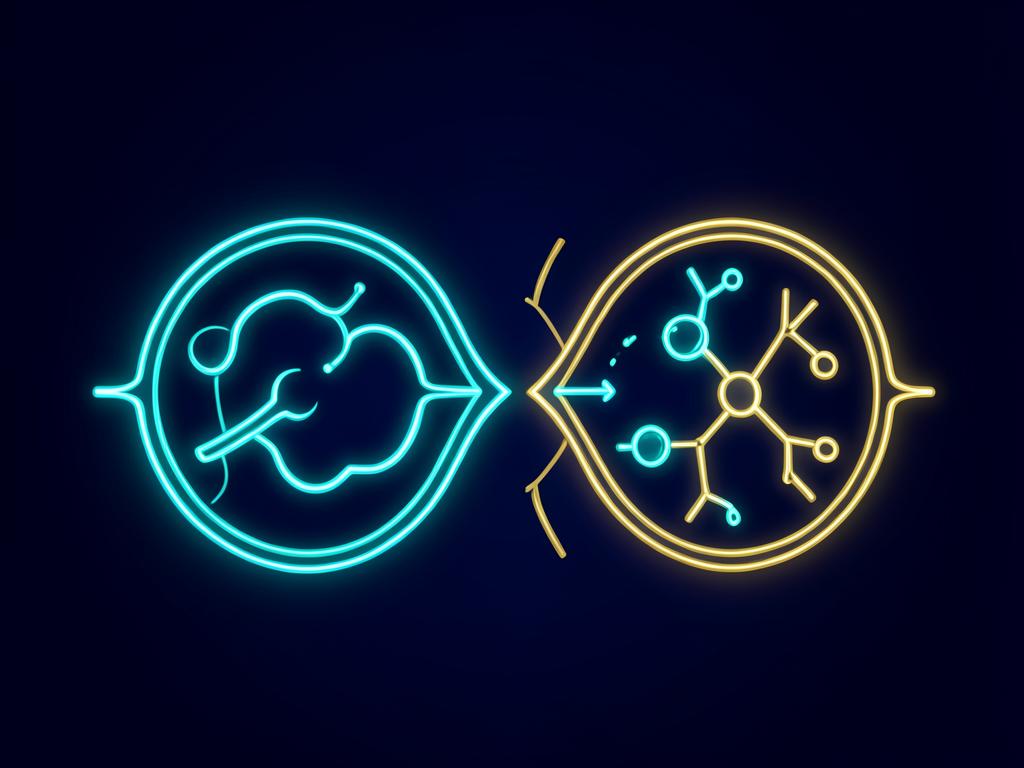
- When a stem cell divides, there are three possible outcomes for the two resulting daughter cells, as described by the NIH: both daughters can remain stem cells (symmetric self-renewing division), one can remain a stem cell while the other differentiates (asymmetric division), or both can go on to differentiate (symmetric differentiating division). Asymmetric division is the more elegant of the three — a single stem cell effectively hedges its bets, replacing itself while also generating a cell committed to a specialized job.
- What Controls the Decision to Self-Renew
- The decision isn't made by the dividing cell in isolation. The same Cell Regeneration review describes how a stem cell's physical neighborhood — its niche — supplies "extrinsic" signals that help orient division and reinforce stemness in the daughter cell that stays close to it, while the daughter that ends up farther away receives less of that signal and differentiates instead.
- Why This Matters for Manufacturing Cell Therapies
- This isn't just an academic distinction — it's a practical bottleneck in regenerative medicine. Hematopoietic stem cells (HSCs), the blood-forming stem cells used in bone marrow and cord blood transplants, normally sit largely quiescent in the bone marrow niche, and a 2023 review in Experimental Hematology notes that an adult body has only on the order of 100,000 active HSCs generating roughly 90% of the body's blood cells — a small, precious population.
What This Article Covers
Every explainer of stem cells mentions that these cells are special because they can "become other cell types" — but that's only half the story, and arguably the less important half. The trait that actually makes a stem cell a stem cell, before it ever differentiates into anything, is self-renewal: the capacity to divide and produce more stem cells, indefinitely, without running out or drifting into a more specialized identity. This article looks at what self-renewal actually is at the cellular level, how a dividing stem cell "decides" whether its daughter cells stay stem cells or start maturing, how that decision is regulated, and why getting it right — or wrong — has direct consequences for both manufacturing cell therapies and understanding how cancer grows.
The Two Jobs Every Stem Cell Has
Stem cell biologists generally define a stem cell by two properties working together: potency (the range of cell types it can become) and self-renewal (the ability to make more of itself). Potency gets most of the public attention because it's the property behind the medical payoff — a pluripotent cell becoming heart tissue or a hematopoietic stem cell becoming blood. But self-renewal is the property that makes any of that sustainable. According to the National Institutes of Health's STEM Cell Information resource, stem cells are distinguished from other cells by their ability to divide and renew themselves for long periods, in contrast to differentiated cells such as muscle, blood, or nerve cells, which generally cannot. Without self-renewal, a stem cell population would simply be used up the first time the body called on it — one wave of repair or blood production, then nothing left.
Symmetric vs. Asymmetric Division
When a stem cell divides, there are three possible outcomes for the two resulting daughter cells, as described by the NIH: both daughters can remain stem cells (symmetric self-renewing division), one can remain a stem cell while the other differentiates (asymmetric division), or both can go on to differentiate (symmetric differentiating division). Asymmetric division is the more elegant of the three — a single stem cell effectively hedges its bets, replacing itself while also generating a cell committed to a specialized job. Research on the underlying mechanics, summarized in a 2024 review in Cell Regeneration, shows that this unequal outcome isn't random. During division, the parent cell can unequally segregate specific proteins, and even organelles like mitochondria, between the two daughter cells — the daughter destined to remain a stem cell tends to inherit fewer "aged" mitochondria, while the differentiating daughter inherits more. Cell-intrinsic signaling proteins (in classic developmental biology models, factors such as aPKC and PAR6 versus Miranda and Prospero) segregate to opposite ends of the dividing cell and push each daughter toward a different fate.
What Controls the Decision to Self-Renew
The decision isn't made by the dividing cell in isolation. The same Cell Regeneration review describes how a stem cell's physical neighborhood — its niche — supplies "extrinsic" signals that help orient division and reinforce stemness in the daughter cell that stays close to it, while the daughter that ends up farther away receives less of that signal and differentiates instead. Wnt and Notch signaling are among the pathways repeatedly implicated in these niche-driven self-renewal decisions across many stem cell systems. Notably, the NIH itself is candid that this is an active area of research rather than settled science, stating plainly that what controls the balance between symmetric and asymmetric divisions — and keeps stem cell numbers appropriate for a given tissue — "is not yet well known." Self-renewal, in other words, is not a switch that's simply "on," but a continuously negotiated balance between a cell's internal machinery and signals from its surroundings.
Why This Matters for Manufacturing Cell Therapies
This isn't just an academic distinction — it's a practical bottleneck in regenerative medicine. Hematopoietic stem cells (HSCs), the blood-forming stem cells used in bone marrow and cord blood transplants, normally sit largely quiescent in the bone marrow niche, and a 2023 review in Experimental Hematology notes that an adult body has only on the order of 100,000 active HSCs generating roughly 90% of the body's blood cells — a small, precious population. Take those cells out of the marrow and try to grow more in a lab dish, and self-renewal capacity tends to erode: cultured HSCs can lose their "stemness" before they've multiplied enough to be clinically useful. Researchers have developed strategies aimed at preserving self-renewal during expansion — small molecules such as UM171 and nicotinamide, serum-free culture systems, and hypoxic, low-cytokine conditions meant to mimic the marrow niche. These efforts helped produce the first FDA-approved ex vivo-expanded HSC product, showing that manufacturing around self-renewal biology can work at clinical scale. A separate 2024 discussion in Cell and Gene Therapy Insights frames replicative senescence — the gradual loss of a cell's ability to keep dividing — as a core barrier to expansion, citing telomerase activation and modifying the aging cellular environment as ways to push past it.
The Cancer Connection
Self-renewal's importance cuts both ways. The same programs that let a healthy stem cell replenish a tissue, when they misfire, can let an abnormal cell replenish a tumor. The 2024 Cell Regeneration review notes that a shift from asymmetric toward more symmetric self-renewing division — so a cell more often produces two stem-like daughters instead of one — increases the proliferation of stem-like cells and has been documented in leukemia, where a mutation involving the NUP98-HOXA9 gene fusion drives this shift. This is part of why "cancer stem cells" are described the way they are: a subpopulation within a tumor capable of the same indefinite self-renewal that makes normal stem cells useful, except now feeding an uncontrolled population rather than a regulated tissue. The same review notes that when cancer stem cells continue dividing asymmetrically, the resulting cellular diversity within a tumor can itself contribute to treatment resistance, since different descendant cells may respond differently to therapy. Understanding self-renewal regulation, then, isn't only about building better cell therapies — it's also part of the broader effort to understand why some tumors are so difficult to eliminate completely.
Bottom Line
Self-renewal is the quieter of the two properties that define a stem cell, but it's arguably the more fundamental one: it's what allows a stem cell population to persist and keep doing its job over time, rather than being a one-time resource. How a dividing stem cell balances symmetric and asymmetric outcomes — shaped by internal signaling machinery and by cues from its niche — determines whether a tissue's stem cell pool stays stable, shrinks, or (in the case of cancer) grows out of control. That same biology is now a direct engineering target in cell therapy manufacturing, where preserving self-renewal during lab expansion is often the difference between a product that works and one that doesn't. Much about how self-renewal is precisely controlled remains an open question in stem cell biology, which is exactly why it continues to be one of the most active areas of research in the field.
Sources
- Stem Cell Basics — STEM Cell Information, National Institutes of Health, accessed 2026 — https://stemcells.nih.gov/info/basics/stc-basics
- Asymmetric division of stem cells and its cancer relevance — Cell Regeneration, 2024 — https://cellregeneration.springeropen.com/articles/10.1186/s13619-024-00188-9
- Ex vivo hematopoietic stem cell expansion technologies: recent progress, applications, and open questions — Experimental Hematology / PMC, 2023 — https://pmc.ncbi.nlm.nih.gov/articles/PMC11511678/
- Overcoming the senescence barrier in stem cell expansion — Cell and Gene Therapy Insights, 2024 — https://www.insights.bio/cell-and-gene-therapy-insights/journal/article/3361/Overcoming-the-senescence-barrier-in-stem-cell-expansion
- Mechanisms of stem cell self-renewal — Annual Review of Cell and Developmental Biology (PubMed), 2009 — https://pubmed.ncbi.nlm.nih.gov/19575646/
- Wnt and Notch signaling govern self-renewal and differentiation in a subset of human glioblastoma stem cells — Genes & Development / PMC, 2019 — https://pmc.ncbi.nlm.nih.gov/articles/PMC6499328/
Related Articles
- Fundamentals
What Is HLA Matching, and Why Does It Matter for Stem Cell Transplants?
HLA matching decides who can receive a donor stem cell transplant and how risky it is. Here's what HLA is, how matches are graded, and why MSC therapies skip it.
- Fundamentals
What Does "Minimal Manipulation" Mean, and Why Is It the Line Between an FDA-Approved and Unapproved Stem Cell Product?
Two phrases in 21 CFR 1271.10 — minimal manipulation and homologous use — decide whether a stem cell product needs full FDA approval. Here's how that test works, and how patients can apply it.
- Fundamentals
What Is Cellular Senescence? A Plain-Language Guide to Why Cells "Retire"
Senescent "zombie cells" stop dividing but refuse to die — a mechanism that protects you from cancer early in life and drives chronic inflammation later. Here's what the science, and senolytics research, actually shows.