What Is a Stem Cell Niche, and Why Does Location Matter for How Stem Cells Behave?
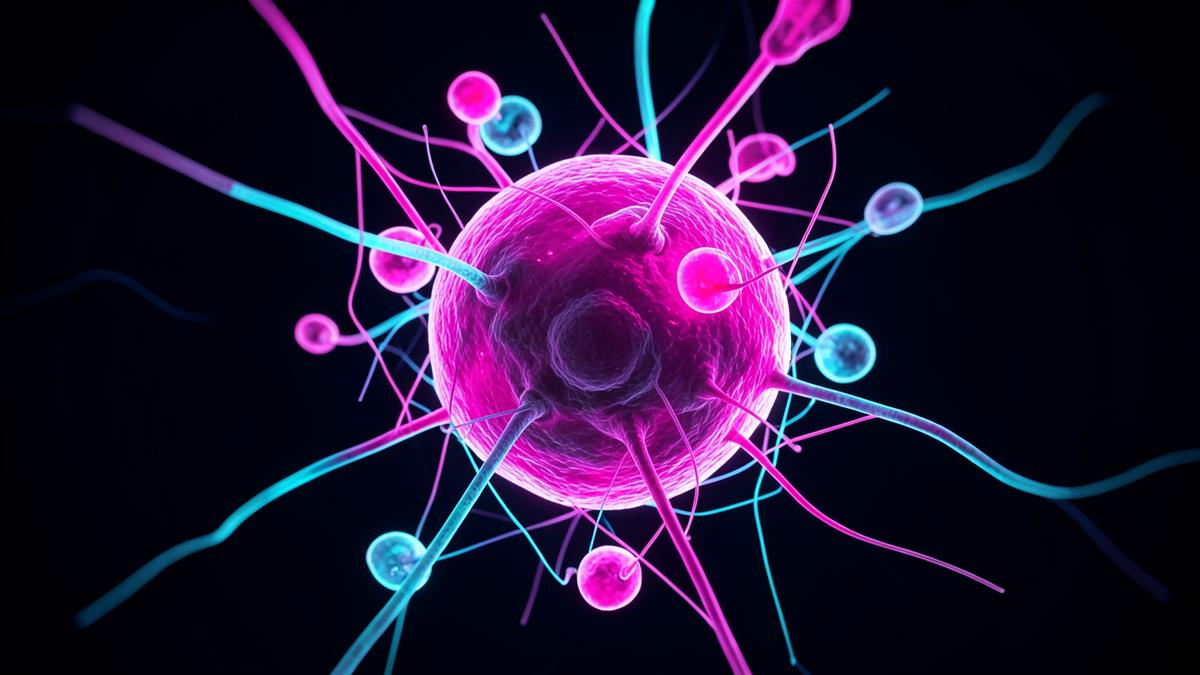
What this article covers
- What This Article Covers
- Stem cells are often described as blank slates with the power to become almost any cell type, but that potential is only ever half the story — the other half is where the cell sits. This article explains what scientists mean by a "stem cell niche," walks through some of the best-understood real-world examples in the human body, and lays out why this concept isn't just academic: it helps explain one of the central practical challenges in stem cell-based medicine today.
- What Is a Stem Cell Niche?
- A stem cell niche is the local microenvironment that surrounds and communicates with a stem cell, regulating whether it stays quiescent (dormant), self-renews (makes more stem cells), or differentiates into a specialized cell type. The idea traces back to a hypothesis proposed by Ray Schofield in the late 1970s, who suggested that stem cells require a specific supportive environment to maintain their identity — remove them from it, and they lose their special properties.
- Real-World Examples: Bone Marrow, Intestine, and Skin
- Three of the best-studied niches illustrate how differently this can play out depending on the tissue. In bone marrow, hematopoietic stem cells (HSCs) — which give rise to all blood and immune cells — reside in a "perivascular" niche near blood vessel walls, supported by mesenchymal stromal cells, endothelial cells, and osteoblasts.
- How Location Controls Stem Cell Fate
- What ties these examples together is a core principle: a stem cell's behavior is not fixed by its genome alone — it is instructed, moment to moment, by signals from its surroundings. Pathways like Wnt, Notch, and BMP act as molecular switches, and depending on their local concentration and combination, they can push a stem cell toward staying dormant, dividing symmetrically to make more stem cells, or committing to a specialized fate.
- Why This Matters for Stem Cell Therapy
- This is where the niche concept moves from biology-class detail to something with real clinical stakes. When stem cells are transplanted, infused, or injected into a location that isn't their natural niche — a common scenario in many current stem cell interventions — they may lack the specific combination of positional cues, neighboring cell types, and signaling molecules they need to survive, integrate, and behave as intended.
What This Article Covers
Stem cells are often described as blank slates with the power to become almost any cell type, but that potential is only ever half the story — the other half is where the cell sits. This article explains what scientists mean by a "stem cell niche," walks through some of the best-understood real-world examples in the human body, and lays out why this concept isn't just academic: it helps explain one of the central practical challenges in stem cell-based medicine today.
What Is a Stem Cell Niche?
A stem cell niche is the local microenvironment that surrounds and communicates with a stem cell, regulating whether it stays quiescent (dormant), self-renews (makes more stem cells), or differentiates into a specialized cell type. The idea traces back to a hypothesis proposed by Ray Schofield in the late 1970s, who suggested that stem cells require a specific supportive environment to maintain their identity — remove them from it, and they lose their special properties. As later research clarified, the niche functions less like a passive backdrop and more like an apparatus for communicating information about tissue state back to stem cells, according to a widely cited review in BMC Biology. In practice, a niche is built from several overlapping components: neighboring "helper" cells, direct physical contact between cells, secreted signaling molecules and growth factors, the physical scaffolding of the extracellular matrix, and local blood supply and oxygen levels.
Real-World Examples: Bone Marrow, Intestine, and Skin
Three of the best-studied niches illustrate how differently this can play out depending on the tissue. In bone marrow, hematopoietic stem cells (HSCs) — which give rise to all blood and immune cells — reside in a "perivascular" niche near blood vessel walls, supported by mesenchymal stromal cells, endothelial cells, and osteoblasts. These cells produce signals such as CXCL12 and stem cell factor that keep HSCs quiescent and preserve their long-term self-renewal capacity, as detailed in a widely cited 2014 Nature review. Further work published in Nature Reviews Immunology has mapped how this perivascular architecture organizes different HSC subpopulations. In the intestine, stem cells living at the base of finger-like structures called crypts depend on direct contact with neighboring Paneth cells, which supply Wnt and Notch signals; move a crypt stem cell away from that contact and it typically loses its stem identity. And in the skin, hair follicle stem cells are kept dormant by signals from surrounding dermal cells, only activating in cycles when local signaling shifts — a niche relationship documented across multiple reviews of skin and hair follicle biology.
How Location Controls Stem Cell Fate
What ties these examples together is a core principle: a stem cell's behavior is not fixed by its genome alone — it is instructed, moment to moment, by signals from its surroundings. Pathways like Wnt, Notch, and BMP act as molecular switches, and depending on their local concentration and combination, they can push a stem cell toward staying dormant, dividing symmetrically to make more stem cells, or committing to a specialized fate. The NIH's own stem cell primer notes that signals for cell differentiation include factors secreted by other cells, physical contact with neighboring cells, and certain molecules in the microenvironment — underscoring that identity, in this sense, is relational rather than purely intrinsic. This is also why niches function as feedback systems: they can sense tissue damage or depletion and adjust how hard stem cells work in response, rather than running on a fixed, pre-programmed schedule.
Why This Matters for Stem Cell Therapy
This is where the niche concept moves from biology-class detail to something with real clinical stakes. When stem cells are transplanted, infused, or injected into a location that isn't their natural niche — a common scenario in many current stem cell interventions — they may lack the specific combination of positional cues, neighboring cell types, and signaling molecules they need to survive, integrate, and behave as intended. This helps explain a real and well-documented limitation in the field: in bone marrow transplantation, "poor graft function" is a recognized complication linked to disruption of the marrow microenvironment itself, not just problems with the donor cells. More broadly, researchers studying regenerative medicine have pointed out that simply having potent stem cells isn't enough — without an intact or adequately reconstructed niche to receive them, transplanted cells can fail to engraft, differentiate inappropriately, or die off. This is a meaningful reason why outcomes from stem cell-based treatments can vary, and why enthusiasm should be paired with realistic expectations about current limitations.
Engineering Niches: A Promising but Early Frontier
The encouraging news is that understanding the niche has opened an entirely new engineering challenge — and researchers are making genuine headway. Bioengineers are now designing synthetic scaffolds and hydrogels with tunable stiffness (cells cultured on soft substrates tend toward neural fates, while stiffer ones favor bone, for instance), nanoscale surface patterns that influence how cells attach and cluster, and precisely dosed growth-factor coatings — all attempts to recreate key niche cues outside the body, as described in a 2018 review in the Journal of the Royal Society Interface. Organoid systems, which grow miniature, self-organizing tissue structures in culture, are another exciting avenue, allowing scientists to study niche-like interactions between stem cells and their neighbors in a dish. These approaches hold real promise for improving how stem cells are expanded, matured, and eventually delivered in future therapies. That said, the same review is candid about the scale of the challenge: natural niches involve numerous interacting cell types, immune factors, matrix architecture, oxygen gradients, and metabolic signals operating simultaneously — a level of complexity that engineered systems have only begun to approximate. This is very much an active area of research rather than a solved problem.
Bottom Line
A stem cell's fate is never determined in isolation — it's negotiated with its surroundings, through direct contact, chemical signals, and physical structure, in a microenvironment scientists call the niche. Understanding this concept explains foundational biology (why a bone marrow stem cell and a skin stem cell behave so differently) and also sheds light on a genuine, ongoing challenge in regenerative medicine: stem cells removed from their natural context don't always behave the way we'd hope. Engineering artificial niches is a genuinely promising area of research, but recreating the full sophistication of a natural microenvironment remains, for now, one of the field's most significant open problems.
Key Questions Answered
- What exactly is a stem cell niche?
- A stem cell niche is the specific physical and chemical microenvironment surrounding a stem cell inside the body — the neighboring cells, signaling molecules, physical structures, and blood vessels that together tell the stem cell whether to stay dormant, divide, or turn into a specialized cell type. The concept was first proposed by researcher Ray Schofield in the late 1970s and has since become a central idea in stem cell biology.
- Why can't scientists just grow stem cells anywhere and get the results they want?
- Because a stem cell's identity and behavior aren't determined by its genes alone — they're heavily influenced by external cues from its surroundings. Move a stem cell out of its native niche (for example, from bone marrow into a lab dish or a different part of the body) and it often loses access to the specific combination of signals it needs, which can cause it to behave unpredictably, differentiate prematurely, fail to survive, or simply not do what researchers expected.
- Is this why some stem cell treatments don't seem to work as well as hoped?
- It's considered one important contributing factor. When stem cells are transplanted or injected outside of a natural, intact niche, they may not receive the positional and molecular cues needed to properly engraft, survive, or function — a well-documented challenge in fields like bone marrow transplantation, where "poor graft function" is a recognized clinical problem tied to a disrupted marrow microenvironment.
- Can scientists build an artificial stem cell niche in the lab?
- Researchers are actively working on this using engineered biomaterials, tailored scaffold stiffness, growth-factor coatings, and organoid culture systems that try to mimic key features of natural niches. Early results are promising for certain applications, but recreating the full complexity of a real niche — with its many cell types, mechanical properties, oxygen levels, and signaling gradients all interacting at once — remains a significant scientific challenge.
Sources
- Stem Cell Basics — STEM Cell Information, National Institutes of Health — 2023 — https://stemcells.nih.gov/info/basics/stc-basics
- What does the concept of the stem cell niche really mean today? — BMC Biology — 2012 — https://pmc.ncbi.nlm.nih.gov/articles/PMC3298504/
- The bone marrow niche for haematopoietic stem cells — Nature — 2014 — https://www.nature.com/articles/nature12984
- Adult haematopoietic stem cell niches — Nature Reviews Immunology — 2017 — https://www.nature.com/articles/nri.2017.53
- Designing stem cell niches for differentiation and self-renewal — Journal of the Royal Society Interface — 2018 — https://pmc.ncbi.nlm.nih.gov/articles/PMC6127175/
- Clinical features, pathophysiology, and therapy of poor graft function post-allogeneic stem cell transplantation — Blood Advances — 2022 — https://pubmed.ncbi.nlm.nih.gov/34492685/
Related Articles
- Fundamentals
Embryonic Stem Cells vs. Adult Stem Cells: What's the Difference?
Compare embryonic and adult stem cells by origin, potency, ethical considerations and clinical maturity, including investigational retinal and islet therapies.
- Fundamentals
Myth: Testimonials and Before-and-After Photos Prove a Stem Cell Treatment Works
Patient stories can be sincere without proving efficacy. Learn how bias, placebo response and regression to the mean differ from controlled clinical evidence.
- Fundamentals
Types of Gastrointestinal Disease: Which Ones Are Being Studied With Stem Cell Therapy?
GI cell-therapy evidence varies sharply: Crohn’s fistula trials and early UC studies contrast with preclinical short bowel work and scarce IBS or celiac evidence.