CAR-T Therapy for Autoimmune Disease in Australia: What's Actually Happening
What this article covers
- The Australian Case: A Lupus Patient Back on the Field
- The patient is Lani Watson, a 32-year-old who was diagnosed with systemic lupus erythematosus (SLE) in July 2022. Before treatment, widespread joint pain was disrupting her work, her home life, and her ability to play the sport she loves.
- How CAR-T Works, and Why It's Being Tried in Lupus
- CAR (chimeric antigen receptor) T-cell therapy was developed for blood cancers like leukemia and lymphoma. It works by removing a patient's own T cells, genetically engineering them to recognize a specific target on the surface of other cells, and infusing them back into the body, where they hunt down and destroy cells carrying that target — typically the protein CD19, found on B cells.
- What's Real and What Isn't: Regulatory and Access Status in Australia
- This is the section that matters most for accuracy.
- The Real Risks Nobody Should Skip Over
- CAR-T is not a gentle intervention. Before receiving the engineered cells, patients typically undergo lymphodepleting chemotherapy (commonly fludarabine and cyclophosphamide) to make room for the new cells to expand.
- Bottom Line
- Australia's first CAR-T treatment for lupus is a real and legitimately exciting milestone: a patient reports being in drug-free remission and back to an active life after a therapy originally designed to fight blood cancer. It reflects a genuinely promising international research direction that could eventually reshape how severe, treatment-resistant autoimmune disease is managed.
In mid-2024, an Australian woman with severe, treatment-resistant lupus became the first person in the country to receive CAR T-cell therapy for an autoimmune disease, as part of a clinical trial run at a hospital in Melbourne. The case, made public in May 2025, is a genuinely encouraging data point in a fast-moving global research effort to repurpose CAR-T — a technology built for blood cancers — as a way to "reset" a misfiring immune system. This article explains what actually happened in Australia, how it fits into the wider international picture, and what the real regulatory and access status is today: this is trial-only, early-stage medicine, not an approved or routinely available lupus treatment.
The Australian Case: A Lupus Patient Back on the Field
The patient is Lani Watson, a 32-year-old who was diagnosed with systemic lupus erythematosus (SLE) in July 2022. Before treatment, widespread joint pain was disrupting her work, her home life, and her ability to play the sport she loves. She received CAR T-cell therapy at a hospital in Melbourne as part of a trial, and the result, as reported by the hospital and its affiliated university in late May 2025, is the kind of outcome that makes this field exciting: Watson is reportedly in remission, has come off the immunosuppressant medication she had depended on, and is back playing sport pain-free.
The rheumatologist and clinical trial lead who oversaw her care called it "a game changer" for lupus treatment. The hospital's haematology clinical director described CAR-T as being "in the new frontier of treatments." Those are strong words from clinicians who worked the case directly, and the result for this one patient genuinely appears to be life-changing.
It's worth sitting with that good news for a moment, because it reflects something real: a therapy built for cancer appears to have driven deep, durable remission in a disease that, for many patients, is a lifetime of flares and immunosuppression. That said — and this matters a lot for anyone reading this as a patient or caregiver — this is a single reported case, not a proven, generalizable treatment.
How CAR-T Works, and Why It's Being Tried in Lupus
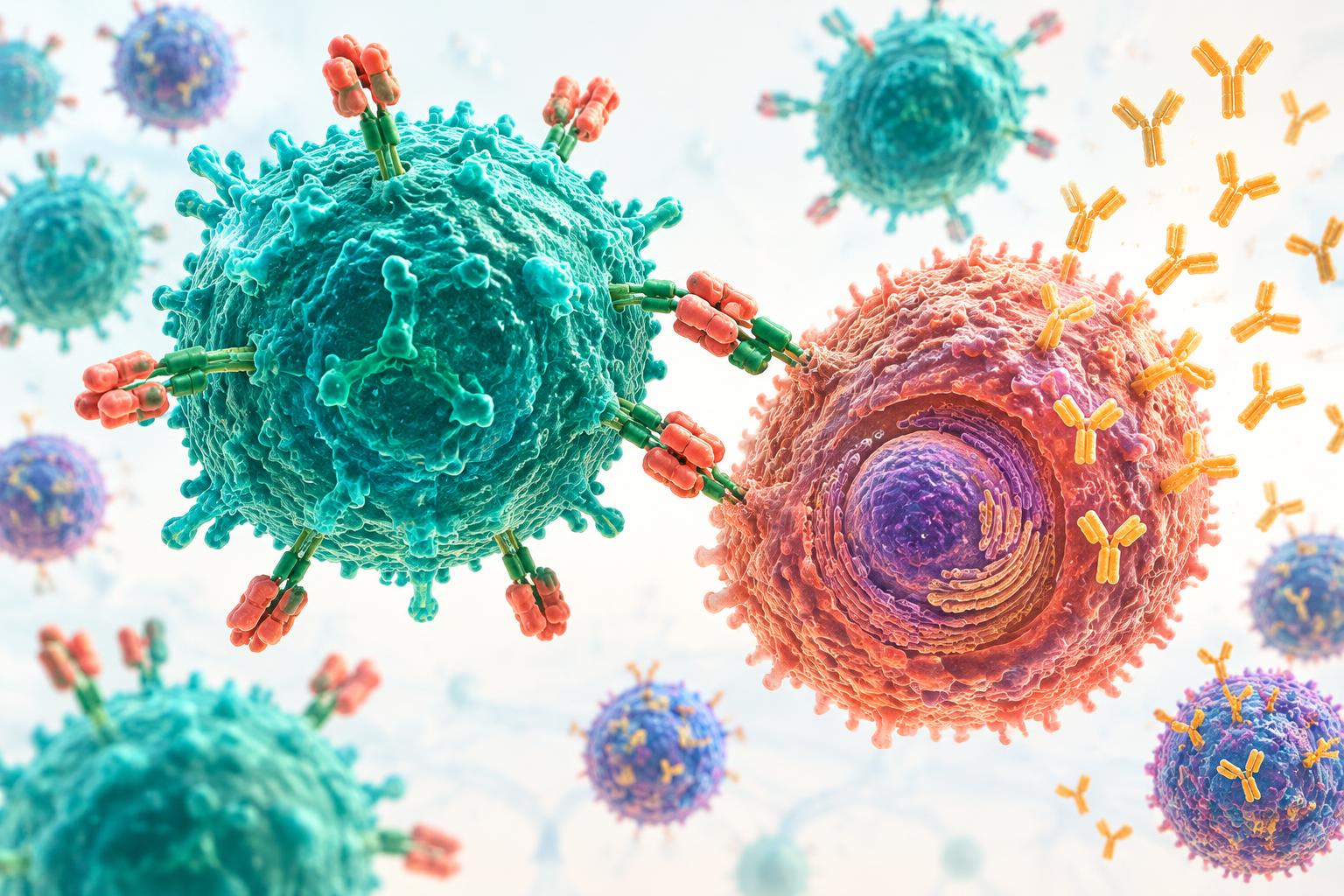
CAR (chimeric antigen receptor) T-cell therapy was developed for blood cancers like leukemia and lymphoma. It works by removing a patient's own T cells, genetically engineering them to recognize a specific target on the surface of other cells, and infusing them back into the body, where they hunt down and destroy cells carrying that target — typically the protein CD19, found on B cells.
In lupus, many of the disease's most damaging effects come from B cells producing autoantibodies that attack the body's own tissue. The logic behind CAR-T for lupus is to use the same CD19-targeting approach to deeply deplete these B cells — far more thoroughly than existing drugs like rituximab — allowing the immune system to effectively "reboot" without the autoreactive B-cell population that was driving disease. Early international work, led by researchers in Erlangen, Germany, first reported this approach in a lupus patient treated in 2021, and later published outcomes in five refractory lupus patients in Nature Medicine (2023), all of whom experienced drug-free remission with only mild cytokine release syndrome and no severe neurotoxicity. That German work, alongside U.S. programs from companies including Kyverna Therapeutics and Cabaletta Bio, has been the main engine driving interest in this approach worldwide. Australia's reported case is best understood as this same international wave reaching local shores.
What's Real and What Isn't: Regulatory and Access Status in Australia
This is the section that matters most for accuracy. As of this writing:
- CAR-T for lupus is not an approved or TGA-registered therapy in Australia. It remains investigational, available only through enrollment in a formal clinical trial.
- According to the hospital's own rheumatology clinical trials page, the international trial Watson took part in is now closed to recruitment, and future CAR-T trial options for autoimmune disease are expected to open at the site in 2027, with no further detail yet available.
- Separately, researchers are also pursuing a related but distinct approach — reprogramming a patient's own regulatory T cells rather than using CAR-T — with human trials for that method planned to begin in 2026, following preclinical results published in Nature Communications.
- There is no general pathway today for an Australian lupus patient to access CAR-T therapy outside of a clinical trial, and no clinic in Australia offers it as a standard or compassionate-use treatment.
Anyone encountering claims of "CAR-T for lupus" being offered commercially in Australia should treat that as a red flag; the legitimate activity here is confined to hospital-based research trials with formal ethics and regulatory oversight.
The Real Risks Nobody Should Skip Over
CAR-T is not a gentle intervention. Before receiving the engineered cells, patients typically undergo lymphodepleting chemotherapy (commonly fludarabine and cyclophosphamide) to make room for the new cells to expand. The therapy carries a well-documented risk of cytokine release syndrome (CRS), an inflammatory reaction that in cancer patients can range from mild flu-like symptoms to life-threatening organ dysfunction. In the lupus-specific studies reported so far — including the Erlangen group's five-patient series — CRS has generally been mild and severe neurotoxicity has not been observed, which is reassuring but based on very small numbers. A 2025 Lancet Rheumatology cohort study found that CAR-T recipients with pre-existing autoimmune conditions (treated for an unrelated cancer) did not show increased severe CRS or neurotoxicity compared with other patients — encouraging context, but a different population from lupus patients receiving CAR-T as a primary treatment. Long-term data on durability of remission and delayed side effects, including infection risk from prolonged B-cell depletion, simply doesn't exist yet.
Bottom Line
Australia's first CAR-T treatment for lupus is a real and legitimately exciting milestone: a patient reports being in drug-free remission and back to an active life after a therapy originally designed to fight blood cancer. It reflects a genuinely promising international research direction that could eventually reshape how severe, treatment-resistant autoimmune disease is managed. But it is still early days — this is one widely reported case within a small, now-closed international trial, with the next Australian CAR-T autoimmune trial opportunities not expected until 2027. It is not an approved therapy, it is not available outside formal trial enrollment, and it carries real, serious risks including cytokine release syndrome and the toxicity of the conditioning chemotherapy that precedes it. Patients interested in future trial participation should ask their treating rheumatologist about hospital-based rheumatology clinical trial programs, rather than seeking this treatment through any clinic claiming to offer it directly.
Key Questions Answered
- Is CAR-T approved for lupus in Australia?
- No. CAR-T for lupus remains investigational and is available only through formal clinical trial enrollment, not as an approved or routinely available treatment.
- What happened in the first reported Australian case?
- The patient reportedly entered remission, stopped immunosuppressant medication and returned to sport pain-free. This single reported case does not establish a generalizable treatment benefit.
- What are the main risks and access limitations?
- Risks include cytokine release syndrome, conditioning chemotherapy toxicity and infection from B-cell depletion. The reported trial is closed to recruitment, and future Australian autoimmune CAR-T trial opportunities are expected in 2027.
Sources
- Australian-first lupus treatment — Hospital news report, 27 May 2025 — https://monashhealth.org/latest-news/2025/05/27/australian-first-lupus-treatment-at-monash-health/
- Australia's first lupus patient treated with ground-breaking CAR T-cell therapy — University news report, 26 May 2025 — https://www.monash.edu/news/articles/australias-first-lupus-patient-treated-with-ground-breaking-car-t-cell-therapy-at-monash-health
- Clinical Trials – Advancing Autoimmune Research — Hospital rheumatology clinical trials page — https://monashhealth.org/services/rheumatology/clinical-trials/
- World exclusive: CAR-T cell therapy successfully used against autoimmune disease — Friedrich-Alexander-Universität Erlangen-Nürnberg (FAU), 11 August 2021 — https://www.archiv.fau.eu/2021/08/news/research/world-exclusive-car-t-cell-therapy-successfully-used-against-autoimmune-disease/
- Small study, seismic implications: Exploring the promise, challenges of CAR-T in lupus — Healio Rheumatology, 28 August 2023 (citing Mackensen et al., Nature Medicine, 2023) — https://www.healio.com/news/rheumatology/20230823/small-study-seismic-implications-exploring-the-promise-challenges-of-car-t-in-lupus
- Is CAR T-Cell Therapy Safe for Autoimmune Patients? — Autoimmune Institute (citing Vanni et al., The Lancet Rheumatology, 2025) — https://www.autoimmuneinstitute.org/research_updates/is-car-t-cell-therapy-safe-for-autoimmune-patients/
- Cell therapy may provide long-term treatment for lupus — Inside Precision Medicine — https://www.insideprecisionmedicine.com/topics/precision-medicine/cell-therapy-may-provide-long-term-treatment-for-lupus
Related Articles
- Research & Industry
FDA Clears First Immunotherapy to Replace Surgery for a Subset of Rectal Cancer Patients
Dostarlimab’s accelerated rectal cancer approval offers organ preservation for a narrow biomarker-defined population, with interim response and safety caveats.
- Research & Industry
ASCO Gastrointestinal Cancers Symposium 2027: What's Coming to GI Oncology's Flagship Research Meeting
ASCO GI 2027 runs January 21–23 in San Francisco and online, highlighting immunotherapy progress in GI cancers while distinguishing meeting previews from published findings.
- Research & Industry
EU Regulators Back Earlier Use of Talvey Plus Daratumumab in Multiple Myeloma: What the Phase 3 MonumenTAL-3 Data Actually Show
CHMP backed earlier talquetamab plus daratumumab use after strong MonumenTAL-3 results, but final EU approval and significant safety trade-offs still matter.