What Is ALS?
What this article covers
- What Is ALS?
- ALS, also known as Lou Gehrig's disease, attacks motor neurons — the specialized nerve cells in the brain and spinal cord that send signals to muscles throughout the body. As these neurons die, the muscles they control weaken, stiffen, and eventually stop responding altogether.
- Causes and Risk Factors
- In most cases, the exact trigger is unknown; Mayo Clinic describes ALS as likely arising from a mix of genetic and environmental factors. About 10% of cases are hereditary, with each child of an affected parent having a 50% chance of inheriting the responsible gene.
- Symptoms
- Early symptoms are often subtle and can start almost anywhere: tripping, hand weakness, slurred speech, muscle cramps and twitching, or trouble swallowing. Symptoms typically begin focally — in a hand, a foot, or the speech muscles — then spread over months to years as more motor neurons are lost.
- Standard Care Today
- There is no cure for ALS; care focuses on slowing progression and preserving quality of life. Three FDA-approved medications address different facets of the disease: riluzole (approved 1995, the first ALS drug) is thought to slow progression by reducing glutamate-related nerve damage; edaravone (Radicava, IV in 2017, oral in 2022) aims to slow functional decline by reducing oxidative stress; and tofersen (Qalsody, 2023) specifically targets the subset of patients with SOD1-mutation ALS via spinal injection.
- Where Stem Cell Research Stands
- Stem cell research for ALS is real and active, but it has not yet produced a therapy proven to meaningfully change the disease's course by regulatory standards — worth stating plainly. S.
Amyotrophic lateral sclerosis (ALS) is a progressive neurodegenerative disease that destroys the nerve cells controlling voluntary muscle movement, leading to paralysis and, eventually, respiratory failure. This article explains what causes ALS, how it typically progresses, what current medical care can and cannot do, and where stem cell and cell-based research actually stands today — including real signals of progress alongside the honest limits of what has been proven so far.
What Is ALS?
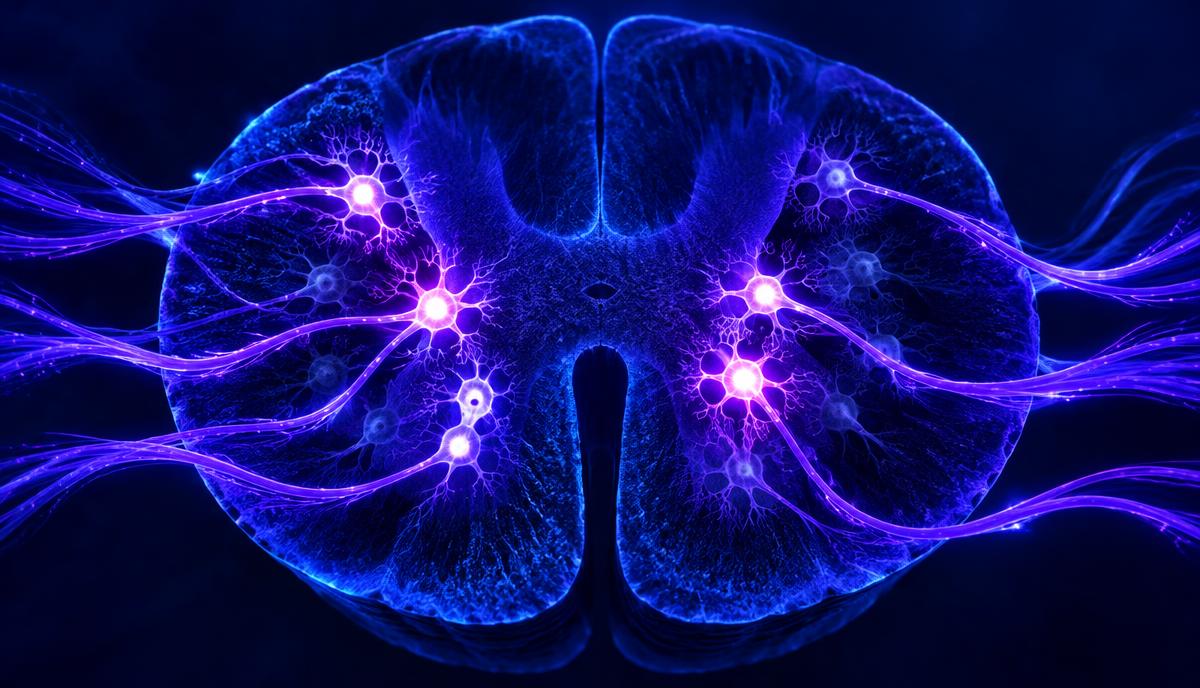
ALS, also known as Lou Gehrig's disease, attacks motor neurons — the specialized nerve cells in the brain and spinal cord that send signals to muscles throughout the body. As these neurons die, the muscles they control weaken, stiffen, and eventually stop responding altogether. Because the nerves controlling sensation, bladder function, and most cognitive processes are usually spared, patients typically remain fully aware even as their bodies lose mobility. The CDC's National ALS Registry estimated that about 24,821 people were living with ALS in the United States in 2017, roughly 7.7 cases per 100,000 people — an uncommon but devastating diagnosis.
Causes and Risk Factors
In most cases, the exact trigger is unknown; Mayo Clinic describes ALS as likely arising from a mix of genetic and environmental factors. About 10% of cases are hereditary, with each child of an affected parent having a 50% chance of inheriting the responsible gene. Mutations in the C9orf72 gene are the most common identified cause of familial ALS, while SOD1 mutations — among the first ALS genes discovered — account for a smaller, well-studied subset. Known risk factors include age (most diagnoses occur between 60 and the mid-80s), sex (men are somewhat more affected before age 65), smoking, and military service, which carries elevated risk for reasons still unclear.
Symptoms
Early symptoms are often subtle and can start almost anywhere: tripping, hand weakness, slurred speech, muscle cramps and twitching, or trouble swallowing. Symptoms typically begin focally — in a hand, a foot, or the speech muscles — then spread over months to years as more motor neurons are lost. As the disease advances, breathing muscles weaken, eventually requiring ventilatory support, and swallowing difficulties can cause malnutrition or aspiration pneumonia. Pain, bladder control, and the senses are generally unaffected, though some patients develop cognitive or behavioral changes, including frontotemporal dementia.
Standard Care Today
There is no cure for ALS; care focuses on slowing progression and preserving quality of life. Three FDA-approved medications address different facets of the disease: riluzole (approved 1995, the first ALS drug) is thought to slow progression by reducing glutamate-related nerve damage; edaravone (Radicava, IV in 2017, oral in 2022) aims to slow functional decline by reducing oxidative stress; and tofersen (Qalsody, 2023) specifically targets the subset of patients with SOD1-mutation ALS via spinal injection. Multidisciplinary care — physical, occupational, and speech therapy, nutritional support including feeding tubes, and respiratory support — remains central and is linked to better quality of life and modestly extended survival. Mayo Clinic notes patients typically live three to five years after symptoms begin, though some live ten years or longer.
Where Stem Cell Research Stands
Stem cell research for ALS is real and active, but it has not yet produced a therapy proven to meaningfully change the disease's course by regulatory standards — worth stating plainly. The most closely watched U.S. candidate, BrainStorm Cell Therapeutics' NurOwn (autologous mesenchymal stem cells engineered to secrete neurotrophic factors), missed its primary and secondary endpoints in a Phase 3 trial; the FDA stated in 2021 that the data did not show a statistically significant benefit over placebo, and the therapy remains unapproved in the U.S. A different product, Corestem's Neuronata-R, holds conditional approval in South Korea (since 2014), and its more recent Phase 3 trial (ALSUMMIT) also missed its overall primary endpoint — but a prespecified subgroup of slower-progressing patients showed statistically significant gains in function (ALSFRS-R score) and combined function-and-survival measures, alongside reductions in neurofilament light chain, a biomarker of nerve damage. That is a genuinely encouraging signal worth watching, and the company has signaled plans to pursue FDA accelerated approval using this data. But Neuronata-R is not FDA-approved, and a subgroup finding from an otherwise negative trial needs independent confirmation before it counts as established evidence. No stem cell therapy for ALS currently has FDA approval, and any clinic offering "stem cell treatment for ALS" outside a registered trial deserves significant scrutiny.
Bottom Line
ALS is a severe, currently incurable disease that progressively destroys the motor neurons controlling voluntary movement, and existing FDA-approved drugs offer modest, not curative, effects. Stem cell research for ALS is legitimate and ongoing, with real trial data and some encouraging biomarker signals, but it remains early-stage by regulatory standards: no cell therapy has yet shown the clear, replicated clinical benefit the FDA requires for approval in the U.S. Anyone considering a stem cell option should look for enrollment in a registered, peer-reviewed clinical trial (searchable at ClinicalTrials.gov) rather than a commercial clinic claiming an available "treatment," and should discuss any such option with their neurologist.
Key Questions Answered
- Is any stem cell therapy FDA-approved for ALS?
- No. BrainStorm's NurOwn missed its Phase 3 endpoints and remains unapproved; Corestem's Neuronata-R holds conditional approval in South Korea but is not FDA-approved, and its Phase 3 subgroup finding needs independent confirmation.
- What FDA-approved drugs exist for ALS?
- Three: riluzole (1995), edaravone (Radicava, IV 2017 and oral 2022), and tofersen (Qalsody, 2023) for SOD1-mutation ALS. All offer modest, not curative, effects.
- How common is ALS?
- The CDC's National ALS Registry estimated about 24,821 people were living with ALS in the United States in 2017, roughly 7.7 cases per 100,000 people.
Sources
- Amyotrophic lateral sclerosis (ALS) — Symptoms and causes — Mayo Clinic, 2024 — https://www.mayoclinic.org/diseases-conditions/als/symptoms-causes/syc-20354022
- Prevalence of Amyotrophic Lateral Sclerosis in the United States, 2017 — CDC/ATSDR National ALS Registry, as reported by ALS News Today, 2021 — https://alsnewstoday.com/news/als-prevalence-united-states-nearly-2017/
- FDA-Approved Drugs for Treating ALS — The ALS Association, 2024 — https://www.als.org/approved-drugs
- FDA Calls Out BrainStorm's ALS Stem Cell Therapy, Says Data Don't Show Benefit — MedCity News, 2021 — https://medcitynews.com/2021/03/fda-calls-out-brainstorms-als-stem-cell-therapy-says-data-dont-show-benefit/
- Neuronata-R Stem Cell Therapy Shows Promise in ALS Phase 3 Subgroup Analysis, Moves Toward FDA Accelerated Approval — BioSpace/PR Newswire, 2025 — https://www.biospace.com/press-releases/neuronata-r-stem-cell-therapy-shows-promise-in-als-phase-3-subgroup-analysis-moves-toward-fda-accelerated-approval
- C9ORF72 Mutation Most Common Cause of Familial ALS, FTD — ALS-FTD/MDA Quest — https://www.als.org/approved-drugs
Related Articles
- Fundamentals
Types of Cardiovascular Disease: Which Ones Are Being Studied With Stem Cell Therapy?
From heart attack to critical limb ischemia, cardiovascular stem cell evidence splits sharply by subtype — here's where research actually stands for each.
- Fundamentals
Protecting Metabolic Health As You Age: What the Evidence Actually Shows
The Diabetes Prevention Program cut type 2 diabetes risk by 58% with modest lifestyle change. Review the evidence for weight, activity, whole grains, sleep and screening.
- Fundamentals
What Is Tissue Engineering? How Stem Cells and Scaffolds Work Together to Rebuild Tissue
How cells, scaffolds and signals combine to engineer tissue — from bladder and cornea grafts to the unresolved challenges of blood supply and manufacturing.