Protecting Muscle Health As You Age: What the Evidence Actually Shows
What this article covers
- Why Muscle Loss Accelerates With Age
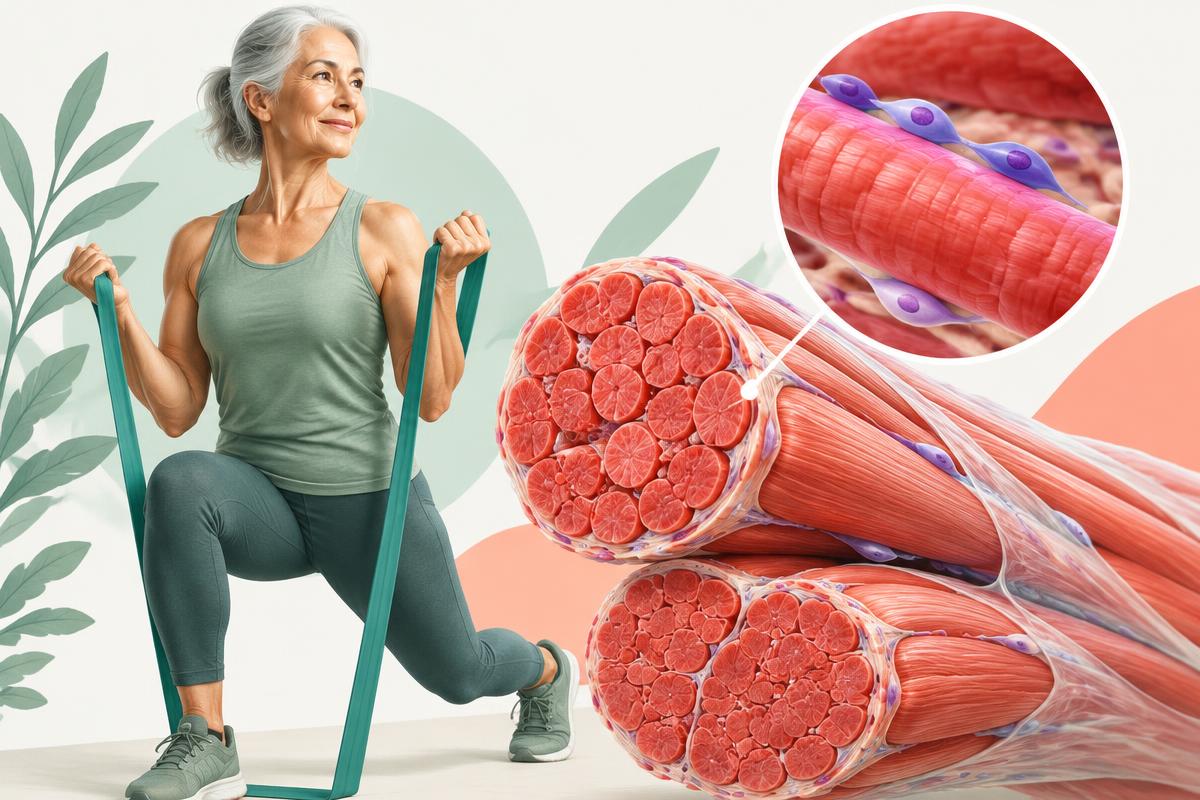
- Age-related muscle loss results from a mix of factors: declining anabolic hormone levels, reduced physical activity, chronic low-grade inflammation, and a loss of motor neurons that connect the brain to muscle fibers. Muscle stem cells, called satellite cells, also become less able to activate and regenerate damaged muscle tissue with age, which is one reason recovery from injury or inactivity gets slower later in life.
- What the Evidence Shows: Resistance Exercise
- Resistance training has the strongest evidence base of any single intervention for preserving muscle mass and function with age. Research reviewed in sports medicine literature indicates that progressive, full-body resistance training performed as infrequently as once or twice a week can meaningfully improve muscle mass and strength in older adults, with most clinical trials using sessions of 20 minutes or more performed two to five times weekly.
- What the Evidence Shows: Protein and Vitamin D
- The nutrition side of the picture is promising but comes with real caveats. A meta-analysis of 12 randomized trials in adults already diagnosed with sarcopenia found that adding protein and/or vitamin D supplementation to resistance training produced a modest improvement in grip strength, though the effect size was small and the studies showed meaningful variability in results.
- Bottom Line
- Age-related muscle loss is real, but it is also one of the more responsive aging processes to known interventions — the evidence for resistance exercise in particular is genuinely solid and consistent across studies. Nutritional strategies like higher protein intake and vitamin D supplementation show real but more modest and inconsistent benefits, layered on top of exercise rather than replacing it, and researchers are still refining exactly who benefits most and by how much.
Starting around age 40, adults typically begin losing muscle mass and strength at a gradual but steady rate, a process that can accelerate sharply after age 60 into what clinicians call sarcopenia — a condition linked to falls, loss of independence, and higher mortality risk. The genuinely good news is that, unlike many of the degenerative conditions covered on this site, sarcopenia is one of the more modifiable aging processes: a substantial and growing body of trial evidence shows that resistance exercise and adequate protein intake can meaningfully slow or partially reverse age-related muscle loss. This article lays out what that evidence actually supports, and where the research is still catching up to the enthusiasm.
Why Muscle Loss Accelerates With Age
Age-related muscle loss results from a mix of factors: declining anabolic hormone levels, reduced physical activity, chronic low-grade inflammation, and a loss of motor neurons that connect the brain to muscle fibers. Muscle stem cells, called satellite cells, also become less able to activate and regenerate damaged muscle tissue with age, which is one reason recovery from injury or inactivity gets slower later in life. This isn't purely a cosmetic or strength issue — reduced muscle mass is tied to slower metabolism, impaired blood sugar regulation, higher fall and fracture risk, and reduced resilience during illness or hospitalization.
What the Evidence Shows: Resistance Exercise
Resistance training has the strongest evidence base of any single intervention for preserving muscle mass and function with age. Research reviewed in sports medicine literature indicates that progressive, full-body resistance training performed as infrequently as once or twice a week can meaningfully improve muscle mass and strength in older adults, with most clinical trials using sessions of 20 minutes or more performed two to five times weekly. This is a genuinely encouraging, low-cost, accessible finding — meaningful benefit doesn't require elite-level training volume.
What the Evidence Shows: Protein and Vitamin D
The nutrition side of the picture is promising but comes with real caveats. A meta-analysis of 12 randomized trials in adults already diagnosed with sarcopenia found that adding protein and/or vitamin D supplementation to resistance training produced a modest improvement in grip strength, though the effect size was small and the studies showed meaningful variability in results. Commonly cited targets suggest older adults may benefit from 1.6 to 1.8 grams of protein per kilogram of body weight daily, well above the standard recommended dietary allowance of 0.8 g/kg — but researchers caution that piling on extra protein helps little for someone already meeting their needs, and that assessing overall diet quality matters more than simply maximizing one nutrient. The same analysis found no significant effect of supplementation on overall muscle mass, chair-stand performance, or timed mobility tests, and study authors were explicit that more large, high-quality randomized trials are still needed before firm nutritional targets can be set with confidence.
Practical, Evidence-Aligned Steps
- Prioritize progressive resistance training (bodyweight, resistance bands, or weights) at least twice weekly, working major muscle groups
- Pair activity with adequate dietary protein spread across meals, discussed with a physician or dietitian given individual kidney function and health status
- Address vitamin D status with a healthcare provider, particularly for adults with limited sun exposure or known deficiency
- Stay physically active overall; prolonged inactivity (such as extended bed rest or sedentary recovery periods) accelerates muscle loss disproportionately in older adults
- Treat any sudden or rapid, unexplained muscle loss as a reason to see a physician rather than a normal aging process to self-manage
Bottom Line
Age-related muscle loss is real, but it is also one of the more responsive aging processes to known interventions — the evidence for resistance exercise in particular is genuinely solid and consistent across studies. Nutritional strategies like higher protein intake and vitamin D supplementation show real but more modest and inconsistent benefits, layered on top of exercise rather than replacing it, and researchers are still refining exactly who benefits most and by how much. No supplement or stem cell therapy currently replaces resistance training as the evidence-backed foundation for protecting muscle health with age.
Key Questions Answered
- What has the strongest evidence for preserving muscle with age?
- Progressive resistance training has the strongest evidence. Benefits have been reported with once- or twice-weekly full-body training, while most trials used sessions of at least 20 minutes two to five times weekly.
- Do protein and vitamin D supplements improve every muscle outcome?
- No. A meta-analysis of 12 randomized trials found a small grip-strength improvement when supplementation was added to training, but no significant improvement in overall muscle mass, chair-stand performance or timed mobility tests.
- Should everyone simply maximize protein intake?
- No. Extra protein helps little when needs are already met, and individual kidney function, health status and overall diet quality matter. Protein intake and vitamin D status should be discussed with a physician or dietitian.
Sources
- Nutritional Supplements to Support Resistance Exercise in Countering the Sarcopenia of Aging, PubMed/NIH, 2020 - https://pubmed.ncbi.nlm.nih.gov/32664408/
- Effects of nutritional supplementation combined with resistance training on sarcopenia in older adults: a meta-analysis, Frontiers in Nutrition, 2023 - https://www.frontiersin.org/journals/nutrition/articles/10.3389/fnut.2023.1109789/pdf
- Resistance training recommendations for older adults, International Journal of Sports Medicine, 2023 - https://www.thieme-connect.com/products/ejournals/abstract/10.1055/a-2116-9240
Related Articles
- Fundamentals
Types of Inherited Blood Disorders: Which Are Treated With Stem Cell Transplant?
Donor transplants and approved gene therapies offer real progress for inherited blood disorders, but conditioning risks, cost and access barriers remain substantial.
- Fundamentals
What Is Scleroderma?
Scleroderma causes collagen-driven skin and organ scarring; transplant trials show survival benefits for selected severe cases, alongside substantial early risk.
- Fundamentals
What Is a Stem Cell Donor Registry, and How Does Matching Work?
What a stem cell donor registry is, how HLA matching works, what joining involves, the real odds of ever being called, and how public cord blood banking fits in.