Stem Cell Therapy for Lymphoma
What this article covers
- How the Procedure Works
- ASCT is not a stand-alone drug — it's a support technique that lets doctors deliver "high-dose chemotherapy" a patient's bone marrow otherwise couldn't tolerate. First, a patient in remission or responding to salvage chemotherapy receives medication to push stem cells out of the bone marrow into the bloodstream (mobilization).
- What the Evidence Shows
- For relapsed or refractory classical Hodgkin lymphoma that still responds to salvage chemotherapy, ASCT has a genuinely encouraging track record: published series report long-term disease-free survival around 50–60% in chemosensitive patients, and for those who remain in remission for two years or more after transplant, 10-year overall survival has been reported as high as 77% — a strong outcome for a relapsed blood cancer. Outcomes are far better for patients with fewer risk factors at relapse and worse for those with multiple adverse features, which is why timing and disease sensitivity to chemo matter so much.
- Risks and Side Effects
- Because conditioning uses intensive chemotherapy, short-term effects — nausea, mouth sores, profound fatigue, low blood counts — are expected and require close hospital monitoring. The bigger risks are a period of high infection vulnerability while blood counts recover, organ strain (liver, kidney, lung, heart), infertility, and a small but real long-term risk of secondary cancers, including treatment-related myelodysplastic syndrome or leukemia.
- Bottom Line
- Autologous stem cell transplant is a proven, guideline-supported option for eligible patients with relapsed or refractory lymphoma who respond to salvage chemotherapy — and for chemosensitive relapsed Hodgkin lymphoma in particular, long-term outcomes can be genuinely good. It is not a cure-all, it carries real short- and long-term risks, and for some early-relapse DLBCL patients, newer CAR-T therapy has shown better outcomes in trials.
When people search "stem cell therapy for lymphoma," they're usually asking about autologous stem cell transplantation (ASCT) — a decades-old, well-established treatment that uses a patient's own blood-forming stem cells to allow much higher doses of chemotherapy than the body could otherwise survive. It is not experimental, and it is not the same thing as CAR-T cell therapy (a newer, genetically engineered treatment covered elsewhere on this site). This article explains how ASCT works for Hodgkin lymphoma and non-Hodgkin lymphoma, who it's for, what the evidence shows, and where it stands today alongside newer options.
How the Procedure Works
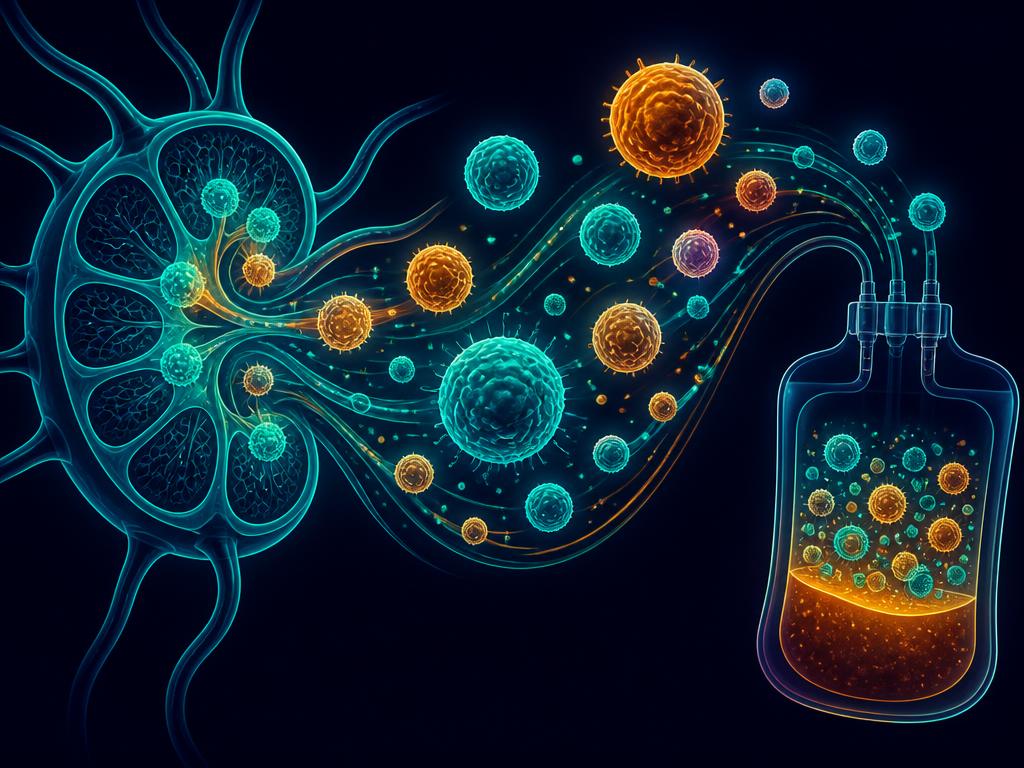
ASCT is not a stand-alone drug — it's a support technique that lets doctors deliver "high-dose chemotherapy" a patient's bone marrow otherwise couldn't tolerate. First, a patient in remission or responding to salvage chemotherapy receives medication to push stem cells out of the bone marrow into the bloodstream (mobilization). These cells are then collected through a process similar to dialysis and frozen. Next comes conditioning: an intensive chemotherapy regimen — commonly the combination known as BEAM (carmustine, etoposide, cytarabine, melphalan) — designed to wipe out remaining lymphoma cells along with healthy marrow. Finally, the patient's own thawed stem cells are reinfused intravenously, where they travel to the bone marrow and rebuild the blood and immune system over the following weeks. In allogeneic transplant, used far less often in lymphoma, the stem cells instead come from a matched donor, which adds a graft-versus-tumor effect but also the risk of graft-versus-host disease.
What the Evidence Shows
For relapsed or refractory classical Hodgkin lymphoma that still responds to salvage chemotherapy, ASCT has a genuinely encouraging track record: published series report long-term disease-free survival around 50–60% in chemosensitive patients, and for those who remain in remission for two years or more after transplant, 10-year overall survival has been reported as high as 77% — a strong outcome for a relapsed blood cancer. Outcomes are far better for patients with fewer risk factors at relapse and worse for those with multiple adverse features, which is why timing and disease sensitivity to chemo matter so much. For diffuse large B-cell lymphoma (DLBCL) and other aggressive non-Hodgkin lymphomas, ASCT following response to salvage chemotherapy has long been the standard consolidation approach for relapsed disease, an approach studied extensively in trials such as CORAL. More recently, the ZUMA-7 trial found that CAR T-cell therapy (axicabtagene ciloleucel) produced better outcomes than standard second-line chemotherapy-plus-transplant for early relapsed/refractory large B-cell lymphoma — 4-year overall survival of about 54.6% with CAR-T versus 46.0% with standard care — which is why current NCCN-informed practice now favors CAR-T for many of these early-relapse patients, while ASCT remains a mainstay for Hodgkin lymphoma, later relapses, and patients for whom CAR-T isn't appropriate or available.
Who Might Be a Candidate
- Has relapsed or refractory Hodgkin lymphoma or non-Hodgkin lymphoma (including DLBCL) that still responds to salvage chemotherapy
- Is being considered for consolidation after achieving remission from initial or salvage treatment
- Has adequate organ function and overall fitness to tolerate high-dose chemotherapy
- Does not have lymphoma that is chemotherapy-resistant (transplant is far less effective against resistant disease)
- Has enough healthy bone marrow reserve for stem cells to be collected successfully
Risks and Side Effects
Because conditioning uses intensive chemotherapy, short-term effects — nausea, mouth sores, profound fatigue, low blood counts — are expected and require close hospital monitoring. The bigger risks are a period of high infection vulnerability while blood counts recover, organ strain (liver, kidney, lung, heart), infertility, and a small but real long-term risk of secondary cancers, including treatment-related myelodysplastic syndrome or leukemia. These risks are why ASCT is performed only at experienced transplant centers and only after careful eligibility screening.
Bottom Line
Autologous stem cell transplant is a proven, guideline-supported option for eligible patients with relapsed or refractory lymphoma who respond to salvage chemotherapy — and for chemosensitive relapsed Hodgkin lymphoma in particular, long-term outcomes can be genuinely good. It is not a cure-all, it carries real short- and long-term risks, and for some early-relapse DLBCL patients, newer CAR-T therapy has shown better outcomes in trials. The right choice depends heavily on lymphoma subtype, how the disease responds to chemotherapy, and overall health — decisions best made with a hematologist-oncologist at a transplant center.
Sources
- High-Dose Chemotherapy and Stem Cell Transplant for Non-Hodgkin Lymphoma — American Cancer Society, 2024 — https://www.cancer.org/cancer/types/non-hodgkin-lymphoma/treating/bone-marrow-stem-cell.html
- Autologous Stem Cell Transplantation — Blood Cancer United (formerly Leukemia & Lymphoma Society), 2025 — https://bloodcancerunited.org/blood-cancer-care/adults/types-blood-cancer-treatment/stem-cell-transplantation/autologous
- Stem Cell Transplantation in Lymphoma — Lymphoma Research Foundation, 2024 — https://lymphoma.org/understanding-lymphoma/treatment-planning-and-options/treatments/transplantation/
- Stem Cell and Bone Marrow Transplants for Cancer — National Cancer Institute (NCI), 2023 — https://www.cancer.gov/about-cancer/treatment/types/stem-cell-transplant
- Current Status of Autologous Stem Cell Transplantation in Relapsed and Refractory Hodgkin's Lymphoma — PMC (peer-reviewed review) — https://pmc.ncbi.nlm.nih.gov/articles/PMC3267827/
- Overall Survival With Axicabtagene Ciloleucel in Large B-Cell Lymphoma: Results From ZUMA-7 — The ASCO Post, 2023 — https://ascopost.com/news/july-2023/overall-survival-with-axicabtagene-ciloleucel-in-large-b-cell-lymphoma-results-from-zuma-7/
Related Articles
- Clinical Applications
Stem Cell Therapy for Multiple Myeloma
Autologous stem cell transplantation is a decades-old, guideline-supported part of multiple myeloma care — not an experimental therapy. Here's how ASCT works, what the DETERMINATION trial showed, and who is a candidate.
- Clinical Applications
Stem Cell Therapy for Bone Fracture Non-Union
Bone marrow cell therapy for fractures that won't heal: a 2025 meta-analysis of 866 patients shows 91% union rates at 12 months — but nothing is FDA-approved.
- Clinical Applications
Stem Cell Therapy for Asherman's Syndrome (Intrauterine Adhesions)
A 2025 phase 1/2 trial of CD133+ stem cells for Asherman's syndrome produced a 30% live birth rate in women who had exhausted surgical options — promising, but still investigational.