How Does CAR-T Cell Therapy for Multiple Myeloma Actually Work?
What this article covers
- What This Article Covers
- BCMA-targeted CAR-T therapy has produced some of the deepest and most durable responses ever recorded in relapsed multiple myeloma, turning a single infusion of a patient's own re-engineered T cells into a treatment that can drive heavily pretreated, previously incurable disease into complete remission. This article explains what BCMA is and why it makes such an attractive target, how the two FDA-approved products — Abecma (idecabtagene vicleucel) and Carvykti (ciltacabtagene autoleucel) — differ, what the pivotal trials actually showed, and the very real safety, manufacturing, and access constraints that still limit who can get this therapy and when.
- What Is BCMA, and Why Target It?
- B-cell maturation antigen (BCMA) is a cell-surface protein expressed almost exclusively on mature B cells and, critically, on malignant plasma cells — the cancerous cells that define multiple myeloma. Because BCMA expression is largely restricted to the B-cell lineage rather than being found broadly across healthy tissue, it gives researchers a relatively clean target: a way to direct an engineered immune attack at myeloma cells while sparing most other organs.
- Abecma vs. Carvykti: Two Products, One Target
- Abecma and Carvykti both target BCMA, but they are distinct products built on different CAR constructs and manufacturing platforms, and they are not interchangeable. Abecma, developed by Bristol Myers Squibb and 2seventy bio, was the first BCMA-directed CAR-T therapy approved for myeloma, receiving initial FDA approval in March 2021.
- The Trial Data: Genuinely Impressive Responses
- The results from both therapies' pivotal trials are among the most striking seen in relapsed myeloma. 7 months, according to results published in the New England Journal of Medicine.
- FDA Approval Status and 2024 Label Expansions
- Both therapies have moved into earlier lines of treatment since their initial approvals. On April 4, 2024, the FDA expanded Abecma's approval to adults with relapsed or refractory multiple myeloma after two or more prior lines of therapy.
What This Article Covers
BCMA-targeted CAR-T therapy has produced some of the deepest and most durable responses ever recorded in relapsed multiple myeloma, turning a single infusion of a patient's own re-engineered T cells into a treatment that can drive heavily pretreated, previously incurable disease into complete remission. This article explains what BCMA is and why it makes such an attractive target, how the two FDA-approved products — Abecma (idecabtagene vicleucel) and Carvykti (ciltacabtagene autoleucel) — differ, what the pivotal trials actually showed, and the very real safety, manufacturing, and access constraints that still limit who can get this therapy and when.
What Is BCMA, and Why Target It?
B-cell maturation antigen (BCMA) is a cell-surface protein expressed almost exclusively on mature B cells and, critically, on malignant plasma cells — the cancerous cells that define multiple myeloma. Because BCMA expression is largely restricted to the B-cell lineage rather than being found broadly across healthy tissue, it gives researchers a relatively clean target: a way to direct an engineered immune attack at myeloma cells while sparing most other organs. This selectivity, combined with BCMA's consistent presence on myeloma cells even in advanced, treatment-resistant disease, is why it has become the dominant target for both CAR-T cell therapies and T-cell engaging antibodies in myeloma over the past decade, according to reviews in journals including Leukemia.
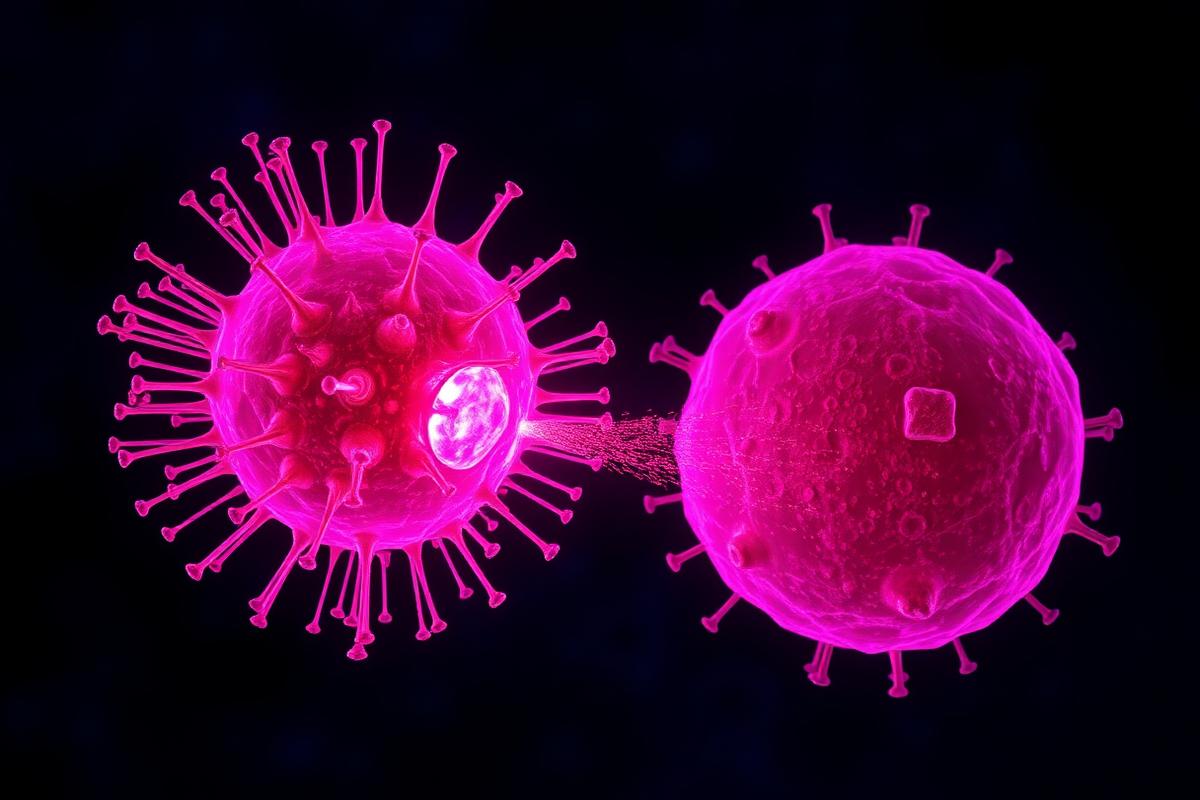
CAR-T therapy itself works by collecting a patient's own T cells through a process called leukapheresis, genetically engineering them in a lab to express a chimeric antigen receptor (CAR) that recognizes BCMA, expanding them into the hundreds of millions, and infusing them back into the patient after a short course of lymphodepleting chemotherapy. Once inside the body, these reprogrammed T cells seek out and destroy BCMA-expressing myeloma cells directly.
Abecma vs. Carvykti: Two Products, One Target
Abecma and Carvykti both target BCMA, but they are distinct products built on different CAR constructs and manufacturing platforms, and they are not interchangeable. Abecma, developed by Bristol Myers Squibb and 2seventy bio, was the first BCMA-directed CAR-T therapy approved for myeloma, receiving initial FDA approval in March 2021. Carvykti, from Janssen (Johnson & Johnson) and Legend Biotech, was approved roughly a year later, in February 2022, and uses a CAR with two BCMA-binding domains, which some researchers believe contributes to its notably high and durable response rates.
The Trial Data: Genuinely Impressive Responses
The results from both therapies' pivotal trials are among the most striking seen in relapsed myeloma. In the KarMMa trial, which supported Abecma's original approval, heavily pretreated patients (a median of six prior therapies) achieved an overall response rate of 73%, with 33% reaching a complete response, and a median duration of response of about 10.7 months, according to results published in the New England Journal of Medicine. The follow-up phase 3 KarMMa-3 trial, comparing ide-cel head-to-head against standard regimens in earlier relapsed disease, showed a median progression-free survival of about 13 months versus roughly 4 months for standard therapy.
Carvykti's CARTITUDE-1 trial produced even deeper responses: an overall response rate of roughly 98%, with 80% of patients achieving a stringent complete response by 18 months, and an estimated median duration of response of 21.8 months. In the landmark phase 3 CARTITUDE-4 trial, which tested cilta-cel earlier in the disease course against standard-of-care regimens, cilta-cel reduced the risk of disease progression or death by roughly 59%, and at 30 months, progression-free survival was 71% in standard-risk patients treated with cilta-cel versus about 43% on standard therapy — with an overall survival benefit also demonstrated. These are the kinds of numbers that have genuinely reshaped how hematologists think about sequencing therapy in relapsed and refractory myeloma, and represent real, hard-won progress against a disease historically considered treatable but not curable.
FDA Approval Status and 2024 Label Expansions
Both therapies have moved into earlier lines of treatment since their initial approvals. On April 4, 2024, the FDA expanded Abecma's approval to adults with relapsed or refractory multiple myeloma after two or more prior lines of therapy. On April 5, 2024, the FDA expanded Carvykti's approval to patients after just one prior line of therapy who are refractory to lenalidomide — making Carvykti, at the time, the earliest-approved BCMA CAR-T option in myeloma. Both expansions followed a 2024 FDA Oncologic Drugs Advisory Committee review and reflect growing confidence, grounded in randomized phase 3 data, that these therapies can outperform standard combination regimens even outside the last-resort setting.
Real Risks: CRS, Neurotoxicity, and Boxed Warnings
The efficacy numbers deserve to be read alongside an honest accounting of risk, because both products carry FDA boxed warnings — the agency's strongest safety label. Cytokine release syndrome (CRS), an inflammatory reaction as engineered T cells activate and expand, occurs in the large majority of patients: roughly 85% of any grade in the KarMMa trial and about 95% (mostly grade 1–2) in CARTITUDE-1. CRS is usually manageable with supportive care and the drug tocilizumab, but it can be severe or, rarely, fatal.
Neurologic toxicity is the other major concern. Both products carry warnings for immune effector cell-associated neurotoxicity syndrome (ICANS), and Carvykti's label additionally warns of parkinsonism and Guillain-Barré syndrome. Both therapies also carry boxed warnings for hemophagocytic lymphohistiocytosis/macrophage activation syndrome, prolonged low blood counts, and secondary hematologic malignancies, including rare cases of T-cell malignancies that led the FDA to require class-wide warnings across BCMA- and CD19-directed CAR-T products. None of this negates the efficacy data above — but it means CAR-T is administered only at specialized centers equipped to manage these complications, typically with an inpatient stay for monitoring after infusion.
Manufacturing, Cost, and Access
Even for eligible patients, CAR-T is not instantaneous. Manufacturing a personalized batch of CAR-T cells typically takes several weeks from apheresis to infusion, during which many patients need “bridging therapy” to keep their disease controlled. Demand at authorized treatment centers has also outstripped manufacturing capacity at times, creating waitlists. Cost is a further, substantial barrier: list prices for these one-time infusions run several hundred thousand dollars before accounting for hospitalization and side-effect management, placing CAR-T therapy well out of reach for most patients globally and raising ongoing questions about insurance coverage and equitable access.
Bottom Line
BCMA-targeted CAR-T therapy represents one of the most genuinely effective advances in relapsed multiple myeloma in a generation — Abecma and Carvykti have each driven response rates most oncologists would have considered unrealistic a decade ago, and Carvykti's phase 3 data now show a meaningful overall survival benefit even against modern standard regimens. That progress is real and worth appreciating without qualification. At the same time, this is not a therapy without serious tradeoffs: nearly all patients experience cytokine release syndrome, a meaningful minority face neurologic complications serious enough to warrant boxed warnings, manufacturing takes weeks that not every patient can safely wait, and the cost and limited number of treatment centers mean it remains inaccessible to most people with myeloma worldwide. It is not a guaranteed cure — many patients eventually relapse — but for the right candidate, treated at the right center, it offers a depth and durability of remission that few other myeloma therapies can match.
Key Questions Answered
- What is BCMA and why is it targeted in myeloma?
- B-cell maturation antigen is a cell-surface protein expressed almost exclusively on mature B cells and malignant plasma cells. That selectivity, plus its consistent presence on myeloma cells even in advanced disease, makes it a relatively clean target for engineered immune attack.
- How do Abecma and Carvykti differ?
- Both target BCMA but are distinct, non-interchangeable products. Abecma (Bristol Myers Squibb/2seventy bio) was approved in March 2021. Carvykti (Janssen/Legend Biotech) followed in February 2022 and uses a CAR with two BCMA-binding domains, which some researchers link to its higher and more durable response rates.
- What did the pivotal trials show?
- KarMMa showed a 73% overall response rate with Abecma in heavily pretreated patients, 33% complete responses, and a 10.7-month median duration of response. CARTITUDE-1 showed roughly 98% overall response with Carvykti, 80% stringent complete response at 18 months, and a 21.8-month median duration of response.
- What are the main risks of BCMA CAR-T?
- Both products carry FDA boxed warnings. Cytokine release syndrome occurred in about 85% of KarMMa patients and about 95% in CARTITUDE-1. Boxed warnings also cover ICANS, hemophagocytic lymphohistiocytosis, prolonged low blood counts and secondary hematologic malignancies; Carvykti additionally warns of parkinsonism and Guillain-Barré syndrome.
Sources
- FDA Approves Bristol Myers Squibb and 2seventy bio's Abecma for Triple-Class Exposed Relapsed or Refractory Multiple Myeloma After Two Prior Lines of Therapy — Bristol Myers Squibb, 2024 — https://news.bms.com/news/details/2024/U.S.-FDA-Approves-Bristol-Myers-Squibb-and-2seventy-bios-Abecma-for-Triple-Class-Exposed-Relapsed-or-Refractory-Multiple-Myeloma-After-Two-Prior-Lines-of-Therapy/default.aspx
- After ODAC Review: FDA Approves Abecma and Carvykti in Earlier Lines of Therapy for Relapsed or Refractory Myeloma Patients — International Myeloma Foundation, 2024 — https://www.myeloma.org/blog/dr-duries/fda-approves-abecma-and-carvykti-in-earlier-treatment-of-RRMM
- Idecabtagene Vicleucel in Relapsed and Refractory Multiple Myeloma — New England Journal of Medicine, 2021 — https://www.nejm.org/doi/full/10.1056/NEJMoa2024850
- Ciltacabtagene autoleucel...in patients with relapsed or refractory multiple myeloma (CARTITUDE-1): a phase 1b/2 open-label study — The Lancet, 2021 — https://pubmed.ncbi.nlm.nih.gov/34175021/
- Cilta-cel or Standard Care in Lenalidomide-Refractory Multiple Myeloma (CARTITUDE-4) — New England Journal of Medicine, 2023 — https://www.nejm.org/doi/full/10.1056/NEJMoa2303379
- 18-Month Follow-Up of CARTITUDE-1 Demonstrates Long-Term Efficacy and Safety of Cilta-Cel — CheckRare, 2022 — https://checkrare.com/18-month-follow-up-of-cartitude-1-demonstrates-long-term-efficacy-and-safety-of-cilta-cel/
- CARVYKTI Prescribing Information and Boxed Warnings — U.S. Food and Drug Administration — https://www.fda.gov/vaccines-blood-biologics/cellular-gene-therapy-products/carvykti
- B-cell maturation antigen (BCMA) in multiple myeloma: rationale for targeting and current therapeutic approaches — Leukemia, 2020 — https://www.nature.com/articles/s41375-020-0734-z
Related Articles
- Clinical Applications
New CAR-T Comparison Data Suggest Anito-cel May Match Carvykti's Efficacy With Far Fewer Neurological Side Effects
An indirect 2026 myeloma comparison finds similar responses for investigational anito-cel and approved Carvykti, with fewer safety events; not a head-to-head trial.
- Clinical Applications
Anito-Cel Shows Deep, Durable Responses in Hard-to-Treat Multiple Myeloma: What the Phase 1 Data Actually Show
All 38 patients in a Phase 1 trial of the BCMA CAR-T anito-cel responded, with nearly 80% in complete response and no delayed neurotoxicity — encouraging, but still early, single-arm evidence.
- Clinical Applications
What Does the FDA's CAR-T Boxed Warning on Secondary Cancers Actually Show?
The FDA's 2024 class-wide boxed warning on secondary T-cell cancers after CAR-T flagged a real signal — but the largest datasets since show the absolute risk is low and CAR-T's benefits still outweigh it.