Myth: Because It's Your Own Cells, Autologous Stem Cell Therapy Is Risk-Free
What this article covers
- What This Article Covers
- A common selling point at stem cell clinics is that "autologous" procedures — using cells drawn from your own body — are inherently safe, since nothing foreign is introduced and there's no risk of rejection. This is a half-truth that obscures real, documented harm.
- The Myth, Stated Plainly
- " The rejection-risk claim is true as far as it goes. But clinics often extend it into a much broader and false claim: that autologous therefore means risk-free, full stop.
- What the Evidence Actually Shows
- ). Three women, ages 72 to 88, with age-related macular degeneration paid to have cells derived from their own abdominal fat (adipose tissue) injected into both eyes on the same day at a Florida clinic.
- Why "Autologous" Doesn't Mean "Risk-Free"
- Several distinct risk categories remain even when the cells are entirely your own:
- What This Means for Patients
- "It's your own cells" is a marketing shorthand that answers one safety question (rejection) while leaving several others completely unaddressed. A procedure can be 100% autologous and still be poorly indicated, poorly processed, or performed in a way that causes lasting harm.
What This Article Covers
A common selling point at stem cell clinics is that "autologous" procedures — using cells drawn from your own body — are inherently safe, since nothing foreign is introduced and there's no risk of rejection. This is a half-truth that obscures real, documented harm. Autologous status addresses only one narrow risk (immune rejection of someone else's tissue); it says nothing about the risks of the harvesting procedure, the injection itself, how the cells are processed, or whether the resulting product is even appropriate for the condition being treated. Peer-reviewed case reports and FDA safety communications document serious, sometimes permanent, injuries from autologous procedures — including blindness.
The Myth, Stated Plainly
The pitch goes something like this: "These are your own cells, so there's no risk of rejection or disease transmission — it's completely safe." The rejection-risk claim is true as far as it goes. But clinics often extend it into a much broader and false claim: that autologous therefore means risk-free, full stop. That leap isn't supported by the evidence.
What the Evidence Actually Shows
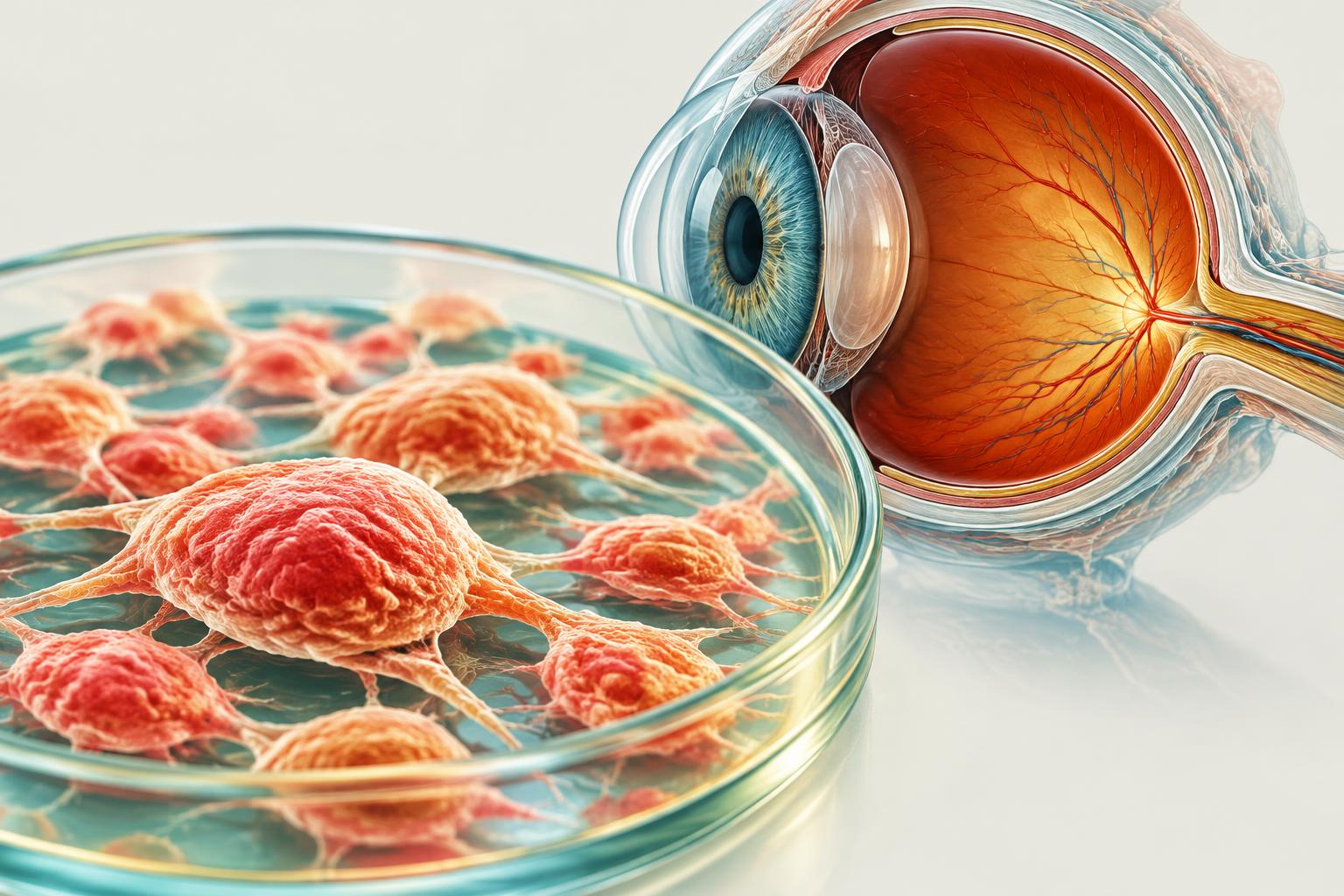
The clearest documented case comes from a 2017 case report in the New England Journal of Medicine, "Vision Loss after Intravitreal Injection of Autologous 'Stem Cells' for AMD" (Kuriyan et al.). Three women, ages 72 to 88, with age-related macular degeneration paid to have cells derived from their own abdominal fat (adipose tissue) injected into both eyes on the same day at a Florida clinic. All three suffered severe, largely irreversible vision loss — including retinal detachment and hemorrhage — despite being treated with their own tissue. The case report became a widely cited warning in the ophthalmology and regenerative-medicine literature about unproven, bilaterally-injected autologous procedures performed outside a clinical trial.
The FDA's own patient-facing guidance backs this up. In its page "Important Patient and Consumer Information About Regenerative Medicine Therapies," the agency states it has received reports of blindness, tumor formation, infections, and other serious complications tied to unapproved regenerative medicine products — explicitly including products "recovered from your own body." The FDA separately warns, in its consumer alert on regenerative medicine products, that these risks include unwanted immune or inflammatory responses, cells migrating and growing into unintended tissue types, and contamination introduced during processing — risks that exist regardless of whose cells are being used.
Why "Autologous" Doesn't Mean "Risk-Free"
Several distinct risk categories remain even when the cells are entirely your own:
- Harvesting risk: Liposuction, bone marrow aspiration, and other collection procedures carry their own risks — bleeding, infection, pain, and procedural complications at the collection site.
- Injection/procedural risk: Introducing any material into a joint, eye, spine, or bloodstream carries infection and injury risk independent of the material's source.
- Processing risk: Once cells leave the body, how they are isolated, concentrated, or expanded determines their purity and safety. Processing in a non-sterile or inadequately controlled setting can introduce bacterial, viral, or fungal contamination — a risk the FDA explicitly flags.
- Biological risk: Your own cells can still provoke unwanted inflammation, form unintended tissue, or simply fail to help. "Autologous" says nothing about whether the processed product contains enough viable, potent cells to do anything therapeutic — or whether that particular cell type was ever an appropriate treatment for that condition in the first place.
What This Means for Patients
"It's your own cells" is a marketing shorthand that answers one safety question (rejection) while leaving several others completely unaddressed. A procedure can be 100% autologous and still be poorly indicated, poorly processed, or performed in a way that causes lasting harm. The Kuriyan case report is a stark illustration: nothing "foreign" was injected, and three patients still lost significant vision. Before any stem cell procedure, patients should ask about the specific harvesting and injection risks, how the product is processed and quality-tested, whether the treatment is part of an FDA-regulated clinical trial (searchable at ClinicalTrials.gov), and whether there is peer-reviewed evidence supporting that specific use — not just general reassurance that "it's your own cells."
Bottom Line
Autologous stem cell therapy eliminates the risk of immune rejection from foreign tissue, but it does not eliminate procedural, infection, processing, or biological risk — and documented cases, including permanent vision loss after autologous fat-derived cell injections for macular degeneration, show those risks can be serious. "It's your own cells" is not a substitute for asking whether a specific procedure has been studied, properly processed, and shown safe and effective for the condition being treated.
Key Questions Answered
- Does autologous mean risk-free?
- No. Using your own cells addresses rejection of foreign tissue but does not remove harvesting, injection, processing, infection or biological risks.
- What documented harm has occurred after autologous procedures?
- A 2017 New England Journal of Medicine case report described three women with severe, largely irreversible vision loss after fat-derived cells from their own bodies were injected into both eyes.
- What should patients ask before a stem cell procedure?
- Ask about harvesting and injection risks, processing and quality testing, FDA-regulated trial status and peer-reviewed evidence for that specific use. Reassurance that the cells are your own does not establish safety or effectiveness.
Sources
- Kuriyan AE, Albini TA, Townsend JH, et al. "Vision Loss after Intravitreal Injection of Autologous 'Stem Cells' for AMD." New England Journal of Medicine — 2017 — https://pmc.ncbi.nlm.nih.gov/articles/PMC5551890
- U.S. Food and Drug Administration. "Important Patient and Consumer Information About Regenerative Medicine Therapies." FDA.gov — https://www.fda.gov/vaccines-blood-biologics/consumers-biologics/important-patient-and-consumer-information-about-regenerative-medicine-therapies
- U.S. Food and Drug Administration. "Consumer Alert on Regenerative Medicine Products Including Stem Cells and Exosomes." FDA.gov — https://www.fda.gov/vaccines-blood-biologics/consumers-biologics/consumer-alert-regenerative-medicine-products-including-stem-cells-and-exosomes
- NBC News. "Three Women Blinded By Bogus Stem Cell 'Treatment'." 2017 — https://www.nbcnews.com/health/health-news/three-women-blinded-bogus-stem-cell-treatment-florida-n734091
Related Articles
- Fundamentals
What Is Umbilical Cord Blood Banking? What Newborn Stem Cells Can (and Can't) Actually Treat
Cord blood banking explained: established transplant uses, public versus private storage, and the low odds of a healthy child using their own banked cells.
- Fundamentals
Types of Cardiovascular Disease: Which Ones Are Being Studied With Stem Cell Therapy?
From heart attack to critical limb ischemia, cardiovascular stem cell evidence splits sharply by subtype — here's where research actually stands for each.
- Fundamentals
Protecting Metabolic Health As You Age: What the Evidence Actually Shows
The Diabetes Prevention Program cut type 2 diabetes risk by 58% with modest lifestyle change. Review the evidence for weight, activity, whole grains, sleep and screening.