What Is Umbilical Cord Blood Banking? What Newborn Stem Cells Can (and Can't) Actually Treat
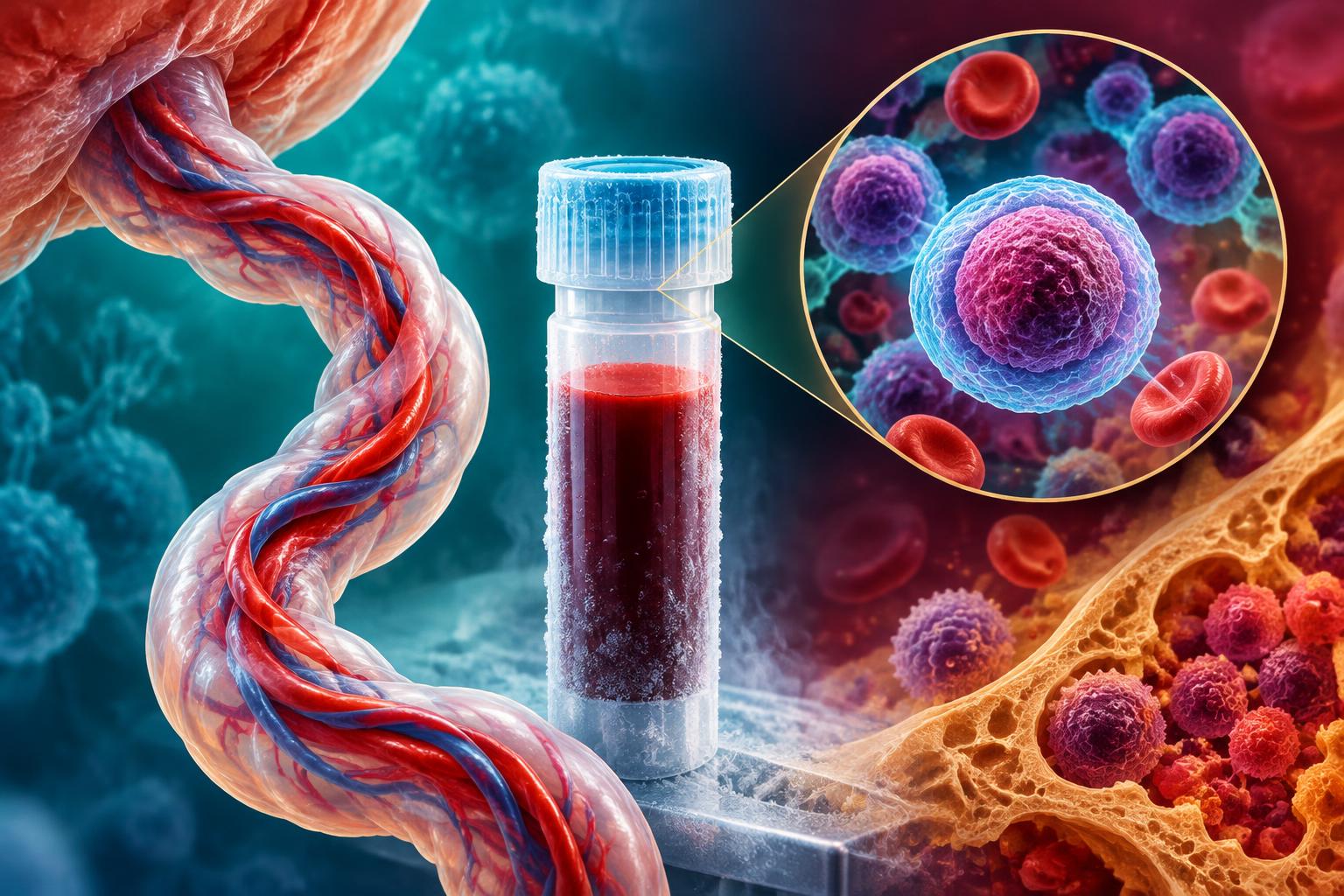
What this article covers
- What This Article Covers
- After a baby is born, a small amount of blood is left in the umbilical cord and placenta. That blood is rich in hematopoietic (blood-forming) stem cells, and it can be collected, frozen, and stored for possible future use in a stem cell transplant.
- What's Actually in Cord Blood
- Cord blood contains hematopoietic stem cells (HSCs), the same type of blood-forming stem cells found in bone marrow. These cells can give rise to red blood cells, white blood cells, and platelets, which is why they're useful for rebuilding a patient's blood and immune system after chemotherapy, radiation, or in place of bone marrow destroyed by disease.
- The FDA-Approved, Evidence-Backed Use: Transplantation
- The one clearly established, FDA-recognized medical use of cord blood is hematopoietic stem cell transplantation (HSCT). The FDA has licensed several cord blood products — including HEMACORD, made by the New York Blood Center, which in November 2011 became the first FDA-licensed cord blood product — for hematopoietic and immunologic reconstitution in patients with disorders of the blood-forming system that are inherited, acquired, or caused by myeloablative (bone-marrow-destroying) treatment.
- The Honest Odds: Will a Family Ever Use Their Own Banked Cord Blood?
- This is where marketing and evidence most often diverge. Cord blood from a healthy newborn generally can't be used to treat that same child's own future leukemia, because the leukemia may already involve a predisposition present at birth — a stored unit isn't a guaranteed personal safety net against the diseases parents worry about most.
- Donating to a Public Bank: A Way to Help Others
- Public cord blood donation functions much like becoming a blood or bone marrow donor: it costs families nothing, and a unit that passes screening becomes part of a shared inventory used to find matches for patients — including those who are harder to match through bone marrow registries because of diverse or mixed ancestry, where cord blood's more flexible matching requirements can help. Organizations such as NMDP (formerly the National Marrow Donor Program, operator of Be The Match) coordinate hospitals and public banks that collect donated cord blood for this purpose.
What This Article Covers
After a baby is born, a small amount of blood is left in the umbilical cord and placenta. That blood is rich in hematopoietic (blood-forming) stem cells, and it can be collected, frozen, and stored for possible future use in a stem cell transplant. This article explains what cord blood stem cells actually are, which uses are backed by real FDA licensure and decades of transplant data, how public and private banking differ, and — because this is one of the most heavily marketed decisions new parents face — what the honest odds are that a family's own privately banked cord blood will ever be used.
What's Actually in Cord Blood
Cord blood contains hematopoietic stem cells (HSCs), the same type of blood-forming stem cells found in bone marrow. These cells can give rise to red blood cells, white blood cells, and platelets, which is why they're useful for rebuilding a patient's blood and immune system after chemotherapy, radiation, or in place of bone marrow destroyed by disease. Cord blood is not a source of the broader "regenerative" cell types sometimes implied in marketing materials — it has not been established as a treatment for autism, cerebral palsy, diabetes, or general anti-aging use, even though cord blood banks sometimes list research into these areas as a reason to bank. Research into some of these areas is ongoing, but it remains investigational, not an approved therapy.
The FDA-Approved, Evidence-Backed Use: Transplantation
The one clearly established, FDA-recognized medical use of cord blood is hematopoietic stem cell transplantation (HSCT). The FDA has licensed several cord blood products — including HEMACORD, made by the New York Blood Center, which in November 2011 became the first FDA-licensed cord blood product — for hematopoietic and immunologic reconstitution in patients with disorders of the blood-forming system that are inherited, acquired, or caused by myeloablative (bone-marrow-destroying) treatment. The FDA's current list of approved cellular and gene therapy products includes cord blood units from several banks operating under this same general indication.
In practice, that means cord blood transplants are used to treat:
- Certain leukemias and lymphomas (e.g., acute lymphoblastic and myeloid leukemia)
- Myelodysplastic syndromes
- Inherited blood disorders such as sickle cell disease and thalassemia
- Bone marrow failure syndromes, including Fanconi anemia and severe aplastic anemia
- Primary immunodeficiencies, including severe combined immunodeficiency (SCID)
- Certain inherited metabolic disorders
An analysis cited in pediatric and family medicine literature found that more than 30,000 cord blood transplants had been performed worldwide by 2013, with roughly 57% for malignant blood cancers, about a third for inherited blood disorders (hemoglobinopathies), and the remainder for immune and other disorders. This is real, working medicine — not a future promise.
Public vs. Private Banking: What's the Difference?
- Public cord blood banks collect donated cord blood, screen and test it to rigorous standards, and make it available to any matching patient in need, similar to blood or organ donation. Donation is free to families. Because of strict screening, only an estimated 25–40% of collected public donations end up meeting the quality bar for storage and release.
- Private (family) cord blood banks store a baby's cord blood exclusively for that family's potential future use, for a fee — typically around $1,350–$2,300 to collect and process, plus annual storage fees of roughly $100–$175, according to figures cited in pediatric literature.
Major medical organizations have taken a consistent position on this choice. The American Academy of Pediatrics (AAP), in its policy statement on cord blood banking, calls for "renewed emphasis and education about the advantages and need for public cord blood banking" and recommends that pediatricians and obstetric providers explain the difference to families rather than default to private-banking marketing. The American College of Obstetricians and Gynecologists (ACOG), in Committee Opinion No. 771, likewise does not recommend routine private banking for low-risk families, while noting that directed (private) donation can make sense when there's a known family history of a disease treatable by transplant, such as an older sibling with leukemia or a blood disorder.
The Honest Odds: Will a Family Ever Use Their Own Banked Cord Blood?
This is where marketing and evidence most often diverge. Cord blood from a healthy newborn generally can't be used to treat that same child's own future leukemia, because the leukemia may already involve a predisposition present at birth — a stored unit isn't a guaranteed personal safety net against the diseases parents worry about most. For families with no known genetic or family risk, estimates cited in the medical literature of the lifetime likelihood that a child will ever use their own privately banked cord blood have ranged from roughly 1 in a few thousand to far rarer, depending on the study and family history — figures well below what typical marketing materials imply. Consistent with this, data cited by the AAP show that cord blood from public banks has been released for actual clinical use roughly 30 times more often than cord blood from private banks — reflecting both the much larger pool available through public banks (which can serve any matching patient, not just one family) and the rarity of a private unit ever being needed by its own donor family.
None of this means private banking is worthless for every family — it can be a reasonable, informed choice for a family with a specific, known medical reason. But for the average healthy pregnancy, the evidence does not support private cord blood storage as broad "biological insurance."
Donating to a Public Bank: A Way to Help Others
Public cord blood donation functions much like becoming a blood or bone marrow donor: it costs families nothing, and a unit that passes screening becomes part of a shared inventory used to find matches for patients — including those who are harder to match through bone marrow registries because of diverse or mixed ancestry, where cord blood's more flexible matching requirements can help. Organizations such as NMDP (formerly the National Marrow Donor Program, operator of Be The Match) coordinate hospitals and public banks that collect donated cord blood for this purpose. Not every hospital participates in public donation, so families interested in donating should ask their obstetric provider or hospital in advance, since arrangements typically need to be made before delivery.
Bottom Line
Cord blood stem cells have a genuine, FDA-recognized medical role: hematopoietic stem cell transplantation for certain blood cancers, inherited blood disorders, bone marrow failure syndromes, and immune deficiencies, with tens of thousands of successful transplants performed worldwide. That's real and worth taking seriously. What the evidence doesn't support is the common marketing pitch that every family should pay to privately bank cord blood as personal insurance against future disease — for most healthy families with no known risk, the odds that stored cord blood will ever be used by that same child are low, and public banks put the same biological resource to more frequent, verified use helping other patients. The evidence-based path most medical organizations recommend for low-risk families is to learn about public donation early in pregnancy and make an informed, unhurried decision about whether private banking fits their specific circumstances.
Key Questions Answered
- What is the established medical use of cord blood?
- Hematopoietic stem cell transplantation for certain blood cancers, inherited blood disorders, bone marrow failure syndromes, immune deficiencies and inherited metabolic disorders. Uses for autism, cerebral palsy, diabetes or anti-aging remain investigational.
- How do public and private cord blood banking differ?
- Public banks accept free donations for any matching patient. Private banks reserve a unit for one family and charge collection, processing and storage fees.
- Is routine private banking recommended for low-risk families?
- AAP and ACOG emphasize public banking rather than routine private storage for low-risk families. Directed private banking may make sense when a family has a known disease treatable by transplant, but a healthy child is unlikely to use their own stored unit.
Sources
- HPC, Cord Blood (approved product information) — U.S. Food and Drug Administration — https://www.fda.gov/vaccines-blood-biologics/approved-products/hpc-cord-blood
- HEMACORD, HPC Cord Blood (approved product information) — U.S. Food and Drug Administration — 2011 — https://www.fda.gov/vaccines-blood-biologics/approved-products/hemacord-hpc-cord-blood
- Approved Cellular and Gene Therapy Products — U.S. Food and Drug Administration — https://www.fda.gov/vaccines-blood-biologics/cellular-gene-therapy-products/approved-cellular-and-gene-therapy-products
- Frequently Asked Questions about Minimally Manipulated, Unrelated, Allogeneic Cord Blood Products for Clinical Use — U.S. Food and Drug Administration — https://www.fda.gov/vaccines-blood-biologics/industry-biologics/frequently-asked-questions-about-minimally-manipulated-unrelated-cord-blood-products-clinical-use
- Cord Blood Banking for Potential Future Transplantation — American Academy of Pediatrics, Pediatrics — 2017 — https://pmc.ncbi.nlm.nih.gov/articles/PMC6091883
- ACOG Committee Opinion No. 771: Umbilical Cord Blood Banking — American College of Obstetricians and Gynecologists, Obstetrics & Gynecology — 2019 — https://pubmed.ncbi.nlm.nih.gov/30801478/
- Cord Blood Banks and Hospitals — NMDP (National Marrow Donor Program / Be The Match) — https://www.nmdp.org/what-we-do/partnerships/global-transplant-network/cord-blood-banks-and-hospitals
Related Articles
- Fundamentals
Myth: Because It's Your Own Cells, Autologous Stem Cell Therapy Is Risk-Free
Using your own cells does not make a procedure risk-free. Documented vision loss and FDA warnings reveal harvesting, injection, processing and biological risks.
- Fundamentals
Types of Cardiovascular Disease: Which Ones Are Being Studied With Stem Cell Therapy?
From heart attack to critical limb ischemia, cardiovascular stem cell evidence splits sharply by subtype — here's where research actually stands for each.
- Fundamentals
Protecting Metabolic Health As You Age: What the Evidence Actually Shows
The Diabetes Prevention Program cut type 2 diabetes risk by 58% with modest lifestyle change. Review the evidence for weight, activity, whole grains, sleep and screening.