Stem Cell Therapy for Avascular Necrosis of the Hip
What this article covers
- What This Article Covers
- This article looks at the use of bone-marrow-derived stem cells — typically delivered alongside a surgery called core decompression — to treat avascular necrosis (AVN) of the hip, also known as osteonecrosis of the femoral head. S.
- How It's Thought to Work
- Core decompression is a minimally invasive surgery in which a surgeon drills one or more small channels into the dead or dying area of the femoral head. This relieves internal pressure and is thought to stimulate a healing response.
- What the Evidence Shows
- The best current evidence is encouraging, particularly for people caught in the earlier stages of the disease — though it comes with real caveats.
- Bottom Line
- The evidence for stem cell-augmented core decompression in avascular necrosis of the hip is genuinely more encouraging than for many other orthopedic stem cell applications — multiple meta-analyses of randomized trials point toward reduced collapse rates and fewer conversions to hip replacement, especially when treatment happens early, before the femoral head has collapsed. That's real, meaningful signal, not hype.
What This Article Covers
This article looks at the use of bone-marrow-derived stem cells — typically delivered alongside a surgery called core decompression — to treat avascular necrosis (AVN) of the hip, also known as osteonecrosis of the femoral head. We cover how the approach is thought to work, what the strongest available evidence (systematic reviews and meta-analyses of randomized trials) actually shows, who is likely to be considered a candidate, and the current U.S. regulatory reality: there is no FDA-approved stem cell drug for this condition.
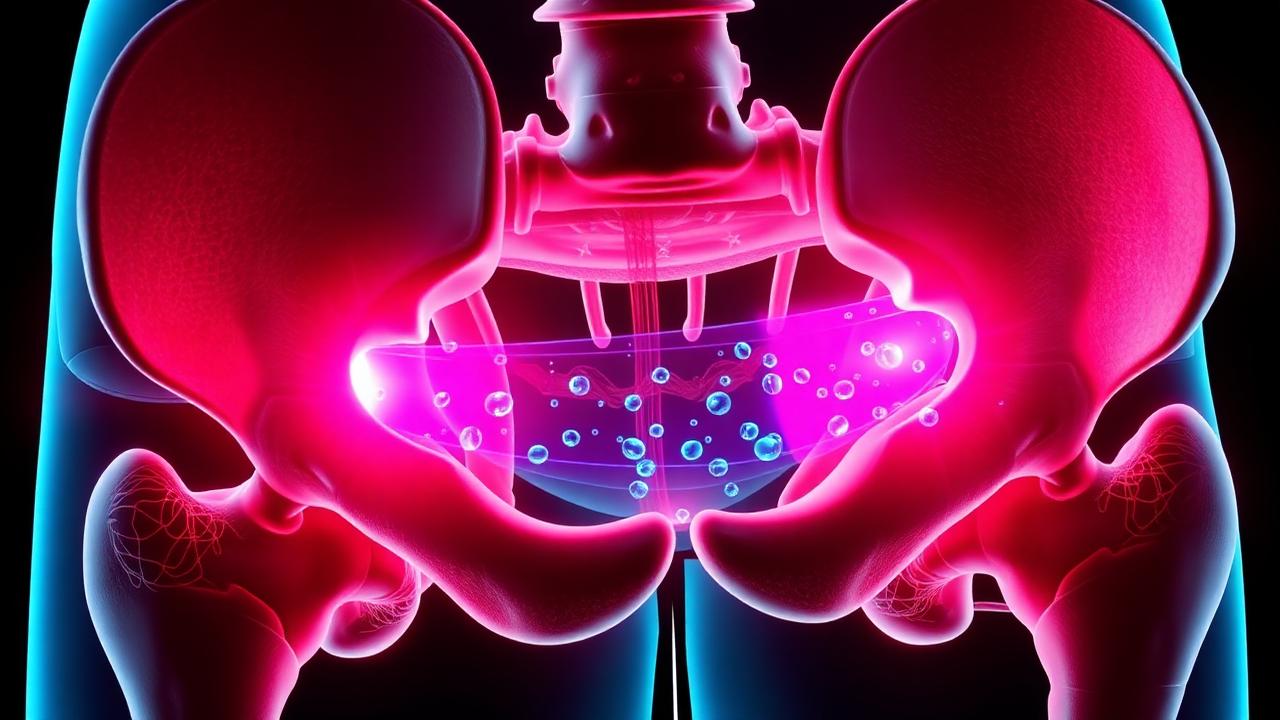
Avascular necrosis of the hip occurs when blood flow to the femoral head (the ball at the top of the thighbone) is disrupted, causing the bone tissue to die. Without a healthy blood supply, the bone weakens, can collapse, and often leads to painful, disabling arthritis of the hip joint. It's distinct from ordinary hip osteoarthritis in both cause and course, and it disproportionately affects younger, otherwise active people — often in their 30s to 50s — for whom a hip replacement is a far less appealing prospect than for an older patient. That's a major reason patients and surgeons have searched for joint-preserving alternatives, and why stem cell-augmented core decompression has drawn so much research interest over the past two decades.
How It's Thought to Work
Core decompression is a minimally invasive surgery in which a surgeon drills one or more small channels into the dead or dying area of the femoral head. This relieves internal pressure and is thought to stimulate a healing response. On its own, core decompression provides a channel for repair — not necessarily the biological material to fill it.
The idea behind adding stem cells is to supply that missing biology. Surgeons typically harvest bone marrow (usually from the patient's own pelvic bone), concentrate it in a centrifuge to enrich it for mesenchymal stem cells (MSCs) and other marrow cells, and inject the concentrate directly into the decompression tract. MSCs are thought to support bone formation and encourage new blood vessel growth (angiogenesis) in the oxygen-starved area — theoretically addressing the two things AVN destroys: bone and blood supply. Some research groups are also testing systemic approaches that try to mobilize a patient's own MSCs to the bone surface without a separate injection.
What the Evidence Shows
The best current evidence is encouraging, particularly for people caught in the earlier stages of the disease — though it comes with real caveats.
A 2023 systematic review and meta-analysis in the Journal of Orthopaedic Surgery and Research, pooling 18 studies (11 RCTs and 7 retrospective studies) covering 916 patients and 1,257 hips, found that adding stem cell therapy to core decompression significantly reduced femoral head collapse rates and radiographic disease progression compared with core decompression alone, and lowered the rate of conversion to total hip replacement — with the benefit most apparent within the first 2-5 years of follow-up and diminishing somewhat beyond 5 years.
A more recent systematic review, meta-analysis, and meta-regression in PLOS ONE, focused specifically on 10 randomized controlled trials covering 593 patients and 779 hips, reported similarly positive signals: significantly lower odds of femoral head collapse (P < 0.00001) and of progressing to total hip arthroplasty (P < 0.00001), along with meaningful improvements in Harris Hip Score and pain (VAS) ratings (all P < 0.00001). The authors were explicit that these benefits were concentrated in early-stage AVN, noting stem cells "can maximize the regeneration of cortical lesions in early stage of AVN" before collapse occurs — and they flagged real limits to the evidence, including inconsistency in how stem cell products were processed and delivered across studies.
Separately, the California Institute for Regenerative Medicine (CIRM) has funded translational and clinical work in this space, including a UC Davis-led program testing a compound designed to direct a patient's own mesenchymal stem cells to damaged bone in non-traumatic osteonecrosis — an approach that reached Phase 1/2 human trials under FDA authorization, illustrating that this remains an active area of clinical investigation rather than settled, routine practice.
Who Might Be a Candidate
- People diagnosed with early-stage avascular necrosis of the femoral head (pre-collapse, roughly ARCO or Ficat stage I–II), where joint-preserving treatment has the best track record
- Younger or middle-aged adults hoping to delay or avoid total hip replacement
- Patients with known risk factors for AVN, such as long-term corticosteroid use, heavy alcohol use, sickle cell disease, or prior joint trauma
- Patients being evaluated by an orthopedic surgeon experienced in core decompression and bone marrow concentrate procedures, ideally within a research or closely monitored clinical setting
- Not a good fit: anyone whose femoral head has already collapsed or who has advanced hip arthritis, where joint-preserving treatment has a much lower track record of success
Bottom Line
The evidence for stem cell-augmented core decompression in avascular necrosis of the hip is genuinely more encouraging than for many other orthopedic stem cell applications — multiple meta-analyses of randomized trials point toward reduced collapse rates and fewer conversions to hip replacement, especially when treatment happens early, before the femoral head has collapsed. That's real, meaningful signal, not hype. At the same time, it's not a cure-all: no stem cell product is FDA-approved to treat AVN, autologous bone marrow concentrate procedures are typically offered under the FDA's "same surgical procedure" framework for minimally manipulated tissue rather than as an approved drug, outcomes vary considerably depending on how advanced the disease is at the time of treatment, and the studies behind these findings vary in quality and technique. Anyone considering this option should seek out a surgeon who treats AVN routinely, ask directly about their own disease stage and its bearing on likely outcomes, and treat dramatic promises of guaranteed hip-replacement avoidance with appropriate skepticism.
Key Questions Answered
- Is there an FDA-approved stem cell treatment for avascular necrosis of the hip?
- No. No stem cell product is FDA-approved for AVN. Autologous bone marrow concentrate is generally used under the FDA's "same surgical procedure" exception for minimally manipulated tissue, not as an approved drug.
- What does adding stem cells to core decompression actually do?
- Core decompression drills channels into the dying bone to relieve pressure and prompt healing; concentrated bone marrow adds mesenchymal stem cells and other marrow cells thought to support new bone formation and blood vessel growth in the oxygen-starved femoral head.
- How strong is the evidence?
- A 2023 meta-analysis of 18 studies (916 patients, 1,257 hips) found significantly reduced femoral head collapse and fewer conversions to hip replacement versus core decompression alone, and a PLOS ONE meta-analysis of 10 randomized trials (593 patients, 779 hips) reported the same direction of benefit with improved Harris Hip and pain scores (all P < 0.00001).
- Does disease stage matter?
- Considerably. Benefit is concentrated in early, pre-collapse disease (roughly ARCO or Ficat stage I–II). Once the femoral head has collapsed or advanced arthritis has set in, joint-preserving treatment has a much weaker track record.
- Does the benefit last?
- The 2023 meta-analysis found the advantage most apparent within the first 2–5 years of follow-up, with the effect diminishing somewhat beyond 5 years — so this may delay rather than permanently prevent hip replacement in some patients.
Sources
- Stem cell therapy combined with core decompression versus core decompression alone in the treatment of avascular necrosis of the femoral head: a systematic review and meta-analysis — Journal of Orthopaedic Surgery and Research, 2023 — https://josr-online.biomedcentral.com/articles/10.1186/s13018-023-04025-8
- Assessing the latest advances in bone marrow stem cell therapy for Avascular Necrosis hip: A comprehensive systematic review, meta-analysis, and meta-regression of randomized controlled trial studies — PLOS ONE, 2024 — https://journals.plos.org/plosone/article?id=10.1371%2Fjournal.pone.0297319
- Treatment of Non-Traumatic Osteonecrosis with Endogenous Mesenchymal Stem Cells — California Institute for Regenerative Medicine (CIRM) — https://www.cirm.ca.gov/our-progress/awards/treatment-non-traumatic-osteonecrosis-endogenous-mesenchymal-stem-cells/
- Same Surgical Procedure Exception under 21 CFR 1271.15(b): Questions and Answers Regarding the Scope of the Exception — U.S. Food and Drug Administration — https://www.fda.gov/files/vaccines,%20blood%20&%20biologics/published/Same-Surgical-Procedure-Exception-under-21-CFR-1271.15(b)-%C2%A0Questions-and-Answers-Regarding-the-Scope-of-the-Exception.pdf
Related Articles
- Clinical Applications
Can Stem Cells Help With Alopecia Areata?
Small human studies show real hair regrowth signals for stem cell approaches in alopecia areata, but no cell or exosome product is FDA-approved or placebo-tested.
- Clinical Applications
Can Stem Cells Help With Beta-Thalassemia?
Beta-thalassemia is one of the few conditions stem cells already cure: matched-sibling HSCT and the FDA-approved gene therapies Zynteglo and Casgevy, with real caveats.
- Clinical Applications
Can Stem Cells Help With Dry Eye Disease?
Early MSC and exosome studies for dry eye report improved symptoms and tear function, but the evidence remains small and no product is FDA-approved.