Can Stem Cells Help with Chronic Back Pain?
What this article covers
- Why Researchers Think Stem Cells Could Help a Degenerated Disc
- Each spinal disc has a gel-like core, the nucleus pulposus, that absorbs load and keeps the disc space hydrated. With age, injury, and repetitive stress, the cells that maintain that core die off, the matrix dries out and loses proteoglycan content, and the disc collapses in height.
- What the Clinical Trial Evidence Actually Shows
- This is the section to read closely, because the picture is genuinely mixed — and where it's positive, the story is worth taking seriously.
- FDA Approval Status
- No stem cell product is FDA-approved for treating disc degeneration, back pain, or any other orthopedic condition. S.
- Realistic Expectations
- If you're considering this today, it is investigational, not a proven cure. Even in the best-controlled positive trial, results were framed in terms of average pain reduction and reduced opioid use over years, not disc regeneration you'd see reversed on an MRI, and not every patient responded.
- Safety and Procedural Risks
- Because the injection goes directly into the disc space — a naturally avascular, low-immune-surveillance environment — the most serious specific risk is discitis or vertebral osteomyelitis, a disc-space infection that can be difficult to treat and has been documented in case reports following intradiscal stem cell injections, sometimes requiring prolonged antibiotics or surgery. Needle-related risks common to any spinal injection also apply: nerve root irritation, bleeding, and post-procedure flare in pain.
Chronic low back pain from a degenerated intervertebral disc — often called discogenic pain — is one of the most common reasons people search for regenerative alternatives to surgery. This article explains the biological logic behind injecting mesenchymal stem cells (MSCs) directly into a damaged disc, walks through what randomized trials have actually found (including a genuinely encouraging late-stage trial now headed toward an FDA filing), and lays out the real risks, costs, and unknowns so you can have an informed conversation with a spine specialist rather than a sales pitch.
Why Researchers Think Stem Cells Could Help a Degenerated Disc
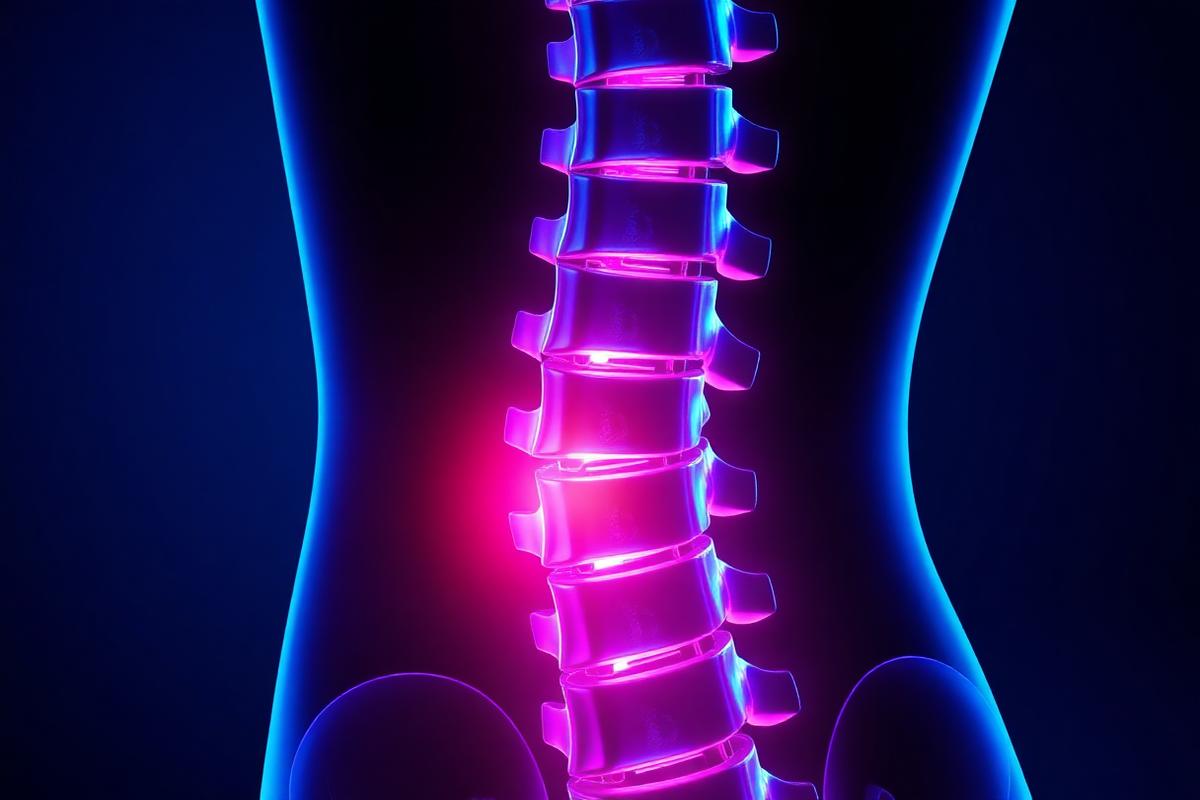
Each spinal disc has a gel-like core, the nucleus pulposus, that absorbs load and keeps the disc space hydrated. With age, injury, and repetitive stress, the cells that maintain that core die off, the matrix dries out and loses proteoglycan content, and the disc collapses in height. As it collapses, it can irritate nearby nerve endings and destabilize the segment above and below it — a process strongly associated with chronic axial low back pain. Because a degenerated disc has almost no blood supply, it has very limited capacity to repair itself. The rationale for intradiscal MSC therapy is that injecting cells — usually harvested from a patient's own bone marrow or fat, or from a donor (allogeneic) source — into the nucleus pulposus might increase local matrix production, dial down inflammatory signaling, and slow or partially reverse degeneration, rather than simply masking pain the way a steroid injection does. This is a fundamentally different target than the cartilage-focused knee osteoarthritis injections covered elsewhere on this site; here the goal is the disc's internal biology, not a joint surface.
What the Clinical Trial Evidence Actually Shows
This is the section to read closely, because the picture is genuinely mixed — and where it's positive, the story is worth taking seriously.
The most encouraging data come from Mesoblast's rexlemestrocel-L program, a series of trials testing a single intradiscal injection of allogeneic (donor-derived) mesenchymal precursor cells against saline in patients with chronic low back pain from degenerative disc disease. In the pivotal Phase 3 trial (404 patients), the treated group showed durable pain reduction that investigators reported as lasting through 36 months, and a striking secondary finding: among patients using opioids at baseline, 28% of those who received the cell therapy were opioid-free at 36 months versus 8% of saline-treated controls (nominal p = 0.0075). That result was strong enough that the FDA granted the therapy Regenerative Medicine Advanced Therapy (RMAT) designation, and in a subsequent regulatory exchange the agency acknowledged that the trial's pain-intensity effects "favored the active arm" and could support a claim of efficacy — with Mesoblast now preparing a Biologics License Application (BLA) based partly on 12-month pain data, while a second confirmatory Phase 3 trial (MSB-DR004, targeting 300 patients) continues enrolling in the U.S. That is about as close as intradiscal cell therapy has come to a real, statistically significant, regulator-acknowledged efficacy signal.
Set against that, other rigorous trials have not replicated a clean win. The 2025 DREAM study, a double-blind Phase IIB RCT of autologous bone-marrow MSCs versus a sham procedure in 46 evaluable patients with multilevel disc degeneration, found the cell-therapy group had significant improvements in disc height on MRI, but no significant difference in pain or disability scores compared to sham at 6 months — the sham group actually trended slightly better on some function measures. A 2023 meta-analysis pooling mostly uncontrolled studies (9 studies, 245 patients, only one of them randomized) found large average improvements in pain and disability scores after MSC injection, but the studies were so heterogeneous (I² = 98%) and so lightly controlled that the authors called their own findings preliminary at best. Two 2025 systematic reviews reached similar conclusions: pooled data trend positive on pain (VAS) and disability (ODI) scores, but the underlying evidence was rated "very low" quality, given small trial sizes, inconsistent cell types and doses, short follow-up, and, in some reviews, financial ties between study authors and biologics manufacturers.
The throughline: uncontrolled and open-label studies almost always look impressive; the few trials with a sham or placebo arm — the only design that can separate a real biological effect from back pain's famously high placebo response — show a much smaller and less consistent effect, except for the Mesoblast program, which stands out as the field's strongest controlled evidence to date.
FDA Approval Status
No stem cell product is FDA-approved for treating disc degeneration, back pain, or any other orthopedic condition. The FDA states plainly that the only stem cell products approved for use in the U.S. are blood-forming (hematopoietic) stem cells from umbilical cord blood, used for certain blood and immune disorders — not for spine or joint pain. Any intradiscal MSC injection offered today, including at U.S. stem cell clinics, is either part of a registered clinical trial or is being marketed outside FDA-approved indications; the agency has separately warned consumers about products "illegally marketed" as regenerative cures that "have not been shown to be safe or effective." Rexlemestrocel-L's RMAT designation and positive regulatory feedback are real progress, but designation is not approval — a BLA still has to be filed, reviewed, and cleared, a process that typically takes years even on an expedited track.
Realistic Expectations
If you're considering this today, it is investigational, not a proven cure. Even in the best-controlled positive trial, results were framed in terms of average pain reduction and reduced opioid use over years, not disc regeneration you'd see reversed on an MRI, and not every patient responded. Outside of registered trials, "stem cell" injections marketed for back pain are frequently bone marrow aspirate concentrate or adipose-derived cellular products with far less rigorous evidence behind them than the controlled trials described above, inconsistent cell viability and dosing between clinics, and price tags of several thousand dollars per injection that are not covered by insurance because the treatment isn't an approved standard of care.
Safety and Procedural Risks
Because the injection goes directly into the disc space — a naturally avascular, low-immune-surveillance environment — the most serious specific risk is discitis or vertebral osteomyelitis, a disc-space infection that can be difficult to treat and has been documented in case reports following intradiscal stem cell injections, sometimes requiring prolonged antibiotics or surgery. Needle-related risks common to any spinal injection also apply: nerve root irritation, bleeding, and post-procedure flare in pain. Trials of well-manufactured, sterile cell products (like the Mesoblast program) have generally reported favorable short-term safety with no excess of serious treatment-related adverse events versus saline, but that safety profile does not automatically transfer to less-regulated clinic-based preparations, where sterility and cell-processing standards vary widely.
How It Compares to Standard-of-Care Alternatives
Standard first-line care for discogenic low back pain — physical therapy, anti-inflammatory medication, activity modification, and time — resolves or substantially improves most cases without any injection. For persistent cases, epidural or intradiscal corticosteroid injections offer short-term relief with a long track record but don't address the underlying degeneration and carry their own limits on repeat dosing. Surgical options (spinal fusion or disc replacement) are effective for well-selected patients but are invasive, irreversible, and carry longer recovery times and their own complication profiles. Intradiscal MSC therapy is being positioned as a middle path — less invasive than surgery, potentially more disease-modifying than steroids — but until a product is actually approved, it should be compared against these established options as an experimental add-on, not a replacement.
Bottom Line
The honest state of the evidence is two-tiered: several small, less-controlled studies show large pain and function improvements after intradiscal stem cell injection, but the few well-designed, sham-controlled trials tell a more tempered story — with one important exception. Mesoblast's rexlemestrocel-L program has produced statistically significant, regulator-acknowledged pain and opioid-reduction benefits through three years in a 404-patient Phase 3 trial, and is now on a real (if unfinished) path toward an FDA filing. That's the strongest signal in this space, and it's worth taking seriously — but it is still not an approved therapy, a second confirmatory trial is still enrolling, and it says nothing about the safety or efficacy of the various "stem cell" injections currently sold at U.S. clinics under other cell sources and protocols. If you're evaluating this treatment, ask any provider: which specific cell product and trial (if any) is this based on, is it being delivered inside a registered clinical trial, what is the cell source and dose, and what happens if you develop worsening pain or fever afterward. If they can't answer those clearly, treat that as your answer.
Key Questions Answered
- Are stem cell injections for back pain FDA approved?
- No stem cell product is currently FDA-approved for treating disc degeneration, back pain, or any orthopedic condition in the U.S. The only FDA-approved stem cell products are blood-forming (hematopoietic) stem cells from umbilical cord blood, used for specific blood and immune disorders. Any intradiscal mesenchymal stem cell (MSC) injection offered today is either part of a registered clinical trial or is being marketed outside FDA-approved indications.
- What does the research say about stem cells for chronic back pain?
- While many uncontrolled studies show large improvements in pain, well-designed, sham-controlled trials have shown mixed results. The most encouraging data comes from Mesoblast's rexlemestrocel-L program, which demonstrated statistically significant, regulator-acknowledged pain and opioid-reduction benefits over three years in a Phase 3 trial. However, a second confirmatory trial for this specific product is still enrolling, and this signal does not extend to other types of stem cell injections currently available.
- What are the risks of stem cell injections for chronic back pain?
- The most serious specific risk for intradiscal injections is discitis or vertebral osteomyelitis, which is an infection in the disc space that can be difficult to treat and has been documented. General needle-related risks common to any spinal injection also apply, including nerve root irritation, bleeding, and a post-procedure flare in pain. While well-manufactured cell products have shown favorable short-term safety in trials, this safety profile does not apply to less-regulated clinic-based preparations.
Sources
- Intradiscal Mesenchymal Stromal Cell Therapy for the Treatment of Low Back Pain Due to Moderate-to-Advanced Multilevel Disc Degeneration: A Preliminary Report of a Double-Blind, Phase IIB Randomized Clinical Trial (DREAM Study), JOR Spine, 2025, https://pubmed.ncbi.nlm.nih.gov/40462867/
- Single Dose of Mesoblast's Allogeneic Cell Therapy Provides Durable Pain Reduction for at Least Three Years in Patients With Degenerative Disc Disease, GlobeNewswire, 2022, https://www.globenewswire.com/en/news-release/2022/01/12/2365313/0/en/Single-Dose-of-Mesoblast-s-Allogeneic-Cell-Therapy-Provides-Durable-Pain-Reduction-for-at-Least-Three-Years-in-Patients-With-Degenerative-Disc-Disease.html
- FDA Acknowledges Effects on Pain Intensity Favor Rexlemestrocel-L, Confirms 12-Month Reduction in Back Pain Supports Product Efficacy, BioSpace, 2026, https://www.biospace.com/press-releases/fda-acknowledges-effects-on-pain-intensity-favor-rexlemestrocel-l-confirms-12-month-reduction-in-back-pain-supports-product-efficacy
- Mesenchymal Stem Cells Can Improve Discogenic Pain in Patients with Intervertebral Disc Degeneration: A Systematic Review and Meta-Analysis, Frontiers in Bioengineering and Biotechnology, 2023, https://www.frontiersin.org/journals/bioengineering-and-biotechnology/articles/10.3389/fbioe.2023.1155357/full
- Stem Cells Therapy as a Treatment for Discogenic Low Back Pain: A Systematic Review, International Journal of Spine Surgery, 2025, https://www.ijssurgery.com/content/early/2025/01/07/86717
- Lumbar Spine Osteomyelitis and Diskitis Following Intradiskal Stem Cell Injections, PM&R, 2020, https://pubmed.ncbi.nlm.nih.gov/31513728/
- Risks of Intradiscal Orthobiologic Injections: A Review of the Literature and Case Series Presentation, International Journal of Spine Surgery, 2021, https://www.ijssurgery.com/content/15/s1/26
- Consumer Alert on Regenerative Medicine Products Including Stem Cells and Exosomes, U.S. Food and Drug Administration, https://www.fda.gov/vaccines-blood-biologics/consumers-biologics/consumer-alert-regenerative-medicine-products-including-stem-cells-and-exosomes
Related Articles
- Clinical Applications
Can Stem Cells Help With Crohn's Disease?
Crohn’s stem cell research: why the ADMIRE-CD II trial reversed early promise for perianal fistulas, and why HSCT for luminal disease remains high-risk.
- Clinical Applications
Stem Cell Therapy for Epidermolysis Bullosa
Epidermolysis bullosa causes skin to blister from minor friction. What bone marrow transplant and MSC infusion trials — including the 2025 MissionEB phase 3 study — actually show for severe recessive dystrophic EB.
- Clinical Applications
Stem Cell Therapy for Radiation-Induced Dry Mouth (Xerostomia)
Injecting MSCs into radiation-damaged salivary glands showed early promise — but the 120-patient MESRIX-III placebo-controlled trial did not confirm a significant benefit. What the evidence really says.