How Do Stem Cells Actually Repair Damaged Tissue? The Science of Paracrine Signaling
What this article covers
- What This Article Covers
- For years, the working assumption about stem cell therapy was simple, almost intuitive: stem cells repair damaged tissue by turning into new, healthy versions of that tissue — a stem cell becomes a new heart cell, a new cartilage cell, a new neuron, physically replacing what was lost. Decades of laboratory research have complicated that picture in a fascinating way.
- The Old Assumption: Stem Cells as Replacement Parts
- Mesenchymal stem cells were first isolated from bone marrow and characterized for their capacity to differentiate into bone, cartilage, and fat cells in a dish. That capacity, combined with the general public understanding of "stem cells" as blank-slate building blocks, fed a natural hypothesis: inject MSCs into damaged tissue, and they will engraft, differentiate into the local cell type, and physically rebuild what was lost — much like a plumber replacing a broken pipe.
- The Paracrine Discovery: Signals, Not Just Substitutes
- When researchers began tracking transplanted MSCs closely, a puzzle emerged: in many animal studies, injected MSCs showed measurable therapeutic benefit even though very few of the cells survived, engrafted long-term, or differentiated into the target tissue. Something else appeared to be doing the work.
- What MSCs Actually Secrete
- Under the paracrine model, an MSC's therapeutic value lies in its secretome — everything it releases into its surroundings. Reviews of this secretome describe three broad categories: growth factors (proteins like VEGF and various growth-promoting factors that encourage tissue survival and vessel formation), cytokines (immune-signaling proteins that shift the local inflammatory environment), and extracellular vesicles or exosomes — nanoscale, membrane-bound packages that carry proteins, lipids, and genetic material (including microRNAs) from the MSC to neighboring or distant cells.
- Immunomodulation: Calming an Overactive Immune Response
- One of the best-documented paracrine effects is immunomodulation. Many injuries and chronic diseases involve an immune response that overshoots — inflammation that, left unchecked, causes additional tissue damage.
What This Article Covers
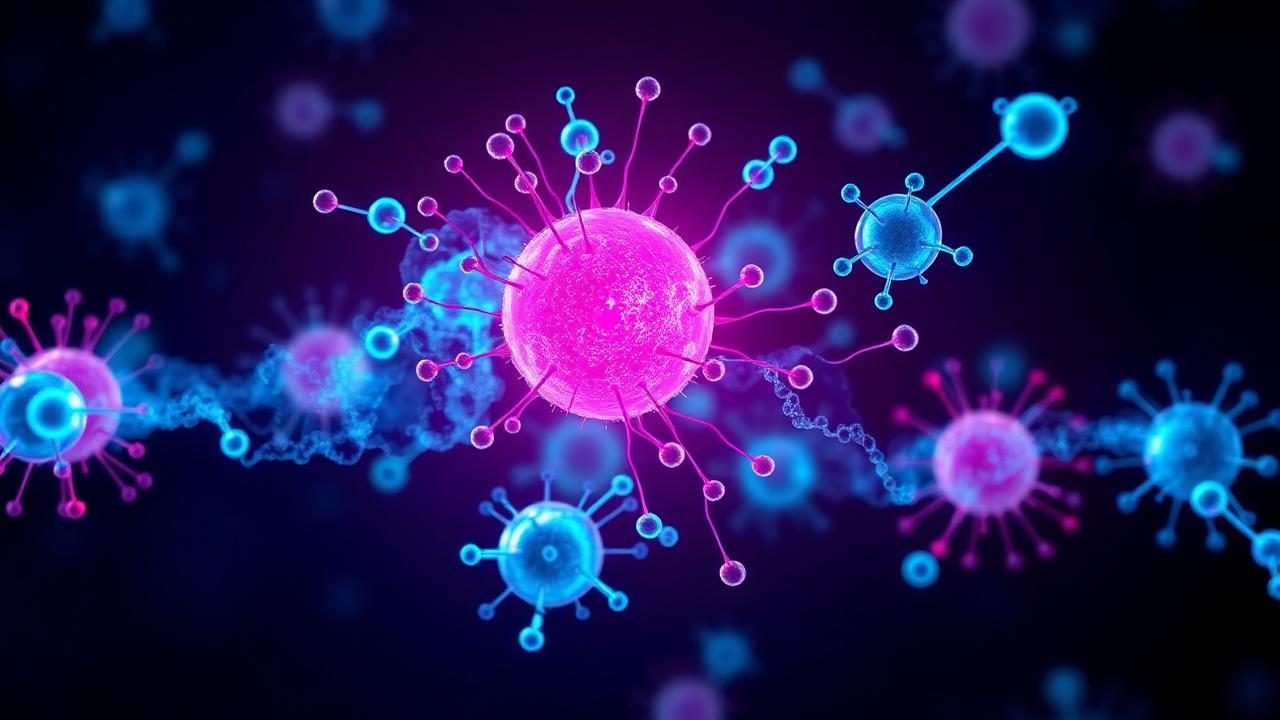
For years, the working assumption about stem cell therapy was simple, almost intuitive: stem cells repair damaged tissue by turning into new, healthy versions of that tissue — a stem cell becomes a new heart cell, a new cartilage cell, a new neuron, physically replacing what was lost. Decades of laboratory research have complicated that picture in a fascinating way. For the most commonly studied adult stem cell — the mesenchymal stem cell, or MSC — direct replacement (engraftment and differentiation) appears to be a relatively minor part of the story. Instead, a large and growing body of evidence points to MSCs acting more like a mobile pharmacy: they arrive at an injury site and secrete a cocktail of signaling molecules — growth factors, cytokines, and tiny membrane-wrapped packages called extracellular vesicles — that calm inflammation, recruit the body's own repair machinery, and protect struggling cells from dying. This is called the "paracrine" or "trophic" effect, and it has become influential enough that one of the field's founding scientists proposed renaming these cells entirely. This article walks through how that discovery unfolded, what MSCs actually secrete, two concrete examples of paracrine action, and what the current evidence does and doesn't support.
The Old Assumption: Stem Cells as Replacement Parts
Mesenchymal stem cells were first isolated from bone marrow and characterized for their capacity to differentiate into bone, cartilage, and fat cells in a dish. That capacity, combined with the general public understanding of "stem cells" as blank-slate building blocks, fed a natural hypothesis: inject MSCs into damaged tissue, and they will engraft, differentiate into the local cell type, and physically rebuild what was lost — much like a plumber replacing a broken pipe. This model guided much of the field's early clinical thinking.
The Paracrine Discovery: Signals, Not Just Substitutes
When researchers began tracking transplanted MSCs closely, a puzzle emerged: in many animal studies, injected MSCs showed measurable therapeutic benefit even though very few of the cells survived, engrafted long-term, or differentiated into the target tissue. Something else appeared to be doing the work. Arnold Caplan — the scientist often credited with coining the term "mesenchymal stem cell" in the first place — and colleague Daniel Correa helped popularize an alternative explanation in influential papers describing MSCs as "trophic mediators" that act largely through secreted factors rather than direct tissue replacement (Caplan & Dennis, Journal of Cellular Biochemistry, 2006; Caplan & Correa, "The MSC: An Injury Drugstore," Cell Stem Cell, 2011). The idea gained enough traction that in 2017, Caplan published a position piece in Stem Cells Translational Medicine arguing the field should rename MSCs "Medicinal Signaling Cells" — keeping the acronym but reflecting what he argued was their real job: manufacturing and releasing bioactive signals rather than becoming new tissue.
What MSCs Actually Secrete
Under the paracrine model, an MSC's therapeutic value lies in its secretome — everything it releases into its surroundings. Reviews of this secretome describe three broad categories: growth factors (proteins like VEGF and various growth-promoting factors that encourage tissue survival and vessel formation), cytokines (immune-signaling proteins that shift the local inflammatory environment), and extracellular vesicles or exosomes — nanoscale, membrane-bound packages that carry proteins, lipids, and genetic material (including microRNAs) from the MSC to neighboring or distant cells. A substantial body of recent work has focused specifically on these vesicles, since they appear able to reproduce many of the parent cell's beneficial effects even when isolated on their own, without any live cells being transplanted at all.
Immunomodulation: Calming an Overactive Immune Response
One of the best-documented paracrine effects is immunomodulation. Many injuries and chronic diseases involve an immune response that overshoots — inflammation that, left unchecked, causes additional tissue damage. Reviews of MSC immunobiology describe how MSCs sense their inflammatory environment and, in response, secrete factors that can shift immune cells like macrophages toward a less inflammatory, more reparative state, and can dampen the activity of certain T cells while supporting regulatory ones. This is not a blunt suppression of immunity but a context-dependent rebalancing act, and it is one of the leading explanations for why MSCs have shown benefit in models of inflammatory and autoimmune-type conditions in the lab.
Angiogenesis: Encouraging New Blood Vessel Growth
A second concrete paracrine mechanism is angiogenesis — the growth of new blood vessels. Damaged tissue is frequently starved of blood supply, which compounds injury and slows healing. Research on MSC paracrine activity has repeatedly identified secreted factors, including VEGF, that stimulate existing blood vessel cells to sprout and form new vasculature, at least in cell-culture and animal models of cardiovascular and ischemic injury. Restoring blood flow doesn't fix tissue by itself, but it removes one of the major bottlenecks to the body's own repair processes.
Why This Reframing Matters — And What It Doesn't Prove
Understanding MSCs as signaling cells rather than replacement parts changes what a realistic mechanism of benefit looks like. It suggests that even MSCs that don't survive long after injection could plausibly do therapeutic work in a short window, by nudging the local environment — less inflammation, more blood supply, less cell death — toward one where the body's own resident repair cells can do their job. That's a meaningfully different (and in some ways more modest) claim than "stem cells regrow your tissue."
It is important to be precise about what this reframing does not establish. The paracrine hypothesis is a mechanistic model, built primarily on cell-culture and animal-model evidence, explaining how MSCs could plausibly help. It is not, by itself, proof that any specific stem cell product or protocol produces reliable, meaningful clinical benefit in any specific human condition. Mechanism and clinical efficacy are separate questions, and a compelling mechanism does not guarantee that a marketed therapy delivers a good outcome for a given patient.
Current Evidence Limitations
This is where honest hedging matters most. Reviews of MSC clinical development have pointed to real, unresolved translational challenges: donor-to-donor and batch-to-batch variability in how cells are manufactured, inconsistent dosing and delivery routes across trials, a poor understanding of how long injected cells or their secreted factors persist in the human body, and clinical trial results that have often been mixed or inconsistent even when preclinical (lab and animal) data looked promising. In short: the paracrine model is currently the field's best-supported explanation for how MSCs might help — but "might help, and here's a plausible mechanism" is a very different sentence from "is proven to work for this condition." Readers evaluating any specific clinic's claims should look for condition-specific, well-controlled clinical trial evidence, not mechanism papers alone.
Bottom Line
Mesenchymal stem cells appear to help repair tissue mainly by acting as signaling factories — secreting growth factors, cytokines, and extracellular vesicles that quiet excess inflammation, encourage new blood vessel growth, and protect stressed cells — rather than by physically becoming the new tissue themselves. This "paracrine" or "trophic" model, popularized by Arnold Caplan's proposal to rename MSCs "Medicinal Signaling Cells," is well supported by laboratory and animal research and represents a genuine, still-unfolding scientific insight. But it remains a mechanistic explanation, not a clinical guarantee: translating this signaling activity into consistent, well-proven benefit for specific human conditions is an active area of research with real unresolved challenges, and no reader should treat "here's how it plausibly works" as equivalent to "this specific treatment is proven effective."
Key Questions Answered
- Do mesenchymal stem cells repair tissue by turning into new tissue?
- Mostly not. Research tracking transplanted MSCs found therapeutic benefit even when very few cells survived, engrafted, or differentiated. The leading explanation is paracrine signaling — the cells secrete factors that change the local environment rather than physically replacing lost tissue.
- What is the MSC secretome?
- Everything an MSC releases into its surroundings: growth factors such as VEGF that support cell survival and vessel formation, cytokines that reshape the local immune environment, and extracellular vesicles or exosomes carrying proteins, lipids, and microRNAs to nearby or distant cells.
- Why did Arnold Caplan propose renaming MSCs?
- Caplan, who is credited with coining "mesenchymal stem cell," argued in a 2017 Stem Cells Translational Medicine piece that the cells should be called "Medicinal Signaling Cells" — keeping the acronym but reflecting that their real job is manufacturing and releasing bioactive signals rather than becoming new tissue.
- What are the two best-documented paracrine effects?
- Immunomodulation — rebalancing an overactive immune response by shifting macrophages toward a reparative state and supporting regulatory T cells — and angiogenesis, in which secreted factors including VEGF stimulate new blood vessel growth in oxygen-starved tissue.
- Does the paracrine model prove stem cell therapies work?
- No. It is a mechanistic model built largely on cell-culture and animal evidence explaining how MSCs could plausibly help. Mechanism and clinical efficacy are separate questions, and clinical trial results remain mixed amid donor variability, inconsistent dosing, and poorly understood cell persistence.
Sources
- Caplan AI. Mesenchymal Stem Cells: Time to Change the Name! — Stem Cells Translational Medicine, 2017 — https://pubmed.ncbi.nlm.nih.gov/28452204/
- Caplan AI, Correa D. The MSC: An Injury Drugstore — Cell Stem Cell, 2011 — https://www.sciencedirect.com/science/article/pii/S1934590911002943
- Caplan AI, Dennis JE. Mesenchymal Stem Cells as Trophic Mediators — Journal of Cellular Biochemistry, 2006 — https://pubmed.ncbi.nlm.nih.gov/16619257/
- Effects of Mesenchymal Stem Cell-Derived Paracrine Signals and Their Delivery Strategies — PMC, 2021 — https://pmc.ncbi.nlm.nih.gov/articles/PMC7995150/
- Mesenchymal Stem/Stromal Cells and Their Paracrine Activity—Immunomodulation Mechanisms and How to Influence the Therapeutic Potential — PMC, 2022 — https://pmc.ncbi.nlm.nih.gov/articles/PMC8875256/
- Mesenchymal Stem/Stromal Cells for Therapeutic Angiogenesis — PMC, 2023 — https://pmc.ncbi.nlm.nih.gov/articles/PMC10486439/
- Challenges in Clinical Development of Mesenchymal Stromal/Stem Cells: Concise Review — Stem Cells Translational Medicine, Oxford Academic, 2019 — https://academic.oup.com/stcltm/article/8/11/1135/6403882
Related Articles
- Fundamentals
What Is Umbilical Cord Blood Banking? What Newborn Stem Cells Can (and Can't) Actually Treat
Cord blood banking explained: established transplant uses, public versus private storage, and the low odds of a healthy child using their own banked cells.
- Fundamentals
Myth: Because It's Your Own Cells, Autologous Stem Cell Therapy Is Risk-Free
Using your own cells does not make a procedure risk-free. Documented vision loss and FDA warnings reveal harvesting, injection, processing and biological risks.
- Fundamentals
Types of Cardiovascular Disease: Which Ones Are Being Studied With Stem Cell Therapy?
From heart attack to critical limb ischemia, cardiovascular stem cell evidence splits sharply by subtype — here's where research actually stands for each.