Myth: Donor (Allogeneic) Stem Cells Will Always Be Rejected by the Body, Just Like an Organ Transplant
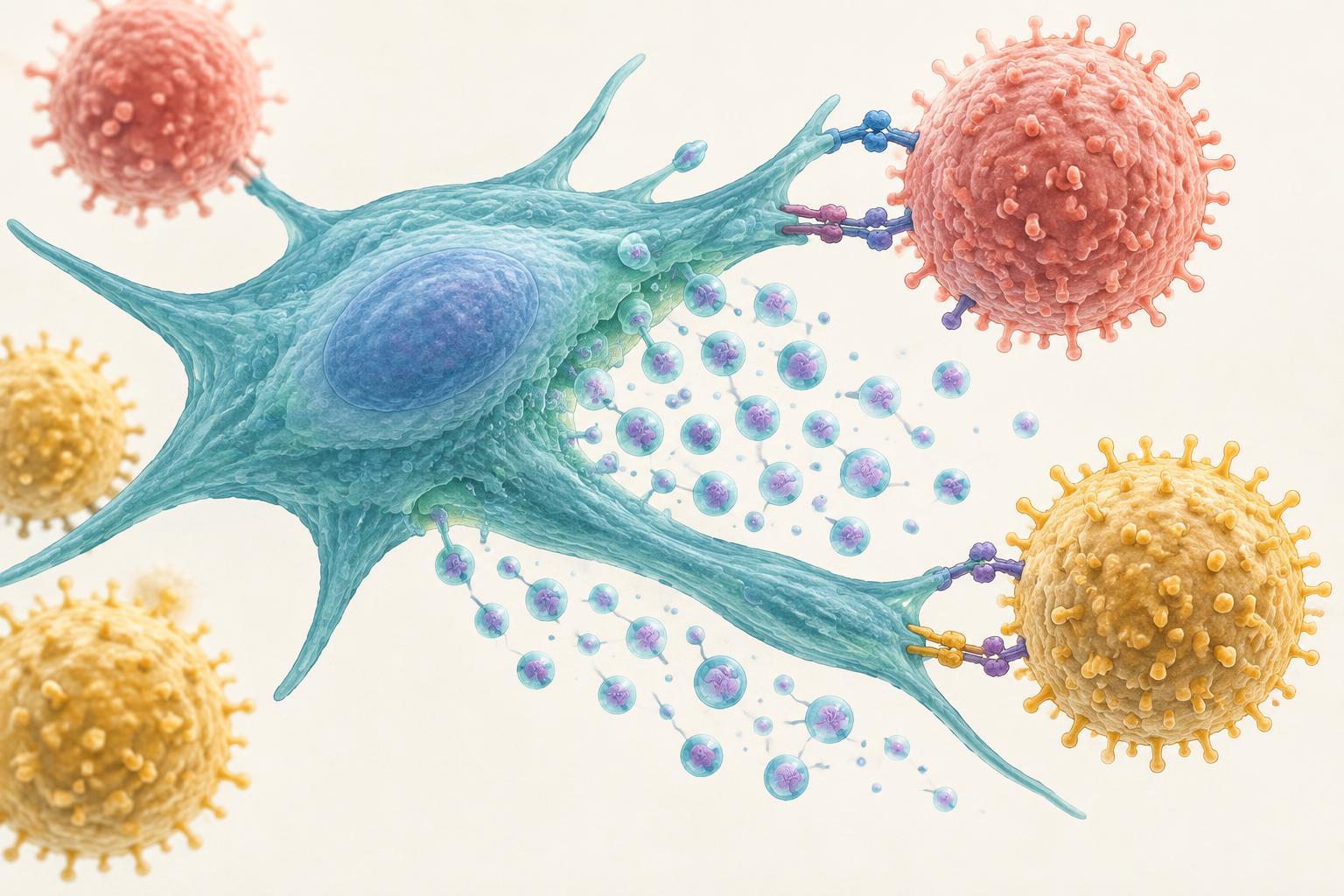
What this article covers
- What This Article Covers
- A common assumption is that any stem cells from a donor must trigger the same kind of immune rejection seen in kidney or heart transplants — meaning donor cells are inherently unsafe or doomed to fail unless the donor and recipient are closely matched. The reality is more nuanced: mesenchymal stem/stromal cells (MSCs), the cell type used in most donor-derived "allogeneic" stem cell products, have biological features that let them evade immediate immune attack, and a December 2024 FDA approval of an allogeneic MSC drug shows this isn't just theoretical.
- Why This Myth Persists
- The comparison to organ transplantation is intuitive. Solid organ transplants (kidney, liver, heart) are made of many cell types that heavily display MHC/HLA markers, which is why recipients need lifelong immunosuppressive drugs and close donor-recipient matching to avoid rejection.
- What the Evidence Actually Shows
- MSCs are biologically different from the cell types in solid organs in ways that reduce, but do not eliminate, immune detection:
- Why the Nuance Matters
- This doesn't mean donor-derived cell therapy carries zero immune risk. Infusion reactions, antibody formation against donor cells after repeated exposures, and reduced persistence or efficacy of allogeneic cells over time have all been documented in various studies.
- Bottom Line
- The organ-transplant comparison overstates the rejection risk of donor-derived mesenchymal stem cells, which have genuine (if imperfect and incompletely understood) ways of reducing immune detection — a property real enough to underlie an FDA-approved therapy. But calling MSCs "immune privileged" overstates the other direction; they are better described as immune evasive, capable of being recognized and cleared under the right conditions.
What This Article Covers
A common assumption is that any stem cells from a donor must trigger the same kind of immune rejection seen in kidney or heart transplants — meaning donor cells are inherently unsafe or doomed to fail unless the donor and recipient are closely matched. The reality is more nuanced: mesenchymal stem/stromal cells (MSCs), the cell type used in most donor-derived "allogeneic" stem cell products, have biological features that let them evade immediate immune attack, and a December 2024 FDA approval of an allogeneic MSC drug shows this isn't just theoretical. But "evade" doesn't mean "invisible forever" — allogeneic MSCs can still be recognized and cleared by the immune system over time, and that distinction matters for how patients and clinicians think about donor-derived therapies.
Why This Myth Persists
The comparison to organ transplantation is intuitive. Solid organ transplants (kidney, liver, heart) are made of many cell types that heavily display MHC/HLA markers, which is why recipients need lifelong immunosuppressive drugs and close donor-recipient matching to avoid rejection. Since stem cell therapy also involves introducing someone else's cells into a patient's body, it's a natural — but biologically inaccurate — leap to assume the same rejection risk and matching requirements apply.
What the Evidence Actually Shows
MSCs are biologically different from the cell types in solid organs in ways that reduce, but do not eliminate, immune detection:
- Low baseline immunogenicity: MSCs express little to no MHC class II and minimal costimulatory molecules (CD80, CD86, CD40) on their surface at rest, which are the signals T cells typically need to mount a strong rejection response.
- Active immunomodulation: MSCs secrete factors (e.g., prostaglandin E2, indoleamine 2,3-dioxygenase, TGF-β) that can locally dampen immune activity rather than provoke it.
- "Immune evasive," not "immune privileged": A widely cited 2014 analysis in Nature Biotechnology argued that MSCs should be described as immune evasive rather than truly immune privileged — they can delay or reduce detection, but inflammatory conditions (e.g., exposure to interferon-gamma) can upregulate MHC class II expression on MSCs, and host immune cells (including NK cells and memory T cells) can still recognize and clear allogeneic MSCs, particularly with repeated dosing.
- Regulatory evidence of feasibility: On December 18, 2024, the FDA approved Ryoncil (remestemcel-L-rknd), the first MSC therapy it has cleared, for steroid-refractory acute graft-versus-host disease in children 2 months and older. It uses allogeneic, donor-derived bone marrow MSCs. In the pivotal trial (54 pediatric patients), the Day-28 overall response rate was about 70%, with roughly 30% achieving a complete response and 41% a partial response. This approval — built on donor cells given without the organ-transplant model of tissue matching — is direct evidence that allogeneic MSC therapy can work without triggering the kind of rejection that defines solid-organ transplantation.
Why the Nuance Matters
This doesn't mean donor-derived cell therapy carries zero immune risk. Infusion reactions, antibody formation against donor cells after repeated exposures, and reduced persistence or efficacy of allogeneic cells over time have all been documented in various studies. The clinical reality sits between the two extremes: allogeneic MSCs are not immunologically invisible, but they also don't require the HLA matching, cross-matching, and lifelong immunosuppression that organ transplants demand. Patients considering an allogeneic stem cell product — especially outside a regulated clinical trial or FDA-approved pathway — should understand that "donor cells" doesn't automatically mean "rejection risk identical to a kidney transplant," but it also doesn't mean "risk-free" or "matching never matters." The specific cell type, dose, route, and clinical context all affect how the immune system responds.
Bottom Line
The organ-transplant comparison overstates the rejection risk of donor-derived mesenchymal stem cells, which have genuine (if imperfect and incompletely understood) ways of reducing immune detection — a property real enough to underlie an FDA-approved therapy. But calling MSCs "immune privileged" overstates the other direction; they are better described as immune evasive, capable of being recognized and cleared under the right conditions. Neither "rejection is inevitable" nor "rejection is impossible" is accurate.
Key Questions Answered
- Are donor MSCs inevitably rejected like a transplanted organ?
- No. MSCs have low baseline immunogenicity and immunomodulatory activity that reduce immediate immune detection, but donor cells can still be recognized and cleared.
- What does Ryoncil's approval demonstrate?
- Its December 18, 2024 FDA approval for steroid-refractory acute GVHD in children 2 months and older demonstrates that donor-derived bone marrow MSC therapy can work in a defined clinical setting.
- Does immune evasion mean donor MSCs are risk-free?
- No. Infusion reactions, antibodies after repeated exposure and reduced cell persistence remain possible. The cell type, dose, route and clinical context all affect immune response.
Sources
- "FDA Approves Remestemcel-L-rknd for Steroid-Refractory Acute Graft-Versus-Host Disease, Pediatric," U.S. Food and Drug Administration, 2024, https://www.fda.gov/drugs/resources-information-approved-drugs/fda-approves-remestemcel-l-rknd-steroid-refractory-acute-graft-versus-host-disease-pediatric
- "FDA DISCO Burst Edition: FDA Approval of Ryoncil (remestemcel-L-rknd) for Steroid-Refractory Acute Graft-vs-Host Disease," U.S. Food and Drug Administration, 2024, https://www.fda.gov/drugs/resources-information-approved-drugs/fda-disco-burst-edition-fda-approval-ryoncil-remestemcel-l-rknd-steroid-refractory-acute-graft
- "Mesenchymal Stem Cells: Immune Evasive, Not Immune Privileged," Ankrum JA, Ong JF, Karp JM, Nature Biotechnology, 2014, https://www.nature.com/articles/nbt.2816.pdf
- "FDA Approves First MSC Therapy for Steroid-Refractory Acute Graft-Versus-Host Disease," ecancer, 2024, https://ecancer.org/en/news/25842-fda-approves-remestemcel-l-rknd-for-steroid-refractory-acute-graft-versus-host-disease-in-paediatric-patients
Related Articles
- Fundamentals
What Is Angiogenesis, and Why Does It Matter for Stem Cell Therapy?
New blood vessels don't just show up — they're built, through a process called angiogenesis. Here's what it is, why the body depends on it for healing, and why so much stem cell research is focused on helping it along.
- Fundamentals
Myth: If a Treatment Is Listed on ClinicalTrials.gov, It Must Be Safe and Effective
Seeing a treatment listed on ClinicalTrials.gov can feel like a stamp of approval — but registering a trial costs nothing, requires no proof the treatment works, and isn't vetted by the government for safety or scientific quality.
- Fundamentals
What Are Organoids, and How Are They Grown From Stem Cells?
Organoids are tiny, self-organizing models grown from stem cells. They help study human biology and drug responses but are not complete transplant-ready organs.