Protecting Thyroid and Hormonal Health As You Age: What the Evidence Actually Shows
What this article covers
- What This Article Covers
- Thyroid function and reproductive hormones both shift gradually with age, and these shifts are easy to misread — as "just getting older," or as a problem demanding aggressive correction. The evidence sits in between: some drift in TSH, estrogen, and testosterone is a normal part of aging, some of it causes real symptoms worth evaluating, and major medical bodies explicitly caution against both ignoring red flags and over-testing or over-treating people who feel otherwise well.
- How Thyroid Function Changes With Age
- Thyroid-stimulating hormone (TSH) tends to drift upward with age, particularly after 65, though the average increase across a lifetime is modest — often well under 1 mIU/L — and varies by sex, iodine status, and other factors, according to American Thyroid Association–reviewed research summarized in its Clinical Thyroidology for the Public. 0 mIU/L compared with middle-aged adults, mainly after about age 70.
- Why Universal Thyroid Screening Isn't Recommended
- S. Preventive Services Task Force (USPSTF) gives thyroid dysfunction screening in nonpregnant, asymptomatic adults a Grade I rating — "insufficient evidence" to weigh benefits against harms — a 2015 statement reaffirmed as current after a 2024 evidence surveillance found no new data warranting a revision.
- Iodine and Selenium: What the Evidence Supports
- Both iodine and selenium are genuinely required for thyroid hormone production — the NIH Office of Dietary Supplements notes the thyroid gland holds a higher selenium concentration than any other organ and needs selenium to make and regulate hormones, with a recommended adult intake of 55 mcg/day and an upper limit of 400 mcg/day. For iodine, the relationship with thyroid dysfunction follows what the Geriatrics review describes as a U-shaped curve: both deficiency and excess raise risk, and older adults may be more vulnerable to iodine-induced thyroid dysfunction because of reduced thyroid reserve and slower kidney clearance of iodine.
- Sex Hormone Decline: Menopause and Age-Related Testosterone
- In women, estrogen and progesterone decline gradually during the menopausal transition (perimenopause), which typically begins years before periods stop; menopause itself occurs at a median age of 51, per the NIH's National Institute of Child Health and Human Development (NICHD). In men, total testosterone declines gradually with age, but the Endocrine Society's 2018 Clinical Practice Guideline on testosterone therapy draws a sharp line against treating this decline as a disease to be universally corrected: it advises against routinely prescribing testosterone to all men 65 and older with low levels, states that otherwise healthy men do not need hypogonadism screening, and requires that diagnosis combine consistent symptoms with unequivocally low, repeat-confirmed lab values (since roughly 30% of men with an initial low reading test normal on retesting) before treatment is considered.
What This Article Covers
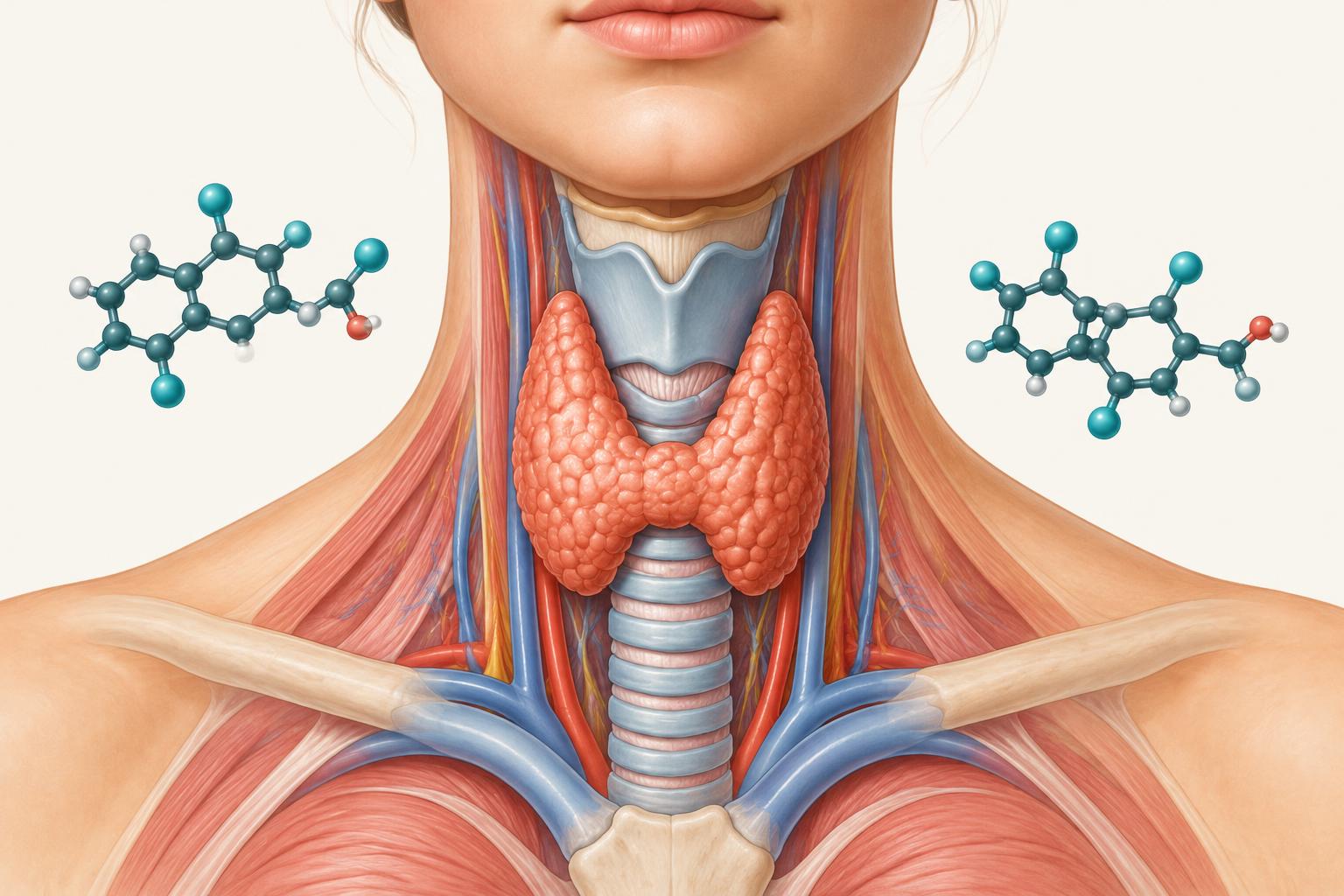
Thyroid function and reproductive hormones both shift gradually with age, and these shifts are easy to misread — as "just getting older," or as a problem demanding aggressive correction. The evidence sits in between: some drift in TSH, estrogen, and testosterone is a normal part of aging, some of it causes real symptoms worth evaluating, and major medical bodies explicitly caution against both ignoring red flags and over-testing or over-treating people who feel otherwise well. This article lays out what large studies and professional guidelines actually say about thyroid screening, iodine and selenium intake, and the age-related decline in sex hormones — and where the evidence stops.
How Thyroid Function Changes With Age
Thyroid-stimulating hormone (TSH) tends to drift upward with age, particularly after 65, though the average increase across a lifetime is modest — often well under 1 mIU/L — and varies by sex, iodine status, and other factors, according to American Thyroid Association–reviewed research summarized in its Clinical Thyroidology for the Public. A 2026 narrative review in Geriatrics notes that thyroid reserve and the gland's ability to adapt to iodine swings both decline with age, and that mean TSH rises roughly 0.5–1.0 mIU/L compared with middle-aged adults, mainly after about age 70. Subclinical hypothyroidism (a mildly elevated TSH with normal thyroid hormone levels) is common in later life: a 2019 review in Thyroid Research pooling multiple cohort studies found subclinical hypothyroidism prevalence of roughly 1.5% to 15% and overt hypothyroidism of roughly 0.2% to 5.7% among adults 60–65 and older, with wide variation across studies tied to gender mix, iodine intake, and ethnicity.
Why Universal Thyroid Screening Isn't Recommended
This is a point worth stating plainly because it cuts against intuition: the U.S. Preventive Services Task Force (USPSTF) gives thyroid dysfunction screening in nonpregnant, asymptomatic adults a Grade I rating — "insufficient evidence" to weigh benefits against harms — a 2015 statement reaffirmed as current after a 2024 evidence surveillance found no new data warranting a revision. The USPSTF notes that treating screening-detected (asymptomatic) thyroid dysfunction hasn't clearly improved quality of life, blood pressure, BMI, bone density, lipids, or cognition in trials lasting 1–2 years, while false positives, labeling, and overtreatment are likely harms. This does not mean thyroid testing is unimportant — it means routine screening of people without symptoms or risk factors lacks proven net benefit, and testing is better targeted at people with symptoms, a goiter, a strong family or personal history, or other risk factors, with any abnormal TSH confirmed by repeat testing before acting on it.
Iodine and Selenium: What the Evidence Supports
Both iodine and selenium are genuinely required for thyroid hormone production — the NIH Office of Dietary Supplements notes the thyroid gland holds a higher selenium concentration than any other organ and needs selenium to make and regulate hormones, with a recommended adult intake of 55 mcg/day and an upper limit of 400 mcg/day. For iodine, the relationship with thyroid dysfunction follows what the Geriatrics review describes as a U-shaped curve: both deficiency and excess raise risk, and older adults may be more vulnerable to iodine-induced thyroid dysfunction because of reduced thyroid reserve and slower kidney clearance of iodine. The practical, evidence-aligned guidance from that review: get iodine and selenium primarily from diet, and supplement only for a confirmed deficiency — not preemptively, since excess intake carries its own documented risk.
Sex Hormone Decline: Menopause and Age-Related Testosterone
In women, estrogen and progesterone decline gradually during the menopausal transition (perimenopause), which typically begins years before periods stop; menopause itself occurs at a median age of 51, per the NIH's National Institute of Child Health and Human Development (NICHD). In men, total testosterone declines gradually with age, but the Endocrine Society's 2018 Clinical Practice Guideline on testosterone therapy draws a sharp line against treating this decline as a disease to be universally corrected: it advises against routinely prescribing testosterone to all men 65 and older with low levels, states that otherwise healthy men do not need hypogonadism screening, and requires that diagnosis combine consistent symptoms with unequivocally low, repeat-confirmed lab values (since roughly 30% of men with an initial low reading test normal on retesting) before treatment is considered.
Bottom Line
Mild upward drift in TSH and gradual decline in estrogen or testosterone are expected parts of aging, not automatically diseases requiring correction — and major guideline bodies (USPSTF, Endocrine Society) explicitly recommend against screening or treating asymptomatic people on the basis of age or mildly abnormal numbers alone. At the same time, real symptoms — fatigue, weight change, mood changes, menstrual irregularity, sexual dysfunction, cold intolerance, or a neck lump — warrant evaluation by a clinician who can order the right confirmatory tests rather than acting on a single value. Diet-first iodine and selenium intake, with supplementation reserved for confirmed deficiency, is the evidence-supported nutritional approach; there is no mainstream evidence supporting aggressive "hormone optimization" in asymptomatic older adults.
Key Questions Answered
- Does aging alone justify routine thyroid screening?
- The USPSTF finds insufficient evidence for routine screening of nonpregnant, asymptomatic adults. Symptoms and risk factors can warrant testing, with an abnormal TSH confirmed before acting.
- Should older adults take iodine and selenium supplements preventively?
- The evidence-aligned approach is diet-first intake, with supplementation reserved for confirmed deficiency. Both iodine deficiency and excess can increase thyroid-dysfunction risk.
- Should low testosterone be treated on the basis of age alone?
- No. The Endocrine Society advises against routinely prescribing testosterone to all men aged 65 and older with low levels. Diagnosis requires consistent symptoms and unequivocally low, repeat-confirmed laboratory values.
Sources
- Screening for Thyroid Dysfunction: US Preventive Services Task Force Recommendation Statement, USPSTF, 2015 (current per 2024 evidence surveillance), https://www.uspreventiveservicestaskforce.org/uspstf/recommendation/thyroid-dysfunction-screening
- TSH and Aging, Clinical Thyroidology for the Public, American Thyroid Association, https://www.thyroid.org/?p=79268
- Testosterone Therapy in Men With Hypogonadism: An Endocrine Society Clinical Practice Guideline, Endocrine Society, 2018, https://www.endocrine.org/news-and-advocacy/news-room/2018/experts-issue-recommendations-to-improve-testosterone-prescribing-practices
- Iodine and Thyroid Dysfunction in Ageing: Nutritional, Pharmacologic, and Microbial Modifiers in Older Adults, Geriatrics (MDPI), 2026, https://pmc.ncbi.nlm.nih.gov/articles/PMC12922011
- Selenium — Consumer Fact Sheet, NIH Office of Dietary Supplements, https://ods.od.nih.gov/factsheets/Selenium-Consumer/
- Menopause — Condition Information, NICHD / NIH, https://www.nichd.nih.gov/health/topics/menopause/conditioninfo/default
- Hypothyroidism in the older population, Thyroid Research, 2019, https://pmc.ncbi.nlm.nih.gov/articles/PMC6367787
Related Articles
- Fundamentals
What Is Angiogenesis, and Why Does It Matter for Stem Cell Therapy?
New blood vessels don't just show up — they're built, through a process called angiogenesis. Here's what it is, why the body depends on it for healing, and why so much stem cell research is focused on helping it along.
- Fundamentals
Myth: If a Treatment Is Listed on ClinicalTrials.gov, It Must Be Safe and Effective
Seeing a treatment listed on ClinicalTrials.gov can feel like a stamp of approval — but registering a trial costs nothing, requires no proof the treatment works, and isn't vetted by the government for safety or scientific quality.
- Fundamentals
What Are Organoids, and How Are They Grown From Stem Cells?
Organoids are tiny, self-organizing models grown from stem cells. They help study human biology and drug responses but are not complete transplant-ready organs.