Myth: Stem Cell Therapy Can Treat or Cure Almost Any Disease
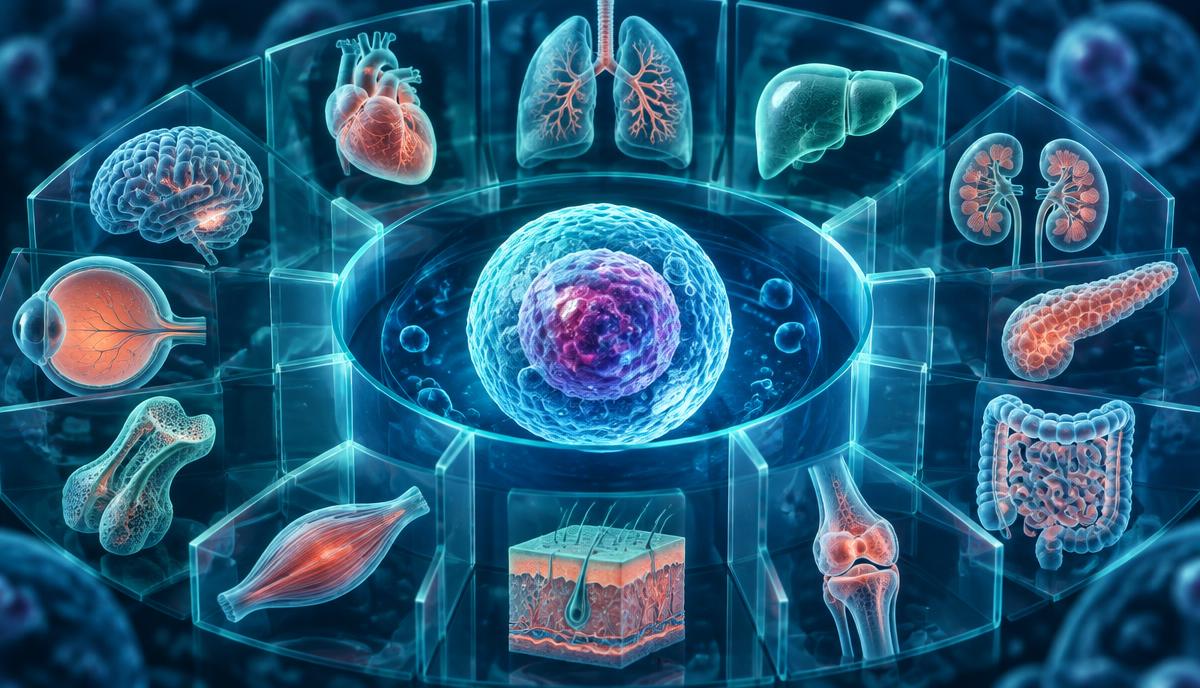
What this article covers
- What This Article Covers
- A persistent misconception, fueled by decades of hopeful media coverage and aggressive clinic marketing, holds that stem cells are a kind of universal biological fix — able to repair joints, reverse neurological disease, treat autoimmune conditions, slow aging, and even help with autism. The reality is far narrower.
- The Myth: "Stem Cells Can Fix Almost Anything"
- Walk into many direct-to-market regenerative medicine clinics or browse their websites and you'll find stem cell injections marketed for arthritis, back pain, tendon and ligament injuries, multiple sclerosis, Parkinson's disease, ALS, autism, lupus, COPD, heart failure, erectile dysfunction, and "anti-aging" rejuvenation — often backed by patient testimonials rather than clinical trial data. The underlying idea — that stem cells, because they can become other cell types, must therefore be able to treat almost any disease involving tissue damage — is a reasonable-sounding oversimplification of real but limited science.
- Why the Gap Between Marketing and Evidence Persists
- S. businesses nonetheless market such treatments, often operating in a legal gray zone and relying on patient anecdotes rather than controlled trials.
- Bottom Line
- Stem cell science is real, and hematopoietic stem cell transplantation is one of modern medicine's genuine success stories for certain blood cancers and blood disorders. But "stem cells" is not a single treatment, and the therapy's proven, FDA-approved uses remain a short, specific list — not a cure-all.
What This Article Covers
A persistent misconception, fueled by decades of hopeful media coverage and aggressive clinic marketing, holds that stem cells are a kind of universal biological fix — able to repair joints, reverse neurological disease, treat autoimmune conditions, slow aging, and even help with autism. The reality is far narrower. As of today, the FDA has licensed only a small, specific set of stem cell-based products, almost all of them for diseases of the blood-forming system, and it has repeatedly warned the public that the vast majority of conditions advertised by "stem cell clinics" — orthopedic, neurological, autoimmune, cosmetic, and more — remain unapproved and scientifically unproven. This piece lays out exactly what is approved, what isn't, and why the gap between hype and evidence is so wide.
The Myth: "Stem Cells Can Fix Almost Anything"
Walk into many direct-to-market regenerative medicine clinics or browse their websites and you'll find stem cell injections marketed for arthritis, back pain, tendon and ligament injuries, multiple sclerosis, Parkinson's disease, ALS, autism, lupus, COPD, heart failure, erectile dysfunction, and "anti-aging" rejuvenation — often backed by patient testimonials rather than clinical trial data. The underlying idea — that stem cells, because they can become other cell types, must therefore be able to treat almost any disease involving tissue damage — is a reasonable-sounding oversimplification of real but limited science.
What's Actually FDA-Approved
The approved reality is narrow:
Hematopoietic (blood-forming) stem cell transplants — using bone marrow, peripheral blood, or umbilical cord blood stem cells — are a well-established, decades-proven standard of care. The National Cancer Institute identifies them as most often used for leukemia, lymphoma, multiple myeloma, and myelodysplastic syndromes, along with select pediatric solid tumors and non-cancer conditions such as aplastic anemia and sickle cell disease. Other cancer types are still being studied in clinical trials.
As FDA-licensed products specifically, the agency has been explicit: "the only stem cell products that are FDA-approved for use in the United States consist of blood-forming stem cells (also known as hematopoietic progenitor cells) that are derived from umbilical cord blood" — and even these are approved only for disorders affecting the blood-forming system, not other uses. Licensed cord-blood-derived products include names such as ALLOCORD, HEMACORD, CLEVECORD, and Ducord.
A handful of other cellular/gene therapies have cleared FDA approval for narrow indications — for example, RYONCIL (remestemcel-L), a mesenchymal stromal cell product approved in December 2024 for pediatric steroid-refractory graft-versus-host disease, and LANTIDRA, an allogeneic pancreatic islet cell product for type 1 diabetes. Overall, the FDA has approved roughly three dozen cell and gene therapies to date, but only a small fraction involve stem cells at all, and fewer still are approved for anything beyond this short list of specific indications. Notably, there are currently no FDA-approved exosome products of any kind.
Why the Gap Between Marketing and Evidence Persists
The FDA has stated plainly that unapproved regenerative products marketed for conditions like COVID-19, ALS, Alzheimer's, Parkinson's, multiple sclerosis, stroke, macular degeneration, heart and lung disease, arthritis, back pain, autism, chronic pain, and fatigue "have not been shown to be safe or effective, and, in some cases, may have significant safety issues that put patients at risk." Hundreds of U.S. businesses nonetheless market such treatments, often operating in a legal gray zone and relying on patient anecdotes rather than controlled trials. The FDA has issued warning letters and public safety notices to companies making these claims, and the International Society for Stem Cell Research (ISSCR) has publicly applauded joint FDA and FTC enforcement actions against clinics it describes as deceptive — without this meaning every stem cell application outside the approved list is fraudulent, only that it is unproven and unregulated to the same standard.
How to Protect Yourself
- Ask directly whether the specific product you're being offered has FDA approval (a Biologics License Application) or is being administered under an active FDA Investigational New Drug (IND) application tied to a registered clinical trial.
- Check whether the treatment appears on ClinicalTrials.gov and what phase it's in — being "in a trial" is not the same as being proven effective.
- Be skeptical of any clinic claiming its stem cells can treat a long, unrelated list of diseases; legitimate, well-studied therapies tend to have narrow, specific indications, not broad ones.
- Consult independent patient resources, such as the ISSCR's patient guide, before paying for or undergoing an unproven procedure.
Bottom Line
Stem cell science is real, and hematopoietic stem cell transplantation is one of modern medicine's genuine success stories for certain blood cancers and blood disorders. But "stem cells" is not a single treatment, and the therapy's proven, FDA-approved uses remain a short, specific list — not a cure-all. For nearly every other condition commonly advertised — orthopedic, neurological, autoimmune, cosmetic, or otherwise — the treatments remain investigational, and the FDA has repeatedly warned that marketing claims for them have outpaced the evidence.
Sources
- Important Patient and Consumer Information About Regenerative Medicine Therapies, U.S. Food and Drug Administration (FDA), last updated 2024 — https://www.fda.gov/vaccines-blood-biologics/consumers-biologics/important-patient-and-consumer-information-about-regenerative-medicine-therapies
- Consumer Alert on Regenerative Medicine Products Including Stem Cells and Exosomes, U.S. Food and Drug Administration (FDA), last updated 2024 — https://www.fda.gov/vaccines-blood-biologics/consumers-biologics/consumer-alert-regenerative-medicine-products-including-stem-cells-and-exosomes
- Stem Cell Transplant Fact Sheet, National Cancer Institute (NCI), National Institutes of Health — https://cancer.gov/about-cancer/treatment/types/stem-cell-transplant/stem-cell-fact-sheet
- The ISSCR Guide to Stem Cell Treatments, International Society for Stem Cell Research (ISSCR) — https://www.isscr.org/resources/patient-guide
- ISSCR Applauds FDA, FTC for Holding Deceptive Stem Cell Clinics Accountable, International Society for Stem Cell Research (ISSCR) — https://www.isscr.org/isscr-news/isscr-applauds-fda-ftc-for-holding-deceptive-stem-cell-clinics-accountable
- What Are the Current FDA-Approved Cell and Gene Therapies? How Many of Those Involve True Stem Cells?, The Niche (ipscell.com), 2025 — https://ipscell.com/2025/01/updated-2025-list-of-fda-approved-cell-and-gene-therapies/
Related Articles
- Fundamentals
What Is a Hematopoietic Stem Cell Transplant? A Beginner's Guide to Bone Marrow and Cord Blood Transplants
How bone marrow and cord blood transplants work, from donor matching and conditioning to engraftment, recovery, indications and serious risks.
- Fundamentals
Types of Neurodegenerative Disease: Which Ones Are Being Studied With Stem Cell Therapy?
Compare stem cell research across Parkinson’s, Huntington’s, ALS, Alzheimer’s, MSA and dementias by trial phase, evidence quality and treatment status.
- Fundamentals
Preventing Sarcopenia: What the Evidence Says About Preserving Muscle Health As You Age
Resistance training, protein and activity help preserve muscle as we age; satellite cells remain responsive, while cell therapies for sarcopenia are unproven.