Protecting Bladder and Urinary Health As You Age: What the Evidence Shows
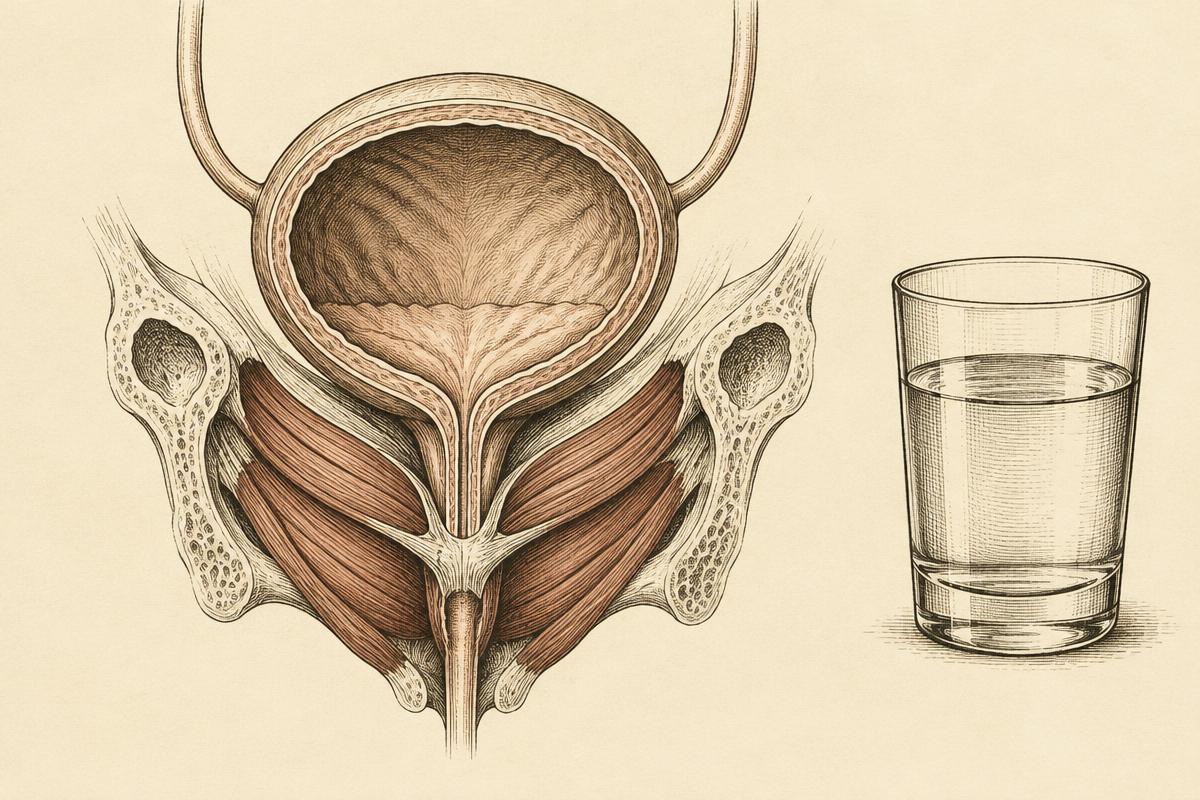
What this article covers
- What This Article Covers
- " A substantial share of risk is modifiable: pelvic floor strength, fluid and diet habits, weight, smoking status, and infection-prevention habits all have real, study-backed effects on bladder function. This article focuses on what a person can actually do — not on diagnosing or treating a specific bladder disorder (see our companion pieces on urological disorders, stress urinary incontinence, and interstitial cystitis for condition-specific detail) — and is honest about where the evidence is strong, where it's modest, and where it's still mixed.
- Why Bladder Health Changes With Age
- Bladder capacity, muscle tone, and nerve signaling to the bladder all shift over time, and in women, declining estrogen after menopause thins the tissue lining the urethra and bladder. The National Institute of Diabetes and Digestive and Kidney Diseases (NIDDK) notes that urinary incontinence is common but not a normal, unavoidable part of aging — it has identifiable causes and, importantly, treatable ones.
- Pelvic Floor Exercises: The Best-Supported Intervention
- Of everything in this article, pelvic floor muscle training (Kegel exercises) has the strongest evidence behind it, particularly for stress and mixed incontinence. Mayo Clinic's patient guidance describes how to correctly identify and contract the pelvic floor muscles — tightening as if stopping urine flow, holding briefly, and releasing, repeated in sets — and NIDDK lists pelvic floor training among the first-line behavioral treatments clinicians recommend before medication or surgery.
- Hydration and Diet: What Helps, What Irritates
- Both under-drinking and habitually "irritating" the bladder can work against you. NIDDK's dietary guidance for bladder health points to caffeine, alcohol, carbonated drinks, and acidic or spicy foods as commonly reported bladder irritants that can worsen urgency and frequency in sensitive individuals — worth trialing a reduction if you notice a pattern, though responses vary person to person.
- Preventing Urinary Tract Infections
- UTIs become more frequent with age, especially in postmenopausal women. A 2023 Cochrane systematic review found that cranberry products modestly reduce the risk of symptomatic, recurrent UTIs in women — a genuinely encouraging, evidence-backed option for people prone to recurrence, though the effect is more established in that group than in others.
What This Article Covers
Bladder and urinary symptoms become more common with age, but "more common" does not mean "inevitable" or "untreatable." A substantial share of risk is modifiable: pelvic floor strength, fluid and diet habits, weight, smoking status, and infection-prevention habits all have real, study-backed effects on bladder function. This article focuses on what a person can actually do — not on diagnosing or treating a specific bladder disorder (see our companion pieces on urological disorders, stress urinary incontinence, and interstitial cystitis for condition-specific detail) — and is honest about where the evidence is strong, where it's modest, and where it's still mixed.
Why Bladder Health Changes With Age
Bladder capacity, muscle tone, and nerve signaling to the bladder all shift over time, and in women, declining estrogen after menopause thins the tissue lining the urethra and bladder. The National Institute of Diabetes and Digestive and Kidney Diseases (NIDDK) notes that urinary incontinence is common but not a normal, unavoidable part of aging — it has identifiable causes and, importantly, treatable ones. That distinction matters: persistent symptoms are a signal to investigate, not a condition to simply accept.
Pelvic Floor Exercises: The Best-Supported Intervention
Of everything in this article, pelvic floor muscle training (Kegel exercises) has the strongest evidence behind it, particularly for stress and mixed incontinence. Mayo Clinic's patient guidance describes how to correctly identify and contract the pelvic floor muscles — tightening as if stopping urine flow, holding briefly, and releasing, repeated in sets — and NIDDK lists pelvic floor training among the first-line behavioral treatments clinicians recommend before medication or surgery. Consistency matters more than intensity: benefits typically build over weeks to months, not days.
Hydration and Diet: What Helps, What Irritates
Both under-drinking and habitually "irritating" the bladder can work against you. NIDDK's dietary guidance for bladder health points to caffeine, alcohol, carbonated drinks, and acidic or spicy foods as commonly reported bladder irritants that can worsen urgency and frequency in sensitive individuals — worth trialing a reduction if you notice a pattern, though responses vary person to person. At the same time, drinking too little in an effort to reduce trips to the bathroom can concentrate urine and irritate the bladder lining further, so the practical goal is steady, adequate hydration rather than restriction.
Preventing Urinary Tract Infections
UTIs become more frequent with age, especially in postmenopausal women. A 2023 Cochrane systematic review found that cranberry products modestly reduce the risk of symptomatic, recurrent UTIs in women — a genuinely encouraging, evidence-backed option for people prone to recurrence, though the effect is more established in that group than in others. Beyond that, adequate fluid intake and prompt urination (not routinely "holding it") remain sensible, low-risk habits for reducing infection risk.
Habits That Protect (or Harm) the Bladder
- Weight management: In a well-conducted randomized trial published in the New England Journal of Medicine, overweight and obese women who achieved modest weight loss through a structured program had significantly greater reductions in weekly incontinence episodes than women whose weight didn't change — one of the clearer causal lifestyle findings in this field.
- Smoking cessation: The American Cancer Society identifies smoking as the single largest modifiable risk factor for bladder cancer, since carcinogens in tobacco smoke are filtered through the kidneys and concentrated in urine, prolonging bladder tissue exposure. Quitting lowers that risk over time and benefits overall urinary and vascular health.
- Timed voiding and bladder training: NIDDK describes scheduled, gradually-lengthened bathroom visits as an evidence-based behavioral strategy for urgency and overactive bladder symptoms, helping retrain the bladder-brain signaling that governs urge.
When to See a Urologist
See a clinician if you notice blood in the urine, pain or burning with urination, recurrent infections, sudden inability to urinate, incontinence that disrupts daily life, or any new or worsening symptom — these warrant evaluation rather than self-management, since several serious conditions share early symptoms with ordinary age-related changes.
Bottom Line
Bladder health in later life responds meaningfully to a handful of concrete habits: strengthening the pelvic floor, moderating known irritants without under-hydrating, managing weight, quitting smoking, and using timed voiding to retrain urgency. None of these guarantee immunity from bladder disease, and symptoms that persist or worsen still deserve a medical evaluation — but within that honest frame, the evidence for these specific, modifiable habits is genuinely encouraging.
Key Questions Answered
- Is urinary incontinence a normal part of aging?
- No. NIDDK notes it is common but not a normal, unavoidable part of aging, and it has identifiable, treatable causes.
- What is the best-supported habit for bladder health?
- Pelvic floor muscle training (Kegel exercises), particularly for stress and mixed incontinence; benefits build over weeks to months.
- Do cranberry products prevent UTIs?
- A 2023 Cochrane review found cranberry products modestly reduce the risk of symptomatic, recurrent UTIs in women.
Sources
- Bladder Control Problems (Urinary Incontinence), National Institute of Diabetes and Digestive and Kidney Diseases (NIDDK) — https://www.niddk.nih.gov/health-information/urologic-diseases/bladder-control-problems
- Eating, Diet, & Nutrition for Bladder Infection (UTI) in Adults, NIDDK — https://www.niddk.nih.gov/health-information/urologic-diseases/bladder-infection-uti-in-adults/eating-diet-nutrition
- Kegel exercises: A how-to guide for women, Mayo Clinic — https://www.mayoclinic.org/kegel-exercises/art-20045283
- Cranberries for preventing urinary tract infections, Cochrane Database of Systematic Reviews, 2023 — https://pubmed.ncbi.nlm.nih.gov/37947276/
- Weight Loss to Treat Urinary Incontinence in Overweight and Obese Women, New England Journal of Medicine, 2009 — https://pubmed.ncbi.nlm.nih.gov/19179316/
- Bladder Cancer Risk Factors, American Cancer Society — https://www.cancer.org/cancer/types/bladder-cancer/causes-risks-prevention/risk-factors.html
Related Articles
- Fundamentals
What Is Angiogenesis, and Why Does It Matter for Stem Cell Therapy?
New blood vessels don't just show up — they're built, through a process called angiogenesis. Here's what it is, why the body depends on it for healing, and why so much stem cell research is focused on helping it along.
- Fundamentals
Myth: If a Treatment Is Listed on ClinicalTrials.gov, It Must Be Safe and Effective
Seeing a treatment listed on ClinicalTrials.gov can feel like a stamp of approval — but registering a trial costs nothing, requires no proof the treatment works, and isn't vetted by the government for safety or scientific quality.
- Fundamentals
What Are Organoids, and How Are They Grown From Stem Cells?
Organoids are tiny, self-organizing models grown from stem cells. They help study human biology and drug responses but are not complete transplant-ready organs.