Protecting Bone Health As You Age: What the Evidence Actually Shows
What this article covers
- What This Article Covers
- Bone loss after midlife is common, but it is not inevitable in its severity, and it is more responsive to specific, well-studied interventions than many people realize. This article walks through what the evidence actually shows about exercise, nutrition, and fall prevention for maintaining bone strength as you age — and where early-stage regenerative medicine research into bone biology fits into the bigger picture.
- The Scale of the Problem
- Bone density naturally declines with age, and the drop accelerates for women after menopause as estrogen — which helps regulate bone turnover — declines. According to the Bone Health & Osteoporosis Foundation, roughly 10 million Americans have osteoporosis and another 44 million have low bone density that raises fracture risk.
- The Exercise That Actually Builds Bone
- Not all exercise affects bone equally. Walking and swimming support cardiovascular and muscular health but provide relatively modest loading for bone.
- Getting Calcium and Vitamin D Right
- Exercise works best alongside adequate raw materials for bone formation. The Bone Health & Osteoporosis Foundation recommends 1,200 mg of calcium daily for women 51 and older and men 71 and older (1,000 mg for younger adults), along with 800–1,000 IU of vitamin D daily for adults 50 and up, preferably from a combination of diet, sunlight, and supplements as needed.
- Reducing Fall and Fracture Risk
- Because most fractures result from a fall, strength and balance training — not just bone density — meaningfully affects outcomes. Public health guidance from the CDC's STEADI (Stopping Elderly Accidents, Deaths, and Injuries) initiative emphasizes balance-focused exercise, home hazard reduction, and medication review as core, evidence-based strategies for lowering fall risk in older adults, complementing the bone-building effects of resistance training.
What This Article Covers
Bone loss after midlife is common, but it is not inevitable in its severity, and it is more responsive to specific, well-studied interventions than many people realize. This article walks through what the evidence actually shows about exercise, nutrition, and fall prevention for maintaining bone strength as you age — and where early-stage regenerative medicine research into bone biology fits into the bigger picture.
The Scale of the Problem
Bone density naturally declines with age, and the drop accelerates for women after menopause as estrogen — which helps regulate bone turnover — declines. According to the Bone Health & Osteoporosis Foundation, roughly 10 million Americans have osteoporosis and another 44 million have low bone density that raises fracture risk. One in two women and up to one in four men over age 50 will break a bone because of osteoporosis, and for women, the foundation notes that lifetime fracture risk exceeds the combined risk of heart attack, stroke, and breast cancer. These fractures are not minor: hip fractures in particular are associated with significant loss of independence. The encouraging part is that bone remains metabolically active tissue throughout life, meaning it responds to mechanical loading and nutrition well into older age.
The Exercise That Actually Builds Bone
Not all exercise affects bone equally. Walking and swimming support cardiovascular and muscular health but provide relatively modest loading for bone. The strongest evidence points to resistance and impact training. A randomized controlled trial known as LIFTMOR, published in the Journal of Bone and Mineral Research, had postmenopausal women with low bone mass perform supervised high-intensity resistance and impact training — barbell-based lifts at more than 85% of one-repetition maximum, twice weekly for eight months. The training group gained 2.9% in lumbar spine bone density and essentially held femoral neck density steady (a 0.3% gain), while the control group lost 1.2% and 1.9% at those sites respectively. Notably, the high-intensity protocol did not cause new vertebral fractures, challenging the assumption that women with low bone mass must avoid heavier loading. A Cochrane systematic review of exercise trials in postmenopausal women similarly supports combined weight-bearing and resistance programs for preserving bone mineral density, particularly at the spine and hip.
Getting Calcium and Vitamin D Right
Exercise works best alongside adequate raw materials for bone formation. The Bone Health & Osteoporosis Foundation recommends 1,200 mg of calcium daily for women 51 and older and men 71 and older (1,000 mg for younger adults), along with 800–1,000 IU of vitamin D daily for adults 50 and up, preferably from a combination of diet, sunlight, and supplements as needed. Getting more than the recommended amount does not appear to provide additional bone benefit and isn't advised without medical guidance.
Reducing Fall and Fracture Risk
Because most fractures result from a fall, strength and balance training — not just bone density — meaningfully affects outcomes. Public health guidance from the CDC's STEADI (Stopping Elderly Accidents, Deaths, and Injuries) initiative emphasizes balance-focused exercise, home hazard reduction, and medication review as core, evidence-based strategies for lowering fall risk in older adults, complementing the bone-building effects of resistance training.
Where Regenerative Medicine Research Intersects
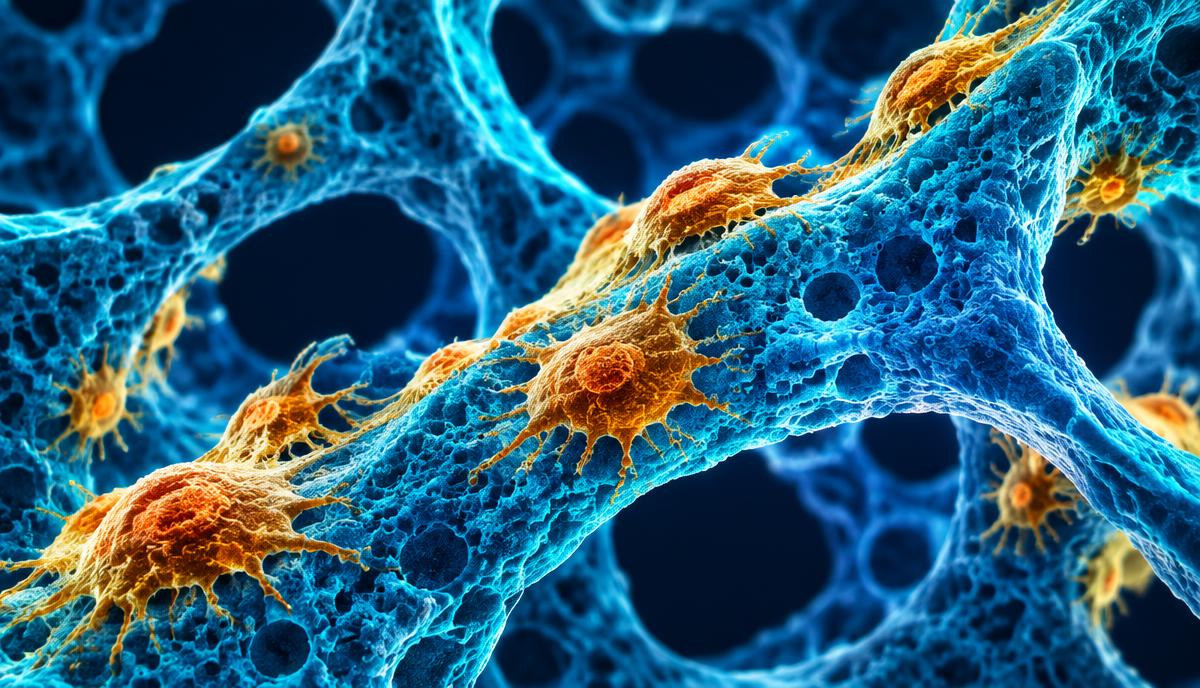
Bone marrow is also where researchers are exploring regenerative approaches to bone loss. Preclinical work out of the Ottawa Hospital Research Institute, for example, found that a single infusion of bone-marrow-derived mesenchymal stem cells nearly doubled the rate of bone renewal and restored healthier bone architecture in an aged mouse model of osteoporosis. This research remains at the animal-study stage — it has not yet been tested in people for osteoporosis specifically — but it illustrates why bone marrow and mesenchymal stem cell biology are an active area of interest for future bone-health therapies, alongside the already well-established behavioral tools available today.
Bottom Line
The clearest, most evidence-backed way to protect bone health as you age combines progressive resistance and impact exercise, adequate calcium and vitamin D, and fall-prevention strategies — tools supported by randomized trials and public health guidance available right now. Regenerative approaches using bone marrow–derived stem cells are a genuinely promising research direction, but they remain in early, preclinical stages for osteoporosis and are not yet a clinical option. Anyone with diagnosed osteoporosis or low bone density should work with a physician before starting a high-intensity training program.
Sources
- Watson SL, et al. "High-Intensity Resistance and Impact Training Improves Bone Mineral Density and Physical Function in Postmenopausal Women With Osteopenia and Osteoporosis: The LIFTMOR Randomized Controlled Trial." Journal of Bone and Mineral Research, 2018. https://academic.oup.com/jbmr/article/33/2/211/7605709
- Howe TE, et al. "Exercise for preventing and treating osteoporosis in postmenopausal women." Cochrane Database of Systematic Reviews. https://www.cochranelibrary.com/cdsr/doi/10.1002/14651858.CD000333
- Bone Health & Osteoporosis Foundation. "Osteoporosis Fast Facts." https://bonehealthandosteoporosis.org/wp-content/uploads/Osteoporosis-Fast-Facts-2.pdf
- Bone Health & Osteoporosis Foundation (formerly National Osteoporosis Foundation). "Calcium and Vitamin D Recommendations." https://www.bonehealthandosteoporosis.org/wp-content/uploads/2016/01/1252.pdf
- Centers for Disease Control and Prevention. "STEADI – Older Adult Fall Prevention." https://www.cdc.gov/steadi/
- Ottawa Hospital Research Institute. "Stem cell therapy rejuvenates old, brittle bones in osteoporosis model." https://ohri.ca/en/newsroom/stem-cell-therapy-rejuvenates-old-brittle-bones-osteoporosis-model
Related Articles
- Fundamentals
What Are Organoids? How Scientists Grow Miniature Organs From Stem Cells
How stem cells form organoids, what these miniature tissue models reveal about disease and drugs, and why they are research tools rather than treatments.
- Fundamentals
Myth: Stem Cell Therapy Works Immediately — and the Results Last Forever
Stem cell treatment rarely acts instantly, and long-term durability is often unknown. Compare common marketing claims with trial follow-up and biology.
- Fundamentals
Types of Liver Disease: Which Ones Are Being Studied With Stem Cell Therapy?
Stem cell research for cirrhosis, liver failure, autoimmune and inherited liver diseases—and how liver cancer cell therapy differs.