Protecting Nerve and Peripheral Health As You Age: What the Evidence Actually Shows
What this article covers
- Blood Sugar Control Is the Single Biggest Lever
- Diabetes is the most common identifiable cause of peripheral neuropathy in the developed world, and glucose control is the best-studied modifiable factor for it. A Cochrane systematic review of randomized trials found that enhanced (tighter) glucose control significantly reduced the risk of developing clinical neuropathy in people with type 1 diabetes, though the effect was considerably weaker and less consistent in type 2 diabetes, where other metabolic factors appear to play a larger role.
- Alcohol: Dose Matters More Than People Assume
- Alcohol is directly toxic to peripheral nerves, both through its own metabolites and through the nutritional deficiencies heavy drinking often causes. A systematic review and meta-analysis published in the Journal of Neurology found that a substantial proportion of people with chronic, heavy alcohol use develop some degree of peripheral neuropathy, with risk rising alongside both the amount and duration of consumption.
- B12 and Nutrient Status: An Underrated, Correctable Risk
- Vitamin B12 deficiency is one of the few well-established, directly reversible causes of peripheral neuropathy — and it becomes more common with age because stomach acid (needed to absorb B12 from food) naturally declines, and because metformin, an extremely common diabetes medication, can lower B12 levels with long-term use. The NIH Office of Dietary Supplements' health professional fact sheet on vitamin B12 identifies peripheral neuropathy and other neurological symptoms as classic consequences of deficiency, and notes that supplementation can resolve them if caught before nerve damage becomes advanced.
- Smoking and Circulation to the Nerves
- Peripheral nerves depend on small blood vessels for oxygen and nutrients, and smoking damages those vessels directly. A matched case-control study examining male tobacco smokers with type 2 diabetes found a significantly elevated risk of peripheral neuropathy compared to non-smokers with the same condition, reinforcing a long-standing pattern in the literature: smoking compounds nerve risk on top of diabetes rather than acting as an independent, unrelated hazard.
- Exercise: A Genuinely Supported, Low-Risk Intervention
- Among chemotherapy patients — who face a well-documented risk of chemotherapy-induced peripheral neuropathy (CIPN) — exercise has become one of the more evidence-backed non-drug strategies available. A 2024 systematic review and meta-analysis of randomized controlled trials found that structured exercise programs reduced the severity of CIPN symptoms in cancer patients.
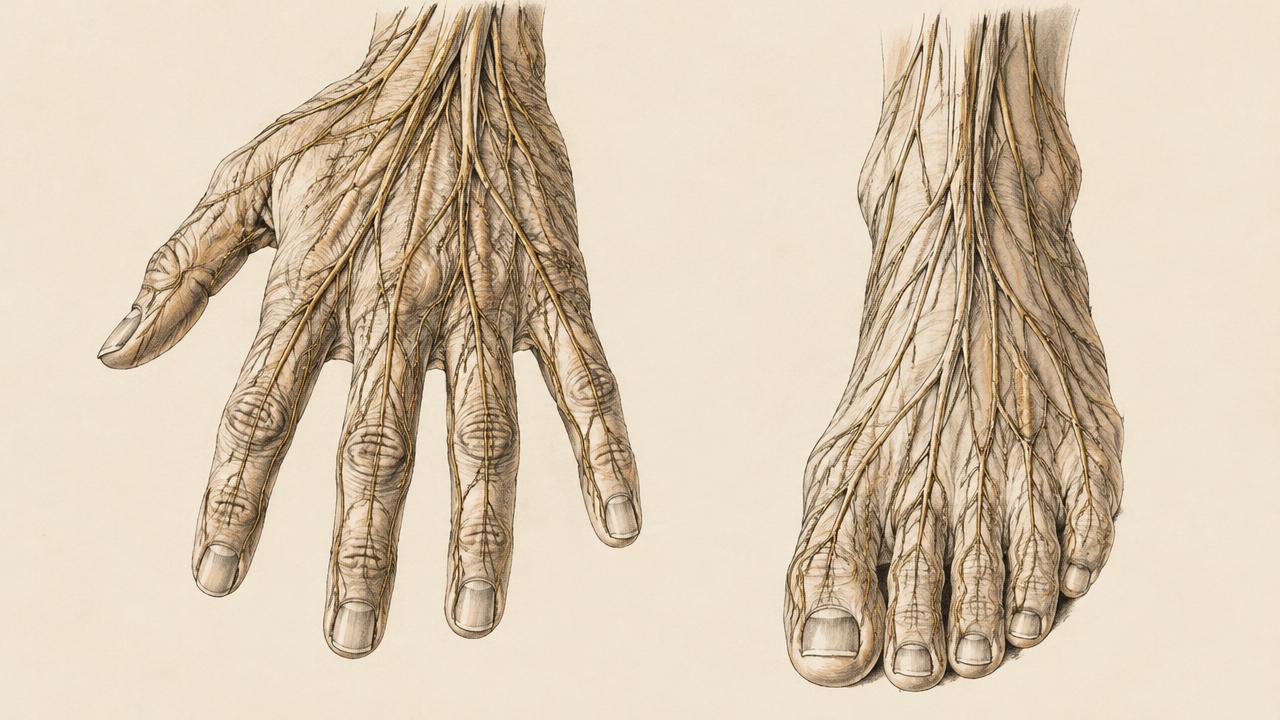
Peripheral neuropathy — damage to the nerves that carry sensation and signals between the brain/spinal cord and the rest of the body — becomes dramatically more common with age, and it is not simply a fate you either win or lose at random. Decades of clinical research point to a handful of modifiable factors — blood sugar control, alcohol intake, specific nutrient deficiencies, smoking, and physical activity — that measurably change the odds of developing or worsening peripheral nerve damage. This article walks through what the evidence actually supports, and where it runs out.
Blood Sugar Control Is the Single Biggest Lever
Diabetes is the most common identifiable cause of peripheral neuropathy in the developed world, and glucose control is the best-studied modifiable factor for it. A Cochrane systematic review of randomized trials found that enhanced (tighter) glucose control significantly reduced the risk of developing clinical neuropathy in people with type 1 diabetes, though the effect was considerably weaker and less consistent in type 2 diabetes, where other metabolic factors appear to play a larger role. The practical takeaway isn't "perfect" blood sugar — it's consistent, monitored control in partnership with a physician, since intensive control also carries its own risks (like hypoglycemia) that have to be balanced against the neuropathy benefit.
Alcohol: Dose Matters More Than People Assume
Alcohol is directly toxic to peripheral nerves, both through its own metabolites and through the nutritional deficiencies heavy drinking often causes. A systematic review and meta-analysis published in the Journal of Neurology found that a substantial proportion of people with chronic, heavy alcohol use develop some degree of peripheral neuropathy, with risk rising alongside both the amount and duration of consumption. This isn't an argument that moderate drinking damages nerves — the evidence base is specifically about sustained heavy use — but it is a clear signal that "how much and for how long" is the operative question, not just "do you drink."
B12 and Nutrient Status: An Underrated, Correctable Risk
Vitamin B12 deficiency is one of the few well-established, directly reversible causes of peripheral neuropathy — and it becomes more common with age because stomach acid (needed to absorb B12 from food) naturally declines, and because metformin, an extremely common diabetes medication, can lower B12 levels with long-term use. The NIH Office of Dietary Supplements' health professional fact sheet on vitamin B12 identifies peripheral neuropathy and other neurological symptoms as classic consequences of deficiency, and notes that supplementation can resolve them if caught before nerve damage becomes advanced. This is worth a direct conversation with a doctor about periodic B12 testing, particularly for older adults, long-term metformin users, and anyone on a largely plant-based diet.
Smoking and Circulation to the Nerves
Peripheral nerves depend on small blood vessels for oxygen and nutrients, and smoking damages those vessels directly. A matched case-control study examining male tobacco smokers with type 2 diabetes found a significantly elevated risk of peripheral neuropathy compared to non-smokers with the same condition, reinforcing a long-standing pattern in the literature: smoking compounds nerve risk on top of diabetes rather than acting as an independent, unrelated hazard. Quitting is one of the few interventions here with benefit that compounds with other risk-reduction steps rather than standing alone.
Exercise: A Genuinely Supported, Low-Risk Intervention
Among chemotherapy patients — who face a well-documented risk of chemotherapy-induced peripheral neuropathy (CIPN) — exercise has become one of the more evidence-backed non-drug strategies available. A 2024 systematic review and meta-analysis of randomized controlled trials found that structured exercise programs reduced the severity of CIPN symptoms in cancer patients. This evidence contributed to the American Society of Clinical Oncology's updated 2020 guideline on CIPN, which notably does not endorse any drug for prevention but does support exercise as a reasonable strategy worth discussing with an oncology team. For general peripheral nerve and circulatory health outside the chemotherapy context, exercise's well-established cardiovascular and glycemic benefits make it a sound, low-downside habit — though the evidence specifically isolating exercise's effect on peripheral nerve tissue in otherwise healthy older adults is thinner than the diabetes and CIPN literature.
Bottom Line
Peripheral nerve health in later life isn't governed by one dramatic choice — it's shaped by blood sugar control, alcohol intake, B12 status, smoking, and activity level, each backed by real clinical evidence of varying strength. The strongest, most actionable levers are glucose management for people with diabetes and B12 screening for older adults generally, since both are concrete, testable, and correctable. Alcohol moderation and smoking cessation matter most as they compound with these other risks rather than acting alone. It's also worth knowing that two of the conditions this evidence most directly concerns — diabetic peripheral neuropathy and chemotherapy-induced peripheral neuropathy — are areas where regenerative medicine research, including investigational stem cell approaches, is being actively studied; prevention and emerging treatment research are not competing stories, but two chapters of the same one.
Key Questions Answered
- What is the biggest modifiable factor for peripheral neuropathy?
- Blood sugar control in people with diabetes, with the clearest benefit shown in type 1 diabetes.
- Why does vitamin B12 matter for older adults?
- B12 deficiency is a reversible cause of neuropathy that becomes more common with age and long-term metformin use, so periodic testing is worth discussing with a doctor.
- Does exercise help nerve health?
- Structured exercise reduced chemotherapy-induced neuropathy symptoms in a 2024 meta-analysis; evidence in otherwise healthy older adults is thinner.
Sources
- Callaghan BC, Little AA, Feldman EL, Hughes RA. "Enhanced glucose control for preventing and treating diabetic neuropathy." Cochrane Database of Systematic Reviews, 2012. https://pubmed.ncbi.nlm.nih.gov/22696371/
- NIH Office of Dietary Supplements. "Vitamin B12 — Health Professional Fact Sheet." https://ods.od.nih.gov/factsheets/VitaminB12-HealthProfessional/
- "Alcohol-related peripheral neuropathy: a systematic review and meta-analysis." Journal of Neurology, 2019. https://pmc.ncbi.nlm.nih.gov/articles/PMC6851213/
- "Assessing the Risk of Peripheral Neuropathy Among Male Tobacco Smokers With Type 2 Diabetes: A Matched Case-Control Study." https://pmc.ncbi.nlm.nih.gov/articles/PMC12576162/
- "Exercise for reducing chemotherapy-induced peripheral neuropathy: a systematic review and meta-analysis of randomized controlled trials." 2024. https://pmc.ncbi.nlm.nih.gov/articles/PMC10813204/
- ASCO Post. "Updated ASCO Guideline Revisits Evidence on Prevention and Treatment of Chemotherapy-Induced Neuropathy." 2020. https://ascopost.com/issues/august-10-2020/updated-asco-guideline-revisits-evidence-on-prevention-and-treatment-of-chemotherapy-induced-neuropathy/
Related Articles
- Fundamentals
What Is 3D Bioprinting, and How Does It Use Stem Cells to Build Tissue?
3D bioprinting layers living cells and supportive gels to build tissue. Learn how stem cells fit into the process, what labs have shown, and what remains unsolved.
- Fundamentals
Myth: If a Stem Cell Treatment Is Legal Somewhere, It Must Be Proven and Safe
"Legal to sell" and "proven by rigorous trials" are different questions, and the gap varies enormously by country. Here's how approval actually works across borders.
- Fundamentals
Types of Reproductive and Fertility Disorders: Which Are Being Studied With Stem Cell Therapy?
A map of reproductive conditions where stem cell research is credible, such as thin endometrium and azoospermia, versus areas still preclinical or speculative.