Protecting Vision Health As You Age: What the Evidence Actually Shows
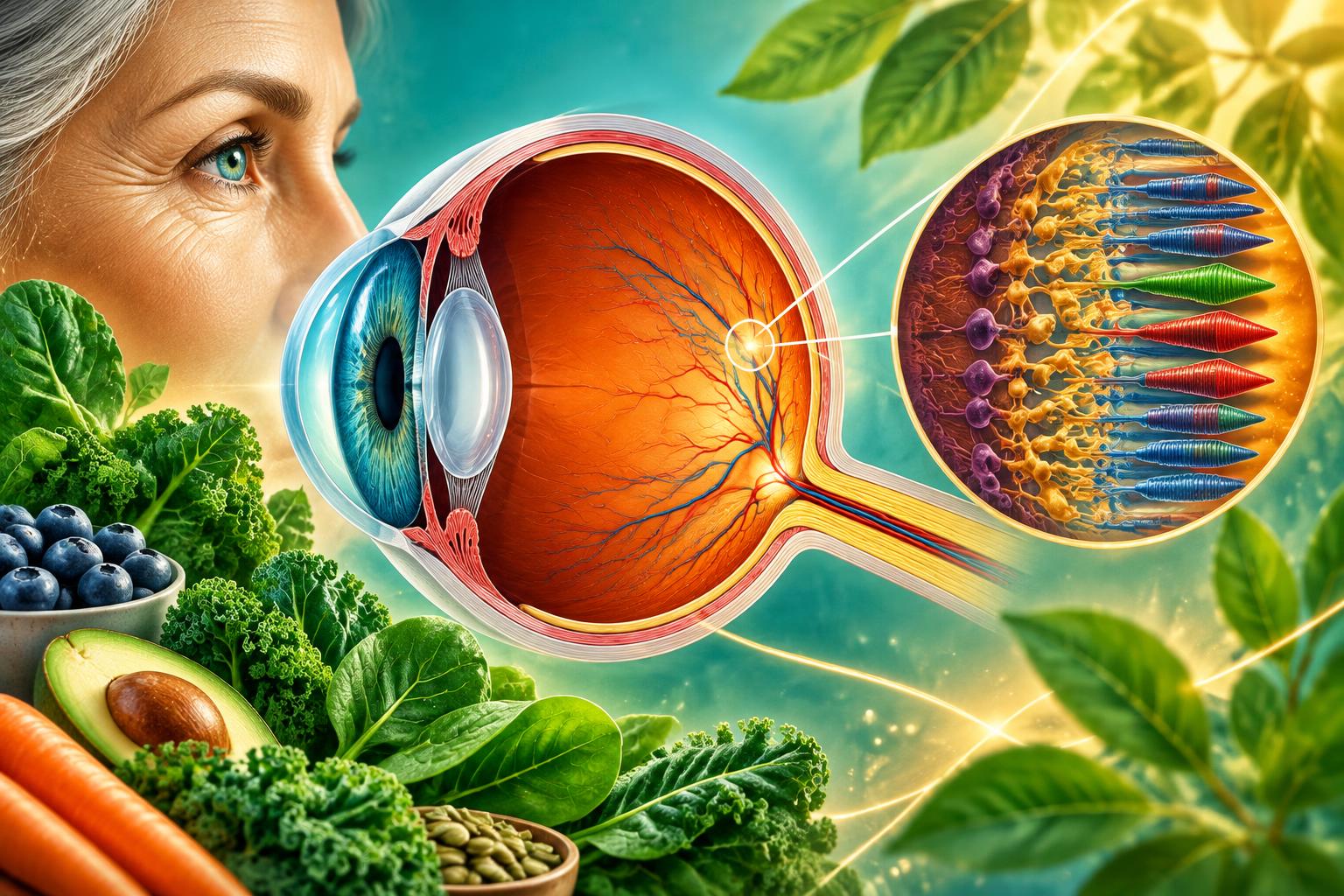
What this article covers
- What This Article Covers
- Most age-related vision loss does not arrive without warning — it develops gradually, and a meaningful share of the risk is shaped by factors people can actually influence: diet, smoking status, blood pressure and blood sugar control, UV exposure, and simply getting examined often enough to catch disease early. This article walks through what large clinical trials and major eye-health organizations have actually found about reducing risk for conditions like age-related macular degeneration (AMD) and diabetic retinopathy.
- Nutrition: What the AREDS2 Trial Actually Showed
- The National Eye Institute's (NEI) Age-Related Eye Disease Study and its follow-up, AREDS2, are among the most rigorously controlled nutrition trials in ophthalmology. The original AREDS formula — antioxidant vitamins C and E, zinc, copper, and beta-carotene — reduced the risk of progression to advanced AMD by about 25% over five years in people with intermediate or advanced disease in one eye.
- Diet Beyond a Pill: The Mediterranean Pattern
- A large European study (the European Eye Study) found that people whose diets most closely matched a Mediterranean pattern — rich in vegetables, fish, olive oil, and legumes — had a roughly 41% lower risk of late AMD compared with those whose diets matched it least, according to reporting highlighted by the American Academy of Ophthalmology (AAO). This is observational, not interventional, evidence, so it shows association rather than proof of cause, but it's consistent with a broader pattern: whole-food, antioxidant-rich diets correlate with better retinal outcomes across multiple studies.
- Smoking: One of the Strongest Modifiable Risk Factors
- Across decades of research, smoking has consistently emerged as one of the clearest modifiable risk factors for AMD. Reviews of the evidence (including analyses published via the National Institutes of Health) have found that current smokers face a substantially elevated risk of developing AMD compared with people who have never smoked, with some studies reporting roughly double the risk.
- Managing Blood Sugar and Blood Pressure for Retinal Health
- For people with diabetes, diabetic retinopathy is a leading cause of vision loss, and it progresses silently — often without symptoms until damage is advanced. Tight glycemic control reduces the risk of retinopathy onset and progression, and a Cochrane systematic review found that blood pressure control also plays a measurable role in slowing diabetic eye disease.
What This Article Covers
Most age-related vision loss does not arrive without warning — it develops gradually, and a meaningful share of the risk is shaped by factors people can actually influence: diet, smoking status, blood pressure and blood sugar control, UV exposure, and simply getting examined often enough to catch disease early. This article walks through what large clinical trials and major eye-health organizations have actually found about reducing risk for conditions like age-related macular degeneration (AMD) and diabetic retinopathy. None of this amounts to a guarantee — the evidence supports "may lower risk," not "prevents" — and that honesty matters, especially since regenerative treatments for restoring lost vision remain early-stage and limited in what they can currently reverse.
Nutrition: What the AREDS2 Trial Actually Showed
The National Eye Institute's (NEI) Age-Related Eye Disease Study and its follow-up, AREDS2, are among the most rigorously controlled nutrition trials in ophthalmology. The original AREDS formula — antioxidant vitamins C and E, zinc, copper, and beta-carotene — reduced the risk of progression to advanced AMD by about 25% over five years in people with intermediate or advanced disease in one eye. AREDS2 tested replacing beta-carotene with lutein and zeaxanthin (since beta-carotene was linked to increased lung cancer risk in smokers) and found the swap worked as well or better, while being safer for smokers and former smokers. Critically, the supplement was studied in people who already had intermediate AMD — it was not shown to prevent AMD from developing in the first place, and it did nothing for early-stage disease. Anyone considering these supplements should discuss them with an eye care provider rather than self-prescribing based on marketing claims.
Diet Beyond a Pill: The Mediterranean Pattern
A large European study (the European Eye Study) found that people whose diets most closely matched a Mediterranean pattern — rich in vegetables, fish, olive oil, and legumes — had a roughly 41% lower risk of late AMD compared with those whose diets matched it least, according to reporting highlighted by the American Academy of Ophthalmology (AAO). This is observational, not interventional, evidence, so it shows association rather than proof of cause, but it's consistent with a broader pattern: whole-food, antioxidant-rich diets correlate with better retinal outcomes across multiple studies.
Smoking: One of the Strongest Modifiable Risk Factors
Across decades of research, smoking has consistently emerged as one of the clearest modifiable risk factors for AMD. Reviews of the evidence (including analyses published via the National Institutes of Health) have found that current smokers face a substantially elevated risk of developing AMD compared with people who have never smoked, with some studies reporting roughly double the risk. Quitting appears to reduce that elevated risk over time, though it may not return instantly to a never-smoker's baseline.
Managing Blood Sugar and Blood Pressure for Retinal Health
For people with diabetes, diabetic retinopathy is a leading cause of vision loss, and it progresses silently — often without symptoms until damage is advanced. Tight glycemic control reduces the risk of retinopathy onset and progression, and a Cochrane systematic review found that blood pressure control also plays a measurable role in slowing diabetic eye disease. Because retinopathy can be present without any noticeable vision change, screening is not optional for people managing diabetes.
Routine Eye Exams and Sun Protection
The AAO's clinical guidance recommends a baseline comprehensive eye exam around age 40, with frequency increasing based on individual risk factors and age — since conditions like glaucoma, AMD, and diabetic retinopathy often have no early symptoms. The AAO also recommends UV-blocking sunglasses, noting that cumulative ultraviolet exposure is linked to cataracts and other eye conditions over a lifetime.
Bottom Line
No supplement, diet, or habit can promise that vision loss won't happen — but the evidence is genuinely strong that not smoking, eating a Mediterranean-style diet, managing blood pressure and blood sugar, wearing UV protection, and keeping up with regular comprehensive eye exams meaningfully shift the odds in your favor. Because treatment options for restoring vision already lost to conditions like advanced AMD or diabetic retinopathy remain limited and regenerative approaches are still largely in early clinical research, prevention and early detection currently do more for long-term vision than any available after-the-fact intervention.
Key Questions Answered
- Do AREDS2 supplements prevent AMD from developing?
- No. They were studied in people with intermediate AMD and were not shown to prevent AMD or help early-stage disease. Supplement decisions should be discussed with an eye care provider.
- Does Mediterranean-diet research prove prevention?
- No. A roughly 41% lower late-AMD risk was reported in observational research, which shows association rather than proof of cause.
- Which practical measures support vision health?
- Avoid smoking, manage blood sugar and blood pressure, wear UV-blocking sunglasses and keep up with comprehensive eye exams. These measures may lower risk but do not guarantee prevention of vision loss.
Sources
- AREDS/AREDS2 Background and Results — National Eye Institute (NIH) — https://www.nei.nih.gov/research/clinical-trials/age-related-eye-disease-study-areds/areds-background-and-results
- NIH Study Confirms Benefit of Supplements for Slowing Age-Related Macular Degeneration — National Institutes of Health — 2013 — https://www.nih.gov/news-events/news-releases/nih-study-confirms-benefit-supplements-slowing-age-related-macular-degeneration
- Eating a Mediterranean Diet May Keep AMD at Bay — American Academy of Ophthalmology — https://www.aao.org/eye-health/news/eating-mediterranean-diet-may-keep-amd-at-bay
- Smoking and Age-Related Macular Degeneration: Review and Update — PMC/National Institutes of Health — https://www.ncbi.nlm.nih.gov/pmc/articles/PMC3866712/
- Blood Pressure Control for Diabetic Retinopathy — Cochrane Systematic Review (PMC) — https://pmc.ncbi.nlm.nih.gov/articles/PMC10876377/
- Frequency of Ocular Examination (Clinical Statement) — American Academy of Ophthalmology — https://www.aao.org/education/clinical-statement/frequency-of-ocular-examination
- Sunglasses: Your Prescription for Eye Health — American Academy of Ophthalmology — https://www.aao.org/newsroom/news-releases/detail/sunglasses-your-prescription-eye-health
- Diabetic Retinopathy Screening — EyeWiki, American Academy of Ophthalmology — https://eyewiki.aao.org/Diabetic_Retinopathy_Screening
Related Articles
- Fundamentals
Types of Kidney Disease: Which Ones Are Being Studied With Stem Cell Therapy?
Kidney stem cell research varies sharply by disease: small human signals in diabetic disease and lupus nephritis, a negative AKI trial, and preclinical PKD work.
- Fundamentals
What Is COPD?
COPD causes, symptoms, spirometry diagnosis and established care, plus why reassuring MSC safety data have not established stem cell treatment efficacy.
- Fundamentals
What Is Umbilical Cord Blood Banking? What Newborn Stem Cells Can (and Can't) Actually Treat
Cord blood banking explained: established transplant uses, public versus private storage, and the low odds of a healthy child using their own banked cells.