Stem Cell Therapy for Aplastic Anemia
What this article covers
- Overview
- Aplastic anemia is a rare, serious condition in which the bone marrow stops making enough new blood cells, usually because the immune system has attacked the marrow's stem cells. In severe cases, this is life-threatening without treatment.
- How It's Thought to Work
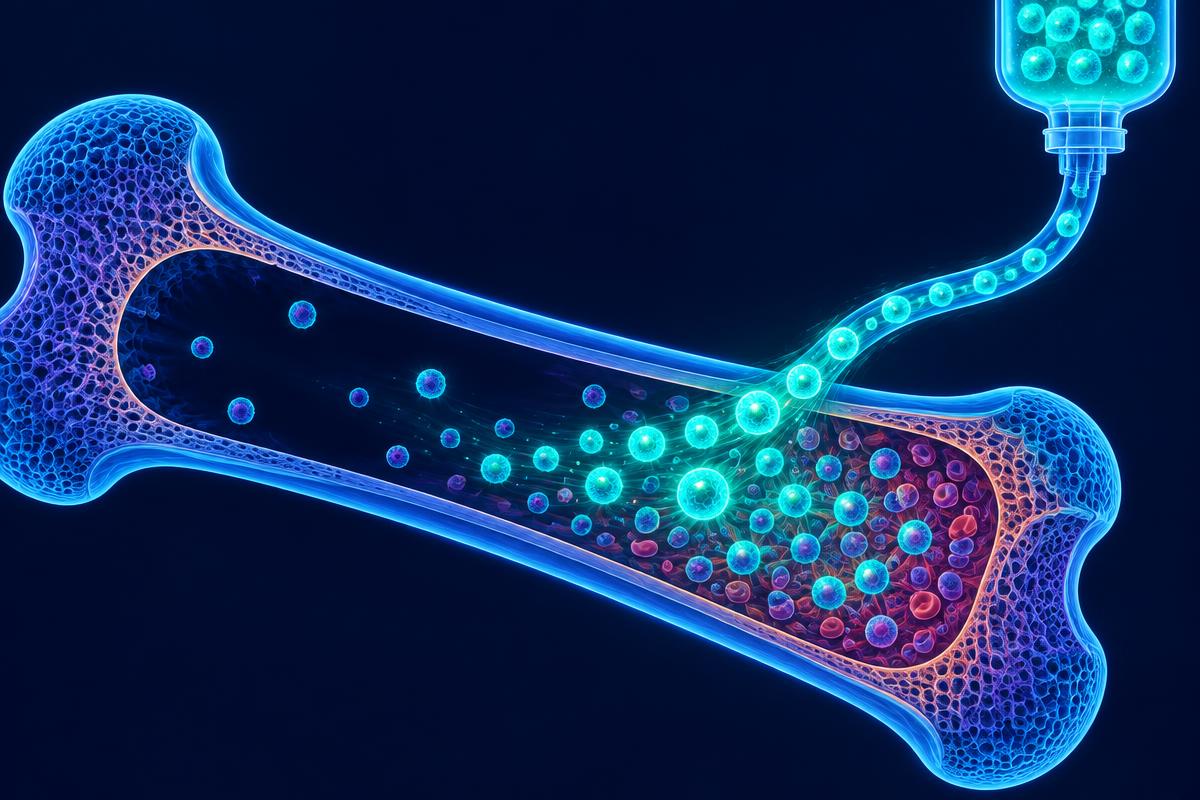
- A matched donor's healthy hematopoietic stem cells — from bone marrow, peripheral blood, or umbilical cord blood — are infused into the patient after "conditioning" (chemotherapy and/or immune-suppressing drugs) clears space in the marrow and prevents rejection. The donor cells then engraft and rebuild normal blood and immune function.
- Bottom Line
- For eligible patients with a matched sibling donor, allogeneic stem cell transplant remains the closest thing to a cure for severe aplastic anemia, and outcomes in younger patients can be genuinely encouraging. But transplant is not risk-free or universally available: graft-versus-host disease, graft failure, infection during immune recovery, and the toxicity of conditioning chemotherapy are real concerns, and many patients simply don't have a matched donor.
For severe aplastic anemia, a stem cell transplant from a matched donor is the one treatment that can potentially cure the disease outright, not just manage it. This article explains how allogeneic hematopoietic stem cell transplant (HSCT) works for aplastic anemia, what current evidence shows about who benefits most, the real risks involved (graft-versus-host disease, graft failure, and donor availability), and what the FDA's approval of Omisirge — a cord-blood-derived cell therapy — means for patients who don't have a matched donor.
Overview
Aplastic anemia is a rare, serious condition in which the bone marrow stops making enough new blood cells, usually because the immune system has attacked the marrow's stem cells. In severe cases, this is life-threatening without treatment. The two main treatment paths are allogeneic HSCT (replacing the damaged marrow with healthy donor stem cells) and immunosuppressive therapy (calming the immune attack so remaining marrow can recover). Which path is recommended depends heavily on age, donor availability, and disease severity.
How It's Thought to Work
A matched donor's healthy hematopoietic stem cells — from bone marrow, peripheral blood, or umbilical cord blood — are infused into the patient after "conditioning" (chemotherapy and/or immune-suppressing drugs) clears space in the marrow and prevents rejection. The donor cells then engraft and rebuild normal blood and immune function. Because this replaces the faulty marrow rather than just suppressing the immune attack on it, transplant offers the possibility of a durable cure rather than ongoing disease management.
What the Evidence Shows
- The American Society for Transplantation and Cellular Therapy's 2024 evidence-based guidelines strongly recommend upfront matched-sibling-donor HSCT as first-line treatment for both children and adults with severe aplastic anemia, citing high cure rates with minimal GVHD risk, and note that the traditional age-40 cutoff is being relaxed in experienced centers (ASTCT, 2024).
- Outcomes vary substantially by age: matched-sibling-donor transplant survival has been described as roughly 80% for patients transplanted before age 20, declining in older adults — underscoring why age and donor type both shape the recommendation (OncLive interview with Dr. Phillip Scheinberg, 2024).
- On December 8, 2025, the FDA approved Omisirge (omidubicel-onlv) — a nicotinamide-expanded, cord-blood-derived stem cell therapy — for adults and children 6 and older with severe aplastic anemia following reduced-intensity conditioning who lack a compatible donor, the first cellular therapy approved for this specific use (FDA, 2025).
- In the supporting study, 86% of patients had early neutrophil recovery (median 11 days); a reported 92% disease-free/overall survival figure came from a small, high-risk study population — a promising but early signal, not yet the large, mature outcomes data available for sibling-donor transplant (FDA, 2025; HCPLive, 2025).
- Omisirge was first approved in 2023 for blood cancer patients undergoing cord blood transplant to speed immune recovery; the 2025 approval extends it to a very different population — patients with severe aplastic anemia who have no matched donor at all.
Who Might Be a Candidate
- Patients with severe or very severe aplastic anemia, especially children, teens, and younger adults
- Those with an available HLA-matched sibling donor (roughly a 1-in-4 chance for any given sibling)
- Patients without a matched donor who may be candidates for matched unrelated donor or haploidentical transplant, or now, in select cases, Omisirge
- Patients healthy enough to tolerate conditioning chemotherapy and the transplant process
- Anyone considering transplant should be evaluated at a center experienced in aplastic anemia, since donor type, graft source, and conditioning regimen all significantly affect outcomes and risk
Bottom Line
For eligible patients with a matched sibling donor, allogeneic stem cell transplant remains the closest thing to a cure for severe aplastic anemia, and outcomes in younger patients can be genuinely encouraging. But transplant is not risk-free or universally available: graft-versus-host disease, graft failure, infection during immune recovery, and the toxicity of conditioning chemotherapy are real concerns, and many patients simply don't have a matched donor. Immunosuppressive therapy remains an important alternative for those without a good match or who are older or less fit. The FDA's approval of Omisirge is a meaningful step for patients who previously had no cellular-therapy option at all, but it's a new approval built on a small early study — patients and families should discuss it with a transplant specialist rather than assume it matches decades of sibling-donor transplant data.
Key Questions Answered
- Can a stem cell transplant cure aplastic anemia?
- For eligible patients with a matched sibling donor, allogeneic transplant remains the closest thing to a cure for severe aplastic anemia, because it replaces the faulty marrow rather than just suppressing the immune attack on it.
- What do the guidelines recommend?
- The American Society for Transplantation and Cellular Therapy's 2024 evidence-based guidelines strongly recommend upfront matched-sibling-donor transplant as first-line treatment for both children and adults with severe aplastic anemia, and note the traditional age-40 cutoff is being relaxed in experienced centers.
- Does age matter?
- Substantially. Matched-sibling-donor transplant survival has been described as roughly 80% for patients transplanted before age 20, declining in older adults — which is why age and donor type both shape the recommendation.
- What if I don't have a matched donor?
- On December 8, 2025, the FDA approved Omisirge (omidubicel-onlv), a cord-blood-derived stem cell therapy, for adults and children 6 and older with severe aplastic anemia following reduced-intensity conditioning who lack a compatible donor. Matched unrelated donor or haploidentical transplant and immunosuppressive therapy are other options.
- How strong is the evidence behind Omisirge for this use?
- Early. In the supporting study 86% of patients had early neutrophil recovery at a median of 11 days, and a 92% disease-free/overall survival figure came from a small, high-risk population — a promising signal, not the large, mature data available for sibling-donor transplant.
Sources
- FDA Approves First Cellular Therapy to Treat Patients with Severe Aplastic Anemia — U.S. Food and Drug Administration, 2025 — https://www.fda.gov/news-events/press-announcements/fda-approves-first-cellular-therapy-treat-patients-severe-aplastic-anemia
- Allogeneic Hematopoietic Cell Transplantation for the Treatment of Severe Aplastic Anemia: Evidence-Based Guidelines From the American Society for Transplantation and Cellular Therapy — Transplantation and Cellular Therapy (ASTCT), 2024 — https://www.astctjournal.org/article/S2666-6367(24)00682-1/fulltext
- FDA Approves Omidubicel-onlv (Omisirge) As First Cellular Severe Aplastic Anemia Therapy — HCPLive, 2025 — https://www.hcplive.com/view/fda-approves-omidubicel-onlv-omisirge-first-cellular-severe-aplastic-anemia-therapy
- Transplantation in Patients With Severe Aplastic Anemia — OncLive (interview with Phillip Scheinberg, MD), 2024 — https://www.onclive.com/view/transplantation-in-patients-with-severe-aplastic-anemia
- FDA approves omidubicel-onlv as first HSCT therapy to treat severe aplastic anemia — Contemporary Pediatrics, 2025 — https://www.contemporarypediatrics.com/view/fda-approves-omidubicel-onlv-as-first-hsct-therapy-to-treat-severe-aplastic-anemia
Related Articles
- Clinical Applications
Stem Cell Therapy for Peyronie's Disease
Small human studies of adipose-derived and placental stem cells show shrinking plaques and less distress in Peyronie's disease, but the best trial missed its curvature goal and nothing is FDA-approved.
- Clinical Applications
Stem Cell Therapy for Hidradenitis Suppurativa
Lab studies and a small case series suggest mesenchymal stem cells may calm hidradenitis suppurativa inflammation and help stubborn tunnels heal — but the approach is experimental and not FDA-approved.
- Clinical Applications
Stem Cell Therapy for TMJ Disorders (Temporomandibular Joint Osteoarthritis)
Randomized trials of fat-derived stem cell injections into the jaw joint beat hyaluronic acid on pain and mouth opening — but the evidence base is small and rated weak.