Stem Cell Therapy for Glaucoma and Optic Nerve Damage
What this article covers
- How It's Thought to Work
- Two general strategies are being studied. The first is neuroprotection and support: mesenchymal stem cells (MSCs), delivered near the eye or into the vitreous cavity, are thought to release protective signaling molecules that may help shield surviving retinal ganglion cells and their fibers from further degeneration, rather than replacing cells that are already lost.
- What the Evidence Shows
- A 2024 systematic review and meta-analysis in BMC Ophthalmology pooled seven published studies covering 66 patients (94 treated eyes) with various forms of optic neuropathy, including glaucoma. 001), though two of the seven studies showed no improvement or worsening.
- Bottom Line
- The idea that stem cells could protect or help restore vision lost to glaucoma is a legitimate, actively studied hypothesis — and a recent meta-analysis did find a statistically significant improvement in visual acuity across a small pooled group of patients. But that same review found no clear evidence of actual nerve fiber regeneration, came from a modest 66-patient evidence base with real inconsistency between studies, and concluded that meaningfully more research is needed before this becomes a standard option.
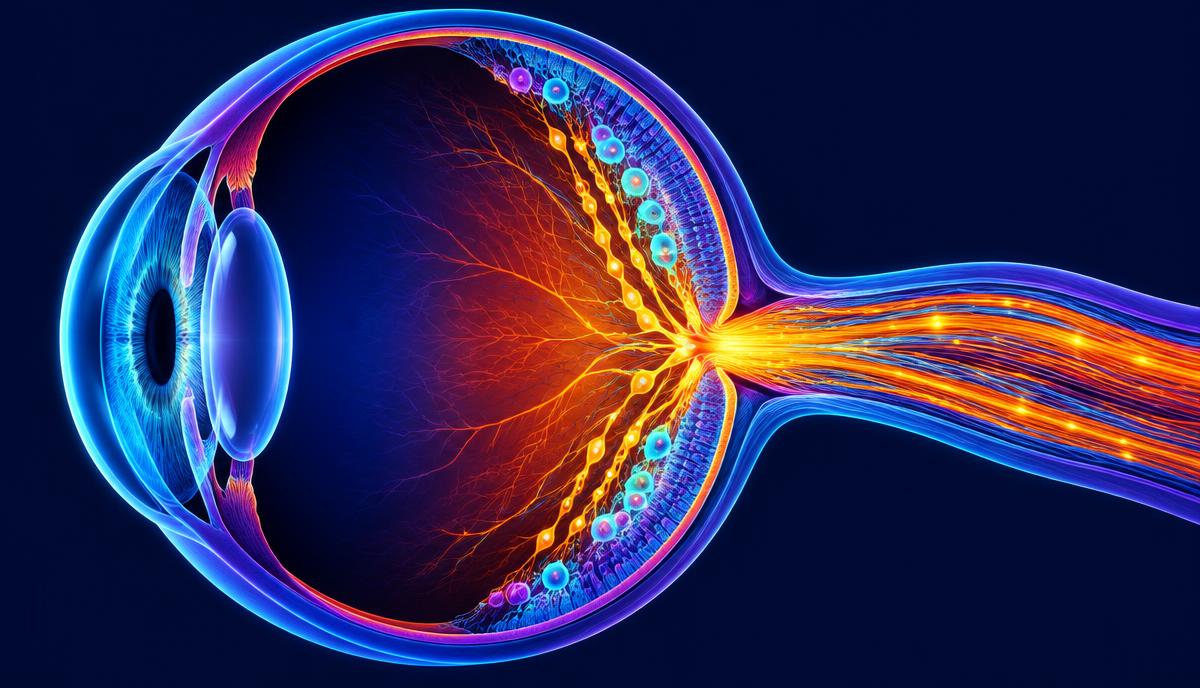
Glaucoma damages the optic nerve, and unlike the eye's outer structures, the specialized retinal ganglion cells that make up that nerve don't meaningfully regenerate on their own once lost. That has made glaucoma and other forms of optic neuropathy an area of real scientific interest for stem cell research — though, as this article lays out, the evidence to date is early, mixed, and far from ready for routine clinical use.
How It's Thought to Work
Two general strategies are being studied. The first is neuroprotection and support: mesenchymal stem cells (MSCs), delivered near the eye or into the vitreous cavity, are thought to release protective signaling molecules that may help shield surviving retinal ganglion cells and their fibers from further degeneration, rather than replacing cells that are already lost. The second, more speculative strategy involves using stem cells to try to regenerate or replace damaged optic nerve tissue directly — an approach that remains largely in earlier-stage research given how structurally complex the optic nerve is to rebuild.
What the Evidence Shows
A 2024 systematic review and meta-analysis in BMC Ophthalmology pooled seven published studies covering 66 patients (94 treated eyes) with various forms of optic neuropathy, including glaucoma. The review found a statistically significant improvement in visual acuity after stem cell therapy — the average LogMAR visual acuity score (a standard eye chart measure, where lower is better) improved from 0.90 before treatment to 0.65 afterward (P=.001), though two of the seven studies showed no improvement or worsening. Notably, the review found no statistically significant change in retinal nerve fiber layer thickness, a structural measure of optic nerve health (P=.174) — meaning the modest vision gains reported were not clearly backed by measurable nerve regeneration on imaging, an important gap between symptom-level and structural evidence. On safety, the reviewed studies reported no adverse events tied to the stem cell treatments, though the authors caution that long-term safety data remain limited. The review's own conclusion is appropriately cautious: stem cell therapy "may improve" visual acuity in optic neuropathy patients, but "more evidence and strict guidelines are needed" given small sample sizes and inconsistent study designs across the field.
Who Might Be a Candidate
- No stem cell therapy is FDA-approved for glaucoma or any other optic neuropathy; today, this is available only through registered clinical trials or, in some cases, physician-directed research protocols, and should not be pursued through unregulated clinics
- The current evidence base comes overwhelmingly from small, uncontrolled or loosely controlled studies, so anyone considering a trial should ask specifically what stage of testing it is (early safety versus a randomized, controlled efficacy trial)
- Because the reviewed studies didn't show clear structural nerve regeneration, this approach should currently be viewed as a research option to explore alongside — never instead of — standard, proven glaucoma treatments like pressure-lowering eye drops, laser therapy, or surgery
- Patients with advanced, standard-treatment-resistant optic nerve damage are the population in whom this kind of experimental approach is most often being studied
- Anyone interested should verify a specific study's registration on ClinicalTrials.gov and discuss it directly with their ophthalmologist, given how serious and often irreversible vision loss from optic neuropathy can be
Bottom Line
The idea that stem cells could protect or help restore vision lost to glaucoma is a legitimate, actively studied hypothesis — and a recent meta-analysis did find a statistically significant improvement in visual acuity across a small pooled group of patients. But that same review found no clear evidence of actual nerve fiber regeneration, came from a modest 66-patient evidence base with real inconsistency between studies, and concluded that meaningfully more research is needed before this becomes a standard option. This is promising early science, not a proven treatment, and patients with glaucoma should continue with established, evidence-based care while this research matures.
Sources
- Evaluating the impact of mesenchymal stem cell therapy on visual acuity and retinal nerve fiber layer thickness in optic neuropathy patients: a comprehensive systematic review and meta-analysis — BMC Ophthalmology, 2024 — https://link.springer.com/article/10.1186/s12886-024-03588-2
- Mesenchymal stem and non-stem cell surgery, rescue, and regeneration in glaucomatous optic neuropathy — Stem Cell Research & Therapy, 2021 — https://link.springer.com/article/10.1186/s13287-021-02351-4
- Diversified Treatment Options of Adult Stem Cells for Optic Neuropathies — PMC — https://pmc.ncbi.nlm.nih.gov/articles/PMC9523835/
- Vision Loss after Intravitreal Injection of Autologous "Stem Cells" for AMD — New England Journal of Medicine — https://www.nejm.org/doi/full/10.1056/NEJMoa1609583
Related Articles
- Clinical Applications
Stem Cell Therapy for Peyronie's Disease
Small human studies of adipose-derived and placental stem cells show shrinking plaques and less distress in Peyronie's disease, but the best trial missed its curvature goal and nothing is FDA-approved.
- Clinical Applications
Stem Cell Therapy for Hidradenitis Suppurativa
Lab studies and a small case series suggest mesenchymal stem cells may calm hidradenitis suppurativa inflammation and help stubborn tunnels heal — but the approach is experimental and not FDA-approved.
- Clinical Applications
Stem Cell Therapy for TMJ Disorders (Temporomandibular Joint Osteoarthritis)
Randomized trials of fat-derived stem cell injections into the jaw joint beat hyaluronic acid on pain and mouth opening — but the evidence base is small and rated weak.