Myth: Stem Cell Injections Can Regrow Lost Cartilage in an Arthritic Joint
What this article covers
- The Myth, Stated Plainly
- The claim shows up in marketing copy, clinic consultations, and patient testimonials: inject stem cells into an arthritic joint, and they'll differentiate into new cartilage cells, rebuilding the cushioning tissue that osteoarthritis has worn away. Framed that way, it sounds like a biological reversal of the disease itself.
- What the Trial Evidence Actually Shows
- The best current synthesis is a 2020 systematic review and meta-analysis in Medicine (Baltimore), pooling 10 randomized controlled trials and 335 patients who received intra-articular mesenchymal stem cell (MSC) injections for knee osteoarthritis, compared against placebo, hyaluronic acid, or conservative care. 23).
- Why Cartilage Volume Isn't the Same as Cartilage Regeneration
- Imaging told a murkier story. 13).
- How MSCs May Be Helping, If Not By Regrowing Tissue
- The leading explanation for the pain and function benefits that do show up isn't that injected cells are becoming new chondrocytes and physically rebuilding cartilage. It's that MSCs act largely through paracrine signaling — secreting anti-inflammatory and immunomodulatory factors that can calm the inflamed joint environment driving osteoarthritis pain.
- The Regulatory Reality
- It's also worth knowing what the FDA has and hasn't signed off on. S.
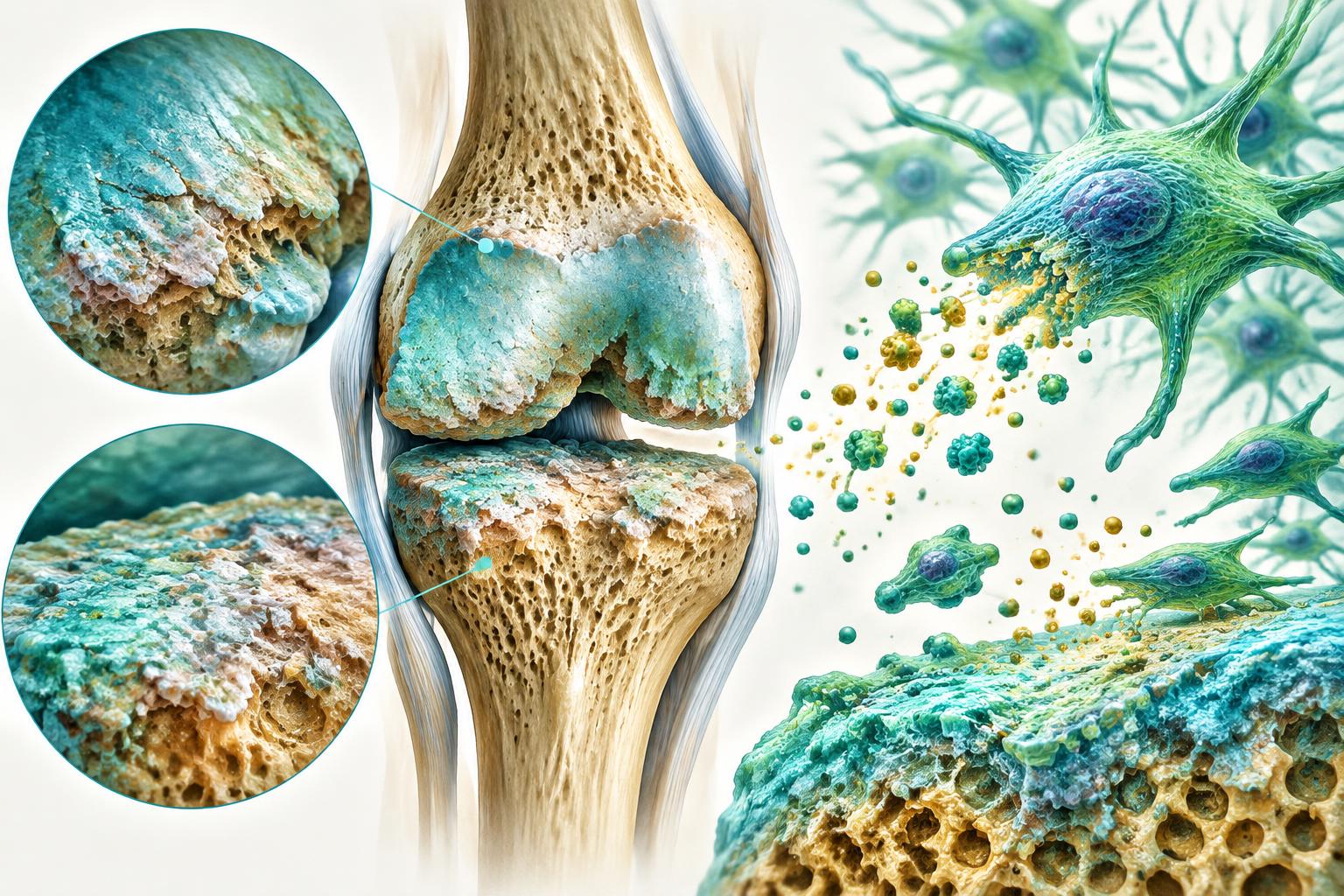
Clinics marketing stem cell injections for knee osteoarthritis often imply, directly or through careful phrasing, that the treatment regrows the cartilage patients have lost. It's an appealing promise — and a genuinely tempting one for anyone facing joint replacement surgery. But the best available clinical trial evidence tells a more specific story: real, measurable improvement in pain and function for some patients, alongside an honest absence of proof that human cartilage tissue actually regenerates. This article separates what's been shown from what's been implied.
The Myth, Stated Plainly
The claim shows up in marketing copy, clinic consultations, and patient testimonials: inject stem cells into an arthritic joint, and they'll differentiate into new cartilage cells, rebuilding the cushioning tissue that osteoarthritis has worn away. Framed that way, it sounds like a biological reversal of the disease itself.
What the Trial Evidence Actually Shows
The best current synthesis is a 2020 systematic review and meta-analysis in Medicine (Baltimore), pooling 10 randomized controlled trials and 335 patients who received intra-articular mesenchymal stem cell (MSC) injections for knee osteoarthritis, compared against placebo, hyaluronic acid, or conservative care. The results on pain and function are genuinely encouraging: VAS pain scores improved significantly more in MSC groups (mean difference −19.24, 95% CI −26.31 to −12.18), and WOMAC total scores also favored MSC treatment (SMD −0.66, 95% CI −1.09 to −0.23). These are real, statistically significant short-term benefits worth taking seriously — not nothing, and not hype.
Why Cartilage Volume Isn't the Same as Cartilage Regeneration
Imaging told a murkier story. Across three small studies (88 patients), MSC groups showed a statistically significant increase in cartilage volume (SMD 0.69, 95% CI 0.25–1.13). But a more comprehensive structural measure — the WORMS whole-joint MRI scoring system, from three studies covering 57 patients — showed no significant difference between MSC and control groups (P = .75). The review's own authors were direct about what this does and doesn't add up to: "current evidence is insufficient to conclude that MSCs can repair cartilage defects." They floated a more modest possibility instead — that MSCs might help protect or slow the breakdown of existing cartilage, rather than build new tissue. The same review found a higher rate of adverse events in MSC-treated patients (OR 3.20, 95% CI 1.50–6.83), mostly mild or moderate joint pain, swelling, or effusion, with a small number of more serious events in two trials.
How MSCs May Be Helping, If Not By Regrowing Tissue
The leading explanation for the pain and function benefits that do show up isn't that injected cells are becoming new chondrocytes and physically rebuilding cartilage. It's that MSCs act largely through paracrine signaling — secreting anti-inflammatory and immunomodulatory factors that can calm the inflamed joint environment driving osteoarthritis pain. That's a real, biologically plausible mechanism, and a different claim than "regrows cartilage."
The Regulatory Reality
It's also worth knowing what the FDA has and hasn't signed off on. The agency's consumer alert on regenerative medicine products states plainly that "generally, all stem cell products require FDA approval," and that the only FDA-approved stem cell products in the U.S. are cord-blood-derived cells for blood-production disorders — unrelated to joint conditions. The alert specifically names osteoarthritis among the conditions for which "none of these products have been approved." A 2017 American Academy of Orthopaedic Surgeons position statement echoes the caution, noting that biologic treatments have reached patients "without extensive research or data" and urging surgeons and patients to understand a product's regulatory status before using it.
Bottom Line
The myth overstates what's proven: controlled trials have not established that stem cell injections regenerate lost cartilage in human joints, and the best meta-analysis to date says so explicitly. The fact, though, isn't dismissive either — several randomized trials have found real, statistically significant improvements in pain and function, benefits that deserve to be taken seriously rather than buried under caveats. The honest summary is that stem cell injections for osteoarthritis may help you feel and move better; they are not currently proven to rebuild the cartilage you've lost, and no stem cell product carries FDA approval for the condition.
Key Questions Answered
- Have stem cell injections been proven to regrow lost cartilage?
- No. The cited review found insufficient evidence to conclude that MSCs repair cartilage defects. Small studies reported greater cartilage volume, but whole-joint WORMS MRI scores did not differ significantly from controls.
- Do randomized trials show any benefit for knee osteoarthritis?
- The cited 2020 review of 10 trials and 335 patients found statistically significant short-term pain and function improvements. Those symptom benefits are not proof of structural cartilage regeneration.
- Are stem cell injections approved for osteoarthritis, and are they risk-free?
- No stem cell product carries FDA approval for osteoarthritis. The review reported more adverse events in MSC-treated patients, mostly joint pain, swelling or effusion, with a small number of more serious events in two trials.
Sources
- Ma W, Liu CM, Wang S, Xu H, Sun H, Fan X. "Efficacy and safety of intra-articular injection of mesenchymal stem cells in the treatment of knee osteoarthritis: A systematic review and meta-analysis." Medicine (Baltimore), 2020 — https://pubmed.ncbi.nlm.nih.gov/33285713/
- U.S. Food and Drug Administration. "Consumer Alert on Regenerative Medicine Products Including Stem Cells and Exosomes." FDA.gov, content current as of April 2024 — https://www.fda.gov/vaccines-blood-biologics/consumers-biologics/consumer-alert-regenerative-medicine-products-including-stem-cells-and-exosomes
- American Academy of Orthopaedic Surgeons. "Patients Should Be Aware of the Benefits & Risks of Biologic Treatments" (Use of Emerging Biologic Therapies position statement). AAOS.org, 2017 — https://www.aaos.org/aaos-home/newsroom/press-releases/patients-should-be-aware-of-the-benefits-risks-biologic-treat
Related Articles
- Clinical Applications
Can Stem Cells Help With Myasthenia Gravis?
Autologous HSCT for severe refractory myasthenia gravis: durable remission signals, immune-reset biology, candidate profiles and substantial transplant risks.
- Clinical Applications
Can Stem Cells Help With Tennis Elbow (Lateral Epicondylitis)?
MSC and bone marrow injections for tennis elbow show encouraging small-study signals, but controlled evidence remains limited and no product is FDA-approved for this use.
- Clinical Applications
Can Stem Cells Help With Keloid and Hypertrophic Scars?
Keloid and hypertrophic scars resist standard treatments. Here's what stem cell and exosome research shows so far — promising animal data, one encouraging human pilot, and no FDA-approved products yet.