What Is a Hematopoietic Stem Cell Transplant? A Beginner's Guide to Bone Marrow and Cord Blood Transplants
What this article covers
- What This Article Covers
- A hematopoietic stem cell transplant (HSCT) — often called a bone marrow or cord blood transplant — is one of the oldest and most established forms of cell therapy in medicine, with roots going back to the 1950s. Rather than focusing on what makes a stem cell a stem cell, this guide walks through the procedure itself: what happens to a patient's body before, during, and after a transplant, what the recovery timeline actually looks like, which diseases it treats, and what the honest risks and realistic odds are for someone considering it.
- What Are Hematopoietic Stem Cells, and Why Replace Them?
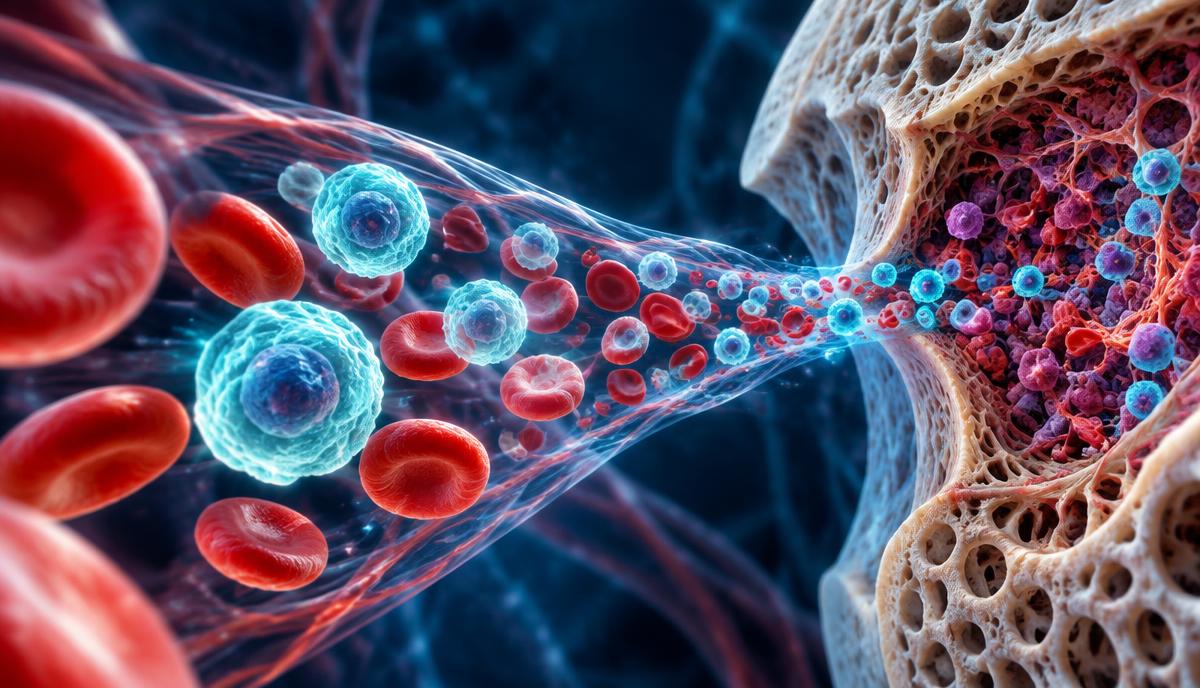
- Hematopoietic stem cells are the cells, found mainly in bone marrow, that give rise to all of the body's blood and immune cells — red blood cells, white blood cells, and platelets. When these cells are destroyed by disease or by the high-dose chemotherapy and radiation used to treat certain cancers, the body loses its ability to make new blood and fight infection.
- Before Transplant Day: Finding a Match and Preparing the Body
- For an allogeneic transplant, the first major step is identifying a donor whose human leukocyte antigen (HLA) markers closely match the patient's — a biological "fingerprint" that helps the immune system recognize the new cells as safe rather than foreign. Roughly 7 in 10 patients do not have a fully matched sibling or relative, according to the American Society of Hematology (ASH), which is why donor registries exist.
- Transplant Day: What Actually Happens
- Despite the word "transplant," the procedure itself is not surgery. On transplant day, the collected stem cells — drawn earlier from bone marrow, circulating peripheral blood, or a stored cord blood unit — are infused into the patient's bloodstream through a central line, much like a blood transfusion.
- Engraftment: The Make-or-Break Weeks
- The period right after infusion is the most medically fragile part of the journey. With the old marrow wiped out by conditioning and the new cells not yet established, blood counts bottom out and infection and bleeding risk peak — patients are typically monitored closely in a hospital or specialized outpatient setting during this stretch.
What This Article Covers
A hematopoietic stem cell transplant (HSCT) — often called a bone marrow or cord blood transplant — is one of the oldest and most established forms of cell therapy in medicine, with roots going back to the 1950s. Rather than focusing on what makes a stem cell a stem cell, this guide walks through the procedure itself: what happens to a patient's body before, during, and after a transplant, what the recovery timeline actually looks like, which diseases it treats, and what the honest risks and realistic odds are for someone considering it.
What Are Hematopoietic Stem Cells, and Why Replace Them?
Hematopoietic stem cells are the cells, found mainly in bone marrow, that give rise to all of the body's blood and immune cells — red blood cells, white blood cells, and platelets. When these cells are destroyed by disease or by the high-dose chemotherapy and radiation used to treat certain cancers, the body loses its ability to make new blood and fight infection. A transplant replaces that marrow with healthy, functioning stem cells, either the patient's own (autologous) or a donor's (allogeneic), so the blood-forming system can rebuild itself.
Before Transplant Day: Finding a Match and Preparing the Body
For an allogeneic transplant, the first major step is identifying a donor whose human leukocyte antigen (HLA) markers closely match the patient's — a biological "fingerprint" that helps the immune system recognize the new cells as safe rather than foreign. Roughly 7 in 10 patients do not have a fully matched sibling or relative, according to the American Society of Hematology (ASH), which is why donor registries exist. The U.S.-based NMDP (formerly Be The Match) now gives patients access to more than 43 million potential donors and over 760,000 cord blood units worldwide, and reports that about 99% of adult patients with common blood cancers can now have a suitably matched donor or cord blood unit identified through the registry.
Once a donor or the patient's own cells are secured, the patient undergoes a "conditioning regimen" — chemotherapy, sometimes combined with radiation, given in the days immediately before the infusion. Conditioning does two jobs at once: it destroys remaining cancer cells, and it suppresses the immune system enough that it won't reject the incoming stem cells. This is one of the most physically demanding parts of the process, and it temporarily wipes out the patient's own blood-cell production — which is precisely why the transplant that follows is necessary.
Transplant Day: What Actually Happens
Despite the word "transplant," the procedure itself is not surgery. On transplant day, the collected stem cells — drawn earlier from bone marrow, circulating peripheral blood, or a stored cord blood unit — are infused into the patient's bloodstream through a central line, much like a blood transfusion. The infusion itself typically takes a few hours. From there, the transplanted cells find their own way to the bone marrow, where, if all goes well, they begin to take root and multiply.
Engraftment: The Make-or-Break Weeks
The period right after infusion is the most medically fragile part of the journey. With the old marrow wiped out by conditioning and the new cells not yet established, blood counts bottom out and infection and bleeding risk peak — patients are typically monitored closely in a hospital or specialized outpatient setting during this stretch. "Engraftment," when the new stem cells begin producing healthy white cells, red cells, and platelets on their own, generally occurs around 30 to 100 days after transplant, per ASH patient education materials; cord blood transplants, which start with fewer stem cells, tend to take longer to engraft. Full immune recovery extends well beyond engraftment, often taking the better part of a year or more, which is why patients continue follow-up care long after leaving the hospital.
What This Procedure Treats
HSCT is best known as a treatment for blood cancers, including leukemia, lymphoma, and multiple myeloma, where it can offer long-term remission other treatments cannot. It also treats certain non-malignant blood and immune disorders — sickle cell disease, severe aplastic anemia, and some inherited immune deficiencies among them — and globally these non-cancer indications make up a meaningful, growing share of transplants performed each year.
Understanding the Risks
A transplant is a serious medical undertaking, not a routine procedure, and it carries real risks alongside its real benefits. Graft-versus-host disease (GVHD) — in which immune cells from a donor's graft recognize the recipient's body as foreign and attack it — remains one of the defining complications of allogeneic transplant; ASH patient materials note that chronic GVHD occurs in roughly 30% to 70% of allogeneic recipients, with severity ranging from mild to serious. (GVHD is covered in depth elsewhere on this site.) During the engraftment window, infection is a major concern simply because the immune system has been deliberately knocked down by conditioning before the new marrow has rebuilt it, and conditioning itself can cause its own short- and long-term side effects. None of this makes a transplant something to enter into lightly — but it is also why transplant programs invest heavily in matching, monitoring, and supportive care at every stage.
Where the Field Stands Today
The field has grown enormously and keeps improving. Worldwide, an estimated 1.5 million hematopoietic stem cell transplants had been performed by 2019, a milestone reached after six decades of practice following the first transplants in the 1950s, with global activity surpassing 80,000 procedures a year as early as 2016. NMDP alone has now facilitated more than 150,000 transplants, with the most recent 50,000 completed in under six years — far faster than its first several decades, reflecting real gains in registry size and matching technology. Outcomes are improving too: a 2024 study in Clinical Cancer Research tracking more than 7,200 patients aged 65 and older who received allogeneic transplants found overall survival rose from 37% in 2000-2009 to 49% in 2015-2021, with leukemia-free survival climbing from 32% to 44% over the same span — evidence that reduced-intensity conditioning and better supportive care are extending this option to older patients once considered poor candidates. None of this erases the risks described above, but it reflects genuine, measurable progress in a maturing field.
Bottom Line
A hematopoietic stem cell transplant is a demanding, high-stakes procedure built around a deceptively simple idea: wipe out damaged or diseased marrow, then give the body new stem cells to rebuild it. The process asks a lot of patients — intensive conditioning, a fragile recovery window, and real risks like infection and graft-versus-host disease — but donor registries, matching technology, and survival outcomes have all improved meaningfully in recent years, extending this option to more patients, including many once considered too old or too high-risk to qualify. Anyone considering a transplant deserves a clear-eyed view of both the demands and the progress, and should work through the specifics of their own case with a qualified transplant physician.
Sources
- Understanding Bone and Blood Marrow Transplants, American Society of Hematology (ASH) Patient Education, 2023 — https://www.hematology.org/-/media/hematology/files/education/patients/understanding-bone-and-blood-marrow-transplants_patient_ed.pdf
- NMDP Celebrates Milestone 150,000th Transplant, NMDP (formerly Be The Match), 2026 — https://www.nmdp.org/what-we-do/news/press-releases/nmdp-celebrates-milestone-150000th-transplant
- CIBMTR 2025 Annual Report, Center for International Blood and Marrow Transplant Research — https://cibmtr.org/Files/Administrative-Reports/Annual-Reports/2025-Annual-Report.pdf
- Global Hematopoietic Stem Cell Transplantation Rates Grow, Society of Hematologic Oncology (SOHO), summarizing Worldwide Network for Blood and Marrow Transplantation (WBMT) data — https://www.sohoonline.org/SOHO/News/Global-Hematopoietic-Stem-Cell-Transplantation-Rates-Grow.aspx
- Rising Survival Rates for AML Patients Over 65 After Allogeneic Hematopoietic Stem Cell Transplant (summary of Bazarbachi et al., Clinical Cancer Research, 2024) — https://www.news-medical.net/news/20240322/Rising-survival-rates-for-AML-patients-over-65-after-allogeneic-hematopoietic-stem-cell-transplant.aspx
- Transplant Process, NMDP (formerly Be The Match) — https://bethematch.org/Patients-and-Families/About-Transplant/Transplant-process
Related Articles
- Fundamentals
Myth: Stem Cell Therapy Can Treat or Cure Almost Any Disease
Stem cell therapy is not a cure-all. Compare established transplants and narrowly approved products with unproven claims for many other conditions.
- Fundamentals
Types of Neurodegenerative Disease: Which Ones Are Being Studied With Stem Cell Therapy?
Compare stem cell research across Parkinson’s, Huntington’s, ALS, Alzheimer’s, MSA and dementias by trial phase, evidence quality and treatment status.
- Fundamentals
Preventing Sarcopenia: What the Evidence Says About Preserving Muscle Health As You Age
Resistance training, protein and activity help preserve muscle as we age; satellite cells remain responsive, while cell therapies for sarcopenia are unproven.