What Is Antibody-Drug Conjugate (ADC) Therapy, and How Is It Different From Immunotherapy?
What this article covers
- What This Article Covers
- Antibody-drug conjugates (ADCs) are one of the fastest-growing classes of cancer drugs, with more than a dozen now FDA-approved and several delivering some of the strongest survival data seen in recent oncology trials. Because ADCs use antibodies — the same molecular tool immunotherapy uses — they're frequently lumped in with checkpoint inhibitors, CAR-T, and bispecific antibodies in casual conversation and even some news coverage.
- How an ADC Actually Works
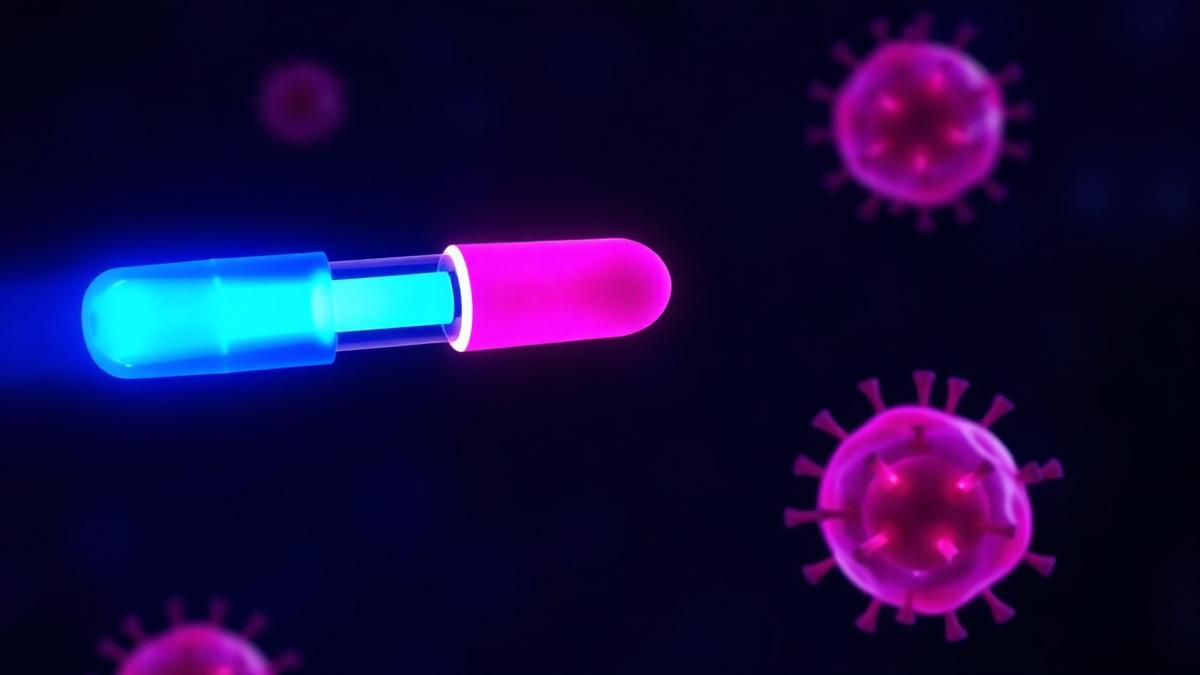
- Every ADC is built from three linked parts, sometimes described as "smart chemotherapy" or a biological "guided missile": a monoclonal antibody engineered to recognize a protein (antigen) found mainly on cancer cells; a potent cytotoxic drug payload, often far too toxic to give as ordinary chemotherapy; and a chemical linker holding the two together. The antibody circulates through the bloodstream, binds its target antigen on the tumor cell surface, and the whole complex is pulled inside the cell.
- ADCs vs. True Immunotherapy: The Key Distinction
- True immunotherapies — checkpoint inhibitors, CAR-T cell therapy, and bispecific antibodies — work by mobilizing or redirecting a patient's own immune system to recognize and destroy cancer. An ADC does something categorically different: it uses an antibody purely as a delivery vehicle for a cytotoxic drug, killing tumor cells directly through chemotherapy, the same way traditional chemotherapy does, just aimed more precisely.
- What the Evidence Shows for Approved ADCs
- Three ADCs illustrate how far this class has come, each with FDA approvals confirmed through 2026. Trastuzumab deruxtecan (Enhertu), targeting HER2, has expanded well beyond its original metastatic breast cancer approval.
- Side Effects and Limitations
- " Because the payload is genuinely cytotoxic, real toxicities remain, and some are payload-specific. 2%) fatal, underscoring the need for proactive monitoring.
What This Article Covers
Antibody-drug conjugates (ADCs) are one of the fastest-growing classes of cancer drugs, with more than a dozen now FDA-approved and several delivering some of the strongest survival data seen in recent oncology trials. Because ADCs use antibodies — the same molecular tool immunotherapy uses — they're frequently lumped in with checkpoint inhibitors, CAR-T, and bispecific antibodies in casual conversation and even some news coverage. That's a meaningful mix-up: an ADC is, at its core, a precision-guided chemotherapy delivery system, not a treatment that reprograms or unleashes the immune system. This article explains how ADCs actually work, walks through three real, currently approved ADCs and what their trial data show, and lays out exactly where the mechanistic line between ADCs and true immunotherapy falls — including the places where the two approaches genuinely do overlap.
How an ADC Actually Works
Every ADC is built from three linked parts, sometimes described as "smart chemotherapy" or a biological "guided missile": a monoclonal antibody engineered to recognize a protein (antigen) found mainly on cancer cells; a potent cytotoxic drug payload, often far too toxic to give as ordinary chemotherapy; and a chemical linker holding the two together. The antibody circulates through the bloodstream, binds its target antigen on the tumor cell surface, and the whole complex is pulled inside the cell. Once internalized, the linker breaks down and releases the payload, which kills the cell from within. Many ADCs also produce a "bystander effect," where released payload leaks into and kills neighboring tumor cells that lack the target antigen — useful in tumors with uneven antigen expression. Because the drug is concentrated inside antigen-positive cells rather than circulating freely through the whole body the way conventional chemotherapy does, ADCs can use more potent payloads while sparing more healthy tissue — though, as the safety data below show, they are far from side-effect-free.
ADCs vs. True Immunotherapy: The Key Distinction
True immunotherapies — checkpoint inhibitors, CAR-T cell therapy, and bispecific antibodies — work by mobilizing or redirecting a patient's own immune system to recognize and destroy cancer. An ADC does something categorically different: it uses an antibody purely as a delivery vehicle for a cytotoxic drug, killing tumor cells directly through chemotherapy, the same way traditional chemotherapy does, just aimed more precisely. As one patient-education overview puts it plainly, immunotherapy antibodies "alert the immune system to initiate an attack," while an ADC's antibody instead carries a chemotherapy "warhead" straight into the cancer cell. That said, the line isn't perfectly clean. Because ADCs still use full antibodies with an intact Fc region, some can trigger secondary immune-mediated killing mechanisms — antibody-dependent cellular cytotoxicity (recruiting natural killer cells), antibody-dependent phagocytosis, and complement activation — alongside their direct chemotherapy effect. So an ADC's antibody component can incidentally engage parts of the immune system even though its primary, defining mechanism is direct cytotoxic drug delivery, not immune activation.
What the Evidence Shows for Approved ADCs
Three ADCs illustrate how far this class has come, each with FDA approvals confirmed through 2026. Trastuzumab deruxtecan (Enhertu), targeting HER2, has expanded well beyond its original metastatic breast cancer approval. In May 2026, the FDA approved it for two new early-stage HER2-positive breast cancer settings: as neoadjuvant therapy (given before surgery) and as adjuvant therapy for patients with residual disease after surgery. In the neoadjuvant DESTINY-Breast11 trial, adding Enhertu produced a pathological complete response rate of 67.3%, compared with 56.3% on the prior standard regimen. In the adjuvant DESTINY-Breast05 trial, it lowered the three-year risk of invasive disease recurrence dramatically — 92.4% of patients were disease-free at three years versus 83.7% on the prior standard, ado-trastuzumab emtansine.
Sacituzumab govitecan (Trodelvy), targeting Trop-2, received FDA approval in June 2026 for first-line metastatic triple-negative breast cancer — both as monotherapy for patients ineligible for checkpoint inhibitors, and in combination with pembrolizumab for PD-L1-positive tumors. In the ASCENT-04/KEYNOTE-D19 combination trial, median progression-free survival reached 11.2 months versus 7.8 months with chemotherapy plus pembrolizumab alone.
Enfortumab vedotin (Padcev), targeting Nectin-4, is FDA-approved for locally advanced or metastatic urothelial (bladder) cancer, including in combination with pembrolizumab as first-line therapy. Its approval history has continued to expand into earlier disease stages, including a July 2026 approval for neoadjuvant and adjuvant use in muscle-invasive bladder cancer regardless of a patient's eligibility for cisplatin chemotherapy — broadening access to a group of patients who previously had fewer options.
Side Effects and Limitations
ADCs are not simply "gentler chemo." Because the payload is genuinely cytotoxic, real toxicities remain, and some are payload-specific. Trastuzumab deruxtecan carries a boxed warning for interstitial lung disease (ILD)/pneumonitis; a pooled analysis of monotherapy trials found drug-related ILD in 15.4% of patients, with the large majority low-grade but a small fraction (2.2%) fatal, underscoring the need for proactive monitoring. Other ADCs carry their own signature risks — peripheral neuropathy, ocular toxicity, or low blood counts and infection risk, depending on the linked drug. These are chemotherapy-class toxicities, not the immune-related adverse events (like colitis or thyroid dysfunction) typically seen with checkpoint inhibitors — another practical reminder that ADCs and immunotherapy are mechanistically, and clinically, distinct.
Bottom Line
Antibody-drug conjugates deserve their own category in any honest discussion of modern cancer treatment. They share immunotherapy's use of engineered antibodies and are often approved and used alongside checkpoint inhibitors, but their core mechanism is direct: an antibody delivers a potent chemotherapy payload straight to the tumor cell, not an immune-system reprogramming effect. For patients with HER2-positive breast cancer, triple-negative breast cancer, or urothelial cancer, that targeted delivery has translated into genuinely encouraging trial results — higher response rates, longer progression-free survival, and in Enhertu's adjuvant setting, a substantial reduction in recurrence risk. Those gains come with real, sometimes serious toxicities that require careful monitoring, so understanding an ADC for what it mechanistically is — precision chemotherapy, not immunotherapy — helps set accurate expectations for both its benefits and its risks.
Key Questions Answered
- Is an ADC a form of immunotherapy?
- Not in the strict sense. ADCs use an antibody to deliver chemotherapy directly into cancer cells rather than directing the immune system to attack the tumor, which is what defines true immunotherapies like checkpoint inhibitors and CAR-T. Some ADCs can trigger secondary immune-mediated effects because they use intact antibodies, but their primary mechanism is direct cytotoxic drug delivery.
- Can ADCs be combined with immunotherapy?
- Yes. Several approved regimens pair ADCs with checkpoint inhibitors — for example, enfortumab vedotin plus pembrolizumab is FDA-approved as first-line therapy for advanced urothelial cancer, and sacituzumab govitecan plus pembrolizumab is now approved for certain first-line triple-negative breast cancers.
- What are the most serious risks of ADC therapy?
- Risks depend on the specific payload and linked drug. Trastuzumab deruxtecan carries a boxed warning for interstitial lung disease/pneumonitis, seen in roughly 15% of patients in pooled trial data, with a small percentage of cases fatal. Other ADCs are associated with peripheral neuropathy, eye toxicity, or low blood cell counts.
- How many ADCs are currently FDA-approved?
- As of mid-2026, more than a dozen ADCs have FDA approval across cancer types including breast, bladder/urothelial, lymphoma, myeloma, ovarian, and lung cancers — a rapid expansion from the first ADC approval, gemtuzumab ozogamicin (Mylotarg), in 2000.
Sources
- FDA Approves Two Separate Indications for Fam-Trastuzumab Deruxtecan-nxki in HER2-Positive Early-Stage Breast Cancer — U.S. Food and Drug Administration, 2026 — https://www.fda.gov/drugs/resources-information-approved-drugs/fda-approves-two-separate-indications-fam-trastuzumab-deruxtecan-nxki-her2-positive-early-stage
- FDA Approves Sacituzumab Govitecan-hziy as Monotherapy and in Combination with Pembrolizumab for First-Line Treatment of Triple-Negative Breast Cancer — U.S. Food and Drug Administration, 2026 — https://www.fda.gov/drugs/resources-information-approved-drugs/fda-approves-sacituzumab-govitecan-hziy-monotherapy-and-combination-pembrolizumab-first-line
- Padcev (enfortumab vedotin-ejfv) FDA Approval History — Drugs.com, 2026 — https://www.drugs.com/history/padcev.html
- Enfortumab Vedotin-ejfv — National Cancer Institute — https://www.cancer.gov/about-cancer/treatment/drugs/enfortumabvedotin-ejfv
- What Is an Antibody-Drug Conjugate? — Cleveland Clinic — https://my.clevelandclinic.org/health/treatments/antibody-drug-conjugates
- Antibody Drug Conjugate: The "Biological Missile" for Targeted Cancer Therapy — Signal Transduction and Targeted Therapy, Nature, 2022 — https://www.nature.com/articles/s41392-022-00947-7
- Pooled Analysis of Drug-Related Interstitial Lung Disease and/or Pneumonitis in Nine Trastuzumab Deruxtecan Monotherapy Studies — PMC/National Library of Medicine, 2022 — https://pmc.ncbi.nlm.nih.gov/articles/PMC9434416/
- Antibody-Drug Conjugates Carry Toxic Payloads Directly to Cancer Cells — CancerCenter.com / City of Hope, 2022 — https://www.cancercenter.com/community/blog/2022/07/antibody-drug-conjugates
Related Articles
- Fundamentals
What Is Apheresis, and Why Is It the First Step in CAR-T Cell Therapy?
Before CAR-T cells can be engineered, a patient's T cells must be collected by leukapheresis — a several-hour blood-filtering procedure whose success is not guaranteed in heavily pretreated patients.
- Fundamentals
Autologous vs. Allogeneic CAR-T: What's the Difference?
All six FDA-approved CAR-T products are made from the patient's own cells. Off-the-shelf donor CAR-T is faster and cheaper in theory — and still investigational.
- Fundamentals
What Is a Cancer Vaccine? Preventive vs. Therapeutic Vaccines Explained
Preventive HPV and hepatitis B vaccines are proven cancer-prevention tools. Therapeutic cancer vaccines are a harder, mostly still-investigational problem.