What Is Duchenne Muscular Dystrophy?
What this article covers
- What This Article Covers
- Duchenne muscular dystrophy (DMD) is the most common, most severe childhood muscular dystrophy, caused by mutations in the gene for dystrophin, a protein muscles need to stay intact. This article covers DMD's cause, progression, diagnosis, and standard care — corticosteroids, physical therapy, cardiac/respiratory monitoring, and the FDA-approved gene therapy Elevidys, whose label changed significantly amid real safety concerns — then closes with an honest look at where stem-cell-specific research (distinct from gene therapy) stands, pointing to our companion deep-dive.
- What Causes Duchenne Muscular Dystrophy?
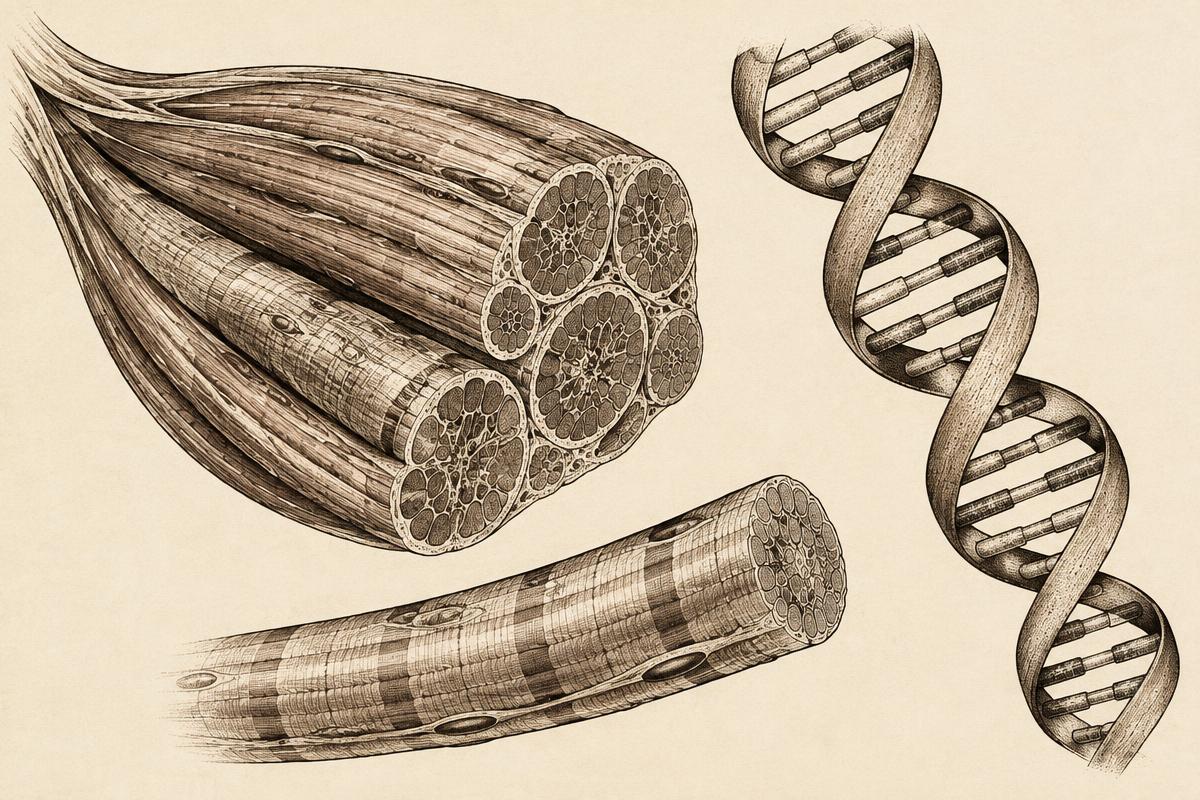
- DMD is caused by mutations in the DMD gene, on the X chromosome, which provides instructions for making dystrophin — a structural anchor that holds muscle cell membranes together during the repeated stress of contraction. Without functional dystrophin, muscle fibers break down over time, become inflamed, and are gradually replaced by scar and fatty tissue.
- Symptoms and Progression
- DMD symptoms typically emerge in early childhood, often between ages 2 and 5, and progress in a fairly predictable pattern:
- How Is It Diagnosed?
- Diagnosis usually starts when a pediatrician or parent notices delayed milestones or unusual falling. The typical path includes a creatine kinase (CK) blood test (muscle damage releases this enzyme at very high levels in DMD), genetic testing (the current standard for confirming diagnosis and identifying the specific mutation in the DMD gene), a muscle biopsy (less commonly needed now, but sometimes used when genetic results are ambiguous), and carrier testing (offered to mothers and other female relatives once a diagnosis is confirmed).
- Standard Care Today
- There is no cure, but care has advanced substantially and a multidisciplinary approach is now standard. Corticosteroids (prednisone, deflazacort, or the newer vamorolone), taken daily, help preserve strength and slow the loss of walking ability for a period of years, though long-term use brings tradeoffs — weight gain, bone thinning, growth delay — that need close monitoring.
What This Article Covers
Duchenne muscular dystrophy (DMD) is the most common, most severe childhood muscular dystrophy, caused by mutations in the gene for dystrophin, a protein muscles need to stay intact. This article covers DMD's cause, progression, diagnosis, and standard care — corticosteroids, physical therapy, cardiac/respiratory monitoring, and the FDA-approved gene therapy Elevidys, whose label changed significantly amid real safety concerns — then closes with an honest look at where stem-cell-specific research (distinct from gene therapy) stands, pointing to our companion deep-dive.
What Causes Duchenne Muscular Dystrophy?
DMD is caused by mutations in the DMD gene, on the X chromosome, which provides instructions for making dystrophin — a structural anchor that holds muscle cell membranes together during the repeated stress of contraction. Without functional dystrophin, muscle fibers break down over time, become inflamed, and are gradually replaced by scar and fatty tissue. Because the gene sits on the X chromosome, DMD follows an X-linked recessive pattern and overwhelmingly affects boys; girls carrying one mutated copy are usually unaffected carriers but can rarely show mild symptoms. Roughly two-thirds of cases come from a carrier mother, while about a third arise from new, spontaneous mutations — so a family with no prior history can still have an affected child.
Symptoms and Progression
DMD symptoms typically emerge in early childhood, often between ages 2 and 5, and progress in a fairly predictable pattern:
- Delayed walking, frequent falls, and difficulty running, jumping, or climbing stairs
- Waddling gait, toe-walking, and using the hands to push up from the floor to standing (Gowers' sign)
- Enlarged calf muscles (pseudohypertrophy) despite underlying weakness
- Learning or behavioral differences in some children, since dystrophin is also expressed in the brain
- Progressive loss of walking ability, usually by the early teens, followed by weakness in the arms and trunk
- Cardiac and respiratory involvement that become central concerns by the teens and twenties
Progression varies, but DMD remains life-limiting. Respiratory and cardiac complications once shortened life expectancy to the 20s; improved multidisciplinary care has extended survival for many into their 30s and beyond, though DMD remains a serious diagnosis.
How Is It Diagnosed?
Diagnosis usually starts when a pediatrician or parent notices delayed milestones or unusual falling. The typical path includes a creatine kinase (CK) blood test (muscle damage releases this enzyme at very high levels in DMD), genetic testing (the current standard for confirming diagnosis and identifying the specific mutation in the DMD gene), a muscle biopsy (less commonly needed now, but sometimes used when genetic results are ambiguous), and carrier testing (offered to mothers and other female relatives once a diagnosis is confirmed). Precise genetic diagnosis matters because it determines eligibility for mutation-specific drugs and gene therapy.
Standard Care Today
There is no cure, but care has advanced substantially and a multidisciplinary approach is now standard. Corticosteroids (prednisone, deflazacort, or the newer vamorolone), taken daily, help preserve strength and slow the loss of walking ability for a period of years, though long-term use brings tradeoffs — weight gain, bone thinning, growth delay — that need close monitoring. Physical and occupational therapy maintain range of motion, help prevent joint contractures, and support mobility devices. Cardiac monitoring (echocardiograms, heart medications when needed) is essential since cardiomyopathy is a leading cause of death in DMD. Respiratory monitoring and support, including pulmonary testing and eventually assisted ventilation, address progressive breathing-muscle weakness. Exon-skipping drugs (eteplirsen, golodirsen, viltolarsen, casimersen) are FDA-approved for specific mutations, modestly boosting a shortened but partially functional dystrophin.
Elevidys (delandistrogene moxeparvovec), a one-time gene therapy delivering a "micro-dystrophin" gene via a viral vector, received accelerated FDA approval in June 2023 for ambulatory children ages 4–5, then an expanded June 2024 approval covering ambulatory patients age 4 and up plus accelerated approval for non-ambulatory patients. That changed in 2025: after reports of patient deaths from acute liver injury, the FDA had the manufacturer pause shipments, and in November 2025 approved a revised label that removed the non-ambulatory indication and added a boxed warning for acute, serious liver injury and acute liver failure. Elevidys remains FDA-approved, but now strictly for ambulatory patients, with new safety monitoring — proof that even approved advanced DMD therapies carry real, evolving risk.
Where Does Stem Cell Research Stand?
Worth being precise: Elevidys and the exon-skipping drugs above are gene therapies, not stem cell therapies. Stem-cell-specific approaches for DMD — muscle progenitor cells, mesenchymal stem cells, iPSC-derived muscle cells, and similar strategies to repair damaged muscle — remain almost entirely preclinical or in small early-phase trials. Researchers are exploring whether such cells, sometimes paired with gene-editing, can regenerate dystrophin-expressing muscle fibers, but none has produced the large, controlled evidence needed for approval, and no stem cell therapy is FDA-approved for DMD. Families should be wary of clinics marketing "stem cell treatments" outside registered trials — these are unproven and unregulated. For a deeper look, see our companion article, "Stem Cell Therapy for Duchenne Muscular Dystrophy."
Bottom Line
DMD is a serious, progressive genetic disease rooted in the loss of functional dystrophin, and it still shortens and limits life in real ways. At the same time, genuine progress has been made: earlier diagnosis, corticosteroids, vigilant cardiac and respiratory care, mutation-specific drugs, and gene therapy have measurably extended what's possible for many families. That progress carries real tradeoffs, as the 2025 safety revisions to Elevidys's label illustrate — hope and honesty have to travel together here. Stem-cell-specific research for DMD is active but still early; it has not produced an approved therapy, and claims otherwise deserve skepticism.
Key Questions Answered
- What causes Duchenne muscular dystrophy?
- Mutations in the X-linked DMD gene that leave muscles without functional dystrophin, so fibers break down and are replaced by scar and fat.
- What changed with Elevidys in 2025?
- After deaths from acute liver injury, the FDA's November 2025 revised label removed the non-ambulatory indication and added a boxed warning; it remains approved for ambulatory patients.
- Is there an approved stem cell therapy for DMD?
- No. Stem-cell approaches remain preclinical or in small early-phase trials; approved DMD therapies are gene-based.
Sources
- FDA Approves New Safety Warning and Revised Indication That Limits Use for Elevidys Following Reports of Fatal Liver Injury, U.S. Food and Drug Administration, 2025 — https://www.fda.gov/news-events/press-announcements/fda-approves-new-safety-warning-and-revised-indication-limits-use-elevidys-following-reports-fatal
- FDA Approves New Safety Warning and Revised Indication for Elevidys, Parent Project Muscular Dystrophy, 2025 — https://www.parentprojectmd.org/fda-approves-new-safety-warning-and-revised-indication-for-elevidys/
- FDA Approves Elevidys (delandistrogene moxeparvovec-rokl) Gene Therapy for Duchenne Muscular Dystrophy, World Duchenne Organization, 2023 — https://www.worldduchenne.org/news/fda-approves-elevidys-delandistrogene-moxeparvovec-rokl-gene-therapy-for-duchenne-muscular-dystrophy/
- Duchenne Muscular Dystrophy and Becker Muscular Dystrophy, Merck Manuals (Professional Edition) — https://www.merckmanuals.com/professional/pediatrics/inherited-muscular-disorders/duchenne-muscular-dystrophy-and-becker-muscular-dystrophy
- What Is Duchenne Muscular Dystrophy (DMD)?, Muscular Dystrophy News / BioNews — https://musculardystrophynews.com/muscular-dystrophy-types/what-is-duchenne-muscular-dystrophy/
- Trial of Cell Based Therapy for DMD, ClinicalTrials.gov (NCT06692426) — https://clinicaltrials.gov/study/NCT06692426
Related Articles
- Fundamentals
What Is Angiogenesis, and Why Does It Matter for Stem Cell Therapy?
New blood vessels don't just show up — they're built, through a process called angiogenesis. Here's what it is, why the body depends on it for healing, and why so much stem cell research is focused on helping it along.
- Fundamentals
Myth: If a Treatment Is Listed on ClinicalTrials.gov, It Must Be Safe and Effective
Seeing a treatment listed on ClinicalTrials.gov can feel like a stamp of approval — but registering a trial costs nothing, requires no proof the treatment works, and isn't vetted by the government for safety or scientific quality.
- Fundamentals
What Are Organoids, and How Are They Grown From Stem Cells?
Organoids are tiny, self-organizing models grown from stem cells. They help study human biology and drug responses but are not complete transplant-ready organs.