What Is Osteoarthritis?
What this article covers
- What This Article Covers
- 5 million adults in the United States. This article explains what osteoarthritis actually is, what causes it, how it's diagnosed, and what evidence-based treatment looks like today — from exercise and medication through to joint replacement surgery.
- What Is Happening in the Joint?
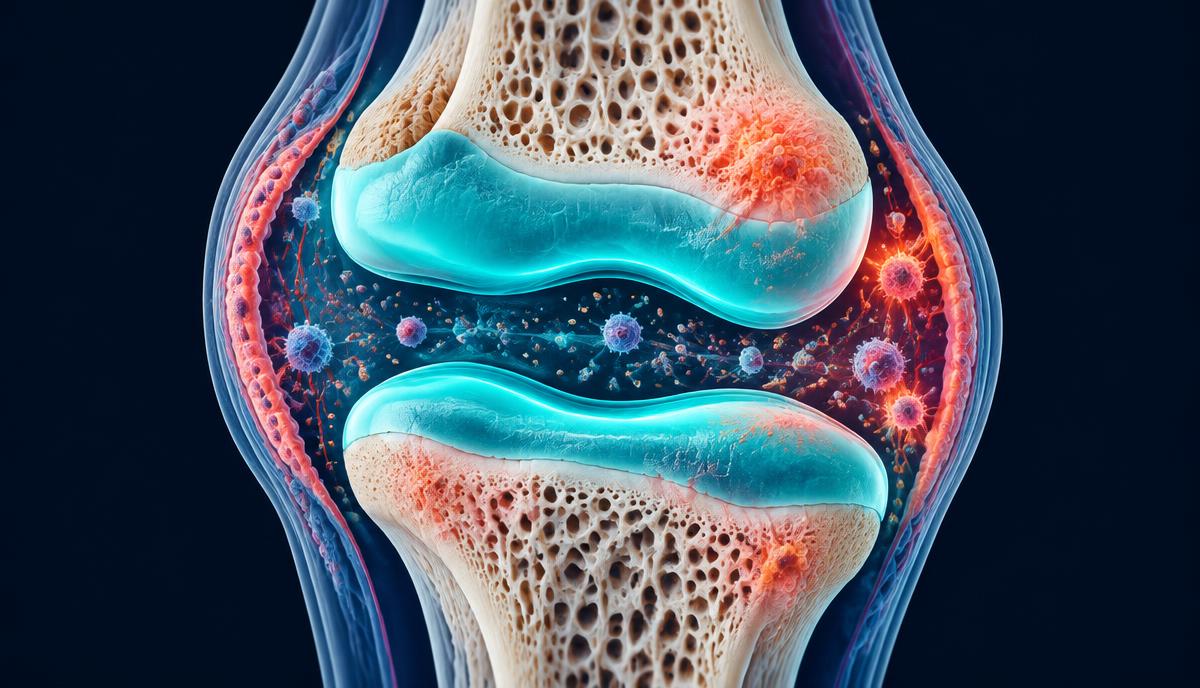
- Osteoarthritis isn't simply "wear and tear" — it's a whole-joint disease that can involve cartilage, the bone beneath it, the joint lining (synovium), ligaments, and surrounding muscle. In a healthy joint, cartilage cushions the ends of bones and allows smooth, low-friction movement.
- What Causes Osteoarthritis?
- No single cause explains OA; it results from a combination of mechanical, biological, and genetic factors that stress a joint beyond its capacity to repair itself.
- Symptoms and How It's Diagnosed
- Symptoms usually build gradually: joint pain during or after activity, stiffness after rest or in the morning (typically easing within 30 minutes), reduced range of motion, a grating or clicking sensation, swelling, and weakness in nearby muscles. Symptoms vary by joint — hip OA, for instance, can present as groin or buttock pain.
- Standard Treatment Today
- There is currently no cure for osteoarthritis, and no standard treatment reverses cartilage that has already broken down.
What This Article Covers
Osteoarthritis (OA) is the most common form of arthritis, affecting more than 32.5 million adults in the United States. This article explains what osteoarthritis actually is, what causes it, how it's diagnosed, and what evidence-based treatment looks like today — from exercise and medication through to joint replacement surgery. It closes with an honest look at where stem cell and regenerative research currently stands for osteoarthritis in general; readers wanting a deeper evidence review for a specific joint can see our dedicated pages on knee osteoarthritis and hip osteoarthritis.
What Is Happening in the Joint?
Osteoarthritis isn't simply "wear and tear" — it's a whole-joint disease that can involve cartilage, the bone beneath it, the joint lining (synovium), ligaments, and surrounding muscle. In a healthy joint, cartilage cushions the ends of bones and allows smooth, low-friction movement. In OA, that cartilage gradually breaks down, the underlying bone can remodel and form bony growths called osteophytes (bone spurs), and low-grade inflammation can develop. It most often affects the knees, hips, hands, and spine, and typically progresses slowly over years rather than appearing suddenly.
What Causes Osteoarthritis?
No single cause explains OA; it results from a combination of mechanical, biological, and genetic factors that stress a joint beyond its capacity to repair itself. Recognized risk factors include:
- Age — risk rises substantially after 50, though OA can develop earlier
- Prior joint injury — a torn ACL or meniscus, for example, markedly raises later OA risk in that joint
- Repetitive joint stress from certain occupations or sports
- Excess body weight, which adds mechanical load to weight-bearing joints and is linked to inflammatory changes that may affect even non-weight-bearing joints
- Joint misalignment or structural abnormalities
- Weak muscles around a joint
- Family history
- Sex — OA, especially of the hands and knees, is more common in women
Symptoms and How It's Diagnosed
Symptoms usually build gradually: joint pain during or after activity, stiffness after rest or in the morning (typically easing within 30 minutes), reduced range of motion, a grating or clicking sensation, swelling, and weakness in nearby muscles. Symptoms vary by joint — hip OA, for instance, can present as groin or buttock pain. There's no single blood test that diagnoses OA. Clinicians rely mainly on reported symptoms and a physical exam. Imaging can support the diagnosis: X-rays may show narrowed joint space and bone spurs, while MRI can reveal cartilage and soft-tissue changes earlier than an X-ray can. Blood tests and joint fluid analysis don't diagnose OA directly but help rule out other causes of joint pain, such as rheumatoid arthritis or gout.
Standard Treatment Today
There is currently no cure for osteoarthritis, and no standard treatment reverses cartilage that has already broken down. Care instead focuses on reducing pain and preserving function, typically in a stepped approach:
- Exercise and physical therapy to strengthen supporting muscles and maintain mobility
- Weight management, since even modest weight loss meaningfully reduces load on weight-bearing joints
- Medications, including acetaminophen and NSAIDs such as ibuprofen or naproxen, for pain and inflammation
- Injections, such as corticosteroids or hyaluronic acid, for longer (though still temporary) relief in some patients
- Bracing or assistive devices to offload a stressed joint
- Joint replacement surgery, generally reserved for more advanced OA once conservative measures no longer control pain or function; knee and hip replacement are the most common examples and are considered effective, durable options for appropriate candidates
Where Stem Cell Research Stands
Interest in stem cell and other regenerative approaches has grown because standard care manages OA symptoms but doesn't regrow cartilage. The most-studied cell type is mesenchymal stem/stromal cells (MSCs), usually drawn from a patient's own bone marrow, fat tissue, or umbilical cord tissue and injected into the joint. A 2024 systematic review and meta-analysis in Frontiers in Endocrinology, pooling 18 randomized controlled trials and roughly 1,170 participants, found that MSC injections outperformed placebo on standard pain and function scores (WOMAC and VAS) at 12 months, with no serious treatment-related adverse events reported. But the same review was candid about its limits: most trials followed patients for only 6–12 months, sample sizes were often small, and cell sources, doses, and protocols varied widely — all of which make long-term durability and real-world generalizability genuinely uncertain. The authors concluded MSCs "may relieve pain and improve function," while cautioning that more standardized, larger, and longer trials are needed before the approach becomes established clinical practice. It's also worth knowing plainly: no stem cell product is currently FDA-approved to treat osteoarthritis in the United States, and the FDA has repeatedly warned about clinics marketing unapproved stem cell injections, some tied to real manufacturing and safety problems. For a deeper look at the evidence specific to a particular joint, see our pages on stem cell therapy for knee osteoarthritis and stem cell therapy for hip osteoarthritis.
Bottom Line
Osteoarthritis is a common, degenerative joint disease driven by a mix of age, injury, mechanical stress, excess weight, and genetics. It can't currently be cured or reversed, but well-established treatments — from exercise and weight management through medication, injections, and joint replacement — can meaningfully control symptoms for most people. Stem cell therapy shows early, genuinely encouraging signals in placebo-controlled trials, particularly for pain and function, but it remains investigational, unstandardized, and not FDA-approved — a research area worth watching, not yet a proven treatment to seek out.
Sources
- About Osteoarthritis, Arthritis Foundation, 2025 — https://www.arthritis.org/about-osteoarthritis
- Osteoarthritis, Arthritis Foundation, 2025 — https://www.arthritis.org/diseases/osteoarthritis
- Tests for Osteoarthritis, Arthritis Foundation, 2025 — https://www.arthritis.org/diseases/more-about/tests-for-osteoarthritis
- Osteoarthritis and Knee Replacement Surgery, WebMD, 2024 — https://www.webmd.com/osteoarthritis/osteoarthritis-knee-replacement-surgery
- Tian, X. et al., "Relative efficacy and safety of mesenchymal stem cells for osteoarthritis: a systematic review and meta-analysis of randomized controlled trials," Frontiers in Endocrinology, 2024 — https://pmc.ncbi.nlm.nih.gov/articles/PMC11194387
- FDA Sends Warning to Company Selling Unapproved Umbilical Cord Blood and Umbilical Cord Products, U.S. Food and Drug Administration — https://www.fda.gov/news-events/press-announcements/fda-sends-warning-company-selling-unapproved-umbilical-cord-blood-and-umbilical-cord-products-may
Related Articles
- Fundamentals
What Are Organoids? How Scientists Grow Miniature Organs From Stem Cells
How stem cells form organoids, what these miniature tissue models reveal about disease and drugs, and why they are research tools rather than treatments.
- Fundamentals
Myth: Stem Cell Therapy Works Immediately — and the Results Last Forever
Stem cell treatment rarely acts instantly, and long-term durability is often unknown. Compare common marketing claims with trial follow-up and biology.
- Fundamentals
Types of Liver Disease: Which Ones Are Being Studied With Stem Cell Therapy?
Stem cell research for cirrhosis, liver failure, autoimmune and inherited liver diseases—and how liver cancer cell therapy differs.