What Is Parkinson's Disease?
What this article covers
- What This Article Covers
- Parkinson's disease is one of the most common neurodegenerative conditions in the world, yet much of what people hear about it starts in the middle — a new diagnosis, a trial headline, a drug name. This article starts at the beginning: what Parkinson's actually is, what's believed to cause it, how doctors recognize and diagnose it, what treatment looks like today, and — honestly, without hype — where stem cell and cell-based research currently stands for this disease.
- What Is Parkinson's Disease, and What Causes It?
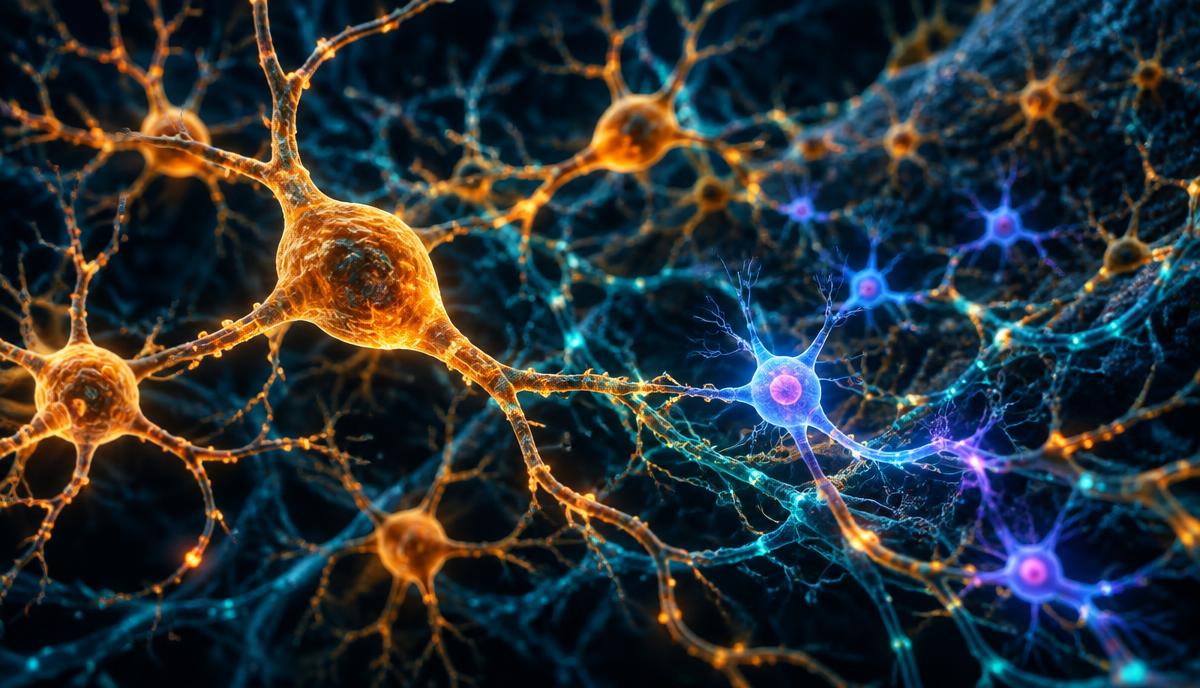
- Parkinson's disease is a progressive disorder of the nervous system that develops when nerve cells in specific areas of the brain weaken, become damaged, and die. The most affected region is the substantia nigra, a small structure that produces dopamine, a chemical messenger critical for smooth, coordinated movement.
- Recognizing the Symptoms
- Parkinson's is defined by four cardinal motor symptoms: bradykinesia (slowed movement), tremor (often at rest), rigidity (muscle stiffness), and postural instability (balance difficulty). Additional motor changes can include a shuffling gait, reduced arm swing, softer speech, and swallowing difficulty.
- How Is Parkinson's Diagnosed?
- There is no blood test, scan, or single definitive exam that confirms Parkinson's disease. Diagnosis is clinical, built on a neurologist's evaluation of medical history, a physical and neurological exam, and the presence of bradykinesia plus at least one other cardinal symptom (tremor, rigidity, or balance problems).
- Standard Treatment Today
- There is currently no cure for Parkinson's disease.
What This Article Covers
Parkinson's disease is one of the most common neurodegenerative conditions in the world, yet much of what people hear about it starts in the middle — a new diagnosis, a trial headline, a drug name. This article starts at the beginning: what Parkinson's actually is, what's believed to cause it, how doctors recognize and diagnose it, what treatment looks like today, and — honestly, without hype — where stem cell and cell-based research currently stands for this disease.
What Is Parkinson's Disease, and What Causes It?
Parkinson's disease is a progressive disorder of the nervous system that develops when nerve cells in specific areas of the brain weaken, become damaged, and die. The most affected region is the substantia nigra, a small structure that produces dopamine, a chemical messenger critical for smooth, coordinated movement. By the time motor symptoms appear, a person has typically already lost 60 to 80% or more of these dopamine-producing cells, according to the National Institute of Neurological Disorders and Stroke (NINDS). Why this cell loss begins is still not fully understood. Researchers believe Parkinson's arises from a combination of factors rather than one single cause. Genetics account for roughly 10 to 15% of cases, with mutations in genes such as LRRK2, GBA1, and SNCA identified as contributors. Environmental exposures — including certain pesticides and head injury — along with age, sex (it affects more men than women), and family history also play a role. For most people, it's this interplay of genetic susceptibility and environmental influence, not a single trigger, that sets the disease in motion.
Recognizing the Symptoms
Parkinson's is defined by four cardinal motor symptoms: bradykinesia (slowed movement), tremor (often at rest), rigidity (muscle stiffness), and postural instability (balance difficulty). Additional motor changes can include a shuffling gait, reduced arm swing, softer speech, and swallowing difficulty. Just as important — and often overlooked — are the non-motor symptoms, which can appear years before movement problems and significantly affect quality of life:
- Loss of sense of smell
- Sleep disturbances, including acting out dreams (REM sleep behavior disorder)
- Constipation
- Depression, anxiety, and apathy
- Cognitive changes, including memory and thinking difficulties
- Fatigue and, in some cases, orthostatic hypotension (a drop in blood pressure on standing)
As the Parkinson's Foundation notes, no two cases look quite alike: symptoms, their severity, and their pace vary widely from person to person.
How Is Parkinson's Diagnosed?
There is no blood test, scan, or single definitive exam that confirms Parkinson's disease. Diagnosis is clinical, built on a neurologist's evaluation of medical history, a physical and neurological exam, and the presence of bradykinesia plus at least one other cardinal symptom (tremor, rigidity, or balance problems). A noticeable improvement in symptoms after starting dopaminergic medication often helps support the diagnosis. Supporting tools exist but aren't required: MRI can rule out other conditions, a DaTscan (FDA-approved since 2011) can visualize dopamine activity in the brain, and newer biomarker tests — including a skin biopsy that detects abnormal alpha-synuclein protein — are increasingly used, particularly in research settings. Many patients are referred to a movement disorder specialist, a neurologist with focused training in diagnosing and managing Parkinson's and related conditions.
Standard Treatment Today
There is currently no cure for Parkinson's disease. Treatment focuses on managing symptoms and preserving quality of life, and it typically evolves over the course of the disease:
- Carbidopa-levodopa remains the most effective medication, replenishing the brain's dopamine supply.
- Dopamine agonists mimic dopamine's effects and are sometimes used earlier in the disease or alongside levodopa.
- MAO-B inhibitors slow the breakdown of dopamine in the brain.
- Deep brain stimulation (DBS), a surgical option involving implanted electrodes that deliver electrical signals to specific brain regions, is considered for patients whose symptoms are no longer well controlled by medication alone or who experience difficult "off" periods.
- Exercise, physical therapy, and speech therapy are increasingly recognized as valuable complements to medical treatment.
Where Does Stem Cell Research Stand?
This is where real, careful optimism belongs — grounded in what's actually been shown so far. Because Parkinson's involves the loss of one relatively specific cell population (dopamine-producing neurons), it has long been considered a promising target for cell replacement therapy: the idea of transplanting new dopamine-producing cells, grown from stem cells, to help restore what the disease has taken. That idea is no longer purely theoretical. Several early-to-mid-stage clinical trials are now underway. The STEM-PD trial, led by researchers at Lund University and Cellular Intelligence, transplanted stem cell-derived dopamine progenitor cells into eight patients and reported genuinely encouraging first-year results: the procedure was well tolerated, no serious cell-related adverse effects occurred, PET imaging showed early signs that the transplanted cells were surviving and integrating, and six of seven participants were able to meaningfully reduce their Parkinson's medications. Separately, BlueRock Therapeutics' bemdaneprocel and a Kyoto University-developed iPSC-based therapy (being advanced by Sumitomo Pharma) have both reported encouraging safety data and movement-symptom trends through 18 to 24 months of follow-up, with larger trials now being planned.
These are real, hopeful signals — the kind that make a devastating diagnosis feel a little less fixed. But it's just as important to be clear-eyed about what they are not. No stem cell therapy is FDA-approved for Parkinson's disease today, trials to date involve small numbers of patients without control groups, and these approaches aim to supply dopamine and ease motor symptoms — they are not expected to reverse the broader, progressive neurodegeneration or address every non-motor symptom. How they compare to established treatments like levodopa or DBS also remains unproven. Patients should be wary of any clinic claiming to offer an approved or guaranteed stem cell "cure" for Parkinson's outside a legitimate, FDA-regulated clinical trial.
Bottom Line
Parkinson's disease is a progressive, currently incurable condition rooted in the loss of dopamine-producing brain cells, shaped by a mix of genetic and environmental factors. Standard care — levodopa, dopamine agonists, and, for appropriate candidates, deep brain stimulation — can meaningfully manage symptoms, but it doesn't stop the disease's progression. Stem cell-based research is one of the more genuinely promising frontiers in Parkinson's science, with early trials like STEM-PD delivering real, carefully measured good news. But it remains investigational: no stem cell therapy is approved for Parkinson's today, and anyone considering it should look only to legitimate, registered clinical trials rather than unregulated clinics.
Sources
- Parkinson's Disease — National Institute of Neurological Disorders and Stroke (NINDS) — https://www.ninds.nih.gov/health-information/disorders/parkinsons-disease
- Causes — Parkinson's Foundation — https://www.parkinson.org/understanding-parkinsons/causes
- Getting Diagnosed — Parkinson's Foundation — https://www.parkinson.org/understanding-parkinsons/getting-diagnosed
- Surgical Treatment Options — Parkinson's Foundation — https://www.parkinson.org/living-with-parkinsons/treatment/surgical-treatment-options
- New Study Shows 1.2 Million People in the United States Estimated to be Living with Parkinson's Disease by 2030 — Parkinson's Foundation, 2022 — https://www.parkinson.org/about-us/news/parkinsons-prevalence-project
- Parkinson's Symptoms: Motor and Non-Motor Signs — Stanford Medicine — https://med.stanford.edu/parkinsons/symptoms-PD.html
- One-year results published from STEM-PD trial for Parkinson's disease — Lund University / progress.org.uk, 2026 — https://www.progress.org.uk/one-year-results-published-from-stem-pd-trial-for-parkinsons-disease/
Related Articles
- Fundamentals
Types of Blood Cancer: Which Ones Are Treated With Stem Cell Transplant or CAR-T Therapy?
Which blood cancers have approved CAR-T therapies, and where does stem cell transplant remain standard? A subtype-by-subtype guide.
- Fundamentals
Protecting Immune Health As You Age: What the Evidence Actually Shows
Exercise, nutrition, sleep and vaccination support immune health with age, but better immune markers do not guarantee disease prevention.
- Fundamentals
What Is a Hematopoietic Stem Cell Transplant? A Beginner's Guide to Bone Marrow and Cord Blood Transplants
How bone marrow and cord blood transplants work, from donor matching and conditioning to engraftment, recovery, indications and serious risks.