What's the Difference Between PRP and Stem Cell Therapy?
What this article covers
- What This Article Covers
- If you've researched options for joint pain, a sports injury, or hair loss, you've likely seen “PRP” and “stem cell therapy” used almost interchangeably in clinic marketing. They are not the same thing.
- What PRP Actually Is
- PRP starts with a routine blood draw. The blood is spun in a centrifuge, which separates it by density and concentrates the platelets — blood components known for clotting that also store hundreds of growth factors in tiny granules.
- What Stem Cell Therapy Actually Is
- “Stem cell therapy” in regenerative medicine most often means mesenchymal stem cells (MSCs) — adult stem cells sourced from a patient's own bone marrow (via bone marrow aspirate concentrate, or BMAC), fat tissue, or, at some clinics, donated umbilical cord tissue. Unlike PRP, these are living cells, not a fluid fraction.
- How Their Mechanisms Differ
- PRP delivers a concentrated signal — a burst of growth factors meant to prompt existing cells to repair themselves. Stem cell therapy delivers living cellular machinery that responds dynamically to its environment and interacts with the local immune system over time.
- What the Evidence Shows When They're Compared
- Knee osteoarthritis has the most head-to-head data. A 2024 review in Frontiers in Medicine by Pabinger, Kobinia, and Dammerer compared corticosteroid, hyaluronic acid, PRP, and BMAC injections for knee OA.
What This Article Covers
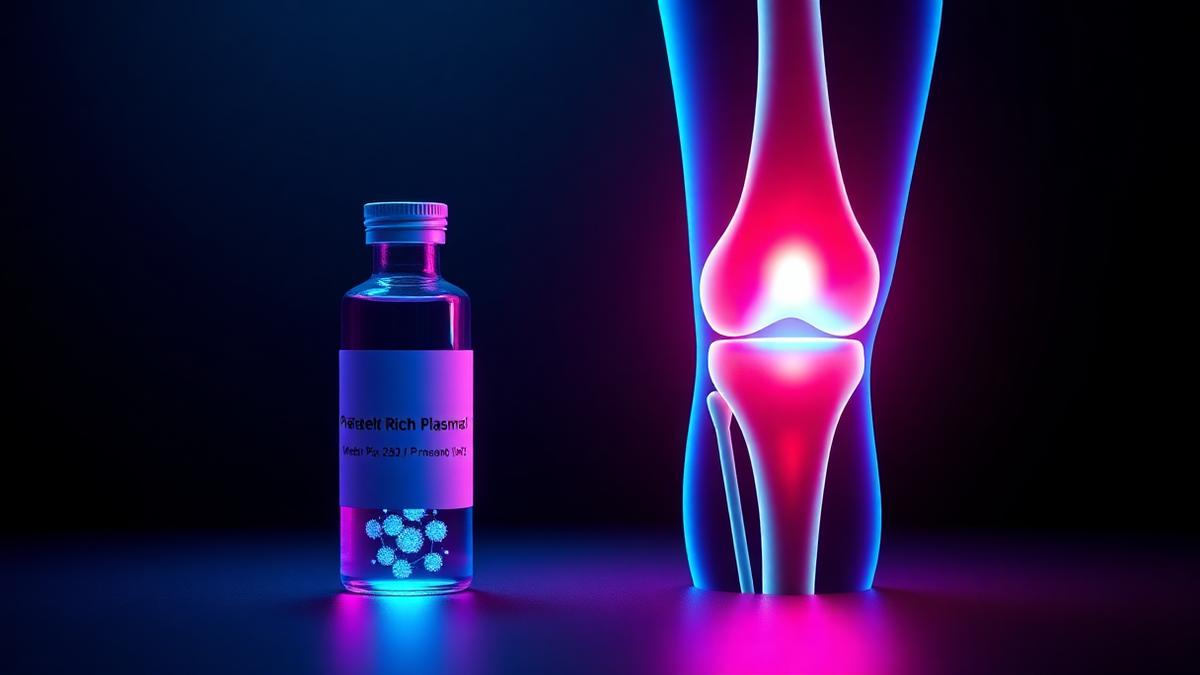
If you've researched options for joint pain, a sports injury, or hair loss, you've likely seen “PRP” and “stem cell therapy” used almost interchangeably in clinic marketing. They are not the same thing. PRP (platelet-rich plasma) is a concentrate of your own blood platelets, spun in a centrifuge and re-injected to release growth factors. Stem cell therapy introduces living cells — most often mesenchymal stem/stromal cells (MSCs) — that modulate inflammation and support repair through their own biological signaling. This article covers what each actually is, how their mechanisms differ, what head-to-head evidence shows for knee osteoarthritis, and how regulation and cost diverge.
What PRP Actually Is
PRP starts with a routine blood draw. The blood is spun in a centrifuge, which separates it by density and concentrates the platelets — blood components known for clotting that also store hundreds of growth factors in tiny granules. The platelet-rich layer is drawn off and injected into a joint, tendon, or scalp. Standard PRP preparation does not isolate or expand any stem cells; the premise is that a concentrated dose of growth factors (like PDGF, TGF-beta, and VEGF) can locally stimulate the tissue's own repair. Because PRP uses a patient's own blood and involves minimal processing, it's the more established, widely available treatment, offered in orthopedic, sports medicine, and dermatology clinics alike.
What Stem Cell Therapy Actually Is
“Stem cell therapy” in regenerative medicine most often means mesenchymal stem cells (MSCs) — adult stem cells sourced from a patient's own bone marrow (via bone marrow aspirate concentrate, or BMAC), fat tissue, or, at some clinics, donated umbilical cord tissue. Unlike PRP, these are living cells, not a fluid fraction. Injected MSCs don't typically work by turning into large amounts of new cartilage or tendon, as once hoped. Current evidence points instead to paracrine signaling — MSCs secreting growth factors, cytokines, and exosomes that dial down local inflammation and recruit the body's own repair cells. Some stem cell products are minimally processed (same-day BMAC); others involve lab expansion or enzymatic digestion to boost cell counts — a distinction that matters enormously for safety and regulatory status.
How Their Mechanisms Differ
PRP delivers a concentrated signal — a burst of growth factors meant to prompt existing cells to repair themselves. Stem cell therapy delivers living cellular machinery that responds dynamically to its environment and interacts with the local immune system over time. PRP's effect is generally shorter-acting and localized to jump-starting native repair; MSC-based therapy is theorized to have broader immunomodulatory effects, part of why it's being studied for inflammatory conditions beyond orthopedics. Neither mechanism reliably regenerates significant new tissue in humans yet — a distinction often oversold in marketing for both.
What the Evidence Shows When They're Compared
Knee osteoarthritis has the most head-to-head data. A 2024 review in Frontiers in Medicine by Pabinger, Kobinia, and Dammerer compared corticosteroid, hyaluronic acid, PRP, and BMAC injections for knee OA. It found PRP outperformed hyaluronic acid on short- and long-term pain and function with no increase in adverse events, while BMAC showed equivalent or superior results to PRP at 12 months, with its advantage growing from year two onward. Separately, a 2024 umbrella review in Annals of Saudi Medicine (Lin, Zhang, and Cui), pooling 28 meta-analyses covering more than 32,000 participants, found both MSC therapy and PRP significantly improved knee OA pain and function scores, without declaring either clearly superior overall. The honest summary: both show real, measurable benefit for knee OA in the aggregate literature, stem cell-based options may have an edge in durability at one to two years in some studies, and neither is a cure — lost cartilage isn't being regrown in these trials.
Regulatory and Cost Differences
This is where the treatments diverge most. Because standard PRP involves only minimal manipulation of a patient's own blood used for its original biological function, it generally qualifies for a narrower FDA pathway (under Section 361 of the Public Health Service Act) that doesn't require premarket approval — part of why it's so widely offered. Stem cell products are murkier: a same-day, minimally processed bone-marrow product may also fall under that lighter pathway, but products with more-than-minimal manipulation — enzymatic digestion of fat tissue, or lab-expanded cells — legally require full FDA drug approval that essentially no U.S. clinic holds. In September 2024, the Ninth Circuit upheld an injunction against a Florida stem cell clinic, ruling its processed product required FDA approval and rejecting the “same surgical procedure” exception. The FDA has long warned that clinics marketing unapproved stem cell products risk serious harm, including infection and blindness, issuing warning letters over such products. In short: many U.S. clinics offering processed or expanded stem cell products sit in a legal gray area that PRP largely doesn't. Cost tracks this divide loosely — reporting on U.S. injection pricing has put the average PRP injection around $700, versus roughly $2,700 for a stem cell injection, with wide regional variation for both.
Which Might Make Sense for Whom
- For a lower-cost, better-regulated, well-established option for mild-to-moderate joint pain, PRP is usually the more conservative first step.
- If considering stem cell therapy, ask exactly what's being injected (same-day BMAC vs. expanded or donor-derived cells) — it determines both regulatory status and how much evidence backs it.
- Neither treatment is well-supported as a substitute for surgery in advanced, bone-on-bone osteoarthritis.
- Ask any prospective clinic whether the specific product used has FDA approval or clearance, and be wary of claims that stem cells “cure” a condition or regenerate significant tissue.
Bottom Line
PRP and stem cell therapy are related but genuinely different: one concentrates your own platelets to nudge the body's repair response; the other introduces living cells that can modulate inflammation and signal repair over a longer window. For knee osteoarthritis, current evidence suggests both offer real benefit, with stem cell options like BMAC potentially more durable at one to two years in some comparisons — but neither regrows lost cartilage, and evidence quality varies by condition and product. PRP is cheaper, faster to access, and sits in a clearer regulatory lane; more processed stem cell therapies cost more and, at many U.S. clinics, carry real regulatory uncertainty. Knowing which one you're actually being offered — and what's really in the syringe — is the first step to an informed decision.
Key Questions Answered
- Does PRP contain stem cells?
- No. Standard platelet-rich plasma preparation concentrates platelets from your own blood; it does not isolate or expand stem cells. The premise is that concentrated growth factors such as PDGF, TGF-beta, and VEGF stimulate the tissue's own repair.
- Which works better for knee osteoarthritis, PRP or stem cells?
- Both show measurable benefit in the aggregate literature. A 2024 Frontiers in Medicine review found BMAC equivalent or superior to PRP at 12 months with a widening advantage from year two, while a 2024 umbrella review of 28 meta-analyses found both improved pain and function without declaring a clear winner.
- Is stem cell therapy FDA-approved for joint pain?
- No. Minimally processed, same-day products may fall under a lighter FDA pathway, but products involving enzymatic digestion or lab expansion legally require full FDA drug approval that essentially no U.S. clinic holds. PRP, by contrast, generally qualifies under Section 361 of the Public Health Service Act.
- How much do PRP and stem cell injections cost?
- Reporting on U.S. injection pricing puts the average PRP injection around $700 and a stem cell injection around $2,700, with wide regional variation. Neither is typically covered by insurance.
- Do either of these regrow cartilage?
- No. Neither PRP nor MSC injections have been shown to reliably regenerate significant new cartilage in humans. Benefits reported in trials are on pain and function scores, not on rebuilding lost tissue.
Sources
- Injection therapy in knee osteoarthritis: cortisol, hyaluronic acid, PRP, or BMAC (mesenchymal stem cell therapy)? — Frontiers in Medicine — 2024 — https://www.frontiersin.org/journals/medicine/articles/10.3389/fmed.2024.1463997/full
- Mesenchymal stem cells and platelet rich plasma therapy for knee osteoarthritis: an umbrella review of systematic reviews with meta-analysis — Annals of Saudi Medicine — 2024 — https://www.annsaudimed.net/doi/10.5144/0256-4947.2024.195
- Ninth Circuit Confirms: Certain Stem Cell Products Require FDA Premarket Approval — Cooley LLP — 2024 — https://www.cooley.com/news/insight/2024/2024-10-31-ninth-circuit-confirms-certain-stem-cell-products-require-fda-premarket-approval
- Statement on stem cell clinic permanent injunction and FDA's ongoing efforts to protect patients from risks of unapproved products — U.S. Food and Drug Administration — https://www.fda.gov/news-events/press-announcements/statement-stem-cell-clinic-permanent-injunction-and-fdas-ongoing-efforts-protect-patients-risks
- How Much Does PRP Injection & Stem Cell Therapy Cost? — Jeffrey Peng MD (San Jose Orthopedics) — https://www.jeffreypengmd.com/post/how-much-does-prp-injection-stem-cell-therapy-cost
Related Articles
- Fundamentals
Types of Kidney Disease: Which Ones Are Being Studied With Stem Cell Therapy?
Kidney stem cell research varies sharply by disease: small human signals in diabetic disease and lupus nephritis, a negative AKI trial, and preclinical PKD work.
- Fundamentals
Protecting Vision Health As You Age: What the Evidence Actually Shows
What AREDS2, diet research and eye-health guidance show about lowering vision-loss risk through smoking cessation, metabolic control, UV protection and exams.
- Fundamentals
What Is COPD?
COPD causes, symptoms, spirometry diagnosis and established care, plus why reassuring MSC safety data have not established stem cell treatment efficacy.