Where Do Stem Cells Come From? A Beginner's Guide to Sources and Ethics
What this article covers
- What This Article Covers
- Every stem cell therapy you've heard about — real or exaggerated — starts with a source: a place in the body, or a laboratory dish, where the cells actually come from. That source shapes everything downstream, including what the cells are legally and ethically allowed to be used for, how flexible they are, and how close (or far) they are from an approved treatment.
- A Quick Note on What Makes a Cell a “Stem Cell”
- We cover the biology of stem cells themselves elsewhere on this site. For this piece, the short version is enough: a stem cell is an unspecialized cell that can both copy itself and turn into more specialized cell types.
- Embryonic Stem Cells and the Ethics Debate
- Embryonic stem cells (ESCs) come from the inner cell mass of a very early-stage embryo called a blastocyst, typically one left over from in vitro fertilization (IVF) and donated for research with consent, rather than an embryo created for research purposes. Scientists first developed methods to isolate and grow human ESCs in the lab in 1998, and because these cells are pluripotent — able to become virtually any cell type in the body — they were, and remain, scientifically prized.
- Adult (Somatic) Stem Cells: Bone Marrow, Fat, and Cord Blood
- Adult stem cells — also called somatic stem cells — are found throughout the body in specific tissues, where they act as a built-in repair crew for that tissue. Unlike embryonic stem cells, they don't require destroying an embryo, which has made them far less ethically contentious.
- Induced Pluripotent Stem Cells: Yamanaka's Reprogramming Breakthrough
- For decades, scientists believed cell specialization was a one-way street — once a skin cell was a skin cell, it stayed that way. Japanese researcher Shinya Yamanaka overturned that assumption.
What This Article Covers
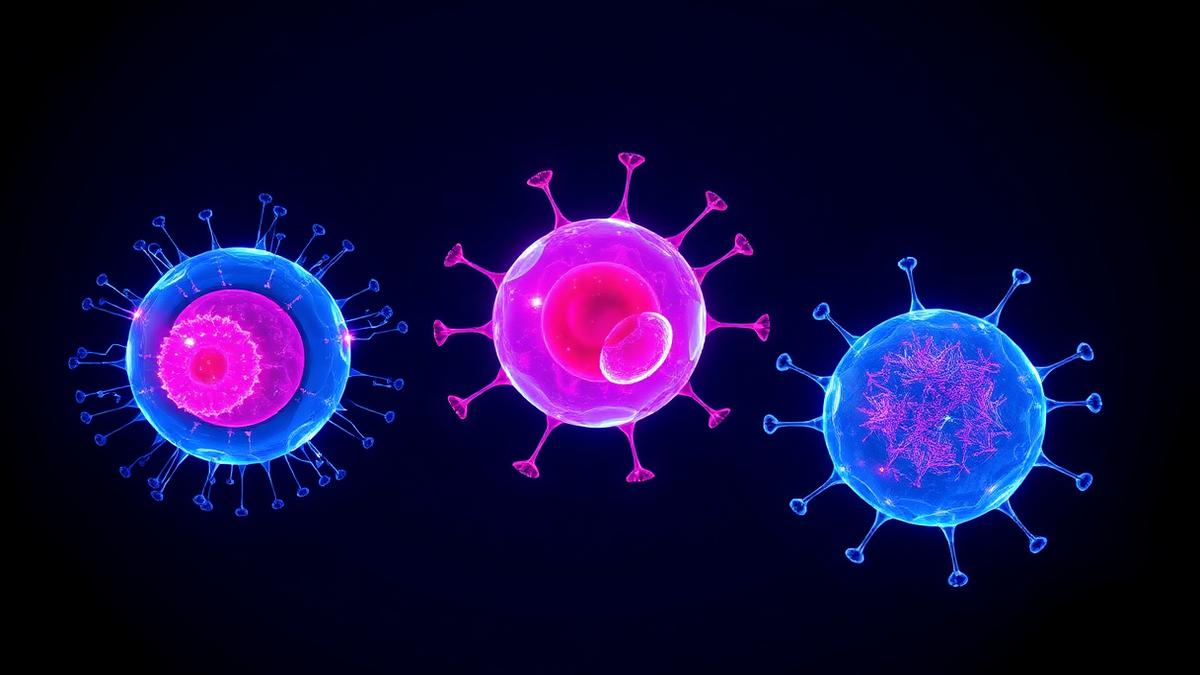
Every stem cell therapy you've heard about — real or exaggerated — starts with a source: a place in the body, or a laboratory dish, where the cells actually come from. That source shapes everything downstream, including what the cells are legally and ethically allowed to be used for, how flexible they are, and how close (or far) they are from an approved treatment. This guide walks through the three main sources of stem cells used in research and medicine today — embryonic, adult (somatic), and induced pluripotent — and the decades-long ethical and political debate that shaped how each one is studied in the United States.
A Quick Note on What Makes a Cell a “Stem Cell”
We cover the biology of stem cells themselves elsewhere on this site. For this piece, the short version is enough: a stem cell is an unspecialized cell that can both copy itself and turn into more specialized cell types. What differs enormously between stem cells is where they're harvested from and, as a result, how many different cell types they're capable of becoming — a range set almost entirely by source, which is why “where do stem cells come from” is really the first question in the field.
Embryonic Stem Cells and the Ethics Debate
Embryonic stem cells (ESCs) come from the inner cell mass of a very early-stage embryo called a blastocyst, typically one left over from in vitro fertilization (IVF) and donated for research with consent, rather than an embryo created for research purposes. Scientists first developed methods to isolate and grow human ESCs in the lab in 1998, and because these cells are pluripotent — able to become virtually any cell type in the body — they were, and remain, scientifically prized. But deriving them destroys the blastocyst, which is precisely why they became one of the most contested topics in American science policy.
The legal fight starts with the Dickey-Wicker Amendment, a budget rider first enacted in 1996 that bars federal funds from being used to create or destroy human embryos for research. It has been re-attached to federal spending bills every year since and remains in force today. In August 2001, President George W. Bush drew a line consistent with that amendment: federal funding could support research only on roughly 60 ESC lines that already existed as of his announcement, plus $250 million toward non-embryonic sources like umbilical cord, placental, and adult stem cells — but not on new lines derived afterward. President Obama reversed that limit with Executive Order 13505 in March 2009, allowing federal funding for research on newly created lines too, provided they came from embryos donated by IVF patients slated for disposal. Dickey-Wicker itself never went away, though — it still bars federal money from paying to derive new embryonic stem cell lines in the first place, so that specific step has generally relied on private or state funding even now.
Adult (Somatic) Stem Cells: Bone Marrow, Fat, and Cord Blood
Adult stem cells — also called somatic stem cells — are found throughout the body in specific tissues, where they act as a built-in repair crew for that tissue. Unlike embryonic stem cells, they don't require destroying an embryo, which has made them far less ethically contentious. The trade-off is versatility: most adult stem cells are multipotent rather than pluripotent, meaning they can typically only become the family of cell types found in the tissue they came from, not any cell type in the body.
The best-known source is bone marrow, home to hematopoietic stem cells (which give rise to blood and immune cells) and mesenchymal stem cells (which can form bone, cartilage, and related tissue). Adipose (fat) tissue is another major source of mesenchymal stem cells, often obtained through routine liposuction, making it popular in both research and the (frequently unproven, direct-to-consumer) clinic setting. A third major source is umbilical cord blood, collected from the placenta and cord after a baby is born; it's rich in hematopoietic stem cells and is the source behind the small handful of treatments that are actually FDA-approved in the U.S. today.
Induced Pluripotent Stem Cells: Yamanaka's Reprogramming Breakthrough
For decades, scientists believed cell specialization was a one-way street — once a skin cell was a skin cell, it stayed that way. Japanese researcher Shinya Yamanaka overturned that assumption. In 2006, his lab showed that inserting just four specific genes (Oct4, Sox2, Klf4, and c-Myc, now often called the “Yamanaka factors”) into ordinary mouse skin cells could reprogram them backward into an embryonic-stem-cell-like pluripotent state. In 2007, his team repeated the feat with human skin cells, showing the technique wasn't a mouse-biology quirk.
The implications were enormous: researchers could now generate pluripotent stem cells capable of becoming nearly any tissue type from a patient's own ordinary adult cells, without touching an embryo. In 2012, Yamanaka shared the Nobel Prize in Physiology or Medicine with British developmental biologist John Gurdon, whose 1962 nuclear-transfer experiments in frogs had first hinted that mature cells could be reprogrammed; the Nobel committee credited the pair with overturning the dogma that cellular development only runs in one direction. iPSCs didn't make embryonic stem cells scientifically obsolete — researchers still use ESCs as a reference standard — but they gave the field a way to study pluripotent cells and model disease largely free of the constraints that had shaped embryonic research for over a decade.
How Source Shapes What's Actually Used in Clinics Today
It's worth being direct about where things stand: as of today, the only stem cell-based treatments with routine FDA approval in the United States are hematopoietic stem cell transplants, primarily using bone marrow or umbilical cord blood, for blood cancers and certain blood and immune disorders. Embryonic stem cells and iPSCs remain overwhelmingly research and clinical-trial tools rather than approved therapies — invaluable for studying disease and testing potential treatments, but not something a patient can currently receive as standard care outside of a trial. Adipose-derived and other mesenchymal stem cell treatments are widely marketed by clinics, but most are not FDA-approved and lack the trial evidence approval requires. Understanding a therapy's source is often the fastest way to tell what stage of development it's actually at.
Bottom Line
Where a stem cell comes from — an early embryo, a patient's own bone marrow or fat tissue, umbilical cord blood, or a reprogrammed skin cell — determines both its scientific potential and the ethical and legal path it has to travel before reaching patients. Embryonic stem cells sparked a genuine, decades-long policy debate in the U.S. that is still shaped by a 1996 budget rider; adult stem cells sidestepped much of that debate but come with real biological limits; and Yamanaka's iPSC breakthrough offered a third path that combines much of the embryonic cells' versatility with far fewer of the ethical objections. None of this makes any single source a shortcut to a cure — as of today, only a narrow set of blood-related treatments have cleared the FDA's bar — but it does make “where did this come from?” one of the most useful questions a newcomer can ask about any stem cell claim.
Key Questions Answered
- What are the three main sources of stem cells?
- Embryonic stem cells (from the inner cell mass of an IVF-donated blastocyst), adult or somatic stem cells (from bone marrow, fat tissue and umbilical cord blood), and induced pluripotent stem cells (ordinary adult cells reprogrammed back to a pluripotent state).
- Why are embryonic stem cells ethically contested?
- Deriving them destroys the blastocyst. The 1996 Dickey-Wicker Amendment still bars federal funds from being used to create or destroy human embryos for research, and federal funding rules shifted under President Bush in 2001 and President Obama's Executive Order 13505 in 2009.
- What was Yamanaka's breakthrough?
- In 2006 Shinya Yamanaka's lab showed that inserting four genes — Oct4, Sox2, Klf4 and c-Myc — could reprogram ordinary mouse skin cells into an embryonic-stem-cell-like pluripotent state, repeated in human cells in 2007. He shared the 2012 Nobel Prize with John Gurdon.
- Which stem cell treatments are actually FDA-approved today?
- Only hematopoietic stem cell transplants, primarily using bone marrow or umbilical cord blood, for blood cancers and certain blood and immune disorders. Embryonic and iPSC-based therapies remain research and clinical-trial tools.
Sources
- Stem Cell Basics — NIH STEM Cell Information, National Institutes of Health — 2025 — https://stemcells.nih.gov/info/basics/stc-basics
- Induction of pluripotent stem cells from mouse embryonic and adult fibroblast cultures by defined factors — Takahashi K & Yamanaka S, Cell — 2006 — https://pubmed.ncbi.nlm.nih.gov/16904174/
- The Nobel Prize in Physiology or Medicine 2012 - Press Release — NobelPrize.org — 2012 — https://www.nobelprize.org/prizes/medicine/2012/press-release/
- The Nobel Prize in Physiology or Medicine 2012 - Popular Information — NobelPrize.org — 2012 — https://www.nobelprize.org/prizes/medicine/2012/popular-information/
- Dickey-Wicker Amendment, 1996 — Embryo Project Encyclopedia, Arizona State University — https://embryo.asu.edu/pages/dickey-wicker-amendment-1996
- President George W. Bush's Announcement on Stem Cells, 9 August 2001 — Embryo Project Encyclopedia, Arizona State University — https://embryo.asu.edu/pages/president-george-w-bushs-announcement-stem-cells-9-august-2001
- Barack Obama Executive Order 13505, November 2008 [signed March 2009] — Embryo Project Encyclopedia, Arizona State University — https://embryo.asu.edu/pages/barack-obama-executive-order-13505-november-2008
- What stem cell-based therapies are currently available? — Harvard Stem Cell Institute FAQ — https://www.hsci.harvard.edu/faq/stem-cell-therapies
Related Articles
- Fundamentals
Types of Lung Disease: Which Ones Are Being Studied With Stem Cell Therapy?
Compare stem cell research for BPD, ARDS, IPF, COPD, pulmonary hypertension, asthma, cystic fibrosis and pneumoconiosis by evidence stage.
- Fundamentals
Protecting Cognitive Health As You Age: What the Evidence Actually Shows
Blood pressure control, hearing treatment and structured lifestyle programs can protect cognition; regenerative approaches remain experimental.
- Fundamentals
What Is Lupus?
Lupus causes the immune system to attack healthy tissue. Learn its symptoms, diagnosis, standard treatments and the early state of cell therapy research.