Myth: Exosome and Secretome Therapies Are Risk-Free Because They're "Cell-Free"
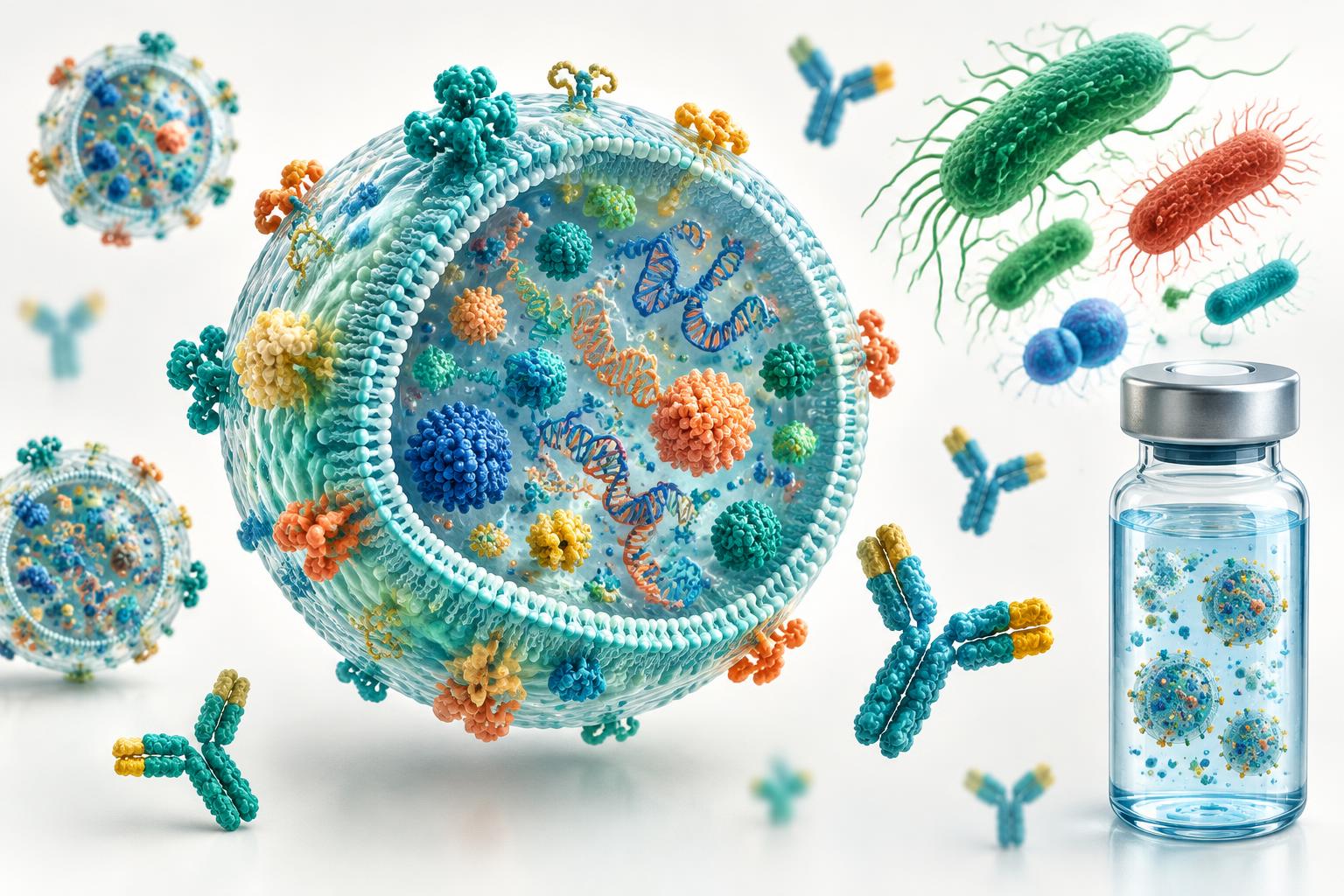
What this article covers
- WHAT THIS ARTICLE COVERS
- A persistent claim in regenerative medicine marketing is that exosome and "secretome" products — the cocktails of vesicles, growth factors, and signaling molecules that cells secrete — are inherently safer than stem cell therapy because "no living cells" are being injected. This is a myth with real consequences.
- The Myth, As It's Usually Sold
- Marketing materials for exosome and secretome treatments often lean on a simple syllogism: stem cell therapy carries risk because living cells can behave unpredictably (proliferate, migrate, or trigger immune rejection); exosomes and secretome products contain no living cells, only their secreted byproducts; therefore exosome/secretome products must be safer, or even risk-free. Each premise sounds plausible, but the conclusion doesn't follow — because most of the actual risk in these products comes from manufacturing and biology that has nothing to do with whether the cells inside the vial are alive.
- What the Record Shows: The 2019 FDA Safety Notification
- This isn't a hypothetical concern. On December 6, 2019, the FDA issued a public safety notification after receiving reports of serious harm in a small number of patients in Nebraska who had been treated with an unapproved product marketed as containing exosomes derived from placental tissue.
- What Legitimate Research Actually Shows
- None of this means exosome and secretome science is without merit — the opposite is closer to true, with important caveats. A substantial and growing body of preclinical research explores mesenchymal stromal cell-derived secretomes for applications ranging from wound healing to neurodegenerative disease, and some early-phase human trials are underway.
- Bottom Line
- "Cell-free" describes a manufacturing category, not a safety guarantee. The documented 2019 Nebraska cases show that unapproved exosome products can cause serious harm through the same routes — contamination, immune reaction, inconsistent composition — that affect any biologic product, living cells or not.
WHAT THIS ARTICLE COVERS
A persistent claim in regenerative medicine marketing is that exosome and "secretome" products — the cocktails of vesicles, growth factors, and signaling molecules that cells secrete — are inherently safer than stem cell therapy because "no living cells" are being injected. This is a myth with real consequences. Cell-free does not mean risk-free: these products still carry contamination risk, can still trigger harmful immune responses, vary enormously in composition from batch to batch, and remain unapproved by the FDA for any general therapeutic use. A documented 2019 safety notification tied to exosome-marketed products makes the point concrete.
The Myth, As It's Usually Sold
Marketing materials for exosome and secretome treatments often lean on a simple syllogism: stem cell therapy carries risk because living cells can behave unpredictably (proliferate, migrate, or trigger immune rejection); exosomes and secretome products contain no living cells, only their secreted byproducts; therefore exosome/secretome products must be safer, or even risk-free. Each premise sounds plausible, but the conclusion doesn't follow — because most of the actual risk in these products comes from manufacturing and biology that has nothing to do with whether the cells inside the vial are alive.
What's Actually True About Cell-Free Product Risk
- Contamination risk doesn't disappear. Exosome and secretome products are manufactured from living source cells (often placental, umbilical cord, or stem-cell-derived) in a lab process involving culturing, harvesting, filtering, and packaging. Every one of those steps is a potential point of bacterial or fungal contamination — regardless of whether the final product contains living cells. Sterility is a manufacturing and quality-control issue, not a cell-viability issue.
- Immune reactions are still possible. Exosomes carry proteins, lipids, and genetic material from their source cells and can still provoke inflammatory or immune responses in a recipient, particularly with repeated dosing or products of inconsistent purity.
- Composition is highly variable and hard to standardize. What's actually in an exosome or secretome product depends heavily on the source cells, the culture conditions, and the isolation method used — none of which are standardized industry-wide. Two vials sold under similar marketing language can differ substantially in content and potency.
- Regulatory status hasn't changed because cells are absent. The FDA regulates exosome products as drugs and biological products, subject to the same premarket review and approval requirements as other biologics. Removing living cells from the formulation doesn't exempt a product from that oversight.
What the Record Shows: The 2019 FDA Safety Notification
This isn't a hypothetical concern. On December 6, 2019, the FDA issued a public safety notification after receiving reports of serious harm in a small number of patients in Nebraska who had been treated with an unapproved product marketed as containing exosomes derived from placental tissue. The patients developed serious illness. The FDA worked with the Nebraska Department of Health and Human Services to investigate, and a companion public safety alert reiterated that clinics offering "stem cell" products were increasingly also marketing exosome products with unsubstantiated claims that they could treat or cure disease.
The FDA's notification was explicit on the regulatory point that matters most here: "There are currently no FDA-approved exosome products." As of this writing, that remains true — no exosome-based or secretome-based biological product has received FDA approval for general therapeutic use. Any exosome or secretome product being marketed for treating a disease or condition outside of an FDA-regulated clinical trial is, by definition, unapproved.
The FDA recommends that patients considering any exosome product ask whether the FDA has reviewed it, request the Investigational New Drug (IND) number if one is claimed, and report suspected adverse events through MedWatch. Patient-advocacy organizations such as the International Society for Stem Cell Research (ISSCR) publish similar guidance, urging patients to apply the same scrutiny — proof of regulatory review, published clinical trial data, transparency about what's actually in the product — to any unproven cell-derived treatment, not just whole-cell stem cell therapy.
What Legitimate Research Actually Shows
None of this means exosome and secretome science is without merit — the opposite is closer to true, with important caveats. A substantial and growing body of preclinical research explores mesenchymal stromal cell-derived secretomes for applications ranging from wound healing to neurodegenerative disease, and some early-phase human trials are underway. A 2023 review in Stem Cell Research & Therapy surveying secretome-based approaches for neurodegenerative conditions found the evidence base still sits primarily at the preclinical, animal-model stage, concluding that the safety and efficacy of MSC-derived secretomes in humans have not been confirmed yet. That's a meaningfully different claim than "this is a proven treatment" — it's real scientific promise that has not yet cleared the bar of rigorous human trials, let alone regulatory approval.
Bottom Line
"Cell-free" describes a manufacturing category, not a safety guarantee. The documented 2019 Nebraska cases show that unapproved exosome products can cause serious harm through the same routes — contamination, immune reaction, inconsistent composition — that affect any biologic product, living cells or not. The legitimate research into secretomes and exosomes is genuinely promising for future applications, but it remains largely preclinical or early-phase, and no exosome or secretome product currently carries FDA approval for therapeutic use. Patients should treat "cell-free" marketing claims with exactly the same scrutiny they'd apply to any unproven stem cell treatment: ask about FDA review status, ask for trial data, and be wary of any clinic that treats the absence of living cells as if it were the absence of risk.
Key Questions Answered
- Are cell-free exosome and secretome products risk-free?
- No. Contamination, immune reactions and variable composition remain concerns even when the final product contains no living cells.
- What did the 2019 FDA safety notification report?
- It followed reports of serious harm in Nebraska patients treated with an unapproved product marketed as containing placental exosomes and stated that no FDA-approved exosome products existed.
- What is the evidence stage for secretome therapies?
- The article describes largely preclinical research and some early-phase human trials, not established safety and efficacy or FDA-approved therapeutic products. Patients should ask about regulatory review and trial data.
Sources
- Public Safety Notification: Exosome Products — U.S. Food and Drug Administration, 2019 — https://www.fda.gov/vaccines-blood-biologics/safety-availability-biologics/public-safety-notification-exosome-products
- Public Safety Alert Due to Marketing of Unapproved Stem Cell and Exosome Products — U.S. Food and Drug Administration, 2019 — https://www.fda.gov/safety/medical-product-safety-information/public-safety-alert-due-marketing-unapproved-stem-cell-and-exosome-products
- Health Officials Highlight Risks Related to Unapproved Stem Cell, Placental, and Umbilical Cord Blood Products — Nebraska Department of Health and Human Services, 2019 — https://dhhs.ne.gov/Pages/Health-Officials-Highlight-Risks-Related-to-Unapproved-Stem-Cell,-Placental,-and-Umbilical-Cord-Blood-Products.aspx
- Mesenchymal stromal cell-derived secretome-based therapy for neurodegenerative diseases: overview of clinical trials — Stem Cell Research & Therapy, 2023 — https://pmc.ncbi.nlm.nih.gov/articles/PMC10161443
- The ISSCR Guide to Stem Cell Treatments (Patient Guide) — International Society for Stem Cell Research — https://www.isscr.org/resources/patient-guide
Related Articles
- Fundamentals
Types of Neuromuscular Disease: Which Ones Are Being Studied With Stem Cell and Gene Therapy?
Explore the neuromuscular disease landscape, from approved SMA gene therapy to early CAR-T and muscular dystrophy trials and the limits of stem cell research.
- Fundamentals
Protecting Lung and Respiratory Health As You Age: What the Evidence Actually Shows
Review evidence for smoking cessation, respiratory vaccines, pulmonary rehabilitation and cleaner air, while separating prevention from experimental lung cell therapy.
- Fundamentals
What Is Heart Failure?
Heart failure explained: causes, symptoms and proven treatment, plus encouraging but limited findings and safety risks in experimental heart-cell trials.