Protecting Lung and Respiratory Health As You Age: What the Evidence Actually Shows
What this article covers
- WHAT THIS ARTICLE COVERS
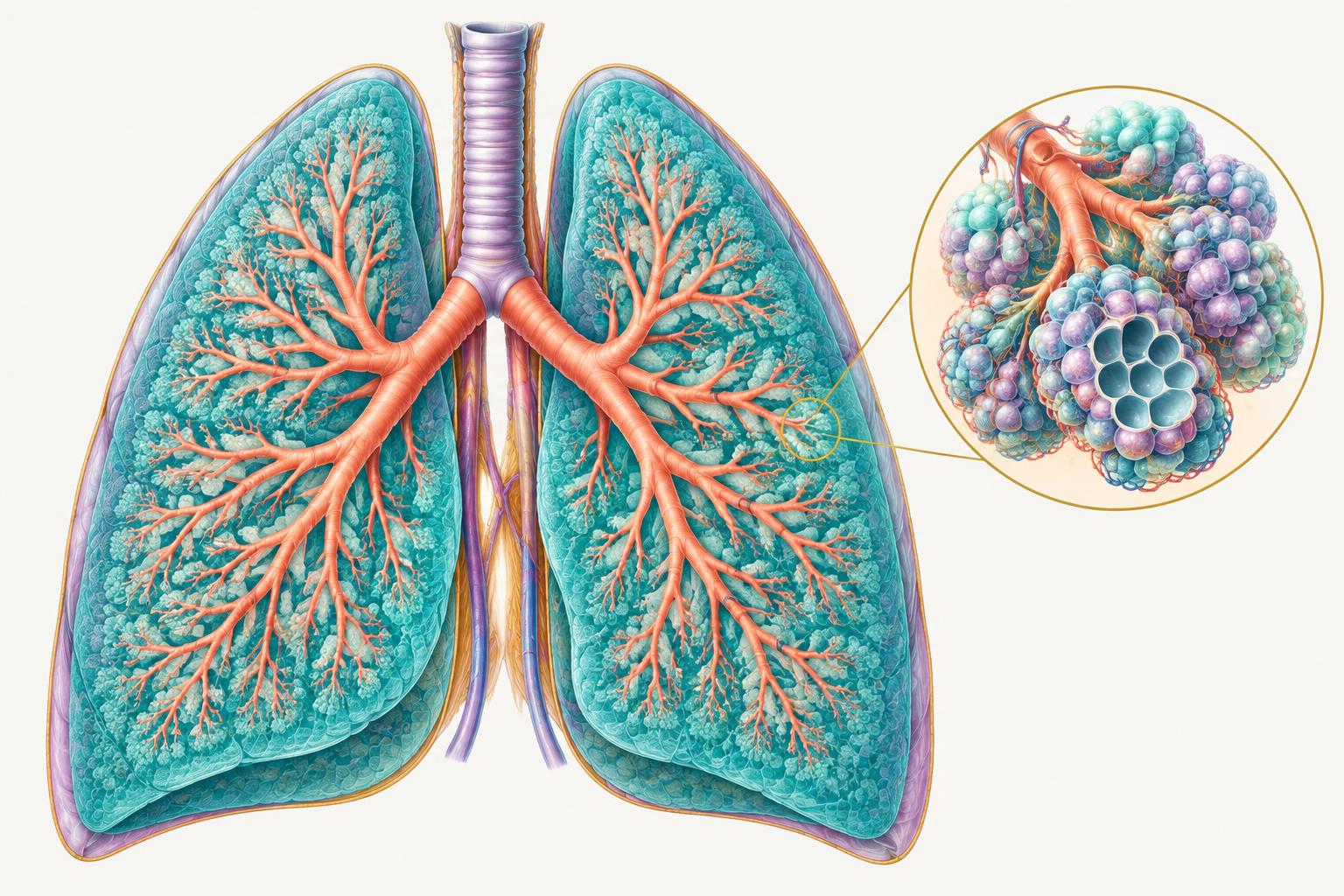
- Lung function declines gradually with age even in healthy nonsmokers, but the evidence is clear that several specific, modifiable factors determine how much capacity a person keeps — and how much disease risk they carry — in their 60s, 70s, and beyond. This article reviews what large studies and federal health data actually show about smoking cessation, vaccination against respiratory infection, pulmonary rehabilitation and exercise, air quality exposure, and early detection of chronic obstructive pulmonary disease (COPD), and separates genuinely promising, well-supported strategies from areas where the evidence is still thin.
- Quitting Smoking Remains the Single Most Powerful Lever
- Of everything covered here, nothing moves the needle on lung health more than this one. In the landmark NHLBI-funded Lung Health Study, smokers with early airflow obstruction who received a structured smoking-cessation intervention lost lung function (FEV1) significantly more slowly than those who kept smoking, with most of that benefit concentrated in the first year and the largest gains going to people who achieved sustained cessation.
- Closing the Immunization Gap
- Respiratory infections hit aging lungs harder, and vaccination is one of the best-evidenced tools for reducing that burden. The CDC recommends an RSV vaccine for everyone aged 75 and older, and for adults 60–74 who are at increased risk due to chronic heart or lung disease or who live in settings like nursing homes; in 2025, that risk-based recommendation was extended down to some adults aged 50–59.
- Pulmonary Rehabilitation and Exercise: More Than Just Disease Management
- For people already living with COPD, structured pulmonary rehabilitation is one of the few interventions with genuinely strong trial evidence behind it. A Cochrane review of 20 randomized trials (1,477 participants) found that rehabilitation after a COPD flare-up improved six-minute walk distance by an average of 62 meters and quality-of-life scores by nearly 8 points on a standard questionnaire — well above the threshold considered clinically meaningful — and was rated safe.
- The Air You Breathe, Over Decades
- Long-term exposure to fine and coarse particulate air pollution is associated with measurably lower lung function in older adults. 5) exposure was linked to reduced vital capacity, while coarse-particle exposure was more strongly linked to reduced airway function.
WHAT THIS ARTICLE COVERS
Lung function declines gradually with age even in healthy nonsmokers, but the evidence is clear that several specific, modifiable factors determine how much capacity a person keeps — and how much disease risk they carry — in their 60s, 70s, and beyond. This article reviews what large studies and federal health data actually show about smoking cessation, vaccination against respiratory infection, pulmonary rehabilitation and exercise, air quality exposure, and early detection of chronic obstructive pulmonary disease (COPD), and separates genuinely promising, well-supported strategies from areas where the evidence is still thin.
Quitting Smoking Remains the Single Most Powerful Lever
Of everything covered here, nothing moves the needle on lung health more than this one. In the landmark NHLBI-funded Lung Health Study, smokers with early airflow obstruction who received a structured smoking-cessation intervention lost lung function (FEV1) significantly more slowly than those who kept smoking, with most of that benefit concentrated in the first year and the largest gains going to people who achieved sustained cessation. That finding — that the trajectory of decline itself can bend, not just the risk of future disease — is part of why smoking cessation is treated as foundational rather than optional in respiratory care. It's also genuinely good news for people at any age: benefit was detectable even among people who already had measurable lung damage. That said, cessation slows decline going forward; it does not reverse damage already done, so earlier is still better than later.
Closing the Immunization Gap
Respiratory infections hit aging lungs harder, and vaccination is one of the best-evidenced tools for reducing that burden. The CDC recommends an RSV vaccine for everyone aged 75 and older, and for adults 60–74 who are at increased risk due to chronic heart or lung disease or who live in settings like nursing homes; in 2025, that risk-based recommendation was extended down to some adults aged 50–59. Annual influenza vaccination and age-appropriate pneumococcal vaccination round out the standard respiratory-infection prevention package for older adults. None of these eliminates risk, but they meaningfully reduce the chance that a routine seasonal infection turns into a hospitalization.
Pulmonary Rehabilitation and Exercise: More Than Just Disease Management
For people already living with COPD, structured pulmonary rehabilitation is one of the few interventions with genuinely strong trial evidence behind it. A Cochrane review of 20 randomized trials (1,477 participants) found that rehabilitation after a COPD flare-up improved six-minute walk distance by an average of 62 meters and quality-of-life scores by nearly 8 points on a standard questionnaire — well above the threshold considered clinically meaningful — and was rated safe. Its effect on readmissions looked favorable (eight trials, odds ratio 0.44) but was less consistent across studies, and effects on mortality were not statistically significant. In short: rehabilitation reliably helps people feel and function better; its effect on hospitalizations and survival is promising but less settled.
The Air You Breathe, Over Decades
Long-term exposure to fine and coarse particulate air pollution is associated with measurably lower lung function in older adults. One study of adults 65 and older found that higher long-term fine-particle (PM2.5) exposure was linked to reduced vital capacity, while coarse-particle exposure was more strongly linked to reduced airway function. Because such studies are typically observational, they show association rather than proof of direct cause — but the pattern is consistent enough across research that reducing indoor air pollutants (secondhand smoke, poorly ventilated cooking, wildfire smoke exposure) is a reasonable precaution, even though it isn't a guaranteed fix.
Catching Decline Early
COPD remains common and under-recognized: in 2024, 4.2% of U.S. adults reported a COPD, emphysema, or chronic bronchitis diagnosis, and chronic lower respiratory disease was the fifth-leading cause of death. Simple spirometry testing can detect airflow obstruction before symptoms become disabling, which matters because interventions like cessation and rehabilitation work best when started earlier in the disease course rather than after significant capacity is already lost.
Where Regenerative Research Fits
Separately from these proven prevention strategies, researchers are investigating whether cell-based and regenerative approaches might eventually help repair damaged lung tissue in conditions like COPD and pulmonary fibrosis. This work remains early-stage and experimental, with no cell therapy currently approved for routine lung disease treatment — it is a research direction worth watching, not a present-day substitute for the prevention measures above.
Bottom Line
The evidence doesn't support treating lung aging as inevitable or untouchable. Quitting smoking, staying current on respiratory vaccines, pursuing structured exercise and pulmonary rehabilitation when indicated, limiting long-term pollutant exposure, and getting lung function checked before symptoms are severe are all backed by real data — and several of them (especially cessation and rehabilitation) show effects large enough to matter in daily life. None of them is a cure, and some of the research, particularly on pollution and on long-term hospitalization outcomes, is still evolving. But as a set, they represent genuinely actionable ground for protecting respiratory health over the decades that matter most.
Key Questions Answered
- Does quitting smoking reverse existing lung damage?
- No. The Lung Health Study found that sustained cessation slows future lung-function decline, with benefits even in people with measurable damage, but it does not reverse damage already done.
- What benefits are supported for pulmonary rehabilitation after a COPD flare-up?
- The cited Cochrane review found improved six-minute walk distance and quality of life. Readmission results were less consistent, and mortality effects were not statistically significant.
- Can regenerative lung therapy replace prevention measures?
- No. Cell-based lung research remains early-stage and experimental, with no cell therapy approved for routine lung disease treatment in the article.
Sources
- Trends in the Prevalence of Chronic Obstructive Pulmonary Disease Among Adults Aged ≥18 Years — United States, 2011–2021 — MMWR/CDC, 2023 — https://www.cdc.gov/mmwr/volumes/72/wr/mm7246a1.htm
- Chronic Obstructive Pulmonary Disease (COPD) FastStats — National Center for Health Statistics/CDC, 2024 data — https://cdc.gov/nchs/fastats/copd.htm
- Lung Health Study — NHLBI BioLINCC study summary — https://biolincc.nhlbi.nih.gov/studies/LHS
- Pulmonary rehabilitation following exacerbations of chronic obstructive pulmonary disease (Cochrane systematic review, CD005305) — Cochrane Library — https://www.cochrane.org/CD005305
- CDC Updates RSV Vaccination Recommendation for Adults — CDC Media Release, June 2024 — https://www.cdc.gov/media/releases/2024/s-0626-vaccination-adults.html
- The Effects of Fine and Coarse Particulate Matter on Lung Function Among the Elderly — PMC/National Library of Medicine — https://pmc.ncbi.nlm.nih.gov/articles/PMC6794286
Related Articles
- Fundamentals
Types of Neuromuscular Disease: Which Ones Are Being Studied With Stem Cell and Gene Therapy?
Explore the neuromuscular disease landscape, from approved SMA gene therapy to early CAR-T and muscular dystrophy trials and the limits of stem cell research.
- Fundamentals
What Is Heart Failure?
Heart failure explained: causes, symptoms and proven treatment, plus encouraging but limited findings and safety risks in experimental heart-cell trials.
- Fundamentals
What Is GMP (Good Manufacturing Practice), and Why Does It Matter for Stem Cell Therapy?
Good Manufacturing Practice for stem cell products: contamination control, batch consistency, traceability, U.S. and EU frameworks, and questions to ask about manufacturing quality.