What Is Type 2 Diabetes?
What this article covers
- What This Article Covers
- Type 2 diabetes is the most common form of diabetes, driven by a combination of insulin resistance and gradually failing insulin-producing cells in the pancreas. This article explains what causes it, how it's recognized and managed today, the complications it can lead to if unmanaged, and — honestly — where cell-based and stem cell research currently stands for this specific form of diabetes, which is a different and generally earlier-stage story than the regenerative medicine progress making headlines in type 1 diabetes.
- What Causes Type 2 Diabetes
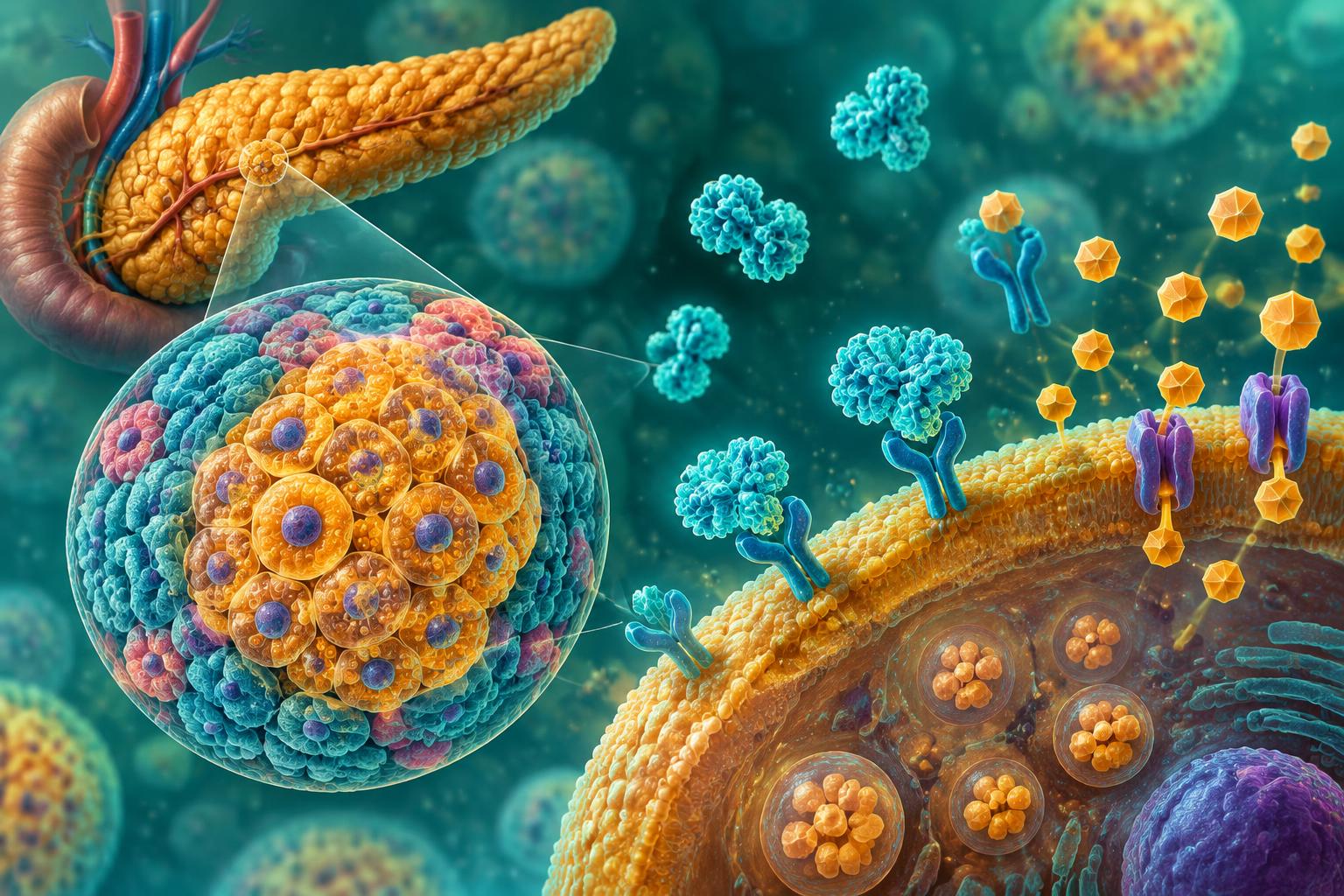
- Type 2 diabetes develops through two intertwined problems. First, muscle, fat, and liver cells become less responsive to insulin — a state called insulin resistance — so glucose builds up in the blood instead of being absorbed for energy.
- Symptoms
- Type 2 diabetes often develops slowly, and many people live with it for years before diagnosis. When symptoms appear, they commonly include increased thirst, frequent urination, increased hunger, fatigue, blurred vision, slow-healing sores, frequent infections, tingling or numbness in the hands or feet, and darkened patches of skin (often at the neck or armpits).
- Standard Treatment Today
- Care typically starts with lifestyle changes — weight management, nutrition changes, and regular physical activity — and most patients eventually add medication:
- Complications
- Persistently high blood sugar can damage blood vessels and nerves throughout the body over time. The CDC identifies heart disease and stroke, diabetic retinopathy (which can threaten eyesight), chronic kidney disease, nerve damage (neuropathy, often affecting the feet), an elevated risk of amputation from poorly healing foot wounds, gum disease, and higher rates of depression among the recognized complications of diabetes.
What This Article Covers
Type 2 diabetes is the most common form of diabetes, driven by a combination of insulin resistance and gradually failing insulin-producing cells in the pancreas. This article explains what causes it, how it's recognized and managed today, the complications it can lead to if unmanaged, and — honestly — where cell-based and stem cell research currently stands for this specific form of diabetes, which is a different and generally earlier-stage story than the regenerative medicine progress making headlines in type 1 diabetes.
What Causes Type 2 Diabetes
Type 2 diabetes develops through two intertwined problems. First, muscle, fat, and liver cells become less responsive to insulin — a state called insulin resistance — so glucose builds up in the blood instead of being absorbed for energy. In response, the pancreas's beta cells ramp up insulin production to compensate. Over years, many people's beta cells can't sustain that elevated output; they lose function and eventually can't produce enough insulin to keep blood sugar in a healthy range. According to the National Institutes of Health's MedlinePlus genetics resource, more than 150 identified gene variants are associated with risk, most acting subtly on beta-cell development, insulin processing, or insulin sensitivity — on top of major contributing factors like excess weight, physical inactivity, and family history.
Symptoms
Type 2 diabetes often develops slowly, and many people live with it for years before diagnosis. When symptoms appear, they commonly include increased thirst, frequent urination, increased hunger, fatigue, blurred vision, slow-healing sores, frequent infections, tingling or numbness in the hands or feet, and darkened patches of skin (often at the neck or armpits).
Standard Treatment Today
Care typically starts with lifestyle changes — weight management, nutrition changes, and regular physical activity — and most patients eventually add medication:
- Metformin remains the typical first-line medication, reducing glucose output from the liver and improving insulin sensitivity.
- GLP-1 receptor agonists (and the related dual GLP-1/GIP agonist tirzepatide) have become increasingly central, prompting insulin release, often supporting weight loss, and in several trials reducing cardiovascular risk.
- SGLT2 inhibitors lower blood sugar by increasing glucose excretion in urine and have cardiovascular and kidney benefits.
- Other classes — sulfonylureas, DPP-4 inhibitors, thiazolidinediones — may be used depending on individual needs.
- Insulin therapy becomes necessary for many patients, particularly as beta-cell function declines over time.
Treatment is individualized, and many people use combinations of these approaches.
Complications
Persistently high blood sugar can damage blood vessels and nerves throughout the body over time. The CDC identifies heart disease and stroke, diabetic retinopathy (which can threaten eyesight), chronic kidney disease, nerve damage (neuropathy, often affecting the feet), an elevated risk of amputation from poorly healing foot wounds, gum disease, and higher rates of depression among the recognized complications of diabetes. Consistent glucose management substantially reduces these risks.
Where Stem Cell Research Stands
Here's where it's essential to be precise: the most advanced cell-therapy progress in diabetes has been in type 1 diabetes, not type 2 — and that distinction matters for anyone researching treatment options.
The clearest example is Vertex Pharmaceuticals' zimislecel (formerly VX-880), a stem-cell-derived islet cell therapy that infuses lab-grown, insulin-producing cells into patients. It is currently in Phase 3 trials, has received the FDA's Regenerative Medicine Advanced Therapy and Fast Track designations, and Vertex has said it plans global regulatory submissions in 2026 — but it remains investigational and is not yet FDA-approved. Critically, this entire program is designed for and studied in type 1 diabetes, where the immune system has destroyed the body's own beta cells. It has not been studied as a treatment for type 2 diabetes, and its mechanism — replacing cells that are largely absent — doesn't map cleanly onto type 2, where the core problem is insulin resistance plus declining (not absent) beta-cell function.
For type 2 diabetes specifically, research exists but is earlier-stage and more varied. A 2024 letter in the Journal of Translational Medicine, surveying diabetes stem cell trials registered since 2000, identified 143 total trials, with 54 specifically targeting type 2 diabetes and only 19 trials of any kind still active — a genuinely small, young evidence base. Much of this work uses mesenchymal stem cells (MSCs) from sources like umbilical cord tissue, bone marrow, or adipose (fat) tissue, with researchers hypothesizing these cells may help by dampening the chronic inflammation linked to insulin resistance rather than by replacing beta cells outright. One encouraging example: a randomized, placebo-controlled Phase II trial of umbilical-cord-derived MSCs in Chinese adults with type 2 diabetes, published in Stem Cell Research & Therapy, reported signals of benefit worth pursuing in larger studies. Separate early-phase trials registered on ClinicalTrials.gov are testing autologous adipose-derived stem cells in people with type 2 diabetes. These are genuinely promising directions — but they remain small, early-phase, and not close to regulatory approval or routine clinical use.
Bottom Line
Type 2 diabetes is a chronic, manageable condition rooted in insulin resistance and progressive beta-cell decline, and lifestyle changes plus medications like metformin, GLP-1 receptor agonists, and insulin remain the backbone of effective care today. Stem cell research for type 2 diabetes specifically — largely MSC-based approaches targeting inflammation and insulin resistance — is real and worth watching, but it is meaningfully earlier-stage than the islet-replacement therapies advancing for type 1 diabetes. Anyone exploring regenerative options should understand that distinction clearly and discuss any experimental approach with their own physician before considering it.
Key Questions Answered
- What drives type 2 diabetes?
- Insulin resistance and gradually declining beta-cell function combine to raise blood glucose. Genetics, excess weight, inactivity and family history contribute to risk.
- Is zimislecel being studied for type 2 diabetes?
- No. The program described here is investigational and designed for type 1 diabetes, not type 2. Islet replacement does not directly address insulin resistance.
- Are MSC approaches established care for type 2 diabetes?
- No. Research is small and early-phase. Individualized lifestyle measures and established medications remain the backbone of care.
Sources
- CDC Diabetes Quick Facts — Centers for Disease Control and Prevention, 2026 — https://www.cdc.gov/diabetes/basics/quick-facts.html
- Put the Brakes on Diabetes Complications — Centers for Disease Control and Prevention, 2024 — https://www.cdc.gov/diabetes/prevention-type-2/stop-diabetes-complications.html
- Type 2 Diabetes — MedlinePlus Genetics, National Library of Medicine/NIH, 2024 — https://medlineplus.gov/genetics/condition/type-2-diabetes
- Vertex Announces Program Updates for Type 1 Diabetes Portfolio — Vertex Pharmaceuticals, March 2025 — https://news.vrtx.com/node/33606
- Efficacy and safety of umbilical cord-derived mesenchymal stem cells in Chinese adults with type 2 diabetes: a randomized, placebo-controlled phase II trial — Stem Cell Research & Therapy, 2022 — https://doi.org/10.1186/s13287-022-02848-6
- Diabetes stem cell trial landscape (letter to the editor) — Journal of Translational Medicine, 2024 — https://doi.org/10.1186/s12967-024-06019-4
- Safety and Effects of Autologous Adipose-Derived Stromal Cells Delivered in Patients With Type II Diabetes — ClinicalTrials.gov, NCT01453751 — https://clinicaltrials.gov/study/NCT01453751
Related Articles
- Fundamentals
Types of Chronic Wounds and Skin Conditions: Which Ones Are Being Studied With Stem Cell Therapy?
Compare stem cell evidence for diabetic foot ulcers, venous ulcers, bedsores, burns and epidermolysis bullosa, including trial limitations and adverse events.
- Fundamentals
Protecting Kidney Health As You Age: What the Evidence Actually Shows
Evidence-based kidney protection through blood pressure and diabetes management, NSAID caution and risk-based testing, while regenerative approaches remain early.
- Fundamentals
What Is CRISPR Gene Editing, and How Does It Intersect With Stem Cell Therapy?
How CRISPR edits DNA, why blood stem cells are a natural target, and how approved Casgevy differs from experimental iPSC and in vivo editing research.