Protecting Kidney Health As You Age: What the Evidence Actually Shows
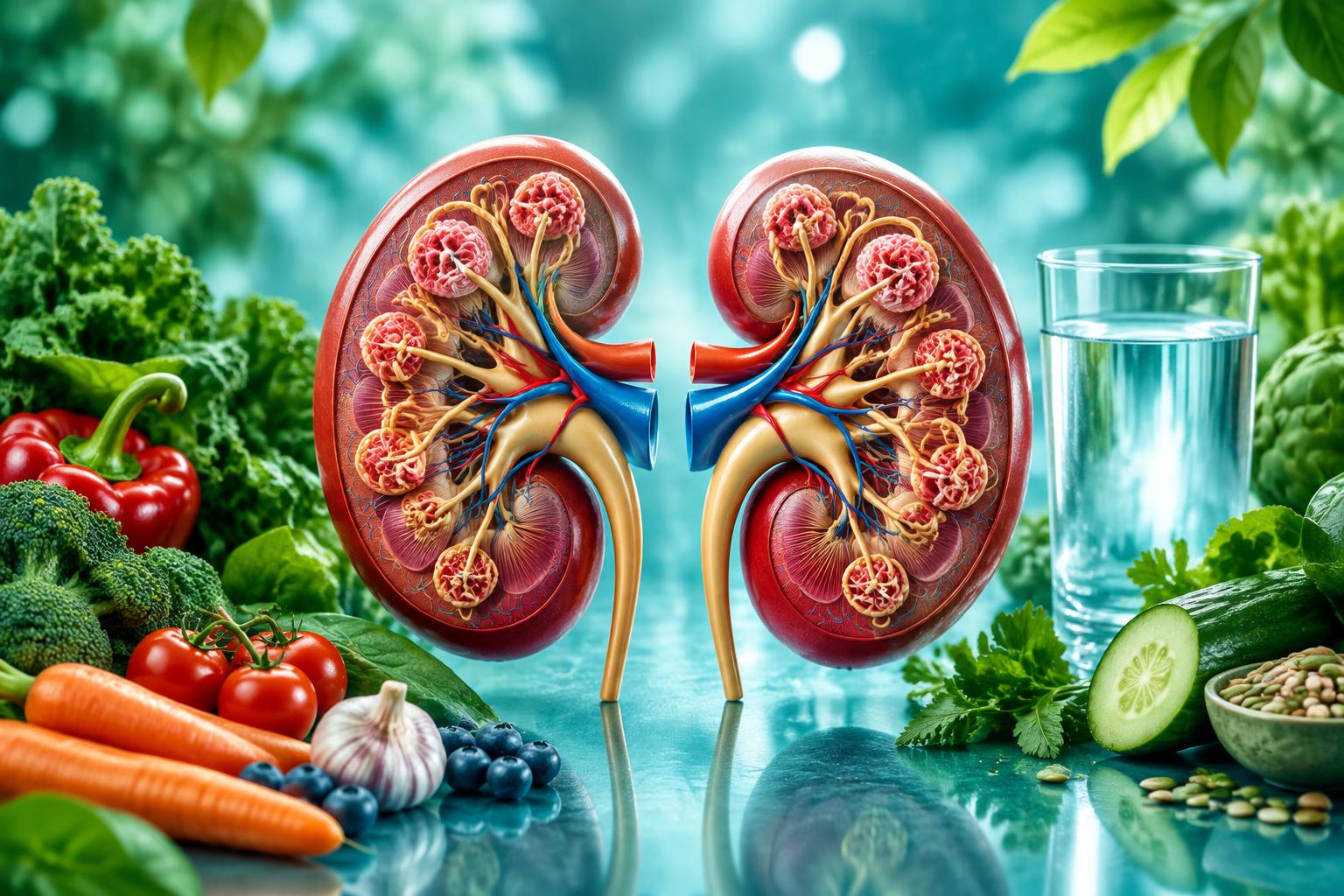
What this article covers
- What This Article Covers
- Chronic kidney disease (CKD) now affects an estimated 1 in 7 US adults — roughly 37 million people — yet according to the CDC, about 9 in 10 of those with it don't know they have it. That gap is the good news in disguise: kidney decline is typically slow, silent, and driven by a short list of well-understood, modifiable factors.
- Blood Pressure: The Single Biggest Lever
- High blood pressure and diabetes together account for the majority of CKD cases, and blood pressure is the more universally actionable of the two. The NIDDK notes that keeping blood pressure near target — and that ACE inhibitors or ARBs can offer kidney-specific protection beyond blood pressure lowering alone — is a cornerstone of prevention for anyone with diabetes or hypertension.
- Diabetes Management
- Diabetes is the single largest driver of kidney disease: CDC figures show 38% of adults with diabetes (diagnosed or undiagnosed) have CKD, rising to 49% in type 1 diabetes and 41% in type 2. Even prediabetes carries measurable risk (11% have CKD).
- The Screening Question
- Here's where nuance matters: the US Preventive Services Task Force reviewed routine CKD screening in adults with no risk factors and found insufficient evidence to recommend for or against it (an "I statement") — not because screening is unhelpful, but because no studies have yet shown that screening the general population changes outcomes, and false positives carry their own costs. That's a different question from monitoring people who already have diabetes or hypertension, where the NIDDK and NKF are clear: regular eGFR and urine albumin testing is appropriate and valuable, since early CKD has no symptoms.
- Where Stem Cell Research Fits Today
- RegenMed Review covers which kidney conditions are being studied with stem cell and regenerative approaches (see our companion piece on types of kidney disease under investigation), and that research is genuinely active — but it remains early-stage, largely preclinical or early-phase clinical work, not an available treatment. Prevention is not a placeholder until regenerative medicine arrives; it is, right now, the best-evidenced tool for protecting kidney function, full stop.
What This Article Covers
Chronic kidney disease (CKD) now affects an estimated 1 in 7 US adults — roughly 37 million people — yet according to the CDC, about 9 in 10 of those with it don't know they have it. That gap is the good news in disguise: kidney decline is typically slow, silent, and driven by a short list of well-understood, modifiable factors. Unlike many conditions covered on this site, CKD prevention isn't a frontier research question — it's one of the more settled areas of medicine, with large, decades-deep evidence bases behind blood pressure control, diabetes management, and a handful of other habits. This article lays out what the evidence actually supports, so the gap between "modifiable" and "modified" gets a little smaller.
Blood Pressure: The Single Biggest Lever
High blood pressure and diabetes together account for the majority of CKD cases, and blood pressure is the more universally actionable of the two. The NIDDK notes that keeping blood pressure near target — and that ACE inhibitors or ARBs can offer kidney-specific protection beyond blood pressure lowering alone — is a cornerstone of prevention for anyone with diabetes or hypertension. Per CDC data, 21% of adults with high blood pressure already have CKD, which is precisely why control matters before damage accumulates, not after.
Diabetes Management
Diabetes is the single largest driver of kidney disease: CDC figures show 38% of adults with diabetes (diagnosed or undiagnosed) have CKD, rising to 49% in type 1 diabetes and 41% in type 2. Even prediabetes carries measurable risk (11% have CKD). The encouraging part is that this risk responds to the same glucose-control fundamentals used across diabetes care — consistent monitoring and staying near individualized targets meaningfully slows the path toward kidney damage.
Everyday Habits With Real Evidence Behind Them
- NSAID caution: The National Kidney Foundation flags regular or high-dose use of ibuprofen and naproxen as a genuine risk to kidney blood flow — not just in people with existing kidney issues, but with long-term heavy use in anyone. Occasional, labeled-dose use isn't the concern; routine, unmonitored use is.
- Smoking cessation: Smoking is independently linked to faster kidney function decline, and quitting is one of the few changes where the benefit curve is unambiguous.
- Hydration: Adequate fluid intake remains standard advice for kidney stone prevention, though recent trial evidence on hydration coaching specifically has been mixed — a reminder that "drink more water" is sound general guidance, not a guaranteed fix for every kidney outcome.
- Protein intake: For the general population without existing kidney disease, there's no strong evidence that typical dietary protein intake drives CKD risk. The NIDDK instead emphasizes an overall DASH-style pattern — fruits, vegetables, whole grains, low-fat dairy, sodium under 2,300 mg/day — rather than protein restriction. Protein limits become relevant mainly after a CKD diagnosis, under medical guidance.
The Screening Question
Here's where nuance matters: the US Preventive Services Task Force reviewed routine CKD screening in adults with no risk factors and found insufficient evidence to recommend for or against it (an "I statement") — not because screening is unhelpful, but because no studies have yet shown that screening the general population changes outcomes, and false positives carry their own costs. That's a different question from monitoring people who already have diabetes or hypertension, where the NIDDK and NKF are clear: regular eGFR and urine albumin testing is appropriate and valuable, since early CKD has no symptoms. If you fall into a higher-risk group, ask your provider about these two simple tests.
Where Stem Cell Research Fits Today
RegenMed Review covers which kidney conditions are being studied with stem cell and regenerative approaches (see our companion piece on types of kidney disease under investigation), and that research is genuinely active — but it remains early-stage, largely preclinical or early-phase clinical work, not an available treatment. Prevention is not a placeholder until regenerative medicine arrives; it is, right now, the best-evidenced tool for protecting kidney function, full stop.
Bottom Line
Kidney health responds unusually well to known, well-studied interventions — blood pressure control, diabetes management, NSAID moderation, not smoking, and a reasonably balanced diet. The biggest obstacle isn't a lack of evidence; it's the "silent" nature of early CKD and the awareness gap the CDC's data makes so visible. If you have diabetes, hypertension, or a family history of kidney disease, ask about eGFR and urine albumin testing at your next visit. For everyone else, the fundamentals above remain the most reliable, evidence-backed path to protecting kidney function as you age — while regenerative approaches continue to be studied for the day they may offer more.
Key Questions Answered
- Which measures best support kidney protection?
- Blood pressure and diabetes management, avoiding routine unmonitored NSAID use, not smoking and a balanced diet are the established measures discussed here.
- Which tests should higher-risk people ask about?
- eGFR and urine albumin testing can detect silent kidney disease. People with diabetes, hypertension or a family history should discuss appropriate monitoring with their provider.
- Is stem cell research a replacement for kidney prevention?
- No. Regenerative approaches remain largely preclinical or early-phase research, while prevention is the best-evidenced approach available now.
Sources
- Chronic Kidney Disease in the United States, 2024 — Centers for Disease Control and Prevention (CDC), 2024 — https://www.cdc.gov/kidney-disease/php/data-research
- Preventing Chronic Kidney Disease — National Institute of Diabetes and Digestive and Kidney Diseases (NIDDK), 2023 — https://www.niddk.nih.gov/health-information/kidney-disease/chronic-kidney-disease-ckd/prevention
- Pain Killers and Your Kidneys – Top 5 Tips — National Kidney Foundation — https://www.kidney.org/news-stories/pain-killers-and-your-kidneys-top-5-tips-e-kidney-oct-2012
- Screening for Chronic Kidney Disease: US Preventive Services Task Force Recommendation Statement — USPSTF, JAMA, 2025 — https://www.uspreventiveservicestaskforce.org/home/getfilebytoken/ZRz9nTrjKkRtNTe6hgPze-
- Association between dietary protein intake and risk of chronic kidney disease: a systematic review and meta-analysis — PMC/peer-reviewed, 2024 — https://pmc.ncbi.nlm.nih.gov/articles/PMC11212527/
- Global clinical landscape of stem cells in CKD: clinical trials, challenges, and opportunities — PMC/peer-reviewed, 2025 — https://pmc.ncbi.nlm.nih.gov/articles/PMC12767974/
Related Articles
- Fundamentals
Types of Chronic Wounds and Skin Conditions: Which Ones Are Being Studied With Stem Cell Therapy?
Compare stem cell evidence for diabetic foot ulcers, venous ulcers, bedsores, burns and epidermolysis bullosa, including trial limitations and adverse events.
- Fundamentals
What Is Type 2 Diabetes?
Type 2 diabetes causes, symptoms, established medications and complications, with a clear distinction between early MSC research and type 1 islet-replacement trials.
- Fundamentals
What Is CRISPR Gene Editing, and How Does It Intersect With Stem Cell Therapy?
How CRISPR edits DNA, why blood stem cells are a natural target, and how approved Casgevy differs from experimental iPSC and in vivo editing research.