Protecting Liver Health As You Age: What the Evidence Actually Shows
What this article covers
- How the Liver Changes With Age
- Liver volume declines by roughly 20–40% over a normal lifespan, with some research finding the drop more pronounced in women (up to about 44%) than in men, and hepatic blood flow can fall by 35–50% in older age. Regenerative capacity also slows: aged liver cells respond more weakly to growth signals like epidermal growth factor, a protein called Bim appears to restrain cell division in older hepatocytes, and livers — particularly diseased ones — show shorter telomeres, a marker of cellular aging.
- The Biggest Levers: Alcohol, Weight, and Metabolic Health
- A few things make an outsized difference, and the evidence for them is strong enough to say plainly. Staying within low-risk drinking limits — no more than 4 drinks/day and 14/week for men, 3/day and 7/week for women, per NIAAA guidance — meaningfully lowers alcohol-related liver risk; roughly a quarter of people who exceed these limits already have an alcohol use disorder.
- Diet, Exercise, and Medication Safety
- , Gastroenterology, 2015), losing at least 7% of body weight through diet and lifestyle changes resolved NASH (the inflammatory form of fatty liver disease) in 64% of patients, and losing 10% or more resolved it in 90%, with fibrosis improving in roughly a third to nearly half of patients respectively. 5 times more likely to meaningfully reduce liver fat than standard care alone.
- Screening: When to Get Checked
- S. Preventive Services Task Force recommends one-time hepatitis C screening for all adults aged 18–79, with periodic rescreening for those with ongoing risk factors; hepatitis B testing and vaccination are also worth discussing with your doctor if you haven't been screened or vaccinated.
- Where Regenerative Research Stands
- Stem cell and regenerative approaches to advanced liver disease — including for cirrhosis and NAFLD/NASH, which we cover elsewhere on this site — remain experimental, investigated mainly in early-phase clinical trials rather than established treatments. They are not a substitute for the prevention strategies above, which have decades of solid evidence behind them.
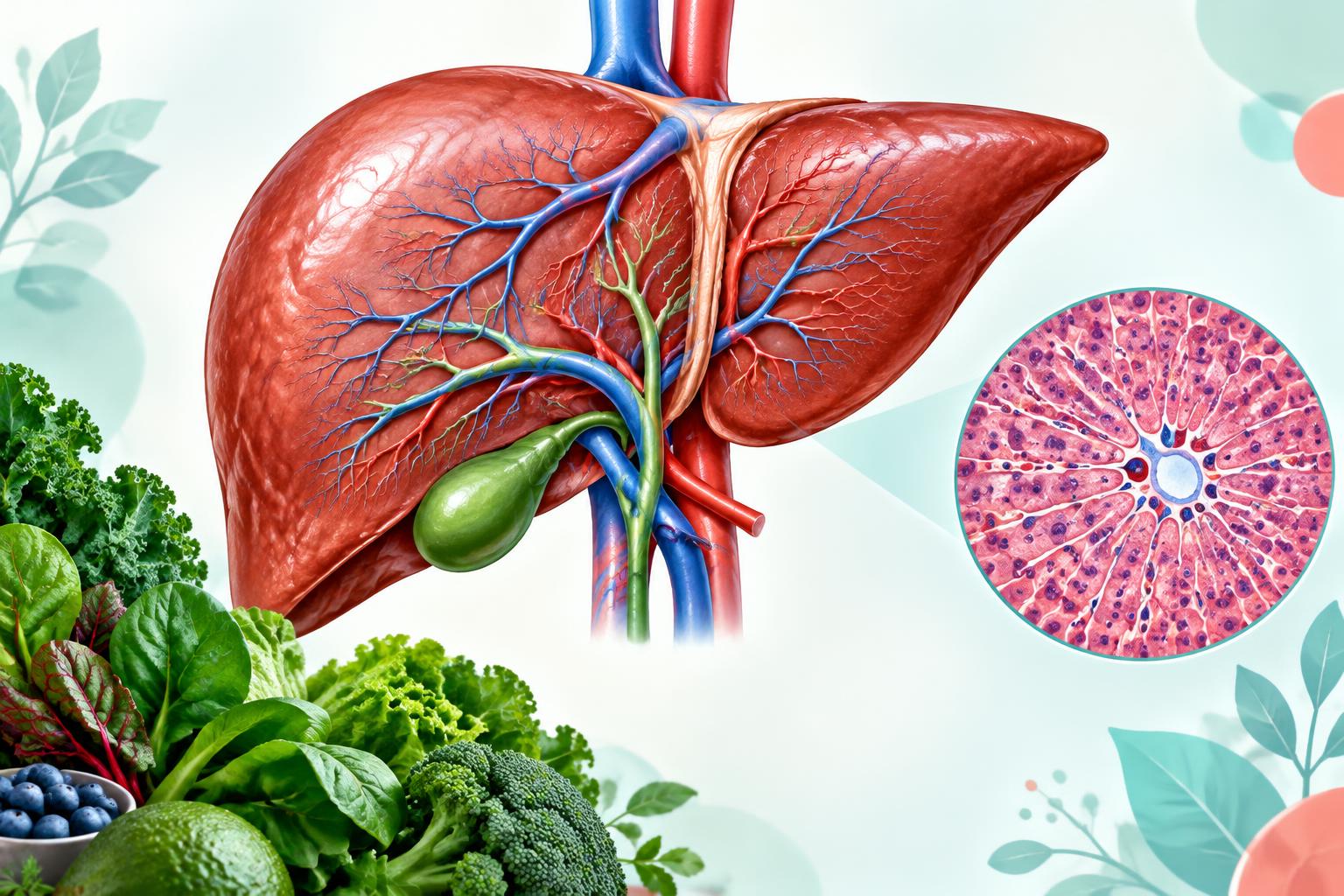
The liver is one of the few organs built to regenerate itself, but that capacity is not unlimited, and it changes measurably with age. This article looks at what research actually shows about age-related liver changes, which risk factors are genuinely modifiable, what the evidence says about diet and exercise, and when screening makes sense — plus a brief, honest note on where regenerative approaches to liver disease stand today. None of this replaces a conversation with your own doctor, especially if you have risk factors or symptoms.
How the Liver Changes With Age
Liver volume declines by roughly 20–40% over a normal lifespan, with some research finding the drop more pronounced in women (up to about 44%) than in men, and hepatic blood flow can fall by 35–50% in older age. Regenerative capacity also slows: aged liver cells respond more weakly to growth signals like epidermal growth factor, a protein called Bim appears to restrain cell division in older hepatocytes, and livers — particularly diseased ones — show shorter telomeres, a marker of cellular aging. None of this means an aging liver can't function well; it means it has less reserve, so protecting it earlier matters more than trying to compensate later.
The Biggest Levers: Alcohol, Weight, and Metabolic Health
A few things make an outsized difference, and the evidence for them is strong enough to say plainly. Staying within low-risk drinking limits — no more than 4 drinks/day and 14/week for men, 3/day and 7/week for women, per NIAAA guidance — meaningfully lowers alcohol-related liver risk; roughly a quarter of people who exceed these limits already have an alcohol use disorder. Maintaining a healthy weight and managing blood sugar matters just as much: obesity, type 2 diabetes, and insulin resistance are the core drivers of nonalcoholic fatty liver disease (NAFLD/MASLD), now the most common chronic liver condition in many countries. The encouraging news is that this risk responds to change — which is where diet and exercise evidence comes in.
Diet, Exercise, and Medication Safety
In a landmark trial (Vilar-Gomez et al., Gastroenterology, 2015), losing at least 7% of body weight through diet and lifestyle changes resolved NASH (the inflammatory form of fatty liver disease) in 64% of patients, and losing 10% or more resolved it in 90%, with fibrosis improving in roughly a third to nearly half of patients respectively. Exercise helps independently of weight loss, too: a 2023 analysis of 14 randomized trials (Stine et al., American Journal of Gastroenterology) found that about 150 minutes a week of moderate aerobic activity — brisk walking most days is enough — made people with NAFLD 3.5 times more likely to meaningfully reduce liver fat than standard care alone. Medication awareness matters too: acetaminophen overdose is a leading cause of acute liver failure, and herbal or dietary supplements (certain weight-loss, bodybuilding, and "liver cleanse" products among them) are an increasingly recognized cause of drug-induced liver injury — more isn't safer, and "natural" doesn't mean liver-safe.
Screening: When to Get Checked
The U.S. Preventive Services Task Force recommends one-time hepatitis C screening for all adults aged 18–79, with periodic rescreening for those with ongoing risk factors; hepatitis B testing and vaccination are also worth discussing with your doctor if you haven't been screened or vaccinated. For fibrosis risk, current gastroenterology guidance favors a stepwise approach: a simple blood-based FIB-4 score first, especially for people with diabetes, obesity, or other metabolic risk factors, followed by imaging-based elastography (FibroScan) if results are indeterminate — and clinicians increasingly recommend repeating this periodically rather than waiting years between checks.
Where Regenerative Research Stands
Stem cell and regenerative approaches to advanced liver disease — including for cirrhosis and NAFLD/NASH, which we cover elsewhere on this site — remain experimental, investigated mainly in early-phase clinical trials rather than established treatments. They are not a substitute for the prevention strategies above, which have decades of solid evidence behind them.
Bottom Line
The liver's capacity to regenerate declines with age, but the biggest threats to it — heavy alcohol use, excess weight, unmanaged diabetes, undiagnosed viral hepatitis, and medication/supplement overuse — are largely modifiable, and the evidence for addressing them is unusually strong and actionable. Pair that with periodic screening appropriate to your risk, and talk to your doctor about your personal risk factors rather than relying on general guidance alone.
Key Questions Answered
- Can lifestyle changes meaningfully improve fatty liver disease?
- Yes. The cited lifestyle trial found NASH resolution in 64% of patients losing at least 7% of body weight and 90% losing 10% or more. Exercise also reduced liver fat independently of weight loss.
- Who is recommended to receive hepatitis C screening?
- The USPSTF recommends one-time screening for adults aged 18–79, with periodic rescreening for those with ongoing risk factors. Fibrosis assessment is tailored to metabolic and other individual risks.
- Can experimental liver cell therapies replace prevention?
- No. Regenerative approaches for advanced liver disease remain experimental and are not substitutes for alcohol-risk reduction, metabolic health management, appropriate screening or medication safety.
Sources
- Liver and aging, World Journal of Gastroenterology, 2013 — https://www.wjgnet.com/1007-9327/full/v19/i46/8459.htm
- Hepatitis C Virus Infection in Adolescents and Adults: Screening, USPSTF Final Recommendation Statement, 2020 — https://www.uspreventiveservicestaskforce.org/uspstf/recommendation/hepatitis-c-screening1
- Weight Loss Through Lifestyle Modification Significantly Reduces Features of Nonalcoholic Steatohepatitis, Vilar-Gomez et al., Gastroenterology, 2015 — https://www.metabolicum.com/learn/research/vilar-gomez-2015-weight-loss-nafld
- 150 minutes of aerobic exercise per week reduces liver fat, study finds (Stine et al., American Journal of Gastroenterology, 2023), Penn State News — https://www.psu.edu/news/research/story/150-minutes-aerobic-exercise-week-reduces-liver-fat-study-finds
- Rethinking Drinking: Alcohol and Your Health, National Institutes of Health/NIAAA — https://www.nih.gov/node/17426
- MASLD Fibrosis Risk Stratification With FIB-4 and VCTE, HCPLive coverage of AGA/AASLD guidance, 2024 — https://www.hcplive.com/view/mazen-noureddin-md-mhsc-masld-fibrosis-risk-stratification-fib-4-vcte
Related Articles
- Fundamentals
Types of Chronic Pain Conditions: Which Are Being Studied With Stem Cell Therapy?
A research-based breakdown of which chronic pain conditions — from knee osteoarthritis to fibromyalgia — have real clinical trial evidence behind stem cell therapy, and which remain preclinical.
- Fundamentals
What Is Peripheral Artery Disease?
A plain-language guide to peripheral artery disease — causes, claudication and critical limb ischemia symptoms, diagnosis, standard care, and where stem cell research honestly stands today.
- Fundamentals
What Is Chimerism, and Why Do Doctors Test for It After a Stem Cell Transplant?
Chimerism testing after donor stem cell transplant: STR methods, full versus mixed donor cells, relapse warning signals and why MRD testing matters.