Does Using Your Own Stem Cells Make the Treatment Automatically Safe?
What this article covers
- What This Article Covers
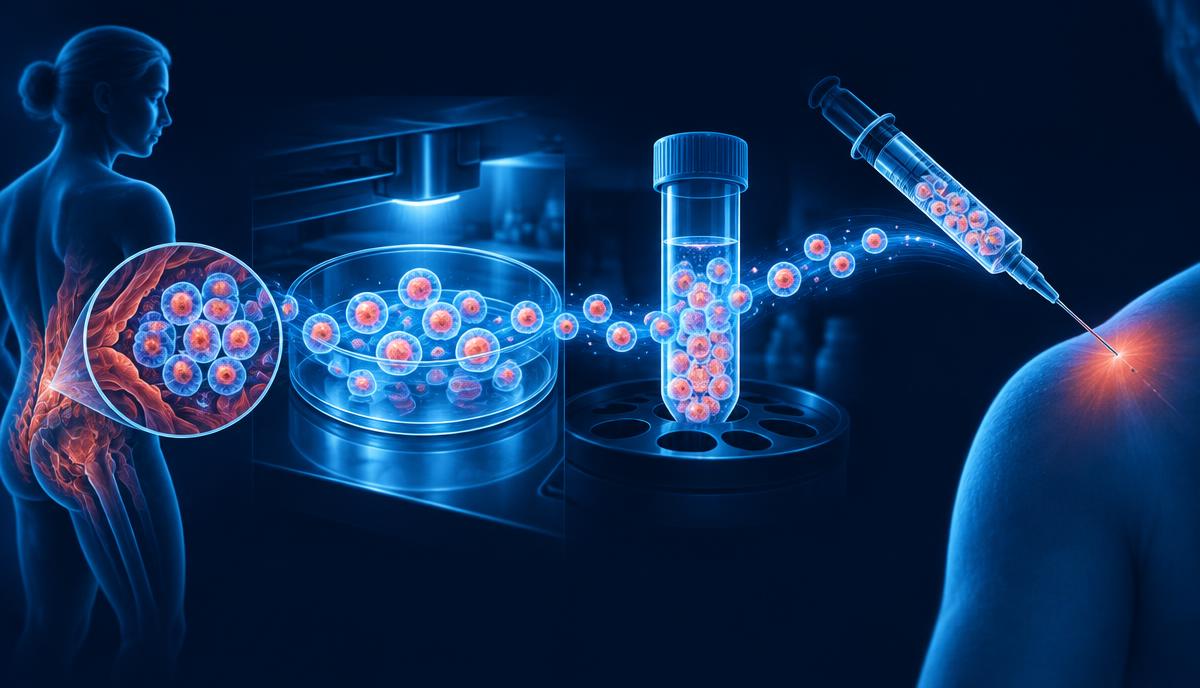
- A common pitch from stem cell clinics is that because a treatment uses "your own cells," it must be safe — no rejection, no foreign material, nothing to go wrong. That framing contains a real, verifiable fact and a dangerous leap.
- The Myth
- The marketing logic goes: your body already tolerates your own cells, so an injection or infusion of them can't hurt you the way a donor product or a synthetic drug might. Patients often hear this as "risk-free," and some clinic materials lean into that impression, especially for conditions — knee arthritis, autoimmune disease, macular degeneration, neurologic injury — where approved treatment options are limited or disappointing.
- The Grain of Truth
- The core biological claim isn't wrong. Using a patient's own fat, bone marrow, or blood-derived cells does remove two specific risks that come with donor (allogeneic) cell products: immune rejection of foreign tissue, and transmission of an infectious disease from a donor.
- What Autologous Sourcing Doesn't Protect Against
- Removing rejection risk leaves everything else on the table. There's the procedure itself: liposuction or bone marrow aspiration carries ordinary surgical risks — bleeding, infection, nerve injury — and whatever device delivers the processed cells (a needle into a joint, the eye, or spinal fluid) carries its own injection-site risks regardless of whose cells are inside it.
- Documented Cases
- The clearest evidence comes from published case reports. A 2017 New England Journal of Medicine case series described three women who received bilateral intravitreal (into-the-eye) injections of their own adipose-derived stem cells at a Florida clinic to treat age-related macular degeneration, paying roughly $5,000 each.
What This Article Covers
A common pitch from stem cell clinics is that because a treatment uses "your own cells," it must be safe — no rejection, no foreign material, nothing to go wrong. That framing contains a real, verifiable fact and a dangerous leap. This article separates the two: what autologous (self-derived) sourcing actually does reduce, and the substantial risks it does nothing to address, drawing on documented case reports and federal safety warnings.
The Myth
The marketing logic goes: your body already tolerates your own cells, so an injection or infusion of them can't hurt you the way a donor product or a synthetic drug might. Patients often hear this as "risk-free," and some clinic materials lean into that impression, especially for conditions — knee arthritis, autoimmune disease, macular degeneration, neurologic injury — where approved treatment options are limited or disappointing.
The Grain of Truth
The core biological claim isn't wrong. Using a patient's own fat, bone marrow, or blood-derived cells does remove two specific risks that come with donor (allogeneic) cell products: immune rejection of foreign tissue, and transmission of an infectious disease from a donor. The International Society for Stem Cell Research (ISSCR), the field's leading scientific body, acknowledges this distinction in its patient-facing guidance while still cautioning that it doesn't make a treatment proven or low-risk overall. So when a clinic says autologous sourcing avoids rejection risk, that part is accurate — it's the "therefore safe" conclusion that doesn't follow.
What Autologous Sourcing Doesn't Protect Against
Removing rejection risk leaves everything else on the table. There's the procedure itself: liposuction or bone marrow aspiration carries ordinary surgical risks — bleeding, infection, nerve injury — and whatever device delivers the processed cells (a needle into a joint, the eye, or spinal fluid) carries its own injection-site risks regardless of whose cells are inside it. There's also what happens to the cells between collection and injection: how they're isolated, expanded in culture, combined with other substances, and where in the body they end up. The U.S. Food and Drug Administration has repeatedly warned that these processing and delivery steps — not the "self" vs. "donor" question — are where much of the documented harm originates, and that most such products are not FDA-approved or shown to be safe or effective for the conditions clinics market them for.
Documented Cases
The clearest evidence comes from published case reports. A 2017 New England Journal of Medicine case series described three women who received bilateral intravitreal (into-the-eye) injections of their own adipose-derived stem cells at a Florida clinic to treat age-related macular degeneration, paying roughly $5,000 each. Within a week, all three developed severe complications — including retinal detachment, vitreous hemorrhage, and lens dislocation — and by one year their vision had deteriorated to a range of 20/200 to no light perception in the worst-affected eyes; two were left legally or completely blind. The cells were autologous throughout; that did nothing to prevent the outcome. A separate line of case reports describes patients who received autologous olfactory (nasal) mucosal cell transplants into the spinal cord for chronic spinal cord injury, intended to promote nerve regeneration. A 2016 NEJM correspondence and a 2019 case report in CMAJ each describe a patient who developed a mass growing at the transplant site years later — in one case, tissue resembling nasal lining and glands growing within the spinal cord, requiring surgical resection. Again, the graft was the patient's own tissue; the complication arose from what was done with it, not from immune rejection.
The Bigger Picture
Beyond individual complications, the FDA and ISSCR both stress a more basic point: outside of specific FDA-approved uses (mainly certain blood-forming stem cell transplants from cord blood or bone marrow for blood and immune conditions), the vast majority of stem cell products marketed for orthopedic, neurologic, cosmetic, or degenerative conditions — autologous or not — have not gone through the clinical trials required to establish they work or are safe for that use.
Bottom Line
Autologous sourcing is a genuine, meaningful safety advantage on two specific fronts — immune rejection and donor-disease transmission — and it's fair to credit it for that. But it says nothing about surgical or injection risk, nothing about what happens to cells during processing and expansion, and nothing about whether a product is proven to work for a given condition. "It's your own cells" answers one narrow safety question; it doesn't answer the much bigger one of whether a specific treatment, for a specific condition, has been shown to be safe and effective.
Sources
- Vision Loss after Intravitreal Injection of Autologous "Stem Cells" for AMD — New England Journal of Medicine, 2017 — https://www.nejm.org/doi/full/10.1056/NEJMoa1609583
- Glioproliferative Lesion of the Spinal Cord as a Complication of "Stem-Cell Tourism" — New England Journal of Medicine, 2016 — https://www.nejm.org/doi/full/10.1056/NEJMc1600188
- Intramedullary Cervical Spinal Mass After Stem Cell Transplantation Using an Olfactory Mucosal Cell Autograft — CMAJ, 2019 — https://www.cmaj.ca/content/191/27/E761
- Consumer Alert on Regenerative Medicine Products Including Stem Cells and Exosomes — U.S. Food and Drug Administration, 2020 — https://www.fda.gov/vaccines-blood-biologics/consumers-biologics/consumer-alert-regenerative-medicine-products-including-stem-cells-and-exosomes
- A Closer Look at Stem Cells (Patient Resources / Treatment Guide) — International Society for Stem Cell Research (ISSCR) — https://www.isscr.org/treatment-guide
Related Articles
- Fundamentals
What Are Hematopoietic Stem Cells? The Cells That Make All of Your Blood
Hematopoietic stem cells make blood and immune cells throughout life. Where they live, how transplants work, and why they differ from MSCs.
- Fundamentals
Types of Cartilage Damage: What Regenerative Options Exist for Each?
Focal cartilage defects, osteochondritis dissecans, osteoarthritis and meniscus tears need different evidence. Where MACI is approved and where MSCs remain experimental.
- Fundamentals
Can Exercise Boost Your Body's Own Stem Cell Activity? What the Evidence Actually Shows
Exercise activates muscle satellite cells and temporarily mobilizes blood progenitors. What human and animal studies show—and what they cannot yet prove about regeneration.