Myth vs. Fact: "Stem Cells Are 'Natural,' So Stem Cell Therapy Can't Really Hurt You"
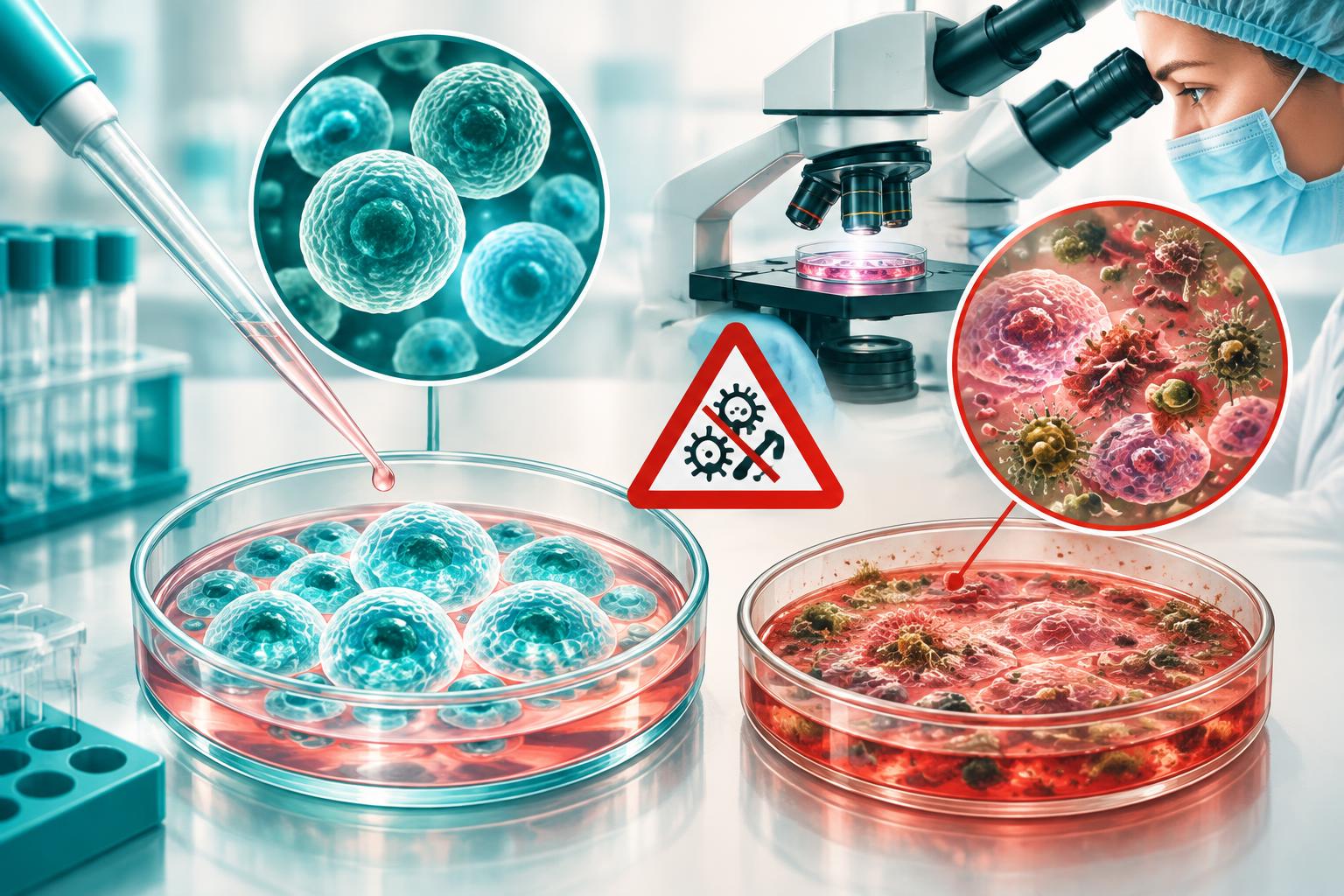
What this article covers
- WHAT THIS ARTICLE COVERS
- A common assumption drives people toward unproven stem cell procedures: because the cells come from your own body (or another biological source) rather than a synthetic drug, the treatment must be inherently gentle and low-risk. This article uses documented case reports, CDC findings, and FDA safety communications to show that this assumption is false — not because stem cells themselves are dangerous, but because how they're processed, where they're injected, what type of cell is used, and whether the procedure is regulated at all determine the risk.
- The Myth
- "It's just my own cells — there's nothing for my body to reject, and nothing artificial that can go wrong. " This reasoning treats stem cell procedures like a vitamin: possibly ineffective, but never actively harmful.
- The Reality: What "Natural" Doesn't Account For
- Autologous (your-own-cell) therapies skip the risk of immune rejection, but that's only one category of risk.
- What Still IS Genuinely Safe and FDA-Approved
- None of this indicts stem cells as a category. FDA-approved hematopoietic stem cell transplants — used for decades to treat leukemia, lymphoma, and other blood disorders — have a well-established safety and efficacy record built on rigorous trials, standardized processing, and regulatory oversight.
- Bottom Line
- Stem cells derived from your own body are not inherently dangerous, and FDA-approved stem cell treatments have a long, well-documented safety record. " The deciding factor isn't where the cells came from — it's whether the specific procedure has been studied, regulated, and shown to be safe for that specific use.
WHAT THIS ARTICLE COVERS
A common assumption drives people toward unproven stem cell procedures: because the cells come from your own body (or another biological source) rather than a synthetic drug, the treatment must be inherently gentle and low-risk. This article uses documented case reports, CDC findings, and FDA safety communications to show that this assumption is false — not because stem cells themselves are dangerous, but because how they're processed, where they're injected, what type of cell is used, and whether the procedure is regulated at all determine the risk. "Natural" and "risk-free" are not the same thing.
The Myth
"It's just my own cells — there's nothing for my body to reject, and nothing artificial that can go wrong. Worst case, it just doesn't work." This reasoning treats stem cell procedures like a vitamin: possibly ineffective, but never actively harmful. The documented clinical record says otherwise.
The Reality: What "Natural" Doesn't Account For
Autologous (your-own-cell) therapies skip the risk of immune rejection, but that's only one category of risk. Serious, documented harm has come from at least four other sources that have nothing to do with whether the cells are "yours":
- Processing: Isolating and concentrating cells from fat or bone marrow typically requires enzymatic digestion and lab handling. Done outside properly controlled, validated conditions, this processing step itself can alter or damage tissue before the cells are ever injected.
- Injection site: Cells behaving normally in, say, a joint can behave destructively somewhere never studied for that use, such as inside the eye.
- Cell type and source: Non-autologous cells (donor-derived, fetal, or embryonic-derived) can proliferate or migrate in ways regulators have not evaluated for safety.
- Sterility and sourcing: Clinics operating outside FDA oversight don't necessarily follow the contamination controls, cell-bank testing (for infectious agents like HIV or hepatitis), or manufacturing standards that approved biologics require.
The FDA's own consumer safety page on regenerative medicine states plainly that it has received "reports of blindness, tumor formation, infections, and more" tied to unapproved stem cell products, and warns that cells can "migrate from placement sites," "change into inappropriate cell types," or "grow abnormally."
What the Documented Cases Actually Show
- Vision loss from a processing and injection-site failure: A 2017 case series in the New England Journal of Medicine (Kuriyan et al.) described three women, in their 70s and 80s, who paid to have stem cells derived from their own abdominal fat injected into both eyes at a for-profit U.S. clinic to treat macular degeneration — a use never studied for this cell product. All three suffered serious complications, including retinal detachment, hemorrhage, and lens dislocation; a year later their vision ranged from 20/200 to no light perception in their better eye. Investigators suspected the enzymatic cell-processing method damaged ocular structures and that the injected cells contracted after placement — a processing and off-label-site problem, not a rejection problem.
- Tumor-like growth from a non-autologous cell source: A 2016 NEJM correspondence (Berkowitz et al.) described a man who received injections of donor-derived mesenchymal, fetal, and embryonic stem cells into his spinal cord at unregulated overseas clinics seeking stroke recovery. He developed progressive paraplegia from a mass that laboratory analysis confirmed was not made of his own cells — an unusual growth directly tied to the type of cells used.
- Infections from unregulated, contaminated product: A 2018 CDC report documented 12 confirmed bacterial infections — including bloodstream infections and epidural abscesses — across three states in patients who received a commercially distributed umbilical-cord-blood-derived cell product for pain or orthopedic conditions, a use the FDA has never approved for that product. The product was later recalled after testing found bacterial contamination.
What Still IS Genuinely Safe and FDA-Approved
None of this indicts stem cells as a category. FDA-approved hematopoietic stem cell transplants — used for decades to treat leukemia, lymphoma, and other blood disorders — have a well-established safety and efficacy record built on rigorous trials, standardized processing, and regulatory oversight. The risk documented above is concentrated almost entirely in procedures marketed directly to consumers for uses the FDA has not reviewed or approved.
How to Protect Yourself
- Ask directly whether the product is FDA-approved or being given under an active FDA-cleared investigational study (IND) — a listing on ClinicalTrials.gov is not the same as approval.
- Be wary of clinics offering the same product for many unrelated conditions (joints, eyes, neurological disease, anti-aging) — that breadth is a red flag, not a sign of versatility.
- Ask what cell type is being used, where it comes from, and how it's tested for contamination.
- Consult a specialist physician in the relevant field (e.g., a retina specialist, not just the treating clinic) before any injection into a sensitive site like the eye or spine.
- Report any adverse event to the FDA's MedWatch program, and expect legitimate clinical trials to disclose and track complications rather than minimize them.
Bottom Line
Stem cells derived from your own body are not inherently dangerous, and FDA-approved stem cell treatments have a long, well-documented safety record. But "from my own body" does not mean "can't go wrong." Documented harm — including permanent blindness, tumor-like growths, and serious infections — has repeatedly traced back to unapproved processing methods, unstudied injection sites, non-autologous cell sources, and unregulated, non-sterile conditions, not to the cells being "unnatural." The deciding factor isn't where the cells came from — it's whether the specific procedure has been studied, regulated, and shown to be safe for that specific use.
Key Questions Answered
- Does using your own cells make a procedure risk-free?
- No. Processing, injection site, cell source and sterility can cause harm even when immune rejection is not the issue.
- What harms have been documented after unapproved interventions?
- The article describes serious vision loss, donor-cell tumor-like growth and 12 confirmed bacterial infections associated with a contaminated cord-blood-derived product.
- Is a ClinicalTrials.gov listing the same as FDA approval?
- No. Ask whether the product is FDA-approved or administered under an active FDA-cleared investigational study, and report adverse events through MedWatch.
Sources
- Important Patient and Consumer Information About Regenerative Medicine Therapies — U.S. Food and Drug Administration (FDA) — https://www.fda.gov/vaccines-blood-biologics/consumers-biologics/important-patient-and-consumer-information-about-regenerative-medicine-therapies
- Notes from the Field: Infections After Receipt of Bacterially Contaminated Umbilical Cord Blood–Derived Stem Cell Products for Other Than Hematopoietic or Immunologic Reconstitution — United States, 2018 — CDC Morbidity and Mortality Weekly Report (MMWR), 2018 — https://www.cdc.gov/mmwr/volumes/67/wr/mm6750a5.htm
- Averting Stem Cell Tx Disasters (discussing Kuriyan AE, et al., "Vision Loss after Intravitreal Injection of Autologous 'Stem Cells' for AMD," N Engl J Med. 2017;376(11):1047-1053) — American Academy of Ophthalmology, EyeNet Magazine — https://www.aao.org/eyenet/article/averting-stem-cell-tx-disasters
- Discussion of Berkowitz AL, et al., "Glioproliferative Lesion of the Spinal Cord as a Complication of 'Stem-Cell Tourism,'" N Engl J Med. 2016; DOI 10.1056/NEJMc1600188 — Signals Blog (Centre for Commercialization of Regenerative Medicine) — https://www.signalsblog.ca/?p=9131
- Harms Linked to Unapproved Stem Cell Interventions Highlight Need for Greater FDA Enforcement — The Pew Charitable Trusts, 2021 — https://www.pewtrusts.org/-/media/assets/2021/05/harms-linked-to-unapproved-stem-cell-interventions-highlight-need-for-greater-fda-enforcement.pdf
Related Articles
- Fundamentals
What Is Gene Therapy, and How Is It Different From Stem Cell Therapy?
Gene therapy changes gene activity; stem cell therapy replaces or supports cells. Learn where CAR-T and sickle cell treatments overlap, with their disclosed risks.
- Fundamentals
Types of Neuromuscular Disease: Which Ones Are Being Studied With Stem Cell and Gene Therapy?
Explore the neuromuscular disease landscape, from approved SMA gene therapy to early CAR-T and muscular dystrophy trials and the limits of stem cell research.
- Fundamentals
Protecting Lung and Respiratory Health As You Age: What the Evidence Actually Shows
Review evidence for smoking cessation, respiratory vaccines, pulmonary rehabilitation and cleaner air, while separating prevention from experimental lung cell therapy.