What Is Gene Therapy, and How Is It Different From Stem Cell Therapy?
What this article covers
- WHAT THIS ARTICLE COVERS
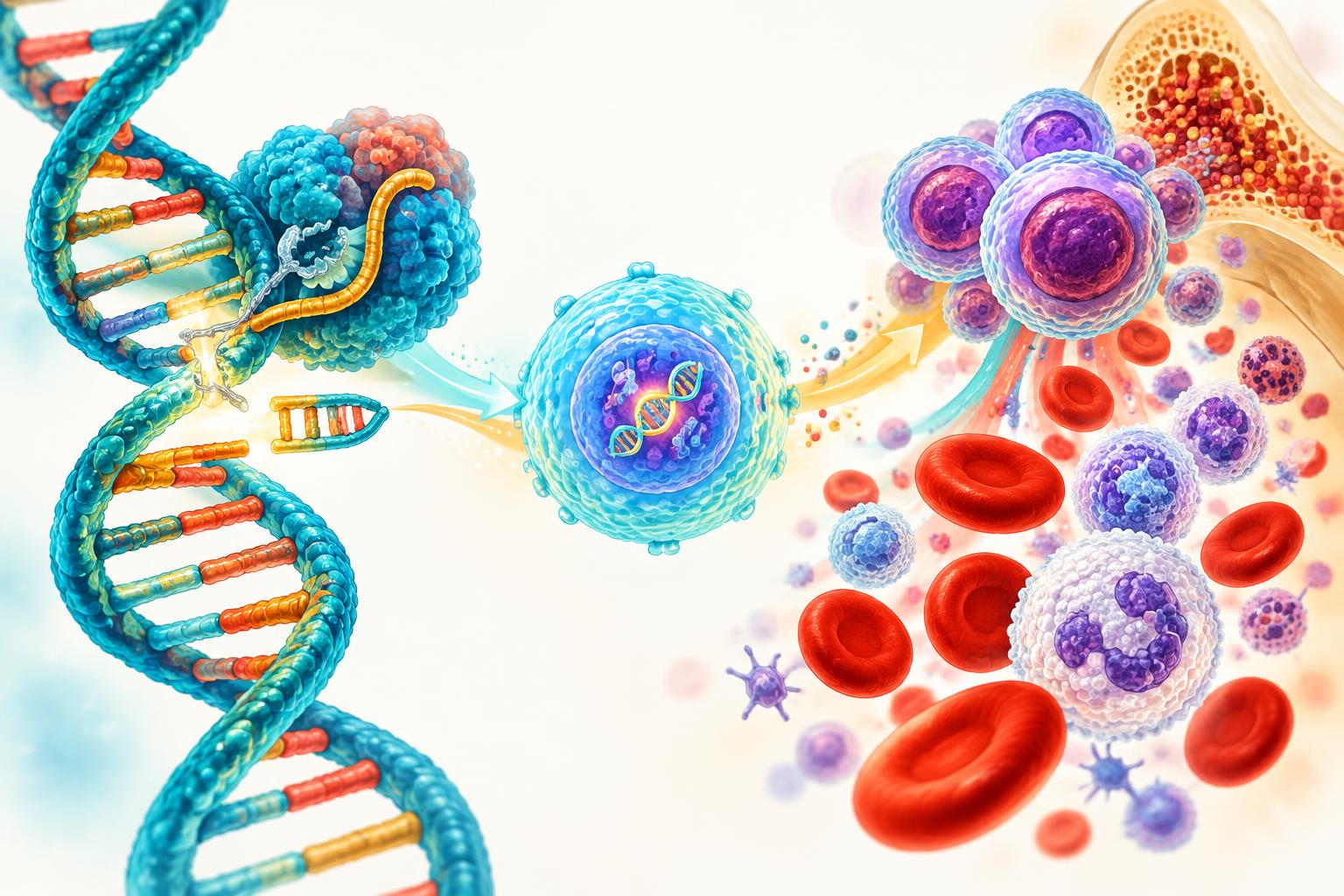
- "Gene therapy" and "stem cell therapy" get used almost interchangeably in casual conversation, and in some real treatments they genuinely are the same thing happening at once. But they are built on different biological ideas, regulated as different categories of product, and carry different risk profiles.
- What Gene Therapy Actually Is
- The FDA defines human gene therapy as "the administration of genetic material to modify or manipulate the expression of a gene product," or, more plainly, a way of changing how a gene behaves in order to treat or cure disease.
- What Stem Cell Therapy Actually Is
- Stem cell therapy works on a completely different principle: it relies on the natural biological behavior of stem cells, not on rewriting their DNA. According to the National Cancer Institute (NCI), blood-forming stem cells are the cells that grow into white blood cells, red blood cells, and platelets.
- Where They Genuinely Overlap
- This is where the terminology gets confusing — and where some real, FDA-approved treatments are both a cell therapy and a gene therapy simultaneously.
- Where They Are Genuinely Distinct
- Plenty of real treatments sit firmly on one side only. Luxturna, an FDA-approved gene therapy for certain inherited retinal diseases, delivers a corrected gene directly into the eye using a viral vector — no stem cells or cell collection involved at all.
WHAT THIS ARTICLE COVERS
"Gene therapy" and "stem cell therapy" get used almost interchangeably in casual conversation, and in some real treatments they genuinely are the same thing happening at once. But they are built on different biological ideas, regulated as different categories of product, and carry different risk profiles. This article walks through what each one actually does at the cellular level, introduces the real, FDA-approved treatments that sit at their intersection, and clarifies where the two fields are entirely separate — so you can read claims about either one with a clearer sense of what's actually being described.
What Gene Therapy Actually Is
The FDA defines human gene therapy as "the administration of genetic material to modify or manipulate the expression of a gene product," or, more plainly, a way of changing how a gene behaves in order to treat or cure disease. According to the FDA, this can happen in a few distinct ways:
- Gene addition: inserting a working copy of a gene to replace one that is missing or faulty.
- Gene silencing: turning off a gene that is active when it shouldn't be, or that produces a harmful protein.
- Gene editing: directly cutting, removing, or rewriting a specific piece of DNA, using tools such as CRISPR/Cas9.
To get that genetic material into cells, researchers use a delivery vehicle. The FDA lists several types: viral vectors (viruses that have been modified so they can no longer cause infection, but still slip genetic material into a cell), plasmid DNA (engineered circular DNA), and bacterial vectors. The choice of vector matters a great deal for safety and durability, which is one reason gene therapies are developed and tested so cautiously.
Gene therapy is also delivered in two fundamentally different ways. In in vivo gene therapy, the genetic material is given directly to the patient — by injection into the bloodstream, the eye, or another tissue — and the modification happens inside the body. In ex vivo gene therapy, cells are removed from the patient, genetically modified in a lab, and then infused back in. That second route is where gene therapy and cell-based therapies start to blend together.
What Stem Cell Therapy Actually Is
Stem cell therapy works on a completely different principle: it relies on the natural biological behavior of stem cells, not on rewriting their DNA. According to the National Cancer Institute (NCI), blood-forming stem cells are the cells that grow into white blood cells, red blood cells, and platelets. A stem cell transplant replaces blood-forming stem cells that have been destroyed — most commonly by the very high doses of chemotherapy or radiation used to treat blood cancers — so the body can resume making blood cells.
There are two main versions. In an autologous transplant, patients receive their own previously collected stem cells; these match perfectly, though there's a small chance cancer cells are collected along with them. In an allogeneic transplant, cells come from a donor, usually a sibling, whose tissue type closely matches the patient's. Stem cell transplants are used mainly for blood cancers like leukemia, lymphoma, and myeloma, as well as blood disorders such as sickle cell disease and aplastic anemia, and some autoimmune diseases.
The risks are real and worth naming plainly. Short-term effects can include nausea, fatigue, infection risk, and mouth sores; long-term risks can include infertility, cataracts, organ damage, and secondary cancers. Allogeneic transplants carry an additional specific risk: graft-versus-host disease, in which the donor's immune cells attack the patient's own tissues, most often the skin, liver, and intestines.
Where They Genuinely Overlap
This is where the terminology gets confusing — and where some real, FDA-approved treatments are both a cell therapy and a gene therapy simultaneously.
CAR T-cell therapy is the clearest example. Kymriah (tisagenlecleucel), approved by the FDA in August 2017, takes a patient's own T cells (a cell-based therapy) and genetically engineers them to carry a chimeric antigen receptor that helps them recognize and attack cancer (a gene therapy). The American Society of Gene & Cell Therapy notes the FDA itself described it as the first gene therapy of its kind approved in the United States. It is a real, approved, and in many cases durable treatment option for certain relapsed or refractory leukemias — and it also carries a well-documented risk of cytokine release syndrome, serious enough that the FDA simultaneously approved a drug, tocilizumab, specifically to manage it.
Gene-corrected autologous stem cell transplants are the second major overlap. In December 2023, the FDA approved Casgevy and Lyfgenia, the first gene therapies for sickle cell disease — a condition that affects roughly 100,000 people in the U.S. Both work by collecting a patient's own blood stem cells, genetically modifying them, and returning them as a stem cell transplant. Casgevy uses CRISPR/Cas9 gene editing to boost fetal hemoglobin production; Lyfgenia uses a viral vector to add a gene for a modified, non-sickling hemoglobin. Both require chemotherapy beforehand to clear space in the bone marrow — a genuinely promising advance for a painful, life-limiting disease, but one that still comes with serious caveats: Lyfgenia carries an FDA boxed warning for blood cancer risk, requiring lifelong monitoring.
Where They Are Genuinely Distinct
Plenty of real treatments sit firmly on one side only. Luxturna, an FDA-approved gene therapy for certain inherited retinal diseases, delivers a corrected gene directly into the eye using a viral vector — no stem cells or cell collection involved at all. Conversely, a standard allogeneic bone marrow transplant for leukemia uses donor cells exactly as they occur naturally, with no genetic engineering step — it is a stem cell therapy, full stop.
Bottom Line
Gene therapy and stem cell therapy are not the same thing, but they are not strictly separate fields either — ex vivo gene therapies in particular depend on stem cell or immune cell biology to work. The clearest way to tell them apart in any specific treatment is to ask two questions: Are the cells being changed genetically, or just transplanted as-is? And is the therapy modifying DNA inside the body (in vivo) or in cells taken out and returned (ex vivo)? A small number of treatments answer "both" to the first question — CAR-T and the new sickle cell gene therapies among them — and those are genuinely some of the most significant advances in medicine in the last decade. But that overlap is the exception, documented in specific FDA-approved products with specific, disclosed risks — not a reason to assume any given "stem cell" or "gene therapy" claim you encounter elsewhere describes the same rigorously tested thing.
Key Questions Answered
- How do gene therapy and stem cell therapy differ?
- Gene therapy modifies gene activity through addition, silencing or editing. A conventional stem cell transplant replaces blood-forming cells without changing their DNA.
- What is the difference between in vivo and ex vivo gene therapy?
- In vivo therapy delivers genetic material directly into the body. Ex vivo therapy modifies cells in a laboratory before returning them to the patient.
- Do gene-corrected stem cell treatments still carry risks?
- Yes. Casgevy and Lyfgenia require chemotherapy before transplantation, and Lyfgenia carries a boxed warning for blood cancer risk with lifelong monitoring.
Sources
- What Is Gene Therapy? - U.S. Food and Drug Administration (FDA), 2018 - https://www.fda.gov/vaccines-blood-biologics/cellular-gene-therapy-products/what-gene-therapy
- FDA Approves First Gene Therapies to Treat Patients with Sickle Cell Disease - FDA Press Announcement, 2023 - https://www.fda.gov/news-events/press-announcements/fda-approves-first-gene-therapies-treat-patients-sickle-cell-disease
- Stem Cell Transplant Fact Sheet - National Cancer Institute (NCI), NIH - https://www.cancer.gov/about-cancer/treatment/types/stem-cell-transplant/stem-cell-fact-sheet
- FDA Approves First CAR T-Cell Treatment for Acute Lymphoblastic Leukemia - American Society of Gene & Cell Therapy (ASGCT), 2017 - https://asgct.org/Research/News/August-2017/FDA-Approves-First-CAR-T-Cell
- ASGCT Celebrates FDA Approval of Voretigene Neparvovec (Luxturna) as Treatment for Inherited Retinal Disease - American Society of Gene & Cell Therapy (ASGCT), 2017 - https://www.asgct.org/research/news/december-2017/luxturna-fda-approval-spark
Related Articles
- Fundamentals
Myth vs. Fact: "Stem Cells Are 'Natural,' So Stem Cell Therapy Can't Really Hurt You"
Natural stem cells are not risk-free. Documented blindness, abnormal growths and infections show why processing, injection site, sterility and oversight matter.
- Fundamentals
Types of Neuromuscular Disease: Which Ones Are Being Studied With Stem Cell and Gene Therapy?
Explore the neuromuscular disease landscape, from approved SMA gene therapy to early CAR-T and muscular dystrophy trials and the limits of stem cell research.
- Fundamentals
Protecting Lung and Respiratory Health As You Age: What the Evidence Actually Shows
Review evidence for smoking cessation, respiratory vaccines, pulmonary rehabilitation and cleaner air, while separating prevention from experimental lung cell therapy.