What Is Osteoporosis?
What this article covers
- What Causes Osteoporosis
- Bone is living tissue that is constantly being broken down and rebuilt in a process called remodeling. Osteoporosis develops when the creation of new bone doesn't keep pace with the removal of old bone, leaving bone tissue thinner, more porous, and structurally weaker.
- Symptoms and Diagnosis
- Osteoporosis is often called a "silent disease" because bone loss typically causes no symptoms in its early stages. Many people don't know they have it until a bone breaks from a minor fall or routine movement.
- Standard Treatment Today
- Osteoporosis management combines lifestyle measures, nutrition, and medication, guided by individual fracture risk. The 2022 Clinician's Guide to Prevention and Treatment of Osteoporosis, published in Osteoporosis International, recommends adequate calcium (about 1,000–1,200 mg per day, preferably from food) and vitamin D (generally 800–1,000 IU per day, adjusted to maintain healthy blood levels) as a foundation for bone health.
- Where Stem Cell Research Stands
- Stem cell and regenerative approaches to osteoporosis are a genuinely active area of laboratory research, but they remain early-stage and are not an established or approved treatment. Scientists are investigating whether mesenchymal stem cells (MSCs) — drawn from bone marrow, fat tissue, or umbilical cord tissue — might help restore the balance between bone breakdown and bone formation, either by developing into bone-forming cells or, as more recent research suggests, by releasing growth factors and exosomes that support the body's own repair processes.
- Bottom Line
- Osteoporosis is a widespread but often under-recognized condition in which bones become fragile and prone to fracture, usually without warning symptoms until a break occurs. The foundation of care today remains well established: adequate calcium and vitamin D, regular weight-bearing exercise, fall prevention, and, for those at meaningful fracture risk, medications such as bisphosphonates.
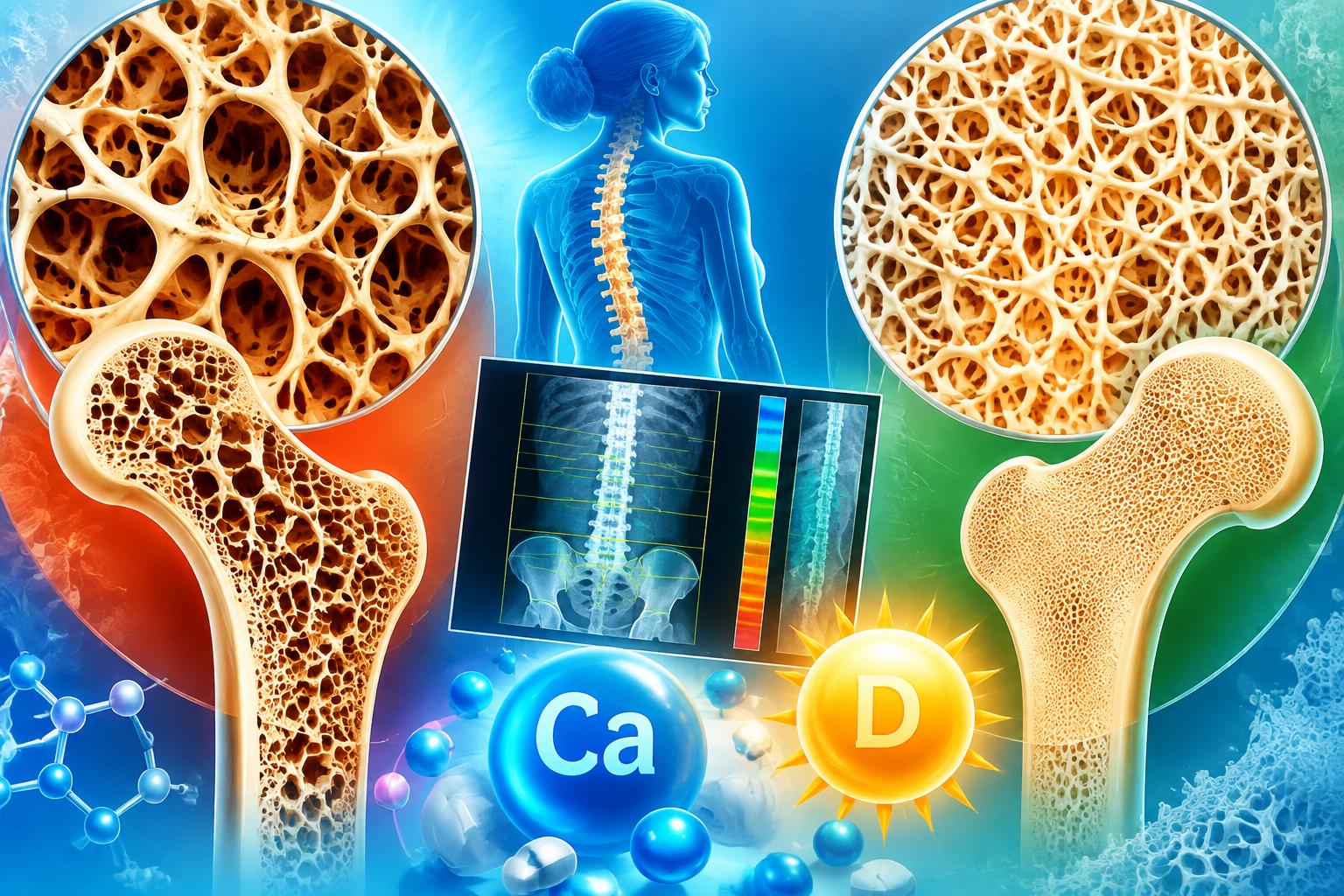
Osteoporosis is a common bone disease in which bones lose density and strength, making them more likely to break — often silently, until a fracture reveals how much bone has already been lost. This article explains what causes osteoporosis, how it's diagnosed, standard care today (bisphosphonates, calcium and vitamin D, weight-bearing exercise, and fracture-risk management), and where stem cell research actually stands — which, despite encouraging lab findings, remains early-stage rather than an available treatment.
What Causes Osteoporosis
Bone is living tissue that is constantly being broken down and rebuilt in a process called remodeling. Osteoporosis develops when the creation of new bone doesn't keep pace with the removal of old bone, leaving bone tissue thinner, more porous, and structurally weaker. Most people reach their peak bone mass by around age 30, and that peak — shaped partly by genetics — determines how much "reserve" they have as bone loss naturally accelerates with age, especially after menopause due to falling estrogen levels. Other contributors include long-term low calcium or vitamin D intake, a sedentary lifestyle, smoking, heavy alcohol use, certain medications (particularly long-term corticosteroids), and medical conditions such as celiac disease, inflammatory bowel disease, rheumatoid arthritis, and hormonal disorders. Family history, small body frame, and being postmenopausal or of white or Asian descent are also recognized risk factors.
Symptoms and Diagnosis
Osteoporosis is often called a "silent disease" because bone loss typically causes no symptoms in its early stages. Many people don't know they have it until a bone breaks from a minor fall or routine movement. When symptoms do appear, they can include back pain from a collapsed or fractured vertebra, loss of height over time, a stooped posture, and bones that fracture more easily than expected. Diagnosis relies on a bone mineral density test, most commonly a DXA (dual-energy X-ray absorptiometry) scan, which produces a T-score; a T-score of −2.5 or lower indicates osteoporosis. According to the Bone Health and Osteoporosis Foundation, roughly 10 million Americans already have osteoporosis and another 44 million have low bone density that raises their risk — together, about half of adults over 50. Despite this, nearly 80% of older adults who break a bone are never tested or treated for the underlying bone disease.
Standard Treatment Today
Osteoporosis management combines lifestyle measures, nutrition, and medication, guided by individual fracture risk. The 2022 Clinician's Guide to Prevention and Treatment of Osteoporosis, published in Osteoporosis International, recommends adequate calcium (about 1,000–1,200 mg per day, preferably from food) and vitamin D (generally 800–1,000 IU per day, adjusted to maintain healthy blood levels) as a foundation for bone health. Weight-bearing and resistance exercise, balance training, and fall-prevention strategies are also central to care, both to help maintain bone strength and to reduce the risk of the falls that lead to fractures.
For people at significant fracture risk — generally postmenopausal women and men over 50 with a T-score of −2.5 or lower, or with osteopenia plus a high calculated fracture risk — medication is often added. Bisphosphonates (such as alendronate, risedronate, ibandronate, and zoledronic acid) are the most widely used first-line drugs; they slow the breakdown of old bone and are FDA-approved for osteoporosis. Other drug classes, including bone-building (anabolic) agents and RANKL inhibitors, are reserved for specific situations, such as after a hip or vertebral fracture. Treatment plans are individualized, and clinicians periodically reassess whether a patient should continue, switch, or pause ("drug holiday") bisphosphonate therapy after several years.
Where Stem Cell Research Stands
Stem cell and regenerative approaches to osteoporosis are a genuinely active area of laboratory research, but they remain early-stage and are not an established or approved treatment. Scientists are investigating whether mesenchymal stem cells (MSCs) — drawn from bone marrow, fat tissue, or umbilical cord tissue — might help restore the balance between bone breakdown and bone formation, either by developing into bone-forming cells or, as more recent research suggests, by releasing growth factors and exosomes that support the body's own repair processes. A 2019 review in Stem Cells International found this evidence base consists mainly of animal studies, with only a handful of early-phase (Phase I/II) human trials registered at the time, none yet confirming clinical benefit. A more recent 2024 review focused on osteoporosis-related spinal fractures similarly describes the field as "in the preliminary stages," citing a single small Phase I/IIa trial and noting that fundamental questions — best cell source, dosing, delivery method, and long-term safety — remain unresolved. This is promising, biologically plausible science worth watching, but it has not yet been shown to work safely and effectively in people, and should not be mistaken for a current alternative to proven bone-health care.
Bottom Line
Osteoporosis is a widespread but often under-recognized condition in which bones become fragile and prone to fracture, usually without warning symptoms until a break occurs. The foundation of care today remains well established: adequate calcium and vitamin D, regular weight-bearing exercise, fall prevention, and, for those at meaningful fracture risk, medications such as bisphosphonates. Stem cell research offers an intriguing long-term direction for restoring bone health at a biological level, but it is still confined largely to lab and animal studies with only limited, inconclusive early human trials. Anyone managing osteoporosis should rely on guideline-based medical care today while watching regenerative research develop over time.
Key Questions Answered
- How is osteoporosis diagnosed?
- Diagnosis relies on a bone mineral density test, most commonly a DXA scan, which produces a T-score; a T-score of −2.5 or lower indicates osteoporosis.
- What is the standard treatment for osteoporosis?
- Care combines adequate calcium (about 1,000–1,200 mg daily) and vitamin D (generally 800–1,000 IU daily), weight-bearing exercise, fall prevention, and — for people at significant fracture risk — medications such as bisphosphonates.
- Can stem cells treat osteoporosis?
- Not yet. Research is active but early-stage, consisting mainly of animal studies and a handful of small early-phase human trials, with fundamental questions about cell source, dosing, delivery, and long-term safety unresolved.
Sources
- Clinician's Guide to Prevention and Treatment of Osteoporosis — Osteoporosis International (LeBoff et al., 2022) — https://pmc.ncbi.nlm.nih.gov/articles/PMC9546973/
- Osteoporosis Fast Facts — Bone Health and Osteoporosis Foundation — https://bonehealthandosteoporosis.org/wp-content/uploads/Osteoporosis-Fast-Facts-2.pdf
- Osteoporosis — Symptoms and Causes — Mayo Clinic (2024) — https://www.mayoclinic.org/diseases-conditions/osteoporosis/symptoms-causes/syc-20351968
- Stem Cells in Osteoporosis: From Biology to New Therapeutic Approaches — Stem Cells International (Antebi et al., 2019) — https://pmc.ncbi.nlm.nih.gov/articles/PMC6589256/
- Stem Cell and Regenerative Therapies for the Treatment of Osteoporotic Vertebral Compression Fractures — International Journal of Molecular Sciences (2024) — https://pmc.ncbi.nlm.nih.gov/articles/PMC11084822/
Related Articles
- Fundamentals
What Are Yamanaka Factors? The Four Genes That Turn Adult Cells Into Stem Cells
Oct4, Sox2, Klf4, and c-Myc can reset adult cells to pluripotency. Their Nobel-winning discovery transformed research, but most iPSC-derived therapies remain investigational.
- Fundamentals
Myth: Younger Donor Stem Cells Are Always More Potent Than Your Own
Aging can reduce some stem cell functions, but tissue source, laboratory expansion, and actual potency testing matter more than a blanket younger-is-better claim.
- Fundamentals
Types of Bone and Skeletal Disease: Which Ones Are Being Studied With Stem Cell Therapy?
From osteoporosis to avascular necrosis and fracture non-union, stem cell research spans many bone diseases — but the depth of evidence varies enormously, and none has FDA approval.